VO2 Max, Effort, and Dementia Risk: What Fitness Shows

Summary
A central theme in this discussion is that brain health benefits from exercise appear to scale with the effort and time you put in, but the most convincing evidence comes from studies that measure cardiorespiratory fitness directly, often via VO2 max. The conversation highlights a striking long-term women’s cohort where the most fit participants had dramatically lower Alzheimer’s risk, while some questionnaire-based studies found no association at all. The proposed explanation is simple: objective fitness testing captures the body’s “output state” of training, while self-reported activity can be too noisy. Mechanisms like lactate signaling and muscle-derived myokines are also flagged as plausible links between muscle work and brain effects.
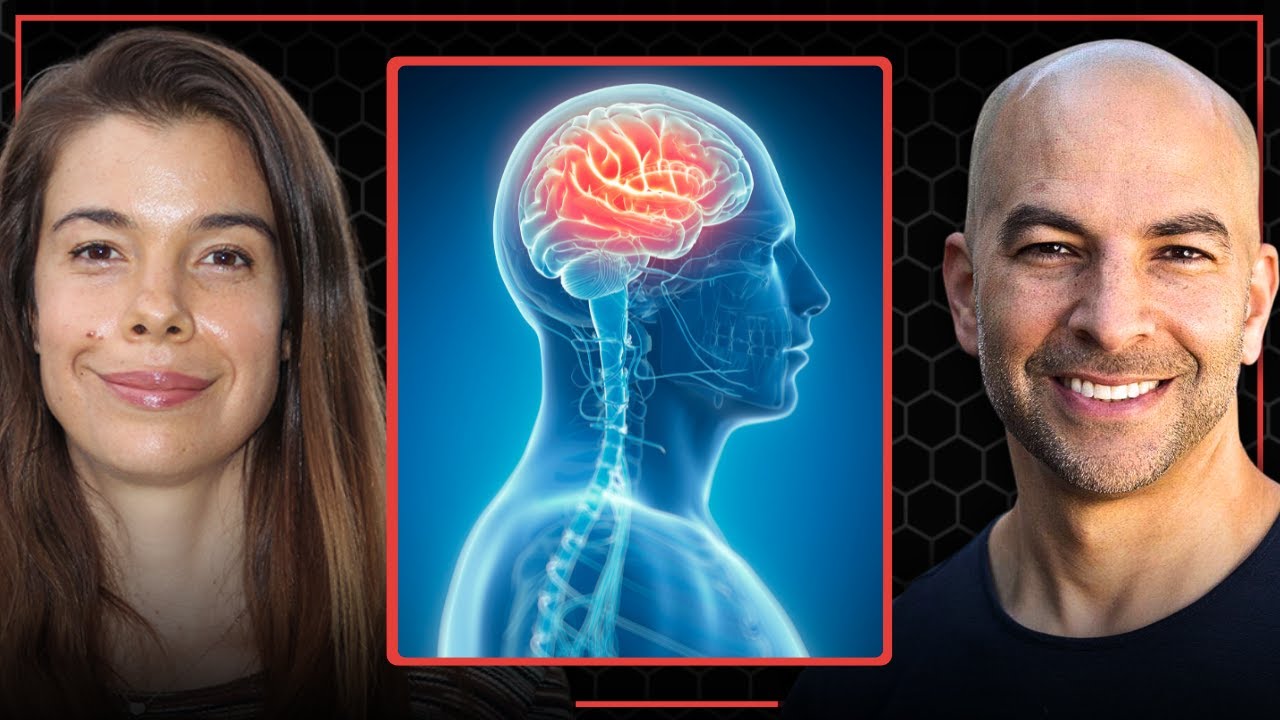
In the conversation, a long-running study in women becomes the anchor example.
Not because it is the only study that matters, but because it illustrates a core point: when you measure fitness, the relationship to brain outcomes can look dramatically clearer than when you simply ask people what they did.
That distinction, measurement versus memory, is the unique lens here.
A striking example: when fitness is measured, results change
The discussion points to a longitudinal cohort of women followed for decades, beginning around the 1970s and extending into the 2000s.
Participants repeatedly came in for objective testing on an exercise bike, with cardiorespiratory fitness quantified empirically (the framing implies VO2 max or a closely related estimate). Testing occurred multiple times across the follow-up, not just once.
Then came the headline finding: women who were the most fit had a dramatically lower risk of developing Alzheimer’s disease, described as “astronomical,” with a figure on the order of nine-fold lower risk. Women with moderate fitness still saw a large reduction, described as roughly four to five-fold.
Those are unusually large effect sizes for lifestyle research.
What the research shows: When cardiorespiratory fitness is assessed with objective testing, higher fitness is often associated with lower risk of cognitive decline and dementia in observational research. For background on how VO2 max is measured and interpreted, see the American Heart Association’s overview of cardiorespiratory fitness as a clinical vital sign: Importance of assessing cardiorespiratory fitnessTrusted Source.
The contrast example is just as important.
A different prospective study design is described where people received questionnaires over many years, asking how often they jogged, biked, or played tennis. In that kind of dataset, the association between physical activity and dementia risk sometimes disappears.
The takeaway is not that questionnaires are useless.
It is that self-report can blur the signal enough to make real effects hard to detect, especially when the outcome is complex and long-term.
Why questionnaires can fail even when exercise helps
Questionnaires can misclassify both intensity and consistency.
Two people might both check “jogging,” but one is doing short, easy jogs and the other is doing structured intervals. One might do it for two months, the other for twenty years. Add recall bias, social desirability bias, and changing habits over decades, and the exposure you are trying to measure becomes fuzzy.
In contrast, a maximal or submaximal fitness test produces a number tied to physiology.
That number acts like a biological receipt.
Why VO2 max is the “unambiguous” metric in this view
A central argument here is that VO2 max is an objective “readout state” of training.
It captures what the body can do, not what the person thinks they did.
VO2 max (maximal oxygen uptake) reflects the integrated capacity of the lungs, heart, blood, and muscles to deliver and use oxygen during increasing exercise intensity. It is influenced by genetics, age, sex, training history, and health conditions, but it is also trainable in many people.
This framing also makes an important conceptual move: it separates the inputs (workouts) from the output (fitness).
Maybe the exact recipe matters less than whether the recipe produces a higher cardiorespiratory fitness level. The discussion does not claim the recipe is irrelevant, but it suggests that, for population-level outcomes like dementia risk, the output may be what shows up most reliably.
Did you know? VO2 max is strongly associated with all-cause mortality risk in large cohorts, which is one reason some clinicians treat cardiorespiratory fitness as a powerful health marker. See the American Heart Association scientific statement: Cardiorespiratory fitness as a vital signTrusted Source.
That does not mean you need lab testing to benefit.
But it does suggest that tracking some objective proxy of fitness over time, such as a validated wearable estimate, a standardized treadmill test, or a repeatable cycling test, may be more informative than tracking “minutes exercised” alone.
Effort, volume, intensity: the dose-response idea
The most consistent theme described is a dose-response pattern.
More effort and more time tends to correlate with bigger cognitive benefits and lower dementia risk.
This is not presented as a magical threshold.
It is presented as a gradient.
The discussion highlights two levers that often move together in real life: volume (how much you do) and vigor (how hard you do it). People who train longer, more consistently, and more vigorously often end up with higher measured fitness, and in the studies emphasized here, they also tend to show the strongest associations with reduced dementia risk.
At the same time, the conversation is careful about what can and cannot be concluded.
Observational associations do not prove causation, and people with higher VO2 max may differ in many ways (sleep, diet, education, vascular risk factors, healthcare access). Still, the argument is that when the exposure is measured precisely, the association becomes harder to dismiss.
Pro Tip: If you want to test whether your training is raising fitness, repeat the same protocol every 6 to 12 weeks (same machine, same warmup, same time of day if possible). Consistency makes the trend more believable.
A practical way to think about “effort” without guessing
Instead of trying to label workouts as “hard enough,” this perspective nudges you toward measurable outputs.
Here are a few accessible options:
Short version: do not just count sessions, watch what your body can do.
How muscle work could talk to the brain
The discussion briefly pivots to mechanisms.
It flags that we have not even fully accounted for immune effects and muscle-to-brain signaling.
Two categories are mentioned.
First is lactate, described as a metabolite produced during harder efforts. Lactate is not just “waste,” it can act as a signaling molecule and an energy shuttle. Research suggests lactate can cross the blood-brain barrier and may influence brain metabolism and signaling in ways that are still being mapped. For a scientific overview of lactate as a signaling molecule, see: Lactate as a signaling moleculeTrusted Source.
Second is myokines, molecules secreted by working muscle.
The conversation names irisin and interleukin-6 (IL-6) as examples, noting that these exercise-induced signals can affect the brain and may even relate to cancer risk pathways. The broader idea is that skeletal muscle functions like an endocrine organ during exercise.
This is a different way of thinking about training.
Not just as “burning calories,” but as creating a pulse of biologically active signals.
Important: Immune and inflammatory markers can shift up or down depending on exercise dose, recovery, sleep, illness, and underlying conditions. If you have an autoimmune disease, are pregnant, or are undergoing cancer treatment, discuss exercise intensity targets with your healthcare team.
Mechanisms are not destiny, but they matter.
They give plausibility to why higher cardiorespiratory fitness could track with brain resilience over decades.
Women, Alzheimer’s risk, and what we still do not know
A notable detail in the conversation is that women are described as having about a two-fold higher risk of Alzheimer’s disease compared with men.
That observation sets up a question: do women respond differently to exercise, meaning do they get more brain benefit per unit of training?
The answer offered is nuanced.
The speaker notes not having seen direct evidence on sex differences in exercise response for dementia outcomes, while pointing out plausible biological reasons differences could exist, including hormonal and metabolic responses, and immune-system effects.
This is an important kind of uncertainty.
It is not a gap you can fill with motivation.
It is a reminder that population risk, biology, and behavior interact in complicated ways.
Q: If women have higher Alzheimer’s risk, does that mean exercise matters more for women?
A: The conversation suggests a strong association between objectively measured fitness and lower Alzheimer’s risk in women, but it does not establish that women uniquely benefit more than men. It highlights that sex differences in hormones, metabolism, and immune signaling could plausibly change responses, but direct comparative data were not cited.
Peter Attia, MD and Rhonda Patrick, PhD (discussion format), Exercise and brain health
If you are a woman thinking about prevention, the practical implication is still actionable.
Aim for improving cardiorespiratory fitness over time, and treat it as a measurable health asset, while also addressing other established risk factors like blood pressure, diabetes risk, sleep, and hearing.
For a broader, evidence-based overview of modifiable dementia risk factors, see the Lancet Commission report: Dementia prevention, intervention, and careTrusted Source.
How to apply this perspective without overinterpreting it
The most distinctive takeaway here is methodological: trust the studies that measure fitness more than the studies that only ask about exercise.
That idea can guide your personal approach too.
How to build toward higher cardiorespiratory fitness
You do not need to copy an athlete’s program.
But you do need progressive challenge.
Pick a baseline you can repeat. Choose a walking route, a cycling wattage, or a treadmill pace you can perform safely and consistently. Repeat it weekly or monthly so you can see change.
Add either volume or intensity, then reassess. For example, add 10 to 20 percent more weekly time for several weeks, or add one session that is clearly more vigorous. If you are new to exercise, intensity should be introduced gradually, and people with cardiovascular symptoms should seek medical guidance.
Let the “output” decide what is working. If your repeat test improves, your program is likely improving fitness. If it does not, adjust one variable, such as frequency, intensity, recovery, or sleep.
This is not about perfection.
It is about feedback.
»MORE: If you want a simple tracking sheet, create a one-page “fitness dashboard” with your repeat test result, resting heart rate, and a brief note about training consistency. Trends over 3 to 6 months are more meaningful than day-to-day fluctuations.
A reality check on causality
Even with objective fitness testing, studies can still be confounded.
Higher VO2 max can correlate with socioeconomic factors, lifelong activity patterns, and fewer vascular risk factors. Reverse causation is also possible, early brain changes could reduce activity long before diagnosis.
Still, the discussion’s position is that VO2 max-based studies are “unambiguous” in one key way.
They unambiguously measure fitness.
And in health science, measurement quality often determines whether you see the signal at all.
Key Takeaways
Frequently Asked Questions
- Is VO2 max the same thing as being physically active?
- Not exactly. Physical activity is the behavior, while VO2 max is an objective measure of cardiorespiratory fitness that reflects how your body transports and uses oxygen during harder exercise.
- Why would a questionnaire study show no link between exercise and dementia risk?
- Self-reported exercise can be inaccurate and may not capture intensity, consistency, or long-term adherence. Objective testing like VO2 max can reduce misclassification and may reveal associations more clearly.
- Do you need high-intensity training to improve brain health?
- The discussion emphasizes that higher fitness levels are associated with better outcomes, but it does not claim a single required workout style. Many people improve fitness through a mix of moderate and vigorous training, tailored to their health status.
- Are women more responsive than men to exercise for Alzheimer’s prevention?
- The conversation notes women have higher Alzheimer’s risk, but it also notes a lack of direct evidence on sex differences in exercise response for dementia outcomes. Hormonal, metabolic, and immune differences are plausible, but not settled.
Get Evidence-Based Health Tips
Join readers getting weekly insights on health, nutrition, and wellness. No spam, ever.
No spam. Unsubscribe anytime.