Upper Body Training Lessons From a 365-Day Plan
Summary
Most people think an “upper body transformation” comes from constantly changing exercises, chasing a muscle pump, or doing only machines for “perfect” form. This 365-day approach argues almost the opposite: pick a small set of high-value lifts, standardize technique, and push hard, consistently, often to failure on the last set. The journey centers on incline barbell pressing, seated cable flys, weighted pull-ups, high cable lateral raises, deficit Pendlay rows, overhead cable triceps extensions, and cable curls. Along the way, it challenges common misconceptions about “feeling” muscles, stability, and what progressive overload really means.
🎯 Key Takeaways
- ✓Consistency beats novelty, the same key lifts repeated for 365 days made progress measurable and technique more honest.
- ✓Progressive overload only counts when technique stays consistent, bouncing reps and changing form can create “fake” progress.
- ✓Pull-ups are framed as a growth tool even when they do not “feel” great, controlled reps plus added load over time mattered most.
- ✓Free weights still have a role even for hypertrophy, this view pushes back on an all-machine trend and values stabilizer demand.
- ✓Cables are used strategically for isolation and tension, but newer data suggests dumbbells can grow delts similarly when effort is high.
What most people get wrong about “transformations”
A lot of lifters assume visible change requires constant novelty.
New exercises every week, new “secret” angles, and a never-ending hunt for the perfect pump can feel productive. But it also makes progress hard to measure, and it can quietly lower standards, because you never get good enough at one movement to know whether you are truly improving.
This 365-day upper body approach flips that script. The journey is less about variety and more about repeatability: a small group of exercises, consistent technique cues, and a clear rule that the last set goes to failure (with no spotter help). The point is not to glorify suffering, it is to remove ambiguity. If you always stop early, it is easy to tell yourself you trained hard when you did not.
Another common misconception is that the most stable option is always the best option.
Machines can be excellent, especially for isolating a muscle and reducing joint stress, but this perspective argues that the pendulum has swung too far toward “only machines.” Even for hypertrophy, free weight compound lifts can still be valuable because they demand stabilization and coordination, which can increase total training stimulus and help you build skill that transfers.
Did you know? Physical inactivity is widespread. The World Health Organization estimates that about 1 in 4 adults do not meet recommended activity levels, which is linked with higher risk of multiple chronic diseases. See the WHO overview on physical activityTrusted Source.
The 365-day framework: fewer exercises, stricter effort
The core claim is straightforward: the same upper body workout was repeated for the last 365 days, and it produced a notable physique change. The results were tracked with objective tools, including DEXA estimates of lean mass and even an ultrasound measurement that suggested a change in biceps “peak.”
That measurement focus matters. When you track something, you tend to train differently. You are less likely to “accidentally” shorten range of motion, rush reps, or turn a controlled set into a bounce-and-heave contest.
The guiding principles that show up again and again
Important: Training to failure on heavy compound lifts can raise fatigue and may increase injury risk if technique breaks down. If you are newer, returning after time off, pregnant, managing cardiovascular disease, or have joint pain, consider using a more conservative “leave 1 to 3 reps in reserve” approach and get individualized guidance.
Chest and shoulders: meet in the middle with incline pressing
The centerpiece for chest and front delts is the incline barbell bench press, framed as the most effective pec-builder in this year-long experiment. The reasoning is practical: barbells are easier to overload in small, consistent jumps than heavy dumbbells, which can become awkward to set up and stabilize as strength increases.
There is also a time-efficiency argument. Instead of doing both a flat press and a vertical overhead press, this plan “meets in the middle” with about a 45-degree incline.
What the research shows: Evidence suggests that an incline press can strongly recruit the upper chest, and may do so without sacrificing mid and lower chest involvement compared with flat pressing. This aligns with the idea that changing the bench angle can shift emphasis across the pectoral region. For a broader overview of resistance training variables and hypertrophy, see the National Strength and Conditioning Association position statement: Progression Models in Resistance Training for Healthy AdultsTrusted Source.
Technique cues that define this style of incline pressing
This is not “just benching.” The cues are the point.
A notable detail is the decision to fail without a spotter for “scientific consistency,” then dump the bar forward onto safety bars when needed. If you train alone, safety arms and a rack setup are non-negotiable.
After pressing, the plan slows down with a chest isolation move that emphasizes stretch and line of pull: the seated cable fly.
The setup is specific: place a bench far out in front, walk the handles in tight to the chest, ease into the seat so you do not get yanked backward, then press into the start position. Reps are controlled, with depth only as far as the shoulders comfortably allow.
Key cues include “bring your elbows together, not just your hands,” and sweep out and back in an arc on the negative. The most common mistake called out is letting elbows drop, which can worsen leverage and shift tension away from the pec fibers.
Pro Tip: If cable flys irritate the front of your shoulders, reduce depth slightly and prioritize a slow negative. You should feel a strong chest stretch, not a sharp pinch.
Back growth: why pull-ups and Pendlay rows did the heavy lifting
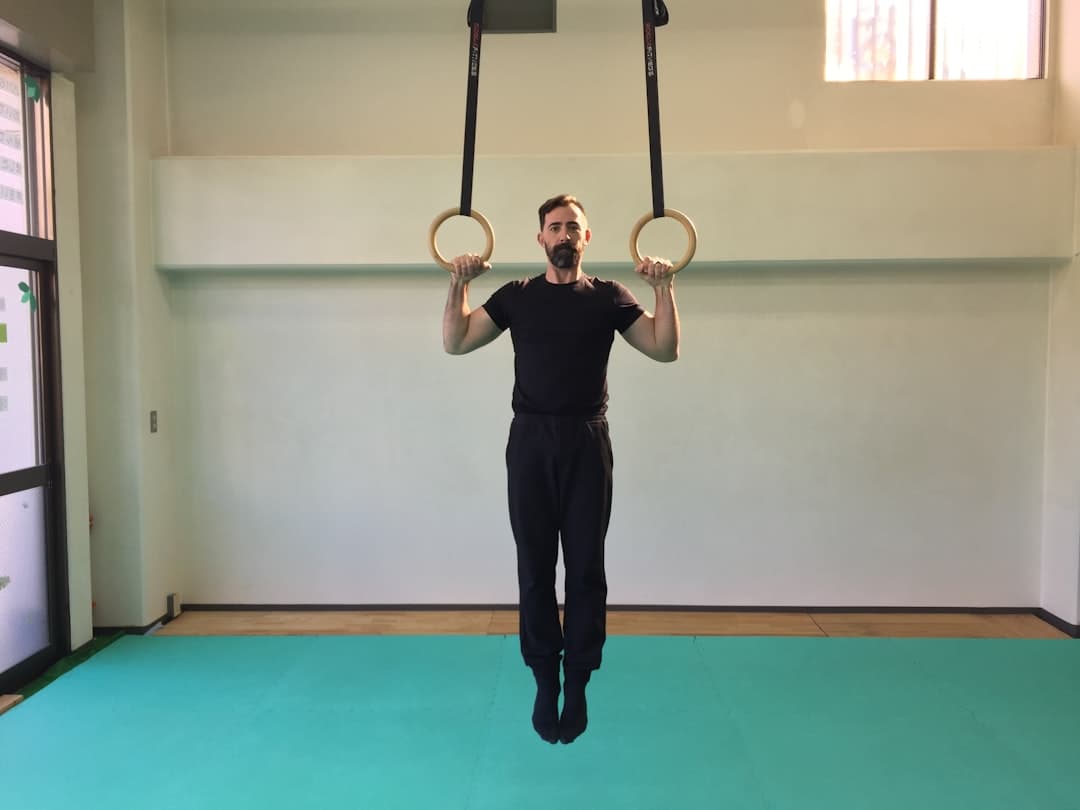
The biggest reported change over the year was back development, and the centerpiece was weighted pull-ups, promoted from “good” to “top-tier.” This is a strong stance in a fitness culture that often treats pull-ups as optional or replaces them entirely with pulldowns.
The argument is not that pulldowns are useless. It is that pull-ups are harder to fake. Once you strap weight on, and especially if you pause at the bottom, excessive swinging becomes harder.
One of the most interesting mindset shifts here is the dismissal of “feeling” as the primary compass.
Pull-ups are framed as a non-feely exercise. They may not feel amazing, and that is not the point. The point is controlled reps and progressive overload over time, with the claim that “your lats are going to grow whether you feel them or not.”
A concrete example is given: starting at 30 lb for 6 reps, later reaching 60 lb for 6 reps, using the same movement.
Pull-up cues and progressions
If you cannot do weighted pull-ups yet, progressions include:
The second big back builder is the deficit Pendlay row, done by standing on a bumper plate to increase range of motion and create a deeper stretch at the bottom.
This lift is described as a “whole back” movement: scapular retractors (mid traps and rhomboids), upper and lower traps for stabilization, lats for shoulder extension, and spinal erectors working isometrically.
Execution is also modified for hypertrophy: explosive positive, slower negative to keep eccentric tension. On the final set, the plan sometimes goes beyond failure using lengthened partials, grinding out a few extra reps in the stretched position once full reps are gone.
The biggest technique mistake highlighted is not getting fully horizontal. When the torso is parallel to the floor, gravity challenges scapular retractors more directly. A more upright row is not “wrong,” but it changes the emphasis and may require heavier weight to create a similar challenge.
Side delts: cables, dumbbells, and the shrugging trap
Side delts got a dedicated, minimalist prescription: high cable lateral raises, typically 2 to 3 sets of 8 to 10 reps, pushed hard.
The cable choice is justified by physics. Cables can keep tension more consistent through the range of motion compared with dumbbells, which have little tension at the bottom and peak tension near the top. Setting the cable high also makes the movement hardest earlier, when the delt is more stretched, because peak tension occurs when the arm and cable form about a 90-degree angle.
At the same time, the narrative is nuanced: the “stretch is everything” trend is described as exaggerated on social media, but not entirely wrong.
What the research shows: A recent study design often used in exercise science has compared cable lateral raises with dumbbell lateral raises by having participants train one arm each way, using high effort. Findings like these suggest both can grow the side delts similarly when sets are pushed hard. For a broader, accessible summary of how resistance training supports muscle and health, see the CDC guidance on strength trainingTrusted Source.
The key practical takeaway is that cables are not magic. What matters most is choosing a variation you can control, feel in the intended area, and progressively overload.
The most common mistake is also simple: shrugging the weight up, which shifts work to the upper traps.
A tactile drill is offered: stand with your back against a wall, push your arm out sideways against the back of your forearm, and feel the side delt engage. That “out, not up” intention is then carried into the raise.
Arms: long-length triceps work and the biceps “lengthened” debate
Arms are treated like the finishing school of the session, but the exercise choices are still driven by a specific hypothesis: training at longer muscle lengths, under meaningful tension, may offer an edge.
For triceps, the featured move is the cable overhead triceps extension, described as the single most effective choice if you only have time for one triceps exercise. The rationale is that overhead positioning biases the long head (because it crosses the shoulder), and a cited comparison suggests overhead extensions can produce more growth than pushdowns.
The most common mistake is not the rep, it is the setup.
Instead of setting the cable low and wasting energy twisting into place, the cable is set higher. You squat underneath, use your legs to get into position, then take a step or two forward and start.
For biceps, the plan leans into newer research comparing a favorite cable curl variation (referred to as the Beijing cable curl) with the preacher curl. The reported result is nuanced: non-significant trends favoring the cable option, but nothing statistically significant, possibly due to small sample size and short duration.
The practical conclusion is refreshingly non-dogmatic. Both likely work. Still, the cable curl is used on the upper body day because it is suspected to provide a slight edge via long muscle length and high tension in the lengthened position. Then, on another day, preacher curls and hammer curls are used as additional biceps work.
Q: Do I have to train to failure for muscle growth like this plan does?
A: Not necessarily. Many people gain muscle with sets that stop 1 to 3 reps before failure, especially on big compound lifts where fatigue can degrade form. Training to failure can be a useful tool, but it may be best reserved for safer isolation movements, or used selectively depending on recovery, sleep, and injury history.
Jordan Lee, MS, CSCS
How to apply this safely if you train for health and metabolic fitness
This video is framed as physique training, but the habits it reinforces can overlap with metabolic health goals: building and maintaining muscle supports glucose disposal, physical function, and healthy aging. Resistance training is widely recommended as part of overall activity for health, including by major public health organizations like the World Health OrganizationTrusted Source.
Still, copying the plan exactly is not always the smartest move. A year-long, high-effort approach can be demanding, and “last set to failure” is not a requirement for better health markers.
How to borrow the best ideas without borrowing all the risk
Keep the exercise menu small, but earn the right to push hard. Pick 4 to 7 core upper body movements you can perform with stable technique. Spend several weeks building consistency before you add failure work.
Use the video’s technique cues as your quality filter. Control the negative on presses and flys. Hit full, comfortable range of motion. Avoid bouncing. For pull-ups, aim for chest-to-bar intent and a controlled descent.
Progress load slowly and predictably. The story’s pull-up jump from 30 lb to 60 lb for 6 reps happened over a year. That is the pace many bodies tolerate well. If your joints ache or your sleep worsens, that is feedback to slow down.
Choose where failure makes sense. Many people reserve true failure for cable flys, lateral raises, curls, and triceps extensions, and keep 1 to 2 reps in reserve on heavy presses, pull-ups, and rows.
Use tools that protect the target muscle. Straps and chalk can be reasonable if grip is the limiting factor on rows and pull-ups. The goal is not to avoid grip work forever, it is to avoid grip being the reason your back training is under-dosed.
»MORE: If you like structured training, consider keeping a simple “technique log” alongside your weights and reps, for example, grip width, pause length, and range of motion notes. It makes progress more comparable across months.
Q: Are free weights better than machines for building muscle?
A: Neither is universally better. Free weights can recruit stabilizers and build coordination, while machines can reduce balance demands and make it easier to train close to failure safely. Many people do best with a mix, similar to this plan’s combination of barbell pressing, pull-ups, and cable isolation work.
Aisha Patel, PT, DPT
Key Takeaways
Frequently Asked Questions
- Is incline bench enough if I do not want both flat and overhead pressing?
- An incline press can train the chest and front delts in one movement, which is why this plan treats it as time-efficient. If your shoulders tolerate it well and you progress gradually, it may be a practical “middle ground,” but individual comfort and goals still matter.
- What if I cannot do pull-ups yet?
- This approach suggests assisted pull-ups (band or machine) and eccentric-only reps as stepping stones. The key is controlled lowering and gradually reducing assistance over time.
- Do cables build more muscle than dumbbells for lateral raises?
- The video prefers cables for consistent tension and extra range of motion, but it also notes research comparing cables and dumbbells found similar delt growth when sets were pushed hard. The best choice is the one you can control and progressively overload without pain.
- Are straps “cheating” for back exercises?
- In this plan, straps are a tool to prevent grip from limiting back stimulus on pull-ups and rows. If your goal is back hypertrophy, using straps can be reasonable, but you can still train grip separately if it is important to you.
Get Evidence-Based Health Tips
Join readers getting weekly insights on health, nutrition, and wellness. No spam, ever.
No spam. Unsubscribe anytime.