Quad: Complete Guide
The quads (quadriceps) are the powerful muscles on the front of your thigh that straighten the knee, help control deceleration, and support daily movement and athletic performance. This guide explains how the quads work, why they matter for strength, knee health, and longevity, and how to train them effectively without aggravating your knees or hips.
What is Quad?
“Quad” is short for the quadriceps femoris, a group of four muscles on the front of the thigh that primarily extend (straighten) the knee and help control knee motion under load. The quadriceps are central to everyday tasks like standing up from a chair, climbing stairs, walking downhill, and catching yourself during a stumble.The four muscles are:
- Rectus femoris: crosses both the hip and knee, contributes to hip flexion and knee extension.
- Vastus lateralis: outer thigh, large contributor to knee extension force.
- Vastus medialis (including VMO region): inner front thigh, important for knee extension and patellar tracking.
- Vastus intermedius: deep muscle under rectus femoris, assists knee extension.
> Callout: If you want strong knees, resilient tendons, and easier daily movement as you age, quad strength is not optional. It is foundational.
How Does Quad Work?
The quadriceps work through coordinated anatomy, nervous system control, and tendon mechanics. They produce force, but they also act as brakes, shock absorbers, and stabilizers.The core action: knee extension and controlled knee flexion
The quads attach to the patella (kneecap) via the quadriceps tendon, and then to the tibia via the patellar tendon. When the quads contract, they pull through this system to extend the knee.Just as important is eccentric control. When you descend into a squat, walk downstairs, or land from a jump, the knee flexes while the quads lengthen under tension. This eccentric action:
- absorbs impact
- protects passive structures (cartilage, ligaments)
- trains the tendon to tolerate load
Rectus femoris is special (two-joint muscle)
Rectus femoris crosses the hip and knee. That means:- Hip position changes how much rectus femoris can contribute to knee extension.
- It can be stressed during activities that combine hip extension with knee flexion (for example sprinting and kicking).
- Some people feel “hip flexor tightness” that is partly rectus femoris stiffness.
Patellofemoral mechanics and why knee angle matters
As the knee bends, contact forces between the patella and femur change. Many people notice discomfort at certain depths. Load tolerance depends on:- quad strength and endurance
- hip strength and femur control (glute med, external rotators)
- ankle mobility and foot mechanics
- training volume progression
Muscle growth and strength: what drives adaptation
Quad improvements come from two main adaptations:- Neural: better motor unit recruitment and coordination, often noticeable within weeks.
- Hypertrophy: increased muscle fiber size, typically requires consistent training over months.
- sufficient weekly hard sets
- proximity to failure (especially for hypertrophy)
- progressive overload (more reps, load, range, or control)
- adequate protein and recovery
Benefits of Quad
Quad development is not just about aesthetics. It is tied to function, joint resilience, and overall health.Stronger legs for daily life and independence
Quads are heavily involved in sit-to-stand, stair climbing, and walking speed. Maintaining quad strength supports:- independence with aging
- reduced fall risk (better braking and recovery)
- easier tolerance of long days on your feet
Improved knee function and pain resilience
Many knee problems worsen when the knee cannot tolerate normal forces. Strong quads can help by:- improving shock absorption during deceleration
- supporting patellar tracking through better force capacity
- increasing tolerance of tendons and connective tissue when loading is progressed gradually
Better athletic performance
Quads contribute to:- sprint acceleration and top-end mechanics (especially through knee drive and stiffness control)
- jumping and landing
- change of direction and cutting (eccentric braking)
- cycling power output
Body composition and metabolic health support
Large muscle groups like the quads meaningfully raise training stimulus and energy demand. Building and maintaining leg muscle supports:- higher resting energy expenditure (modest but meaningful over time)
- improved glucose disposal and insulin sensitivity
- better ability to sustain activity without fatigue
Helpful for menopause and midlife strength goals
In perimenopause and menopause, strength training is strongly associated with better bone, muscle, and metabolic outcomes. While many programs emphasize posterior chain for alignment and joint load management, quad strength remains essential for stair capacity, balance recovery, and knee tolerance.Potential Risks and Side Effects
Training quads is safe for most people when progressed sensibly, but there are common pitfalls.Anterior knee pain and patellofemoral irritation
Symptoms often include pain around or behind the kneecap during squats, stairs, running, or prolonged sitting. Contributing factors can include:- rapid increases in volume or depth
- heavy knee-dominant work without adequate recovery
- poor tolerance of certain knee angles
- weak hip stabilizers or limited ankle dorsiflexion
Patellar or quadriceps tendinopathy
Tendon pain usually presents as localized pain at the patellar tendon (below kneecap) or quadriceps tendon (above). Risk increases with:- lots of jumping, sprinting, or sudden heavy squatting
- insufficient recovery
- poor load management
Muscle strains (especially rectus femoris)
Rectus femoris strains can occur with sprinting, kicking, or abrupt changes. Risk increases when:- hip flexors are undertrained eccentrically
- fatigue is high
- warm-up and progression are poor
Hip or low-back compensation
If quads are trained with poor bracing or technique, people may compensate with lumbar extension or hip shift. Address with:- core bracing practice
- load reduction while refining form
- unilateral work to reduce side-to-side dominance
Overtraining and recovery debt
Leg training can be systemically fatiguing. Signs you are overreaching:- persistent soreness and declining performance
- sleep disruption
- loss of motivation
- nagging tendon pain
> Callout: Joint pain is not a badge of honor. The goal is progressive overload of tissues, not repeated irritation of the same structure.
How to Train the Quad (Best Practices)
This is the practical core: exercise selection, programming, and progression for strength, size, and knee-friendly training.Choose the right quad-biased exercises
Most people do best with a mix of bilateral and unilateral patterns.Compound (high return):
- Front squat (more upright torso, often more quad bias)
- High-bar back squat (quad dominant for many)
- Hack squat (machine stability, high quad stimulus)
- Leg press (easy to scale, great for hypertrophy)
- Bulgarian split squat
- Step-ups and step-downs
- Reverse lunge (often more knee-friendly than forward lunge)
- Leg extension (excellent for quads when programmed intelligently)
- Sissy squat (advanced, high knee stress, use carefully)
Technique levers that increase quad bias
Small form changes can shift stress toward the quads.- Heel elevation (plates or weightlifting shoes): increases knee travel and quad demand.
- More knee travel over toes (within tolerance): can increase quad loading.
- More upright torso (front squat, goblet squat): typically increases knee extensor demand.
- Controlled eccentrics: improves tissue tolerance and hypertrophy stimulus.
Weekly volume and intensity guidelines
Your best dose depends on training age, recovery, and goal.General starting points (per week):
- Beginners: 6 to 10 hard sets for quads
- Intermediate: 10 to 16 hard sets
- Advanced hypertrophy blocks: 14 to 22 hard sets (only if recovery is strong)
- Strength focus: 3 to 6 reps on a main lift, plus back-off work
- Hypertrophy focus: 6 to 15 reps on compounds, 10 to 20+ on isolation
- Most sets should end around 1 to 3 reps in reserve (RIR)
- Isolation work can be taken closer to failure more often
A simple quad-focused template (2 days per week)
Day A (strength + control)- Front squat or high-bar squat: 3 to 5 sets of 3 to 6 reps
- Bulgarian split squat: 2 to 4 sets of 6 to 10 reps per side
- Leg extension (slow eccentric): 2 to 4 sets of 10 to 15 reps
- Leg press or hack squat: 3 to 5 sets of 8 to 15 reps
- Step-downs or reverse lunges: 2 to 3 sets of 8 to 12 per side
- Leg extension (top squeeze): 2 to 4 sets of 12 to 20 reps
Knee-friendly progression (if pain is present)
If you are dealing with cranky knees, the goal is to keep training while reducing irritation.Practical steps: 1. Find tolerable ranges: use a depth and load that keeps pain low during and after. 2. Use isometrics: wall sits or Spanish squats for 30 to 60 seconds can reduce pain and build tolerance. 3. Prioritize slow eccentrics: 3 to 5 seconds down on leg press or split squats. 4. Add volume gradually: increase weekly sets by 10 to 20% when symptoms are stable.
This approach pairs well with lifestyle habits that support recovery, including walking and sleep.
Nutrition and recovery that supports quad growth
- Protein: aim for a daily target that reliably supports muscle gain or retention, spread across meals.
- Carbohydrates: helpful for leg training performance, especially when volume is moderate to high.
- Sleep: consistently one of the strongest predictors of recovery quality.
- Walking: low-intensity movement can improve recovery and work capacity. Many people benefit from short walks after meals.
What the Research Says
Research on quads spans anatomy, biomechanics, hypertrophy programming, pain science, and aging.Quad strength and function across the lifespan
Large observational research consistently links low muscle mass and low strength with worse health outcomes and higher mortality risk. While these studies do not isolate the quads alone, they support the broader conclusion: maintaining large lower-body muscles is a major health lever.Clinical and gerontology research also shows that lower-body strength is closely tied to:
- gait speed
- stair performance
- fall risk
- ability to perform activities of daily living
Hypertrophy: volume, effort, and exercise selection
Modern hypertrophy evidence generally supports that:- Multiple hard sets per muscle per week outperform very low volumes on average.
- Training close to failure is effective, especially for isolation work.
- A range of rep targets can build muscle if sets are hard.
Knee pain, patellofemoral pain, and load management
Rehab literature increasingly emphasizes:- graded exposure to load rather than complete rest
- strengthening of quads and hips
- movement variability and progressive return to activity
What we know vs. what we do not
We know:- Quads respond well to progressive resistance training across ages.
- Both heavy and moderate loads can build size and strength.
- Tendons adapt to progressive loading, but slowly.
- The single “best” quad exercise for every body type and pain presentation.
- Exact individual volume thresholds without trial and adjustment.
- How to perfectly individualize knee-friendly angles without hands-on assessment.
Who Should Consider Quad Training?
Nearly everyone benefits from training the quads, but some groups benefit even more.People who want stronger knees and better mobility
If stairs, squats, hiking descents, or getting up from the floor feel hard, focused quad work can be transformative.Lifters cutting body fat
During a calorie deficit, quad strength work helps preserve lean mass. Many people do well with:- fewer exercises
- fewer total sets
- very high effort on key movements
Perimenopause and menopause
Strength training is strongly supported for midlife women, with special attention to technique, recovery, and joint-friendly progression. Quads matter for:- knee function
- bone loading through squats and step-ups
- maintaining muscle mass as hormones shift
Athletes and active adults
Field sport athletes, runners, cyclists, and skiers all rely on quad capacity, especially eccentric control and fatigue resistance.People rehabbing knee issues (with appropriate guidance)
Quad loading is commonly part of rehab for patellofemoral pain and tendon issues. The right plan should be individualized, and persistent or worsening symptoms warrant assessment by a qualified clinician.Common Mistakes, Alternatives, and Smart Substitutions
Quad training fails most often due to errors in progression, exercise fit, or recovery.Common mistakes
Chasing soreness instead of progression Soreness is not a reliable indicator of growth. Track performance and total hard sets.Doing only one pattern Only back squats or only leg extensions can leave gaps. Mixing patterns spreads stress and often reduces joint irritation.
Jumping volume too fast Knees and tendons often complain when weekly sets or running mileage spikes.
Ignoring the posterior chain Quads do not work alone. Weak glutes and hamstrings can increase knee load and reduce control.
Smart substitutions if your knees are sensitive
- Swap deep back squats for box squats temporarily.
- Use hack squat or leg press for stability and controlled range.
- Use reverse sled drags (if available) for knee-friendly quad volume.
- Use split squats with a shorter range and slower tempo.
When “inner thigh” goals show up
People often confuse “inner thigh fat” goals with adductor strength or quad training. You cannot spot reduce fat, but you can:- build leg muscle to improve shape
- use eccentric leg work to build capacity
- increase daily walking, especially after meals
- prioritize recovery so training adaptations stick
Frequently Asked Questions
Do squats mainly work quads or glutes?
Both. Squat style matters: a more upright torso and greater knee bend typically increases quad demand, while a more hip-dominant squat shifts more to glutes and adductors.Are leg extensions bad for your knees?
Not inherently. Leg extensions can be very effective for quad growth. They can aggravate some knees if load or range is too aggressive. Start light, control the eccentric, and progress gradually.How many days per week should I train quads?
Most people do well with 2 days per week of direct quad work. Beginners can grow with 1 to 2 days. Advanced lifters may use 2 to 3 exposures depending on recovery.Why do my knees hurt when I train quads?
Common reasons include rapid volume increases, poor tolerance to certain knee angles, tendon irritation, or weak hip control. Reduce aggravating load, keep training in tolerable ranges, and rebuild with slow eccentrics and gradual progression.Can I build quads while losing fat?
Yes, especially if you are newer to training or returning after time off. More often, the goal during a cut is to maintain or slightly improve strength while preserving muscle. Lower volume with high effort can be effective when recovery is limited.What is the fastest way to grow quads?
The fastest sustainable path is consistent progressive overload on a few key movements, enough weekly hard sets, training close to failure, adequate protein, and sleep. Shortcuts usually become overuse injuries.Key Takeaways
- The quads (quadriceps) are four muscles on the front of the thigh responsible primarily for knee extension and eccentric control.
- Strong quads support daily function, knee resilience, athletic performance, and long-term health.
- The biggest training drivers are progressive overload, sufficient weekly hard sets, and good recovery.
- Common risks include anterior knee pain and tendon irritation, usually from poor load management rather than “bad exercises.”
- A balanced plan mixes compound lifts (squats, leg press) with unilateral work (split squats, step-downs) and optional isolation (leg extensions).
- During fat loss or high stress, consider lower volume with high effort to match reduced recovery capacity.
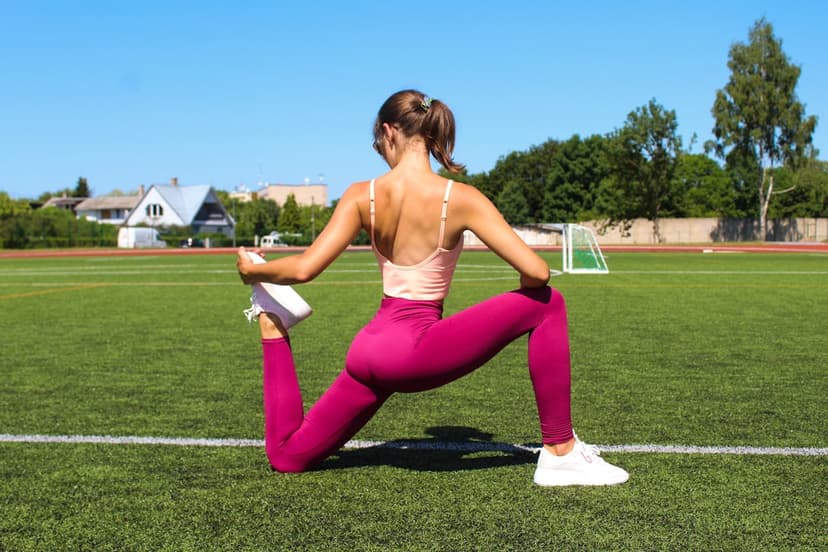
Glossary Definition
Short for quadriceps, a muscle group at the front of the thigh important for leg movement.
View full glossary entryHave questions about Quad: Complete Guide?
Ask Clara, our AI health assistant, for personalized answers based on evidence-based research.