Fix Your Mouth, Support Your Brain and Body Health
Summary
Most people chase white teeth and fresh breath by “carpet bombing” the mouth with harsh products. This video’s core message is the opposite: protect the oral microbiome, support saliva, and fix the upstream drivers like diet, snacking frequency, and mouth breathing. The discussion connects oral inflammation to whole-body outcomes, including cardiovascular health, cognition, fertility, and pregnancy. You will learn how demineralization and remineralization work, why nighttime cleaning matters most, how to floss effectively, when to consider water flossing, and why nasal breathing is a foundational oral health tool.
What Most People Get Wrong About Oral Health
Most people think oral health is a whitening problem.
Or a breath problem.
Or a “brush harder and buy a stronger mouthwash” problem.
This conversation flips that script. The central idea is that the mouth is an ecosystem, and many popular “fresh” and “clean” sensations, burning, foaming, intense mint, can be a sign you are stripping the ecosystem rather than supporting it.
The unique perspective here is not that brushing and flossing do not matter. They do. It is that mechanics should be gentle and targeted, and the real wins often come from upstream levers like snacking frequency, hydration and minerals, and nasal breathing.
Aesthetic goals still matter in this framing. But the argument is that the best-looking mouth often comes from the most biologically supportive habits, not the most aggressive products.
Pro Tip: If your oral care routine “has to burn” to feel effective, treat that as a clue. Burning often reflects strong antimicrobials or irritants, not necessarily better cleaning.
The Mouth Is Not Separate From the Body
Dentistry has historically been siloed from medicine, but the mouth is the gateway to the digestive tract and a major immune interface.
That matters because chronic oral inflammation is not just local. The discussion highlights how oral pathogens and inflammatory signals can be linked with broader health concerns, including cardiovascular disease, metabolic disease, and even neurodegenerative conditions.
A key theme is translocation. Oral bacteria and their byproducts can move beyond the mouth, potentially triggering immune responses elsewhere. Even without proving cause in every case, this is a powerful reason to treat bleeding gums, chronic bad breath, and recurrent infections as whole-body signals.
The clinician in the video also emphasizes that saliva is not just “water.” It contains immune cells, enzymes, minerals, and hormones like cortisol.
That means oral health is not only about what you remove (plaque). It is also about what you preserve and support (saliva quality, healthy bacteria, tissue integrity).
Did you know? Gum inflammation is extremely common during pregnancy. The video cites pregnancy gingivitis affecting 50 to 70% of pregnant women.
Stop “Carpet Bombing” Your Oral Microbiome
The mouth has a microbiome, and the goal is balance, not sterility.
This view holds that many mainstream products aim to disinfect the mouth with a broad-spectrum approach, alcohol, astringents, foaming agents, and strong essential oils. The problem is that these tools are often not selective, they can suppress beneficial organisms along with harmful ones.
Ingredients that come up in the video
One standout example is sodium lauryl sulfate (SLS), a foaming agent. The concern raised is not that foam is inherently evil, but that SLS can irritate oral tissues in some people and may be associated with oral ulcerations (canker sores) in sensitive individuals.
Essential oils also get a nuanced critique. “Natural” does not automatically mean microbiome-friendly. Many essential oils are antimicrobial, and frequent use may disrupt the oral ecosystem.
Bad breath is treated as a signal.
Instead of masking halitosis with stronger and stronger products, the framing encourages asking: why is the mouth imbalanced in the first place? Dry mouth, mouth breathing, diet patterns, gum inflammation, and tongue coating can all play a role.
Important: Recurrent mouth ulcers can have multiple causes, including irritation, viral triggers, or sometimes broader gut or immune issues. If ulcers are frequent, severe, or persistent, it is reasonable to discuss it with a dentist or clinician.
For general oral health guidance, the American Dental AssociationTrusted Source provides practical information on cavities, gum disease, and hygiene basics.
Demineralization vs Remineralization, The Daily Tooth Cycle
Teeth are not static.
They are constantly cycling through demineralization (mineral loss) and remineralization (mineral repair). The key insight is that this cycle happens every day, and your habits determine which direction wins over time.
When you eat, saliva enzymes begin digestion and the pH drops, creating a more acidic environment. Acid can leach minerals like calcium and phosphorus from enamel. This is normal.
The problem is duration.
If the mouth stays acidic for too long, mineral loss outpaces repair and a lesion can progress toward a cavity.
The discussion references the Stephan curve, which illustrates how pH drops after eating and then gradually returns toward baseline as saliva buffers acids. In this framing, frequent snacking and sipping keep the mouth in repeated acid dips, reducing time for repair.
A particularly practical point is that very early lesions (incipient lesions) that are still in enamel may be able to remineralize under the right conditions. Once a true hole forms, restorative treatment is often needed.
What the research shows: Fluoride is widely recognized to reduce caries risk primarily through topical effects that enhance enamel’s resistance to acid. Public health summaries and evidence reviews are available from the CDC’s community water fluoridation resourcesTrusted Source.
Sugar, Flour, and the Real Cause of Cavities (Acid and Time)
Sugar does not “drill a hole” in your tooth.
Acid does.
This perspective emphasizes that bacteria metabolize fermentable carbohydrates and release acids that drive demineralization. The more often you feed that system, and the longer food residues sit on teeth, the more time acid has to do damage.
A unique and memorable point in the discussion is: think of flour like sugar in the mouth.
Crackers, chips, toast, pretzels, and other sticky, processed starches can lodge in grooves and between teeth, creating long contact times. That contact time can be worse than the sweetness level of the food.
This is also why grazing matters so much. Eating a snack slowly over an hour, or sipping a sweet drink repeatedly, can keep pH low far longer than eating a meal and then giving the mouth a break.
A practical “diet pattern” lens (not a strict diet)
The approach here is not about banning fun foods forever. It is about shifting the baseline.
Nutrition guidance for oral health is also echoed in mainstream sources, including the National Institute of Dental and Craniofacial ResearchTrusted Source.
Saliva, Your “Golden Elixir” for Teeth and Immunity
Saliva is a protective fluid.
It is also a diagnostic window.
In the video’s framing, saliva contains bacteria, viruses, fungi, immune cells, enzymes for digestion, minerals for remineralization, and even hormones like cortisol.
Dry mouth is not a small issue. Reduced saliva can make chewing and swallowing harder, and it can accelerate tooth decay and gum disease risk, especially in older adults or people undergoing certain medical treatments.
What supports healthier saliva
This is where the “less product, more physiology” approach becomes very tangible.
»MORE: If you are curious about oral microbiome testing, ask a dentist who offers salivary analysis what they measure (bacteria profiles, inflammatory markers, or both) and how results would change your prevention plan.
For dry mouth education and causes, including medication-related xerostomia, see the NIDCR overview on dry mouthTrusted Source.
Nasal Breathing: An Oral Health and Brain Health Lever
Mouth breathing changes the mouth.
It dries it.
That dryness can shift pH and reduce saliva’s protective buffering, creating a more cavity- and gum-disease-friendly environment.
The discussion goes further, connecting airway health to sleep quality and brain function. The argument is that sleep-disordered breathing in children can show up as behavioral issues, poor sleep quality, bedwetting, and daytime problems that can sometimes be misattributed to purely behavioral diagnoses.
This is also framed as a generational structural issue. The idea is that modern diets require less chewing, which can reduce the mechanical forces that shape jaw width and airway space during development. Narrow palates can mean smaller nasal volume, and the roof of the mouth is also the floor of the nose.
Signs of airway issues discussed in the video
Some of the cues described are surprisingly visible.
Standalone statistic: The video cites estimates that up to 50% of the population may mouth-breathe, and suggests this may be an underestimate in real-world settings.
Mouth taping, the cautious way
Mouth taping is presented as a tool, not a universal solution.
A safety-focused approach is emphasized: screen for nasal obstruction first. A simple self-check mentioned is a three-minute test, can you breathe through your nose for three minutes without panicking or feeling overly stressed? If not, it may be safer to address nasal obstruction with an airway-focused clinician before taping.
A gradual ramp is suggested: start with five minutes while doing a calm activity, then 30 minutes, then longer periods, before trying overnight.
For a broader evidence-based overview of sleep-disordered breathing, see the American Academy of Sleep MedicineTrusted Source.
Brushing and Flossing, The Mechanical Basics Done Right
Nighttime brushing is the anchor.
If you only do one cleaning session well, the video emphasizes doing it at night. You are removing the day’s food debris and disrupting plaque biofilm before hours of sleep.
The second major emphasis is interdental cleaning.
Many cavities, especially in children, occur between teeth or in the molar contact areas. Brushing alone often misses these zones.
How to build a routine that matches the video’s priorities
This is not about perfection. It is about consistency.
A subtle but important timing point is also included: brushing immediately after eating can be harsh because enamel is temporarily more vulnerable during the acid phase. Waiting 20 to 30 minutes after meals is suggested when possible.
Floss picks and water flossers
Floss picks are framed as useful, especially for children and for adults who struggle with traditional floss.
Water flossers are presented as a helpful add-on, particularly as we age and gum contours change. The idea is that string floss may not fully reach into shallow pockets that can develop over time.
Expert Q&A
Q: If I can only do one thing, brush or floss?
A: The video’s priority is to keep nighttime cleaning strong, and to include interdental cleaning because many cavities form between teeth. If you truly can only do one habit consistently, consider making it a combined habit at night, even if the flossing is brief.
A: If flossing feels unrealistic, a water flosser or floss picks may be a practical bridge. Consistency tends to beat intensity.
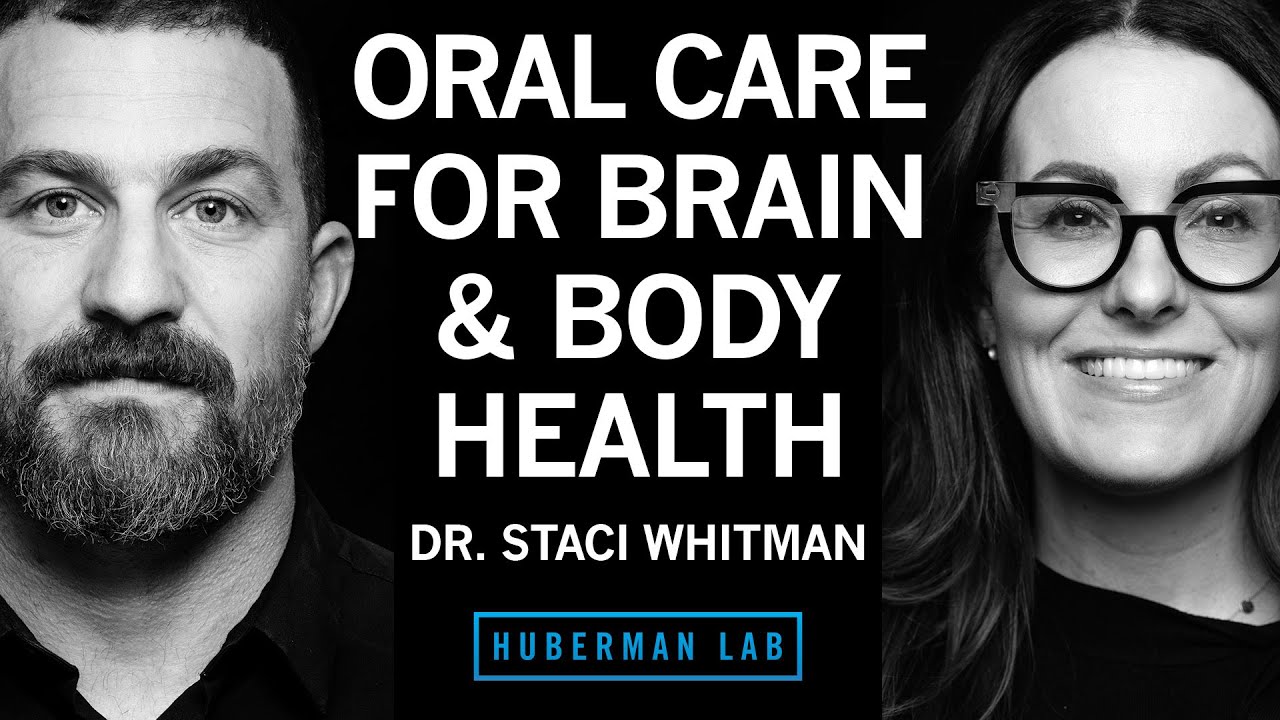
Dr. Staci Whitman, functional dentist (as featured on Huberman Lab)
For technique refreshers and prevention basics, the American Dental Association’s brushing and flossing guidanceTrusted Source is a solid reference.
Tongue Scraping, Oil Pulling, and Gum: Where They Fit
Not everything has to be daily.
That is part of the “less is more” theme.
Tongue scraping
Tongue scraping is presented as a targeted way to remove tongue biofilm, which can influence breath and taste. The coating on the tongue is also framed as a potential clue, a persistent white coating may reflect dysbiosis, and in children, fungal overgrowth like Candida is emphasized as an often-missed contributor in early decay patterns.
Scraping should be gentle. The goal is not to sand down the tongue, but to remove the surface film.
Pro Tip: If tongue scraping makes you gag, try doing it after a few slow nasal breaths, and scrape less far back at first. Build tolerance over days.
Oil pulling
Oil pulling is included with a cautionary twist. Coconut oil is described as antimicrobial, which could be helpful in targeting anaerobic pathogens, but the caution is that daily use could disrupt the microbiome.
A practical compromise suggested is a few times per week, not necessarily every day.
Also, do not spit oil into the sink, it can clog plumbing.
Chewing gum
Gum is framed as “time and place.” Chewing increases saliva, which can be protective.
Xylitol gum is highlighted as a better choice, because xylitol may inhibit bacterial proliferation, including Streptococcus mutans.
The caution is overuse. Excessive gum chewing can strain the temporomandibular joint and contribute to jaw discomfort.
For a mainstream overview of xylitol and caries prevention, see the Cochrane summary on fluoride and other preventive interventionsTrusted Source, which discusses preventive strategies in context.
Fluoride, Hydroxyapatite, and Tooth Appearance Concerns
This is the most emotionally charged part of modern dental prevention.
The video walks through mechanism first.
Hydroxyapatite vs fluoride, the mechanism in plain language
Enamel is largely hydroxyapatite, a calcium-phosphorus mineral structure. Fluoride can replace part of that structure, forming fluorapatite, which is typically described as more acid-resistant.
Fluoride is also described as having antimicrobial effects, but the concern raised is selectivity. If an antimicrobial is not selective, it may also suppress beneficial organisms.
This is why hydroxyapatite toothpaste is discussed as an appealing alternative for some people. The argument is that it aligns with the tooth’s native mineral structure.
Fluorosis and the aesthetics angle
A unique point in the conversation is that fluoride’s visible effects can become a motivator for public awareness.
Dental fluorosis can range from mild white spotting to more severe staining. The video mentions that a large proportion of teenagers show some degree of fluorosis.
If you are weighing fluoride choices for yourself or your child, it can help to separate two questions:
Important: If you are considering changing fluoride exposure for a child, it is worth discussing with a pediatric dentist, especially if the child is high risk for cavities. The balance of benefits and risks is individual.
For an evidence-based public health overview of fluoride benefits and safety considerations, see the CDC fluoridation pageTrusted Source.
Women’s Hormones, Pregnancy, and the Mouth
Oral tissues respond to hormones.
This section is one of the video’s most practical contributions for women who feel blamed for changes that are not purely behavioral.
Hormonal shifts, including puberty, pregnancy, oral contraceptive use, perimenopause, and menopause, can influence gum inflammation, dry mouth, tissue integrity, and even jaw discomfort.
Pregnancy is a major example. Pregnancy gingivitis is described as very common, and gum inflammation may increase even with good hygiene. Relaxin is also mentioned as a hormone that can affect ligaments, including the periodontal ligament, potentially contributing to changes in bite or tooth position.
Perimenopause and menopause are discussed as times when decreasing estrogen and progesterone can affect collagen synthesis. That can show up as more temporomandibular discomfort, headaches, dry mouth, burning mouth sensations, taste changes, and gum inflammation.
A practical suggestion offered is that some people may benefit from more frequent dental cleanings during these phases, for example every two to three months rather than every six, depending on symptoms and risk.
Expert Q&A
Q: My gums bleed more during pregnancy, does that mean I am doing something wrong?
A: The video emphasizes that pregnancy gingivitis is very common and often reflects hormonal shifts, not neglect. That said, bleeding gums still signal inflammation, so it is worth keeping up gentle brushing, interdental cleaning, and regular dental visits.
A: If bleeding is heavy, persistent, or paired with swelling or pain, contacting a dental professional is reasonable, especially because oral inflammation can affect overall health.
Dr. Staci Whitman, functional dentist (as featured on Huberman Lab)
For pregnancy and oral health basics, including gum changes, see guidance from the American College of Obstetricians and GynecologistsTrusted Source.
Key Takeaways
Frequently Asked Questions
- Is brushing right after eating bad for enamel?
- The video notes that after eating, the mouth becomes more acidic and enamel is temporarily in a demineralized state. When possible, waiting about 20 to 30 minutes before brushing may be gentler while saliva begins buffering.
- If my toothpaste foams a lot, is that a problem?
- Foam is often created by ingredients like sodium lauryl sulfate (SLS). The video raises that SLS can irritate oral tissues in some people, especially those prone to mouth ulcers, so checking ingredients and symptoms can guide choices.
- What is the biggest daily habit for preventing cavities, according to this episode?
- Nighttime cleaning is emphasized as the most important because it removes food debris and disrupts plaque before hours of sleep. Interdental cleaning (floss, floss picks, or a water flosser) is highlighted because many cavities form between teeth.
- Does mouth breathing really affect teeth?
- Yes, the episode argues that mouth breathing dries the mouth, reduces saliva protection, and can lower pH, which may increase cavity and gum disease risk. Addressing nasal breathing and airway issues is framed as a core prevention strategy.
- Is oil pulling recommended every day?
- The video suggests a cautious approach, a few times per week rather than daily, because coconut oil can be antimicrobial and the goal is not to overly disrupt the oral microbiome. It is presented as an add-on, not a replacement for brushing and flossing.
Get Evidence-Based Health Tips
Join readers getting weekly insights on health, nutrition, and wellness. No spam, ever.
No spam. Unsubscribe anytime.