A 45-Minute, Low-Volume Leg Workout That Hits Hard

Summary
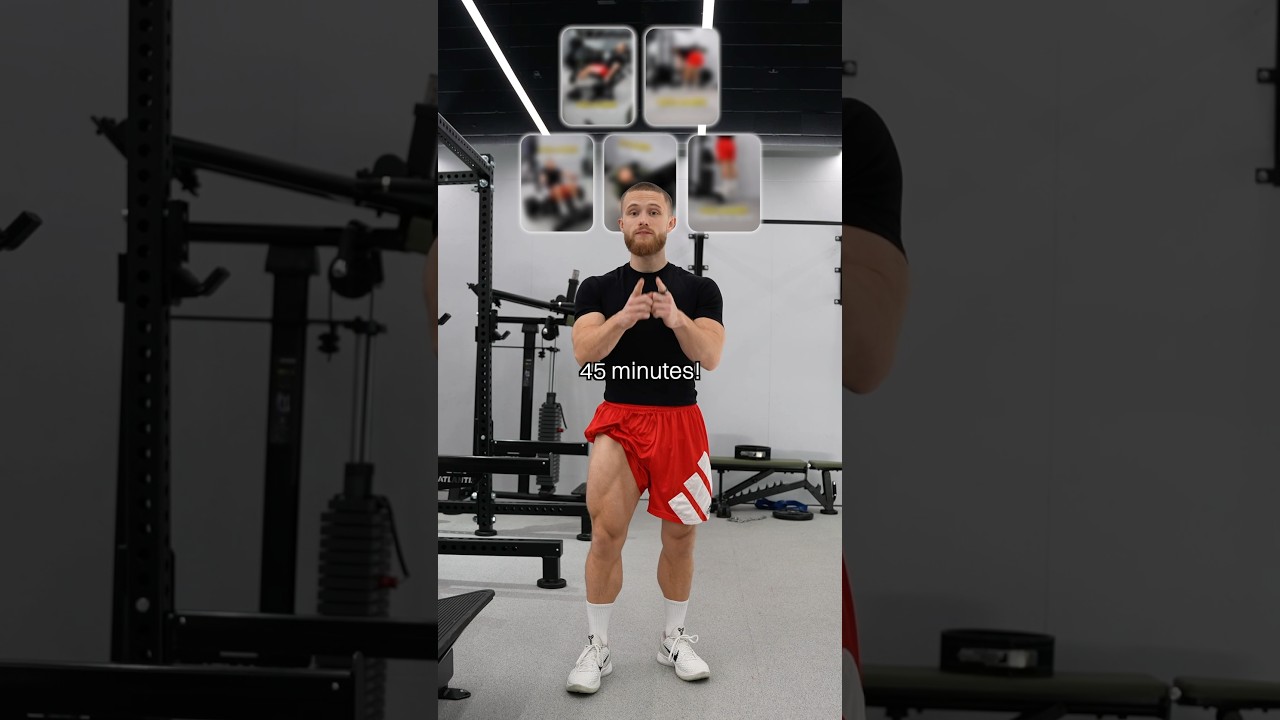
This 45-minute leg session is built around a clear idea: do fewer total sets, but make the sets count with high effort and tight technique. The workout uses two sets each of leg extensions, barbell Romanian deadlifts, and hip thrusts, then one hard set of leg press, plus two sets of standing calf raises using lengthened partials. The unique focus is on stability, stretch, and controlled “near-failure” effort, especially stopping when form would break down. This approach can fit busy schedules while still targeting quads, hamstrings, glutes, and calves.
Why this 45-minute leg plan matters for health
Strong legs support daily function, not just gym goals.
Leg strength and muscle can help with everyday tasks like climbing stairs, carrying groceries, and getting up from a chair. A shorter workout can also be easier to do consistently, which often matters more than having a “perfect” plan.
This routine’s distinctive angle is efficiency through low volume, high intensity, with careful attention to stability and range of motion. It is not a long list of exercises, it is a short list done with intent.
Did you know? The Physical Activity Guidelines for AmericansTrusted Source recommend muscle-strengthening activities at least 2 days per week, because strength supports health across the lifespan.
The workout structure: low volume, high intensity
The session fits into about 45 minutes and follows a simple order: quads, hamstrings, glutes, then a hard compound finisher, then calves.
Pro Tip: If you are short on time, keep rest periods honest. Start with 90 to 150 seconds for big lifts (RDLs, hip thrusts, leg press) and 60 to 90 seconds for isolation work (extensions, calves), then adjust based on form.
Form cues that make each set count
Good form is not about looking perfect, it is about keeping tension where you want it.
Leg extensions: stability plus stretch
Leaning the seat back slightly can increase the quad stretch, and pulling down into the seat reduces extra movement at the hips. That stability makes it easier to “find” your quads and squeeze them through the rep.
Romanian deadlifts: hinge, midfoot bar path, flat back
The key insight is the bar traveling straight down over midfoot while the hips move back. You are not trying to touch the floor, you are trying to load the hamstrings in a controlled hinge. If your back starts rounding, the set has already drifted away from its purpose.
Important: If you have a history of low back pain, talk with a qualified clinician or physical therapist before pushing RDLs close to failure, and consider coaching for hinge mechanics.
How to use “failure” without turning it into risk
Training to failure can be a tool, but it is not a license to break form.
The speaker draws a clear line on leg press: you do not need to go to the point where you actually drop the plates. Instead, stop when you are confident you cannot get another rep with good form. This “technical failure” approach often matches what many strength coaches use in practice.
What the research shows: Position statements from the American College of Sports MedicineTrusted Source support progressive overload and working at sufficiently challenging intensities for strength gains, while emphasizing safe technique and appropriate progression.
Q: Is one hard set of leg press really enough?
A: For some people, one very hard, well-executed set can be a useful finisher, especially after your quads, hamstrings, and glutes are already fatigued from earlier work. The practical test is whether you can recover well and progress over time without joint irritation.
Jordan Lee, MS, CSCS
Key Takeaways
Frequently Asked Questions
- How often can I do this 45-minute leg workout?
- Many people place a hard leg day 1 to 2 times per week, depending on recovery, soreness, and overall training load. If performance drops or joints feel irritated, increasing rest days or reducing failure work may help.
- What are “lengthened partials” for calves?
- Lengthened partials are shorter-range reps focused near the stretched, bottom position rather than full reps through the entire range. The idea is to keep tension where the calf muscle is lengthened, while still using controlled movement.
- Should beginners train to failure on these exercises?
- Beginners often benefit from stopping a little short of failure while they learn stable technique and consistent range of motion. If you are unsure, consider working with a qualified trainer and using “leave 1 to 3 reps in reserve” as a starting point.
Get Evidence-Based Health Tips
Join readers getting weekly insights on health, nutrition, and wellness. No spam, ever.
No spam. Unsubscribe anytime.