ADHD Focus Tools, Structure, Sleep, and Meds Explained

Summary
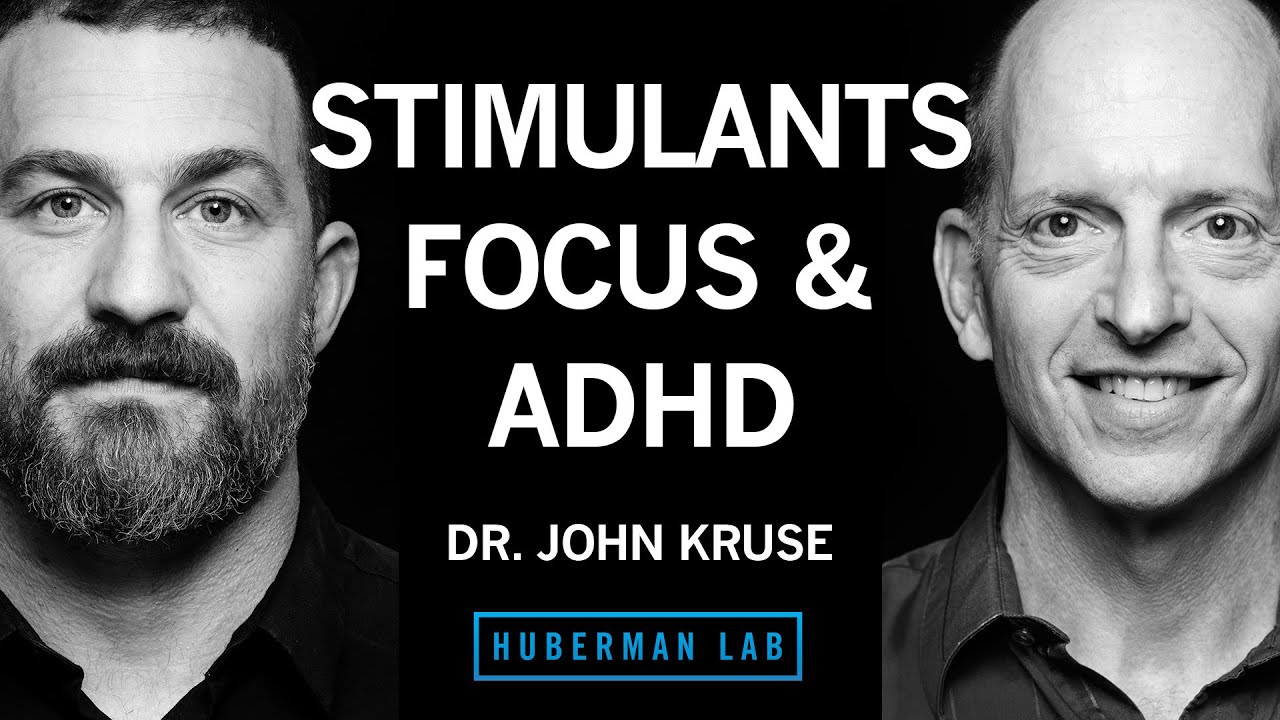
ADHD is often misunderstood as a simple “attention deficit,” but this video’s core framing is different: it is mainly a **control-of-attention** problem, shaped by genetics and the environment. Dr. John Kruse emphasizes “Goldilocks structure,” interest-driven motivation, and the way modern life can train all of us toward more distractibility. He also highlights under-discussed risks, including accidents and impulsivity, and offers a practical toolkit: build external structure, protect sleep timing, reduce attention fragmentation, and consider medications thoughtfully with a clinician.
A surprising ADHD fact: the stakes can be life and death
A child with ADHD may have a life expectancy about 10 years shorter than peers.
That single line from the discussion changes the tone of the whole topic. ADHD is often treated like a quirky personality trait, a punchline about being late, losing keys, or chasing “squirrels.” The video pushes back hard on that caricature.
The argument is not that ADHD automatically causes tragedy. It is that ADHD can increase exposure to risk in ways that add up over time, especially through accidents and impulsivity. In this framing, improving focus is not only about productivity, it is also about safety, relationships, education, and long-term health.
Did you know? ADHD is associated with higher rates of unintentional injury and risky driving. Public health agencies highlight distracted driving as a major preventable cause of injury and death, and ADHD-related inattention and impulsivity can compound that risk. For background on distracted driving risks, see the CDC on distracted drivingTrusted Source.
This is why the video keeps returning to a practical question: what actually helps, in the real world, for real people, not only in a lab test.
What ADHD is (and what it is not): a control-of-attention disorder
ADHD has a formal diagnostic definition, but the video’s most useful move is separating the checklist from the lived experience.
Clinically, ADHD is defined by 18 symptoms, nine in the inattentive cluster and nine in the hyperactive-impulsive cluster. Inattention can look like losing items, forgetting to follow through, being easily distracted. Hyperactive-impulsive symptoms can look like fidgeting, blurting things out, interrupting, and restlessness. The key nuance is that these behaviors can be normal in small amounts. They become clinically relevant when they are excessive, cause distress or dysfunction, and show up across multiple areas of life.
This is also why ADHD gets questioned and stigmatized. Unlike hallucinations in schizophrenia, there is no single “pathognomonic” symptom that only appears in ADHD.
The video’s more modern framing is that ADHD is largely a problem with executive functions, including working memory, selective attention, impulse control, and emotional regulation. And the most important correction is embedded in a simple phrase: it is not a deficit of attention, it is a deficit of control over attention.
The three attention control problems highlighted
The discussion breaks attention control into three practical domains:
This is where the concept of hyperfocus fits. Many people with ADHD can focus intensely, sometimes for hours, particularly when something is highly engaging. The problem is not that focus is impossible, it is that focus is harder to steer.
Important: If attention problems begin suddenly, worsen rapidly, or come with symptoms like severe sleep disruption, mania, substance use changes, or depression with suicidal thoughts, it is important to seek professional evaluation. Attention symptoms can overlap with many health conditions.
The “Goldilocks” model: structure vs demands in real life
One of the most distinctive perspectives in the video is a “both-and” model. ADHD is strongly biological and strongly shaped by environment.
Genetically, ADHD has high heritability, often described around 0.8, which is in the same ballpark as traits like height, and comparable to other highly heritable psychiatric conditions. But the discussion insists that genes are not destiny, because you are not just a brain, you are a brain interacting with the world.
Here is the practical model used:
The ADHD brain is described as less able to generate internal structure reliably, so it relies more on “optimal structure” in the outside world.
A workplace can provide that structure without you noticing it. A start time. Colleagues working nearby. Natural check-ins. Clear lunch breaks. A shared rhythm.
Home can strip much of that away. At the same time, home can increase demands: children, partners sharing space, more distractions, more self-management.
This is why the video frames work-from-home and lockdown periods as a “perfect storm”: structure decreased while demands increased. That combination can make many people feel more ADHD-like, even if they never had childhood ADHD.
Before vs After: how environment can change symptoms
Before (high external structure):
After (low external structure):
This comparison is not meant to excuse every struggle. It is meant to show why “try harder” is often the wrong advice.
Interest-driven vs importance-driven, why motivation feels different
A core “aha” moment in the video is the contrast between importance-driven and interest-driven brains.
In the importance-driven mode, you do the boring thing because it matters. You pay taxes because the consequences are real. You move your car because you will get a ticket. You follow through because it is important.
In the interest-driven mode, importance is not absent, but it is weaker as a motivator. Interest, novelty, urgency, and emotional salience drive action more reliably.
This perspective also explains why ADHD can look confusing from the outside. Someone may be unable to finish a simple form but can spend hours building a complex project, coding, gaming, or researching a niche topic.
It also reframes career paths. The video challenges the cultural ideal of a single, linear 50-year career. For some people with ADHD, a better fit may be multiple careers, or repeated reinvention, especially when novelty and learning are built into the work.
Parenting is also discussed through this lens. Some clinicians first noticed adult ADHD when parents of children with ADHD repeatedly arrived late, forgot prescriptions, or struggled with consistency. Family-based training can help not only the child but the whole household build more predictable routines.
Pro Tip: If your motivation is interest-driven, do not wait to “feel like it.” Build a system that makes the first 5 minutes easy, because starting is often the biggest barrier.
Is social media “giving people ADHD” or training attention away?
The video takes a middle path that feels both realistic and uncomfortable.
It does not claim social media literally causes ADHD in the genetic, neurodevelopmental sense. But it does argue that heavy immersion in social media can train attention in ways that resemble ADHD, especially by increasing sensitivity to interruptions.
The key mechanism described is practice. If your day is filled with constant novelty, constant switching, and constant engineered attention capture, you may become more reactive to new stimuli. Sustained attention can feel harder because your brain has been trained to expect interruption.
At the same time, the video acknowledges trade-offs. Some people become faster at switching tasks or scanning for information. That is not always a net benefit, but it is not purely negative.
This leads to a broader thesis: we are living in an “attention deficit world,” where many people without ADHD are becoming more ADHD-like in their attention habits.
What the research shows: Frequent media multitasking is associated with poorer sustained attention and increased distractibility in multiple studies, although causality is complex. For an overview of how digital habits can shape attention, see the APA discussion of multitasking and attentionTrusted Source.
A practical takeaway from the conversation is that you may not be able to out-willpower an environment that is designed to interrupt you. You may need barriers.
Behavioral tools that match the ADHD brain (CBT, scheduling, triage)
Behavioral tools are not presented as “soft alternatives” to medication. They are presented as core infrastructure.
A major emphasis is cognitive behavioral therapy (CBT) adapted for ADHD. Traditional CBT can be a poor fit because it often requires repetitive homework and sustained self-monitoring, exactly what ADHD makes hard. But specialized CBT approaches for ADHD have been developed to match those barriers.
The heart of the approach in the video is not exotic. It is almost boring, which is exactly why it works.
The scheduling plus task-list system (the core behavioral scaffold)
This approach has two pillars: a daily schedule and a single consolidated task list.
The video calls out a specific ADHD trap: doing small, satisfying tasks first because they are easier to complete, even when they are not the most important. You get the reward of crossing something off, but the critical tasks remain untouched.
How to build an ADHD-friendly daily plan (step-by-step)
Pick 2 to 4 fixed anchors. Examples include wake time, first work block, lunch, and bedtime. Anchors reduce decision fatigue.
Write one consolidated list. Put everything in one place, even if it is messy at first. The goal is visibility.
Sort into A, B, and C. Keep it simple. Overly complex prioritization systems often collapse under stress.
Schedule your A tasks into actual time blocks. If it is not on the calendar, it tends to become “not now.”
Plan for distractions instead of pretending they will not happen. Build short buffer blocks so one interruption does not destroy the whole day.
Short systems beat perfect systems.
Brain training games and neurofeedback: cautious optimism, limited real-world proof
The video discusses an FDA-approved video game-based intervention for ADHD and notes a critical nuance: FDA approval for devices is not the same as FDA approval for medications. It often means safety and some evidence of benefit, not definitive real-world symptom improvement.
The key critique is transfer. Many programs show that you get better at the game, and you get better at tasks that look like the game. But data showing broad, day-to-day improvements in ADHD functioning is limited.
Neurofeedback is treated similarly. The discussion notes that many people spend large amounts of money out of pocket, and the evidence base has been mixed, including recent reviews questioning the size and reliability of benefits.
If you are considering these tools, a practical question to ask is: what is the measurable outcome you care about, and how will you track it?
Resource callout: »MORE: Build a “focus friction” plan. List your top 3 distraction sources, then add one barrier for each (app blocker, separate device, locked box, or scheduled access window).
Sleep timing and circadian rhythm, the underused ADHD lever
One of the most unique contributions in the video is the emphasis on when you sleep, not only how much you sleep.
The discussion argues that sleep timing has been known for decades to matter for restorative sleep and circadian alignment, yet most public messaging focuses only on duration.
This matters in ADHD because there is a strong tendency toward being a “night owl,” a later chronotype (the timing preference of your internal clock). The video also notes that genetic markers related to sleep timing are overrepresented in ADHD populations.
There is also a behavioral loop: procrastination can push work into late hours, and late hours can feel easier because there are fewer interruptions. That can reinforce a delayed schedule.
The practical stance is flexible: if you can consistently sleep from 2 a.m. to 10 a.m. and your life supports it, consistency may matter more than matching a cultural norm.
Circadian rhythm as a possible root contributor
A striking idea raised is that ADHD, for some people, may be closely tied to circadian misalignment. A research group is mentioned as proposing ADHD as primarily a circadian disruption problem.
The video also references studies where bright light exposure in the morning improved ADHD symptoms even in people without seasonal depression.
Morning light is a well-established circadian cue. For background on how light anchors circadian timing, see the NIH overview of circadian rhythmsTrusted Source.
This is not presented as a replacement for other treatments. It is presented as an underused lever that may amplify everything else.
Expert Q&A
Q: If I get 8 hours, does it matter when I sleep?
A: This perspective says yes, timing can matter. Sleeping 8 hours at a wildly different time on weekends may feel less restorative for some people, especially if it shifts your body clock.
Consistency can reduce the “social jet lag” effect, where your brain and body feel like they are in a different time zone. If you suspect circadian misalignment, consider discussing sleep timing, light exposure, and medication timing with a clinician.
Dr. John Kruse, MD-PhD (psychiatrist), as discussed in the video
Medication trade-offs: stimulants, “smoothness,” and drug holidays
Medication is treated as a legitimate tool, not a moral failing. But it is also treated as a trade-off.
The video discusses a range of commonly used ADHD medications, including stimulant medications (amphetamine and methylphenidate based) and non-stimulant options (atomoxetine, bupropion, and others). It also touches on how some people use caffeine, and how timing matters.
A key clinical theme is that medication choice should match the person’s day, their side effect profile, and their risk factors.
Immediate-release vs extended-release: flexibility vs stability
Immediate-release medications can feel clear and controllable. They often work quickly, and you can time them around specific demands.
That flexibility can be a real advantage. If you forget a morning dose but need focus for a late afternoon presentation, a short-acting option may still be useful without necessarily disrupting sleep.
But the downside is the “off” period. Many people experience a noticeable comedown, which may include fatigue, irritability, tearfulness, or a mood crash. Even if the medication was not perceived as mood-elevating, the contrast can feel dramatic.
Extended-release medications often have a slower onset and a smoother offset. That can reduce the crash, but it can also make the benefits feel less obvious to the person taking it.
“Drug holidays”: what the video emphasizes
The discussion highlights how common the advice has been to take breaks from stimulants, especially in children.
One reason is growth suppression. Evidence suggests stimulant treatment during growth years may be associated with a small average height difference, and longer breaks (for example, months) may reduce that effect in some children.
However, the video notes limited rigorous evidence that weekend-only breaks reduce addiction risk or tolerance. It also points out a modern reality: weekends are not always low-demand anymore, especially for children with activities that require focus and emotional regulation.
If you are considering medication breaks, it is worth discussing the goal of the break with the prescribing clinician. Is it for appetite, sleep, growth, side effects, or reassessment of need?
Important: Do not change prescribed stimulant dosing schedules abruptly without medical guidance. Some people experience significant rebound symptoms or functional impairment when medication is stopped suddenly.
Why Vyvanse is described as “smooth”
A distinctive part of the video is the explanation of why lisdexamfetamine (Vyvanse) often feels smoother to patients.
Vyvanse is a prodrug. It links dextroamphetamine to the amino acid lysine. The body must cleave that link to release active dextroamphetamine, and red blood cells play a role in that conversion. The practical result is a slower, more even release curve for many people.
It was originally designed to be less attractive for misuse via snorting or injection, because the prodrug is inactive until metabolized. In lived experience, the slower ramp-up and slower ramp-down can feel less jarring.
Not everyone prefers that. Some people feel it comes on too slowly, or they miss the clear “on” signal.
Nontraditional options discussed: guanfacine and modafinil
Two medications discussed in detail are not the typical first things people think of for ADHD: guanfacine and modafinil/armodafinil.
They are presented as options with specific profiles, not as universal solutions.
Guanfacine: an alpha-2 agonist with a slower build
Guanfacine and clonidine are alpha-2 adrenergic agonists, originally used as blood pressure medications. The video explains why guanfacine is often preferred over clonidine in ADHD contexts: clonidine can come off receptors quickly, and abrupt stopping can cause rebound high blood pressure. Guanfacine tends to leave receptors more slowly, and rebound hypertension appears less common.
The discussion also highlights research suggesting guanfacine may strengthen synaptic functioning in prefrontal circuits, potentially involving modulation of glutamate signaling (including NMDA-related pathways). The practical implication is that guanfacine may take weeks to show benefit.
Sedation is common. Many people take it at night.
This leads to a real-world paradox: a sedating nighttime medication can still help daytime ADHD symptoms if it improves regulation over time, sleep quality, or prefrontal circuit function.
Modafinil and armodafinil: alertness without the “revved up” feeling for many
Modafinil (Provigil) and armodafinil (Nuvigil) are discussed as wakefulness-promoting agents, originally approved for narcolepsy, shift work disorder, and sleepiness from sleep apnea.
The video traces an earlier view that modafinil worked via the orexin system (a wakefulness network often associated with stable arousal), and notes that some modern literature describes it as having dopaminergic effects as well.
The practical clinical description is consistent: many people feel more awake and alert without feeling as jittery as traditional stimulants. A minority feel overstimulated at first, described as feeling like “bad speed,” and then sometimes acclimate.
Because modafinil is a controlled substance but generally in a different schedule category than amphetamines, some clinicians find it simpler to prescribe, depending on jurisdiction and patient context.
What the research shows: Modafinil is effective for excessive sleepiness in conditions like narcolepsy and shift work disorder. For an overview of approved uses and safety considerations, see MedlinePlus on modafinilTrusted Source.
Time perception in ADHD, why “now vs not now” matters
The video closes with a topic that often surprises people: time perception.
A memorable phrase appears in the conversation: people without ADHD track time, people with ADHD may track “now” versus “not now.” That is not a formal diagnostic criterion, but it captures something many families recognize.
In lab studies, people with ADHD tend to be more inconsistent in estimating time intervals. The video frames this as “consistently inconsistent.” It is not always underestimation or always overestimation, it is variability.
Then there is the real world layer. If you do not notice cues, if you miss transitions, if you hyperfocus, time can disappear. If you do not experience 9:15 as “late,” you may sincerely answer “I am not late,” even while your environment disagrees.
The discussion does not provide a definitive answer about whether stimulants measurably normalize time perception in lab tasks. But it makes a practical point: time blindness can be a core functional problem, and external systems (alarms, calendars, buffers, check-ins) may be as important as medication.
Pro Tip: Build “transition alarms,” not just start alarms. A 10-minute warning before you must leave can be more effective than an alarm at the exact departure time.
Key Takeaways
Frequently Asked Questions
- Can you have ADHD if you can hyperfocus sometimes?
- Yes. This video’s framing is that ADHD is often a problem of controlling attention, not an absolute lack of attention. Hyperfocus can happen when a task is highly interesting, but shifting attention on demand may still be difficult.
- Does working from home make ADHD worse?
- It can for some people. The discussion emphasizes that home often reduces external structure while increasing demands and distractions, which can amplify ADHD symptoms or make anyone feel more distractible.
- Are brain training games proven to improve real-life ADHD symptoms?
- Evidence is mixed. Some programs can improve performance on the game and similar tasks, but the video notes limited data showing large, consistent improvements in everyday functioning.
- Why do some people describe Vyvanse as smoother than other stimulants?
- Vyvanse is a prodrug that must be converted in the body to active dextroamphetamine, which often creates a slower rise and fall in effects. That can reduce the abrupt “on/off” feeling for some people.
- Is sleep timing really as important as sleep duration for focus?
- The video argues it often is. Consistent sleep timing can support circadian rhythm alignment, and ADHD is linked with a tendency toward later chronotype, so timing and regularity may affect daytime attention.
Get Evidence-Based Health Tips
Join readers getting weekly insights on health, nutrition, and wellness. No spam, ever.
No spam. Unsubscribe anytime.