How Behavior Can Shift Gene Expression and Immunity

Summary
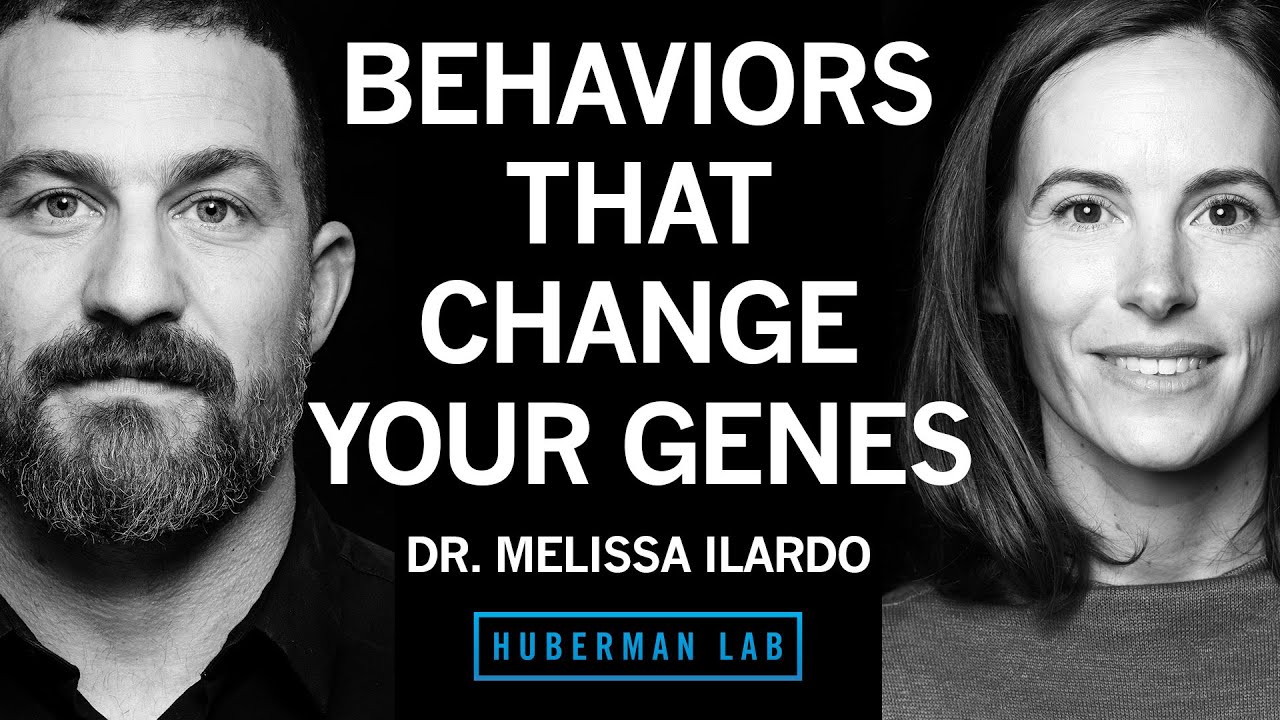
One surprising takeaway from Dr. Melissa Ilardo’s discussion is that human biology is not just “set” by DNA, it is constantly responding to environment and behavior. The conversation connects immune genetics to mate preference (including the famous sweaty T-shirt studies), explains how gene expression can shift quickly, and explores longer-term changes that can persist across generations. It also reframes evolution as “best fit,” not “most fit,” and highlights how standing genetic variation can become advantageous when environments and behaviors change.
A surprising starting point: all blue eyes trace back to one person
All humans with blue eyes likely descend from a single ancestor who first carried the genetic change that produced blue irises.
That is the kind of detail that changes how you think about genetics. It takes something that feels personal and everyday, eye color, and turns it into a story about mutation, inheritance, and selection.
This framing also quietly sets up the episode’s main theme: while some traits feel fixed, biology is more flexible than most people were taught in the classic “Mendel’s peas” version of genetics.
Eye color is a useful entry point because it illustrates two realities at once. First, some traits are strongly constrained by inherited DNA. Second, even traits that seem fixed can still shift at the edges through environment. The discussion notes that eyes can darken with sunlight exposure over time, likely due to pigmentation changes, which is a reminder that phenotype is not just “genes,” it is genes interacting with inputs.
Did you know? Even highly heritable traits can show subtle shifts over the lifespan, because pigment cells and gene regulation respond to environmental signals like light.
Genes vs gene expression: what can change quickly
A key distinction in this conversation is DNA sequence versus gene expression.
Your DNA sequence, the A, C, G, and T code, is mostly stable across your life. But what your cells do with that code changes constantly.
Gene expression is the process by which genes are turned up, turned down, or turned on and off in different tissues. The discussion highlights that this can happen on the order of minutes or hours in response to environmental stimuli. That is part of why two people with similar genetic predispositions can look or function differently depending on sleep, stress, diet, infection exposure, physical activity, and other inputs.
This is also where “nature versus nurture” becomes less of a tug-of-war and more of a partnership. The “nature” part includes inherited variants that shape baseline tendencies. The “nurture” part includes signals that tell cells which programs to run today.
A practical way to think about it
Instead of asking, “Can I change my genes?” a more useful question is often, “Can I change the output of my genes in a direction that supports health?”
Sometimes the answer is yes, at least partially.
For immune health, this matters because immune cells are built to be responsive. They change gene expression rapidly when they detect pathogens, inflammation, tissue damage, or stress hormones. This responsiveness is part of what makes the immune system powerful, and also part of what makes it vulnerable to chronic stressors.
Important: Rapid changes in gene expression are normal. If you are dealing with persistent symptoms like recurrent infections, unexplained fevers, weight loss, severe fatigue, or swollen lymph nodes, it is worth discussing with a clinician rather than assuming it is “just epigenetics.”
Epigenetics across generations: famine, trauma, and tradeoffs
The episode draws a line from everyday gene regulation to epigenetics, which refers to chemical modifications that influence gene activity without changing the underlying DNA sequence.
A common example is DNA methylation, where small chemical groups attach to DNA and affect how accessible certain genes are to the cellular machinery that reads them. These marks can be influenced by environment.
What makes this especially compelling is the idea that some epigenetic changes can be passed down. The discussion mentions observations in refugee populations, where descendants may show inherited biological signatures linked to parental trauma exposure, even if the descendants did not directly experience the original traumatic event.
The conversation also points to famine research in Dutch populations, often discussed in the context of the Dutch Hunger Winter, where prenatal exposure to famine conditions has been associated with long-term health differences in offspring, and measurable epigenetic differences decades later.
Here is the nuance that the episode emphasizes: an adaptation can be helpful in one environment and harmful in another. If a population is “tuned” epigenetically for scarcity, that tuning might be protective during famine. In an environment of abundance, the same tuning could, at least in theory, contribute to metabolic mismatch.
What the research shows: People exposed to famine in utero during the Dutch Hunger Winter showed persistent differences in DNA methylation decades later, compared with unexposed siblings, suggesting long-lasting biological embedding of early environment (PNAS summaryTrusted Source).
This does not mean fate is sealed. It means the body records information, and those records can shape physiology.
Immunity and mate choice: why smell can matter
The conversation’s most “everyday” immune lesson is also one of the weirdest: mate preference can track immune gene differences.
The immune system genes discussed here are often grouped under the major histocompatibility complex (MHC) in humans (also called HLA, human leukocyte antigens). These genes help the immune system recognize what belongs to you and what does not, including fragments of pathogens.
The claim highlighted is that, when given a choice, humans tend to be more attracted to the scent of people whose MHC genes are more different from their own. The episode references the classic “sweaty T-shirt” style experiments, where participants smelled shirts worn by others and rated attractiveness. The idea is that smell can act as a proxy for immune-system difference, which could, in principle, increase immune diversity in offspring.
This is not framed as destiny or a perfect algorithm. It is framed as a subtle bias that may influence attraction under certain conditions.
What this means for immune health, practically
Most people cannot, and should not, turn dating into a genetics lab.
But this perspective can change how you interpret the immune system. It is not just a defense system that activates when you get sick. It is also a major axis of human variation that may shape social behavior and reproduction.
It also provides a concrete example of how “genes” show up in daily life in ways people do not consciously recognize.
Expert Q&A
Q: Does choosing a partner with different immune genes guarantee healthier children?
A: No. Immune diversity can be beneficial in some contexts, but health outcomes depend on many factors, including other genes, prenatal environment, infections, nutrition, and healthcare access. The key idea is that immune gene differences may subtly influence attraction, not that they determine family health outcomes.
Melissa Ilardo, PhD (as discussed in the Huberman Lab episode)
For readers who want a deeper research anchor, the original line of work on odor preferences and MHC differences is often associated with Wedekind and colleagues, who reported associations between MHC dissimilarity and odor preference (Proceedings of the Royal Society BTrusted Source).
Hybrid vigor in a global world: resilience and new risks
The discussion introduces a concept many people intuitively understand: mixing distant genetic backgrounds can reduce the chance that two parents carry the same harmful recessive variant.
This is one reason close-relative reproduction increases risk. When two people are closely related, they share more of the same genetic variants, including potentially harmful ones. That increases the odds that a child inherits two copies of a deleterious variant.
In contrast, pairing with someone genetically more distant can “dilute” shared recessive risk. This is sometimes colloquially described as hybrid vigor, although human genetics is more complex than plant or livestock breeding analogies.
But the episode adds an important twist: globalization can also create new combinations of variants that have never co-occurred before. That can be beneficial, neutral, or sometimes problematic. The conversation notes that new disease risks can emerge when genetic variants that evolved in different contexts meet in the same genome.
This is a very specific, modern framing. It treats evolution as ongoing, not ancient history.
Pro Tip: If you have a strong family history of a genetic condition, or you are planning a pregnancy and are concerned about inherited risks, consider discussing carrier screening with a qualified healthcare professional or genetic counselor.
Evolution is “best fit,” not “most fit”
A central philosophical correction in the episode is the rejection of evolution-as-a-ladder.
The familiar image of a line of primates marching toward modern humans suggests a trajectory and a pinnacle. This view is misleading.
The alternative framing is simple: evolution favors the best fit for a particular environment, not the strongest, smartest, or most morally worthy. Fitness in evolutionary biology is about reproductive success in context.
This matters for immune health because immune traits are deeply contextual. A gene variant that protects against one pathogen might increase vulnerability to another. A robust inflammatory response might help you survive infection, but it might also raise risk for inflammatory disease if inflammation becomes chronic.
The conversation also highlights an asymmetry that is easy to miss: it can take many generations to build a complex adaptation, but relatively few to lose it. Many mutations are harmful, and many never make it to birth because they disrupt development early.
That is one reason major beneficial adaptations are rare. They often rely on either a very specific new mutation that happens to help, or on pre-existing variation that becomes useful when the environment changes.
Fast evolution when variation is already there
The episode distinguishes between three time scales:
What is striking here is the claim that some human evolutionary changes may occur faster than previously assumed, possibly within 1,000 to 2,000 years in certain contexts.
That is still a long time in a human life, but it is short in evolutionary terms.
The mechanism that makes “fast” evolution plausible is often standing variation, meaning genetic differences already present in a population. When the environment changes, those existing variants can suddenly matter a lot. Individuals carrying beneficial variants may have more surviving offspring, and the variant frequency can rise.
The episode uses high-altitude adaptation as an example, including the idea that Tibetan high-altitude adaptation involves genetic material introgressed from Denisovans, an archaic hominin group. In other words, Homo sapiens did not only adapt by waiting for brand-new mutations. Sometimes we acquired advantageous variants through interbreeding with other hominin populations.
For readers who want an accessible scientific overview of Denisovan introgression and high-altitude adaptation, a widely cited finding is that a Denisovan-like EPAS1 haplotype is associated with Tibetan high-altitude adaptation (NatureTrusted Source).
This is also where the episode’s tone becomes motivating: human biology is not static, and human populations are still changing.
Humans as occasional underwater mammals: the dive reflex idea
One of the most distinctive perspectives in this episode is the invitation to rethink what kind of animal a human can be.
Most people do not think of humans as an underwater species. The discussion challenges that assumption by pointing out that some human groups, historically and today, spend a lot of time underwater.
The episode introduces the mammalian dive reflex, a set of physiological responses to breath-holding and cold water exposure, often discussed in the context of free diving. While the transcript excerpt you provided only begins to set up the free-diver story, it clearly frames the dive reflex as a mechanism that can shift physiology in meaningful ways.
Even without turning this into a how-to, the key health idea is that certain extreme or repeated behaviors can act as strong biological signals. If a behavior is practiced across generations in a population, and if some individuals have genetic variants that make them better at it, selection can favor those variants.
This connects to immune health in a less obvious way: oxygen availability, stress responses, and inflammation are tightly linked. Hypoxia (low oxygen), cold exposure, and stress hormones can all influence immune signaling. The body treats these as meaningful inputs.
Important: Breath-hold training and cold water exposure can be risky, especially for people with heart conditions, fainting risk, panic disorders, or a history of seizures. If you choose to experiment, do it conservatively, do not do it alone, and consider medical guidance.
The episode also floats a broader hypothesis: coastal populations, or even populations living near river systems, may be more likely to carry genetic variation that enables repeated diving behavior. It cites skeletal findings near river systems that suggest diving may have occurred in multiple places, not only coasts.
This is the “unique perspective” piece: the conversation is not only about genes inside bodies, it is about how geography and cultural practices can shape selection pressures.
Practical takeaways: behaviors that may shape immune-relevant biology
The episode’s overall message is action-oriented, but it does not reduce genetics to a checklist.
Instead, it encourages a more strategic mindset: focus on behaviors that send strong, consistent signals to your biology.
Below are practical, everyday-aligned takeaways that match the spirit of the discussion, while staying medically neutral.
1) Treat your environment like a biological input
Your immune system is constantly sampling the world.
That includes pathogens, but also light, temperature, sleep timing, and stress.
Short version: your immune system is not only responding to germs, it is responding to your life.
2) Remember that “adaptive” depends on context
A recurring theme is tradeoffs.
A trait that helps in famine might hurt in abundance. A strong inflammatory response might help in acute infection but contribute to chronic disease risk if it stays elevated.
This is why it can be helpful to avoid extreme interpretations like “inflammation is always bad” or “stress is always bad.” The body is built for pulses. Problems often arise with chronicity.
3) Use the “standing variation” idea to stay humble and curious
You might not need a new mutation to change your health trajectory.
You may already carry variants that respond especially well, or poorly, to certain environments. That is one reason individualized responses to diet, exercise, altitude, heat, cold, and sleep schedules can vary so much.
If you are experimenting with lifestyle changes, consider tracking outcomes that matter, such as energy, mood, resting heart rate, frequency of infections, or lab markers your clinician recommends.
»MORE: Consider creating a simple two-week “input-output” log. Track sleep timing, stress level, training, and illness symptoms, then review patterns with a clinician if you are dealing with recurrent issues.
Gene editing and ethics: “possible” is not the same as “simple”
Toward the end of the conversation, the discussion turns to gene editing and the ethical landscape.
The key point is not hype, it is reality with caution: gene editing in humans is becoming possible and is already happening in certain contexts.
That does not mean it is broadly safe, widely available, or ethically settled.
From an immune health perspective, gene editing raises complicated questions. Editing immune genes could, in theory, influence infection resistance, autoimmunity risk, or cancer surveillance. But immune pathways are interconnected, and changing one component can have unintended consequences.
This is also where the episode’s “X-Men” framing becomes useful as a warning. Real genetics is rarely a single mutation that gives a clean superpower. More often, it is networks of tradeoffs.
If you are considering any form of genetic testing or emerging therapies, it is wise to involve qualified medical professionals and, when appropriate, genetic counselors.
Key Takeaways
Frequently Asked Questions
- Can you actually change your genes with behavior?
- You generally cannot change your DNA sequence through lifestyle, but you can influence gene expression, meaning how strongly certain genes are activated in certain tissues. Sleep, stress, infection exposure, and other environmental inputs can shift gene activity over minutes to hours.
- Is epigenetic inheritance real in humans?
- Some studies suggest that certain epigenetic marks associated with early-life exposures, like famine, can persist for decades and may be detectable across generations. This is an active research area, and findings do not mean outcomes are fixed or inevitable.
- Do humans really choose partners based on immune system differences?
- Research suggests odor preferences can correlate with differences in MHC genes, which are important for immune function. This does not determine who someone will date or marry, but it may be one subtle factor among many.
- Does mixing ancestry always improve health in children?
- Not always. Greater genetic diversity can reduce the chance of inheriting two copies of certain recessive harmful variants, but health outcomes depend on many genes and environmental factors. New combinations can also bring unexpected risks.
- Is breath-hold diving or cold water exposure safe for everyone?
- No. Breath-holding and cold exposure can trigger strong reflexes and may be dangerous for people with certain medical conditions or fainting risk. If you want to explore these practices, consider medical guidance and never do breath-hold training alone.
Get Evidence-Based Health Tips
Join readers getting weekly insights on health, nutrition, and wellness. No spam, ever.
No spam. Unsubscribe anytime.