Brooklyn 99 Medical Scenes, a Doctor’s Reality Check
Summary
Comedy medical scenes can be funny, but they also shape what people think is normal or safe. In this Brooklyn 99 reaction, the clinician’s lens is practical and prevention-focused, correcting myths about vasectomy, “internal bleeding,” quarantine for mumps, and why sitting too long can raise clot risk. He also calls out what TV skips, like vaccination, masks, and realistic recovery after fractures. This article unpacks those points in plain language, adds research context, and highlights what should prompt urgent medical care.
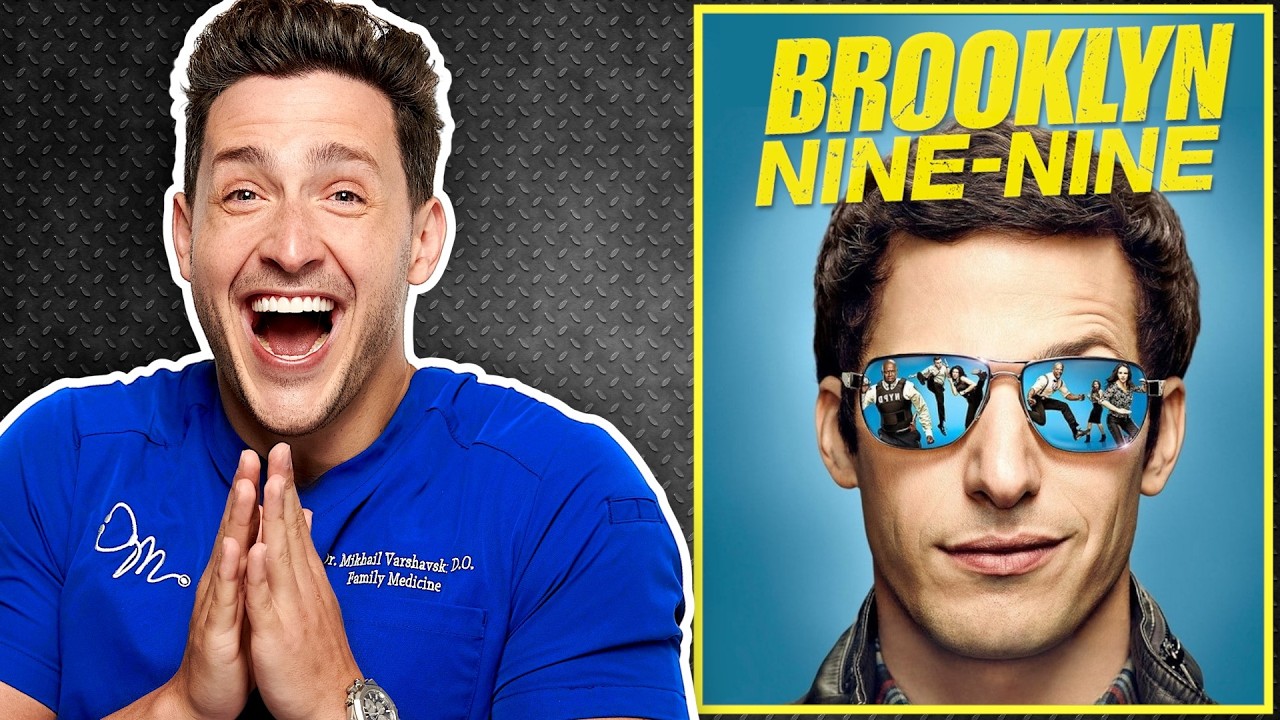
The most important takeaway from this reaction is simple: jokes land harder when you know what the body actually does, and health decisions get safer when you ignore TV logic.
This Brooklyn 99 breakdown uses comedy as a teaching tool. The clinician corrects myths that can quietly influence real choices, like what a vasectomy changes, why “internal bleeding” is not a punchline, and how contagious illness is handled outside a script.
What makes this perspective feel uniquely useful is the constant return to basic principles, anatomy, mechanism of injury, and prevention. The point is not to ruin the joke, it is to keep viewers from walking away with the wrong mental model.
The big takeaway, comedy is fun, physiology still wins
TV medicine often compresses time, skips follow-up, and swaps nuance for a one-liner.
In the reaction, the clinician repeatedly highlights the gap between what is funny and what is medically meaningful. A key example is how characters bounce back after injuries that would typically require careful monitoring, imaging, pain control, and restricted activity. Another is how contagious diseases become a plot device without showing the unglamorous parts, like vaccination status, reporting requirements, or isolation logistics.
This framing matters for men’s health because a lot of high-impact outcomes are shaped by everyday decisions: whether you get vaccinated, whether you ignore warning signs after a crash, whether you sit for 10 hours straight, whether you treat a “diet challenge” as a health plan.
Pro Tip: If a TV scene makes an injury look minor but it involved high speed impact, severe pain, confusion, heavy bleeding, or fainting, treat it as a reason to seek urgent evaluation, not reassurance.
Vasectomy myths, what it is, what it is not
The show leans into the classic misunderstanding: a vasectomy equals “chopping off” something important.
The clinician corrects it directly. A vasectomy does not remove the penis or testicles. It is a procedure that blocks the vas deferens, the tubes that carry sperm, so sperm do not enter the semen that is ejaculated.
He also adds a practical counseling point that many people do not hear in casual conversation: vasectomies can be reversible, but they should be approached as irreversible so people do not do them “willy-nilly.” That is less a moral judgment and more a realistic way to frame decision-making, because reversals can be complex, expensive, and not always successful.
What changes after a vasectomy, and what does not
A lot of anxiety comes from mixing up sperm production with masculinity, hormones, and sexual function.
Important: If you are considering a vasectomy, ask your clinician about permanence, follow-up semen testing, and what to do until sterility is confirmed. Do not rely on TV timelines.
From a research standpoint, vasectomy is widely used and generally considered safe, with counseling focused on permanence and follow-up. For patient-facing overviews, see the American Urological Association vasectomy informationTrusted Source and the CDC contraception guidanceTrusted Source.
Sitting, “anal canyon,” and why movement breaks matter
A running gag in the episode is a character describing an “anal canyon.” The clinician translates the vibe into something more plausible, pointing toward a pilonidal cyst (he also jokes about a “Jeep Wrangler cyst,” a nickname sometimes used historically for pilonidal disease in people who sit for long periods).
Then he pivots to a broader point: sitting all day is not harmless.
He rejects the exaggerated claim that sitting is “as bad as smoking,” but he still calls it “not good for you,” especially for really extended periods. His reasoning is straightforward and clinically oriented: prolonged sitting can contribute to blood pooling and stagnation, higher clot risk, and overall deconditioning. The practical fix is also simple, frequent breaks and movement to circulate blood and support lymphatic flow.
Research supports the general idea that long sedentary time is associated with worse cardiometabolic outcomes, even if the “new smoking” slogan oversimplifies. Public health guidance commonly encourages breaking up sitting time, and the CDC physical activity recommendationsTrusted Source emphasize regular movement for health.
How to build movement breaks into a desk day
This is where the reaction’s advice becomes usable. Not heroic workouts, just circulation and consistency.
Set a “stand and move” trigger every 30 to 60 minutes. A phone alarm, smartwatch reminder, or calendar pop-up works. The goal is to interrupt long sitting bouts, not to hit a perfect step count.
Use 2 minutes for circulation, not chores. Walk a loop, do a few bodyweight squats to a chair, or march in place while breathing steadily. If you only stand at your desk and keep scrolling, you may not get much of the circulation benefit.
Pair movement with a routine you already do. Stand when you take calls, refill water, or after sending a batch of emails. Habit stacking is often more reliable than motivation.
If you have clot risk factors, personalize the plan. Recent surgery, long flights, a history of clots, certain medications, and some chronic conditions can change the risk picture. A clinician can help you decide what is appropriate.
Did you know? In everyday language, “blood clots” often refers to deep vein thrombosis (DVT), which can sometimes travel to the lungs and become a pulmonary embolism. Risk is not just about sitting, it is about the whole context, including recent surgery, immobility, and personal history. For an overview, see CDC information on blood clotsTrusted Source.
Mumps on TV, quarantine, chills, and the vaccine gap
The show introduces “the mumps” as a plot problem, swollen glands and quarantine.
The clinician’s reaction focuses on what is missing: why were the characters not vaccinated, and why are they not shown wearing masks if they are contagious? He also notes that mumps is typically self-resolving with supportive care, and that being young and healthy can help, but contagiousness changes the public health response.
This is a distinctly prevention-forward lens. Rather than obsessing over rare complications, the emphasis is on basic containment, isolation, and vaccination.
What mumps looks like in real life
Mumps is a viral illness known for parotitis (swollen parotid salivary glands), but symptoms can vary.
The CDC mumps overviewTrusted Source notes that symptoms may include swollen salivary glands, fever, headache, muscle aches, tiredness, and loss of appetite. Some people have mild symptoms, and some have none.
The reaction also highlights chills in a separate scene and explains them in a way that is unusually clear for a comedy review: chills can be part of the body building a fever. Shivering generates heat, raising body temperature. When fever comes down, sweating can happen, and medications like acetaminophen or ibuprofen may reduce fever for comfort, when appropriate.
What the research shows: Vaccination has dramatically reduced mumps incidence, but outbreaks still occur, particularly in close-contact settings. The CDC MMR vaccine informationTrusted Source explains how the vaccine helps prevent measles, mumps, and rubella and why some adults may need updated guidance based on risk.
Quarantine and reporting, why the show’s line is not totally off
The episode mentions quarantine for “n days” and suggests reporting to the Department of Health.
The exact isolation recommendations can vary depending on local public health rules and the situation, but the concept is real: contagious diseases can involve isolation guidance and public health coordination. In real life, you would not guess your own isolation period from a sitcom, you would follow clinician and public health instructions.
Q: If mumps is usually self-resolving, why do isolation and vaccines matter so much?
A: The main issue is not only how sick one person gets, it is how easily the virus spreads to others, including people at higher risk of complications. Isolation reduces transmission during the contagious period, and vaccination lowers the chance of infection and outbreaks.
If you think you were exposed or you have swelling near the jaw with fever, contact a clinician promptly for guidance on testing, isolation, and protecting household members.
Health Educator Review, MPH
Injuries and reality checks, internal bleeding, burns, and fractures
Several scenes revolve around injury logic that sounds plausible until you slow down.
The clinician uses one of the most useful emergency medicine principles for laypeople: mechanism of injury matters. Getting hit by a car is not the same as tripping over a curb, even if you feel “fine” at first.
“All my bleeding was internal, that’s where the blood is supposed to be”
This line is funny because it is absurd, but it also mirrors a real misunderstanding.
Blood belongs inside blood vessels, arteries, veins, and capillaries, not “floating around” in body cavities. Internal bleeding can occur in the abdomen, chest, brain, or around organs and it can be life-threatening. The clinician’s phrasing is memorable: there are “levels to internal,” and the safe place is inside vessels.
If someone has internal bleeding, symptoms can be subtle early on, especially if adrenaline is high. Concerning signs include worsening pain, dizziness, fainting, confusion, shortness of breath, vomiting blood, black stools, or a rapidly enlarging bruise. After a significant crash, clinicians may use vitals, physical exam, and imaging to evaluate for internal injury.
Important: Seek urgent care after major trauma (like being hit by a car), especially if there is severe pain, fainting, confusion, weakness, or trouble breathing, even if you can still walk.
The hot drink burn scene, why “it’s just tea” can still injure
The episode includes a scald injury, framed as a “second degree crotch burn.” The clinician connects it to real-world cases where hot beverages spill and cause significant burns.
Scalds can cause superficial burns or deeper partial-thickness burns depending on temperature and contact time. Genital and inner-thigh skin can be particularly sensitive. If a burn is blistering, very painful, involves a large area, or affects the face, hands, feet, groin, or major joints, it is worth getting medical advice promptly.
For burn first-aid basics, the American Burn AssociationTrusted Source and NIH MedlinePlus burn guidanceTrusted Source provide practical overviews.
Butt cast and hip fracture, the recovery mismatch
A character appears with a “butt cast” after being shot, and the clinician questions the realism, including why the abdomen is taped if the injury was in the buttocks. He also notes that if someone truly fractured a hip, they often should not be walking around normally and may be non-weight-bearing depending on the injury and treatment plan.
This is a recurring TV issue: fractures look like an inconvenience rather than a major mobility and safety problem. In real life, fractures can require imaging, surgical repair, restricted weight-bearing, physical therapy, pain control, and monitoring for complications.
Organs in coolers and “PW” weapons, what’s plausible
The episode includes a serial killer storyline involving organ removal and a heart in a cooler. The clinician brings in a practical transplant reality: highly vascular organs do not last days outside the body. Many have preservation windows measured in hours.
That observation is not just trivia. It highlights how TV often ignores time constraints that drive real medical logistics.
For a general overview of organ donation and transplant processes, the U.S. government’s OrganDonor.govTrusted Source and the United Network for Organ Sharing (UNOS)Trusted Source explain how organs are matched and transported.
The episode also mentions a “portable ultrasonic weapon” that can disorient and potentially rupture an eardrum. The clinician notes that highly directional sound could cause pain and that tympanic membrane injury is not fun. While the specifics of any device can vary and claims can be exaggerated, the health concept is real: very loud sound exposure can damage hearing.
For hearing-risk basics, the CDC guidance on noise-induced hearing lossTrusted Source explains how loud sounds can harm hearing and how to reduce risk.
Health isn’t a scale number, the diet scene and better framing
A diet scene features a tiny breakfast: an orange wedge, three cashews, and a single grape. The clinician’s reaction is skeptical, calling it unnecessary for people who appear in good shape.
Then comes the more nuanced point: health is not about a number on a scale. Weight can correlate with health risk at extremes, but a “good” weight does not guarantee good health, and a restrictive plan is not automatically healthy just because it is structured.
This is a useful men’s health angle because many men oscillate between ignoring health until something breaks and jumping into extreme challenges. The reaction’s tone suggests a middle path: focus on sustainable behaviors, not performative restriction.
A more grounded way to evaluate a diet challenge
Instead of asking “Will this make me leaner fast?” the better questions are practical.
»MORE: If you want a simple self-check, create a one-week “baseline” log of sleep, steps, strength training, alcohol, and fiber intake, then change only one variable at a time. Sustainable progress is easier to spot when you do not change everything at once.
The reaction also makes a quick joke about “PFA molecules” in a plastic baggie. The science around PFAS (often called “forever chemicals”) is evolving, but it is reasonable to reduce unnecessary exposure where practical. For a balanced overview, see the U.S. EPA PFAS informationTrusted Source.
Key Takeaways
Frequently Asked Questions
- Does a vasectomy affect testosterone or erections?
- A vasectomy blocks the vas deferens and does not typically reduce testosterone, because testosterone enters the bloodstream from the testicles. Erections and orgasm are usually not affected, but individual concerns are worth discussing with a clinician.
- How often should I take breaks if I sit all day?
- Many people do well with movement breaks every 30 to 60 minutes, even if it is only 1 to 3 minutes of walking or light leg movement. If you have clot risk factors or recent surgery, ask your clinician for personalized guidance.
- If mumps is self-resolving, do I still need to stay home?
- You may, because the main goal is reducing spread to others during the contagious period. Follow advice from your clinician and local public health guidance rather than guessing based on a TV plot.
- What should I watch for after being hit by a car if I feel okay?
- Worsening pain, dizziness, fainting, confusion, shortness of breath, or new weakness can be warning signs. Because serious injuries can be delayed, it is safer to seek urgent evaluation after major trauma.
Get Evidence-Based Health Tips
Join readers getting weekly insights on health, nutrition, and wellness. No spam, ever.
No spam. Unsubscribe anytime.