Why Hip Labral Tears Hurt, And What Helps Most
Summary
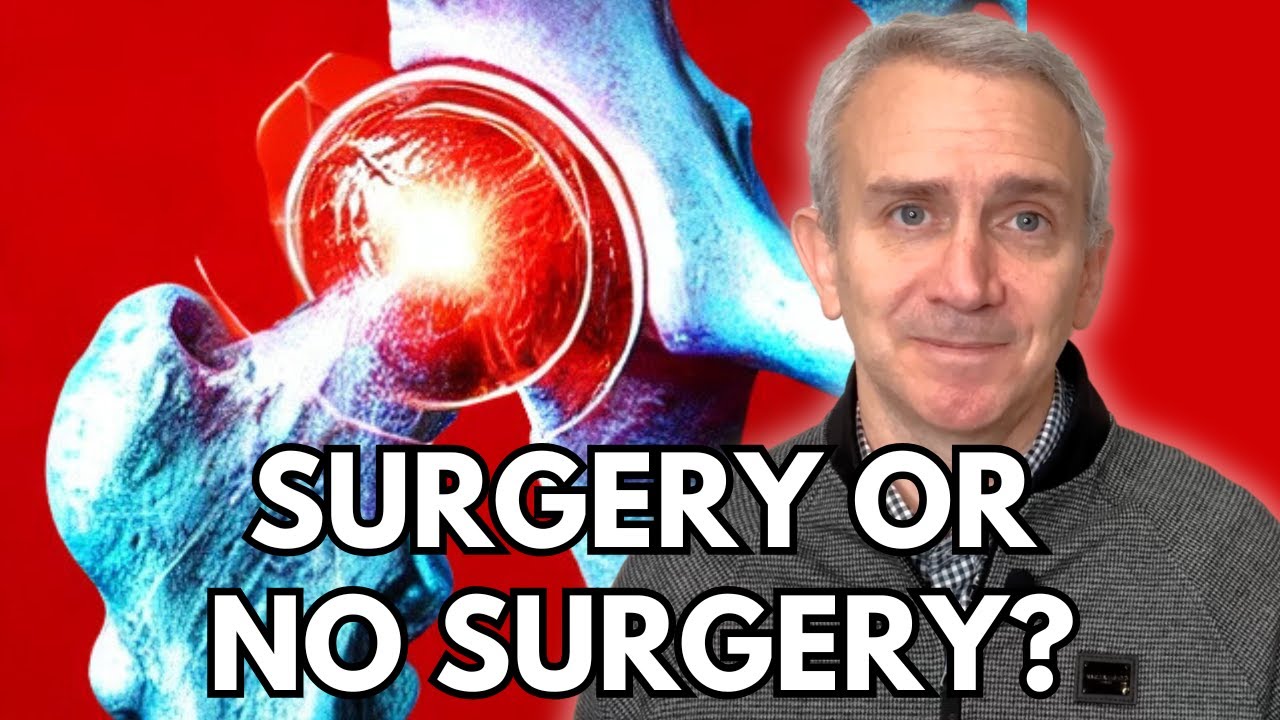
If your MRI says “labral tear,” it is easy to assume surgery is the only answer. This video’s core idea is different: the tear itself is often not the main driver of pain, inflammation is. Many people have labral tears with no symptoms, so treatment should focus on calming the inflammatory “fire,” improving mechanics, and strengthening hips and core. Options range from targeted physical therapy to image guided injections (steroid, ketorolac, viscosupplementation, PRP). Surgery can help in select cases, but arthritis and overall hip health change the decision.
Why does my hip keep hurting if the MRI “just” shows a labral tear?
“Do I need surgery because my MRI shows a hip labral tear?”
That question sits at the center of this discussion, because a labral tear sounds definitive. It sounds like a broken part that must be “fixed.” But one of the most important misconceptions to clear up is that an MRI finding and your pain level are not always the same thing.
A striking data point comes from MRI research in people who had no hip symptoms. In one study of volunteers with a mean age of 37, 69 percent of hips showed labral tears. That means labral tears can be common even in younger adults who feel fine. (This aligns with the broader reality that imaging can reveal structural changes that do not always match symptoms, a theme also seen in other joints.)
This perspective does not minimize labral tears. It reframes them.
A labral tear can absolutely be a nightmare when it becomes painful. But the presence of a tear alone does not automatically mean it is the pain generator, and it does not automatically mean surgery is required.
Did you know? MRI studies have found a high rate of labral tears in people without hip pain. One volunteer study reported tears in 69 percent of asymptomatic hips, even with a relatively young average age.
The key idea: it is often inflammation, Not the tear itself
The most useful lens in this video is simple: pain often tracks with inflammation, not just structure.
If the tear itself were always the cause, then everyone with a tear would hurt. But many people do not. The key insight here is that symptoms may show up when the body responds to the tear with an inflammatory reaction, and that reaction can vary widely person to person.
Inflammation is described as a “protein response,” but the practical metaphor is even clearer: inflammation is like a fire.
There are two broad ways to deal with a fire:
In the surgical world, “moving away the sticks” can mean fixing the structure with surgery. In the non surgical world, it often means changing the forces going through the hip using exercise, mobility work, and better movement patterns, so the irritated tissue can calm down.
What makes one person inflame and another person stay quiet, even with a similar looking tear? The discussion is honest here: we do not fully know. Still, several factors are highlighted as likely contributors, including activity level, muscle strength and tightness, diet, medical history, genetics, and plain luck.
What the research shows: Imaging findings do not always equal symptoms. For example, a classic review in spine care found many people without back pain still had disc bulges or herniations on imaging, highlighting why clinicians interpret scans in context rather than in isolation. See the review in the New England Journal of MedicineTrusted Source.
How hip labral tears can feel in real life (and why symptoms vary)
Hip labral tear symptoms are not always “hip pain.” They can show up in places that surprise people.
Common patterns discussed include:
Then there are the mechanical sensations that tend to worry people.
Some people describe locking, catching, or a feeling of instability, like the hip cannot be trusted during certain movements. Pain may flare with walking, running, prolonged sitting, stairs, getting in and out of the car, or pivoting.
Why the same tear can feel totally different in two people
Two MRIs can look similar, and two lives can look very different.
This framing emphasizes that the hip does not work in isolation. Muscle strength around the hip and pelvis, the control of rotation during sport, and even the timing of muscle activation can all change whether a tear becomes irritated. If the surrounding system is absorbing load well, the tear may stay quiet. If the system is overloaded or poorly coordinated, the same tear may become inflamed.
Pro Tip: If a movement repeatedly triggers sharp pain, catching, or locking, treat that as a clue. It can help a clinician or physical therapist identify which positions and rotations are provoking the hip, and which can be trained more safely.
Rehab that “moves away the sticks”: strength, core, gait, mechanics
The conservative plan described here is not “just rest” and not “just stretch.” It is a more complete rebuild of how force moves through your hip.
A practical goal is to reduce the stress on the irritated area so the inflammatory fire can fade. That often means improving strength and control, addressing tightness, and temporarily modifying the activities that repeatedly provoke symptoms.
What a well rounded rehab approach tends to include
A strong rehab plan is described as having several layers, not one.
Rehab also includes a reality check about certain activities. Excessive, repetitive hip internal and external rotation can be provocative for some people, and the example of yoga is raised as an activity where certain positions may repeatedly irritate the hip if not modified.
Sport specific mechanics: reduce torque, build capacity
A useful example is golf. If a golf swing creates unnecessary torque through the hip, refining the swing can reduce repeated provocation. For soccer players who pivot frequently, the point is even more direct: you may need extra strengthening of the muscles that support cutting and pivoting so the hip is not taking the brunt.
This is not about blaming the sport. It is about matching the body’s capacity to the sport’s demands.
A less obvious driver: when the back contributes (L5 nerve root)
This is one of the more unique, clinically oriented points in the video.
Sometimes a hip labral tear becomes part of a bigger chain problem that includes the lower back. A common scenario discussed is an L5 nerve root issue. L5 contributes to innervation of the hip abductor muscles. If that nerve signal is compromised, the hip abductors may not activate well, or may not activate at the right time.
That timing problem matters during walking, landing, turning, and pivoting, exactly the moments when the hip needs dynamic protection. Without it, the hip can experience extra stress, which may contribute to a tear or make an existing tear symptomatic.
If this back component is missed, symptoms may keep returning.
Addressing the back might mean lumbar focused exercises, or in some cases an injection, or even surgery, depending on what is compressing the nerve and how severe it is. The key is not which tool is used, it is identifying the driver so the hip rehab has a fair chance to hold.
Important: Hip pain can overlap with back related nerve pain. If you have hip pain plus numbness, tingling, weakness, or pain traveling down the leg, consider getting evaluated for a spine contribution. Seek urgent care for new bowel or bladder changes, saddle numbness, fever, or major weakness.
»MORE: Want a simple tracking sheet you can bring to physical therapy? Create a one page “pain and triggers” log with three columns: activity, hip position (deep flexion, pivot, stairs), and next day response. Patterns often show up within 1 to 2 weeks.
When the fire will not die down: injection options, pros and cons
Sometimes you do the strengthening, improve mechanics, and still feel like the fire keeps burning.
That is where “water on the fire” comes in. In this framework, injections are not portrayed as magic. They are portrayed as a way to reduce inflammation enough to create a window where you can rehab more effectively.
A critical technical point is emphasized strongly: hip injections should be image guided.
That means ultrasound guidance or fluoroscopy (a low dose moving X ray). For the hip joint, image guidance is described as non negotiable because accuracy matters, and “blind” injections cannot reliably confirm the needle is in the joint.
The four injection categories discussed
The options are presented as four broad types, each with tradeoffs.
Intra articular steroid (cortisone) injection. Steroids are powerful anti inflammatory medications that can be delivered directly into the joint. The caution is about repetition: one injection is unlikely to harm the hip, but a pattern of repeated steroid shots may have downsides for joint tissues. Relief is often described as lasting about 3 months on average, though individual response varies.
Ketorolac injection (Toradol). This is an injectable NSAID (often described as a “liquid Advil”). Studies in hip osteoarthritis suggest ketorolac injections may work similarly to steroids for some people, and the argument is that it may also help in labral tear related inflammation. A potential advantage is avoiding steroid related joint concerns. Downsides include NSAID contraindications (for example, certain kidney disease, GI bleeding risk, or anticoagulant use, decisions that require clinician oversight) and less overall experience and data compared with steroids.
Viscosupplementation (synthetic joint fluid). The analogy is memorable: the tear is like a pothole in the road, and viscosupplementation “paves over” it. This approach is framed as more “organic” in the sense that joint fluid belongs in the joint. It is described as working well in clinical experience for this purpose. The data is strong for hip osteoarthritis, but more research is needed to establish it as standard of care specifically for labral tears. Typical relief is described as about 6 months in many cases.
Regenerative medicine injections. The goal here is to prompt repair by injecting around the tear with products intended to recruit healing mechanisms. The most popular option discussed is PRP (platelet rich plasma), which involves drawing blood, centrifuging it to concentrate platelets and growth factors, then injecting the concentrate into the pathologic site. Other approaches named include prolotherapy, amniotic fluid products, and bone marrow aspirate. The major drawback is cost and coverage: insurance “almost never” covers these, and typical costs are described as $750 to $3,000 or more depending on technique and provider.
Expert Q&A
Q: If injections can reduce inflammation, why not just do the injection and skip rehab?
A: The central argument here is that injections can cool the fire, but they do not automatically remove the sticks that keep it burning. If mechanics, strength, and movement patterns stay the same, the irritated hip may flare again once the medication effect fades.
The more durable approach is to use the pain relief window to learn and progress the right exercises, adjust provoking movements (for example, repeated deep rotation positions), and improve gait or sport technique. That combination is positioned as the best way to reduce recurrence.
Dr. Grant Cooper, Princeton Spine and Joint Center
Choosing among options, what tends to matter most
The decision is individualized. It depends on your medical history, your risk tolerance, your goals (return to sport vs comfortable walking), and whether you can commit to rehab during the relief window.
It also depends on what else is happening in the hip.
For example, if osteoarthritis is part of the picture, viscosupplementation has a clearer evidence base. The American Academy of Orthopaedic SurgeonsTrusted Source provides patient education on hip conditions and treatment discussions that can help you prepare for an appointment, even though recommendations vary by diagnosis.
And for PRP, evidence is still emerging. The American Academy of Orthopaedic Surgeons OrthoInfo overview of PRPTrusted Source explains what PRP is, common uses, and why coverage varies.
When surgery enters the conversation (and when arthritis changes it)
Conservative care is positioned as the starting point for many people. But it is not the only path.
If a younger person has an isolated labral tear and does not respond to a thoughtful combination of biomechanics work, physical therapy, and an image guided injection, arthroscopic surgery may be an excellent option. Return to sport is described as commonly taking 3 to 6 months, and the procedure is characterized as generally well tolerated.
Things get more complicated with age and arthritis.
If the labral tear occurs alongside meaningful hip arthritis, arthroscopy may not be appropriate or may have less predictable benefit. Depending on the extent of arthritis, the surgical alternative may shift toward hip replacement, which is a much bigger operation with bigger implications.
Do not “decondition” while waiting for surgery
One of the most practical points is about preparation.
If surgery is planned, it is common for people to stop moving because they feel broken and want to wait until the hip is “fixed.” This is framed as almost always a mistake. The muscles you need after surgery can weaken and atrophy quickly, and that can slow recovery.
The recommendation is to work with a physical therapist on structured, appropriate exercises as tolerated leading up to surgery. The stronger you go in, the stronger and faster you may come out.
Expert Q&A
Q: Can you re tear the labrum after arthroscopy?
A: Yes, re tearing is possible. That is why it is still important to identify why the tear happened in the first place, then correct mechanics and strength deficits after surgery.
The goal is not only healing the labrum, it is reducing the forces that created the problem so you do not have to repeat the same cycle.
Dr. Grant Cooper, Princeton Spine and Joint Center
Key Takeaways
Frequently Asked Questions
- Can you have a hip labral tear and no symptoms?
- Yes. MRI studies have found labral tears in many people without hip pain, which is why clinicians interpret imaging alongside your symptoms, exam, and function.
- What does a hip labral tear typically feel like?
- It may cause groin, buttock, or thigh pain, and some people notice catching, locking, or pain with pivoting, stairs, prolonged sitting, or getting in and out of a car.
- Do all hip labral tears need surgery?
- Not necessarily. This approach emphasizes starting with biomechanics, strengthening, and possibly image guided injections, with surgery considered when conservative care does not restore function or control symptoms.
- Why is image guidance important for hip injections?
- The hip joint is deep, and accurate placement matters. Ultrasound or fluoroscopy helps confirm the needle reaches the joint, improving reliability and reducing the chance of a missed injection.
- How long do hip injections last for labral tear pain?
- Duration varies, but this discussion notes steroid injections often help around 3 months on average, while viscosupplementation may provide around 6 months of relief for some people.
- Can back problems contribute to hip labral tear symptoms?
- They can. An L5 nerve root issue may reduce hip abductor activation and timing, increasing hip stress during walking, landing, and pivoting, so addressing spine contributors can matter for lasting improvement.
Get Evidence-Based Health Tips
Join readers getting weekly insights on health, nutrition, and wellness. No spam, ever.
No spam. Unsubscribe anytime.