Science-Based Critique of Influencer Workouts and TRT

Summary
Is the “perfect” workout the one that looks hardest on camera, or the one you can recover from and progress on for months? This article unpacks a video where two evidence-minded lifters, including Dr. Mike Israetel (PhD sports science), rapidly critique famous training clips, steroid and TRT takes, and recovery trends like cold plunges. The throughline is simple but easy to miss online: most gains come from effort, volume you can recover from, good range of motion, and consistency, not novelty. You will also get practical “what to tweak” ideas for squats, rows, presses, curls, pulldowns, and leg press.
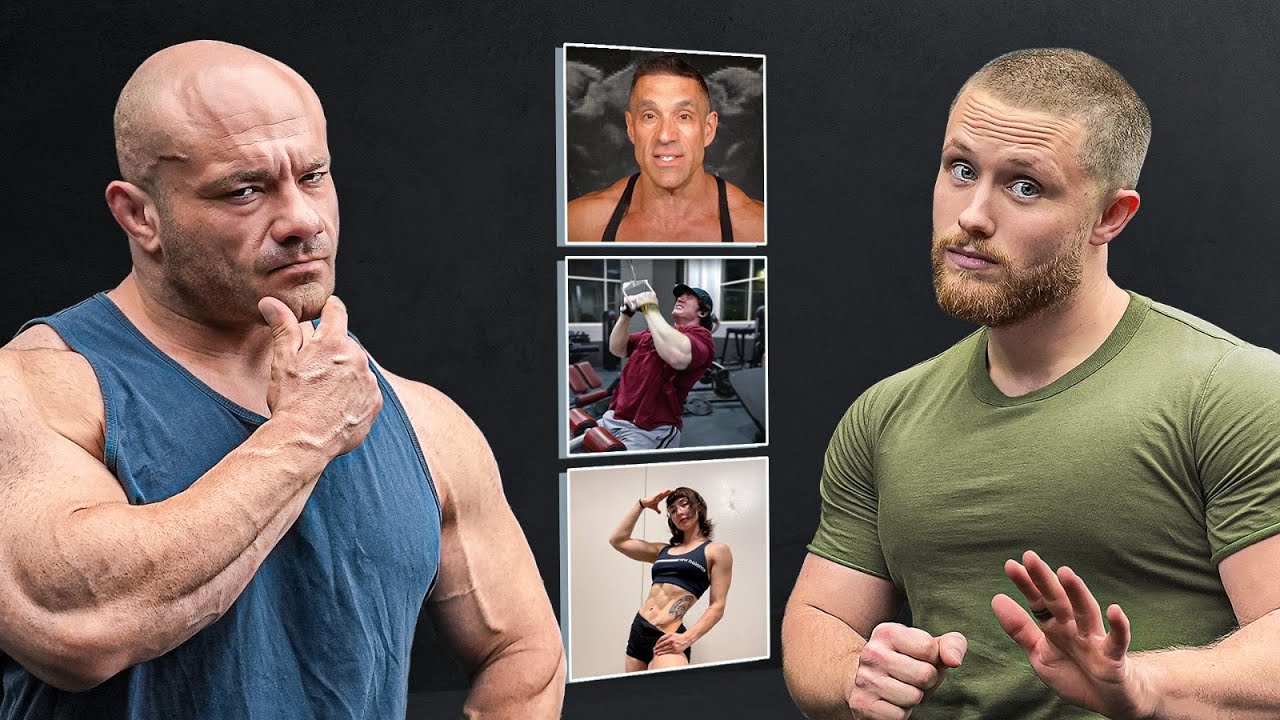
Why do “hard-looking” workouts not always build the most muscle?
Is the best program the one that looks the most brutal on social media?
That is the puzzle this video keeps poking at, using rapid-fire critiques of famous bodybuilders and fitness influencers. The vibe is not “gotcha.” The point is to separate what is visually impressive from what is mechanically productive and recoverable.
A repeated theme is that many big names are clearly doing the big things right. They train hard. They show up. They progress. But the discussion argues there are “better degrees of right,” meaning you can respect someone’s results and still ask whether small changes could reduce injury risk or improve growth.
The unique perspective here is not that science replaces hard training. It is that science helps you place hard training inside guardrails, so you can repeat it week after week.
Important: A workout can feel intense and still be a poor trade if it beats up joints and connective tissue faster than it builds muscle. If you have pain, numbness, or symptoms that persist, it is worth discussing with a qualified clinician.
Ronnie Coleman, optimization, and the injury tradeoff puzzle
The video opens with a provocative claim: even the greatest bodybuilders could likely have built bigger quads with fewer injuries if they trained in a more “science-based optimal way.” Ronnie Coleman is used as the case study.
This is not framed as disrespect. It is framed as a basic principle of human systems: almost no historical process looks perfectly optimized in hindsight.
The “three dials” that can break you
The injury argument is specific. The idea is that Ronnie “cranked” multiple variables at the same time: very high loads, very high intensity, and very high volume. Any one of these can be productive. The combination is presented as the problem.
A comparison is made to Dorian Yates, who also trained heavy, but with lower volume, suggesting that heavy training alone is not the whole story.
This is a fatigue-management lens. It is less about “never lift heavy” and more about not maxing out every dial at once.
Could Ronnie’s quads have been even bigger?
The discussion gets nuanced fast. Genetics and drug use are acknowledged as major contributors to elite size. Training optimization is described as a smaller slice of the pie, but still potentially meaningful.
Then comes an interesting hypothetical: maybe Ronnie was only a few hard sets shy of his best weekly quad volume. If so, the extra growth might have been marginal.
But there is another possibility raised, based on the idea of maximum recoverable volume. If systemic fatigue is not the limiter for a muscle, some people may tolerate short “sprints” of very high set counts. The video mentions a world where 20, 30, even 40 sets per week for a muscle, for short periods, could be more hypertrophic than lower volumes.
The honest ending is, “we do not really know.” That uncertainty is part of the video’s identity. It is not pretending the science can rewind history and give a single correct answer.
Did you know? In the general population, anabolic-androgenic steroid use is not rare. A widely cited meta-analysis estimated a lifetime prevalence around 3.3% globally, with higher rates in men (about 6.4%) (British Journal of Sports MedicineTrusted Source). That matters because “enhanced” physiques shape expectations about what training alone can do.
The big three variables the video keeps circling back to
A lot of clips get critiqued in seconds, but the logic behind the critiques stays consistent. When the conversation turns to “kids regurgitating nuance,” the response is not “stop learning.” It is “stop swapping your plan every two weeks.”
The framing emphasizes that chasing the “one special exercise” is usually a bad start. Get the basics going, then experiment.
Here are the three variables the video keeps returning to, translated into practical terms.
Effort and proximity to failure. The view is that how hard you push sets, especially in moderate rep ranges, is often more important than whether an exercise is trendy. Training close to failure is repeatedly implied as a key driver of hypertrophy, as long as you can recover.
Volume you can recover from. The discussion repeatedly points to the idea that volume is not inherently good or bad. It is good when you can adapt to it. It is bad when it accumulates systemic fatigue that ruins performance and increases injury risk.
Technique, range of motion, and control. Many critiques are micro-adjustments: less wobble, more stability, a deeper stretch, a pause in a key position, or a more controlled eccentric. These are not “magic.” They are ways to make the same set produce a clearer stimulus.
Short closing thought: the video is skeptical of “science-based” as a label when it just means “new.” Novelty can be fun. It just is not automatically evidence.
What the research shows: Hypertrophy can occur across a wide range of loads, including lighter weights taken close to failure, although heavier loads can be more time-efficient for strength gains. A frequently cited position stand from the National Strength and Conditioning AssociationTrusted Source discusses progression, volume, and loading as central programming variables.
Steroids, TRT, and men’s sexual health, what the video actually implies
This video sits in a men’s sexual health niche for a reason, even though much of it looks like training critique. Testosterone, steroids, and the psychology of enhancement are a major thread.
The video highlights a claim that “99.9% of people should not take steroids,” then pivots to what might actually deter use.
The deterrents are not just medical, they are psychological
A standout perspective is that the most effective deterrent is not a lecture about long-term risk. It is making the downsides feel immediate and personal.
The discussion points to:
This is not a how-to. It is an argument that the “downside list” should include mental and life-function costs, not just abstract cardiovascular risk.
TRT is framed as medical normalization, not a shortcut
A separate clip argues that if a man has very low testosterone (a number like “250” is mentioned), he “should be on something.” The critique is more measured: if you have symptoms and clinically low testosterone, get checked, talk to a doctor, and if testosterone replacement therapy is recommended, that is a medical decision.
A key nuance is that TRT aims to bring you into a normal physiological range. It is not presented as a guarantee of huge muscle gain.
But the video adds an interesting point: endogenous testosterone fluctuates with sleep, nutrition, and stress. With TRT, levels may be more stable. Over time, that stability could subtly increase hypertrophy potential compared to someone whose natural levels dip frequently.
That said, the video is blunt about expectations. Many people believe a cycle will transform them into a pro bodybuilder, and the claim is that 7 or 8 times out of 10, they will be wildly wrong. Genetics and baseline training status shape response.
From a sexual health standpoint, it is also worth knowing that non-prescribed anabolic steroid use can suppress the body’s own testosterone production, which may affect fertility and sexual function. Clinical overviews note that anabolic steroid use can cause hypogonadism (low gonadal function) and infertility in some men (Endocrine SocietyTrusted Source).
Pro Tip: If you are worried about low testosterone, consider tracking symptoms and lifestyle factors first, sleep duration, alcohol intake, stress, and training load, then discuss testing with a clinician. A single number without context can be misleading.
Heavy squats on a Smith machine, what is “needlessly risky”?
A clip of a five-plates-per-side Smith machine squat gets a high score for effort and execution, around a “9.5 out of 10.”
The critique is not that the set is bad. It is that the load may be unnecessary for the stimulus.
The specific concern is needlessly exposing tendons and connective tissues to high risk when a slightly lower load (the video mentions ranges like 365 to 405) could still “get the job done.”
This is a practical principle: if two choices produce similar muscle stimulus, the one with less joint and connective tissue strain is often the better long-term bet.
How to apply this idea without becoming timid
You do not need to fear heavy weight.
You do need to ask a simple question: “Can I progress this for months?” If the answer is no because your knees, hips, or back feel beat up, the load is not “hardcore,” it is just a tax you cannot afford.
Here is a simple decision tool inspired by the video’s logic.
Short closer: the video’s “perfectionist with a PhD” joke is really a reminder that small technique choices are often about risk management, not ego.
Rows and back training, the video’s “there’s no direct science” moment
Back training is where the video gets unusually candid: there is “not one single long-term study on the back,” meaning that many specific back-training prescriptions are indirect applications of anatomy, biomechanics, and general hypertrophy principles.
That honesty is part of the video’s unique voice. It is skeptical of people calling every novel back exercise “science-based.”
Bent-over row critique, wobble, bottom position, and angles
A barbell row clip gets a “pretty decent” rating by gym culture standards, with several tweaks suggested:
The video also discusses “lengthened partials” and momentum reps. There is openness to using momentum to get the weight up if the eccentric is controlled, but skepticism that it is worth the fatigue cost for many people.
This is a stimulus-to-fatigue argument: if a technique beats you up more than it stimulates growth, it may be better to do another set with cleaner reps.
What the research shows: Training at longer muscle lengths is a growing area of hypertrophy research, with multiple studies suggesting it can be a potent stimulus in some contexts. A helpful overview is available from Stronger by ScienceTrusted Source, which summarizes the emerging evidence and its limitations.
Pressing and arm work, small tweaks that may add up
Several pressing and arm clips get a surprisingly positive review, with critique focused on tiny adjustments rather than sweeping changes.
Incline dumbbell press, chase the stretch, not just the number
A heavy incline dumbbell press set (140 pound dumbbells) is called “excellent technique.” The nitpicks are classic hypertrophy cues:
There is also a practical concession: when you are very strong, slowing the eccentric can force you into even heavier dumbbells that are awkward to set up. The idea is not to make everything slow. It is to choose a tempo you can execute safely.
Skull crushers, decline versus flat, and elbow comfort
A decline dumbbell skull crusher variation is treated as “cool” but not necessarily optimal, because at the bottom stretch position the lever arm may not challenge the triceps as much as a flat bench version.
Then comes a very real-world point: grip and elbow comfort matter. Some people get “elbow weirdness” with certain dumbbell orientations. A thumbless grip or treating dumbbells more like a bar at a 45-degree angle is mentioned as a workaround.
This is a reminder that biomechanics is personal. If a movement irritates your joints, finding a reminder-free variant is not “less hardcore.” It is smarter.
Hamstrings, glutes, and the case for targeted partials
Two lower-body examples highlight how the video thinks about range of motion and partials.
Seated hamstring curls, lean forward or lock in?
A seated hamstring curl performed with the torso leaning forward is endorsed as a way to get a bit more pre-stretch. But stability is treated as the gatekeeper.
If leaning forward makes you feel unstable, the recommendation is to lock in, lean back if needed, and drive hard. Different machines feel different, so the advice is to test and pick what lets you produce the most force with good control.
That practical “no wrong answers” tone is important. The video is not trying to create one universal rule.
“Twerker squats,” pulses in the hole
A glute and quad-focused squat variant with a small pulse at the bottom, then a full rep, is praised for bodybuilding goals. It increases time in the stretched position.
There is also a sport-specific caveat: if you are powerlifting and trying to maximize a competition squat, full range reps may be more specific. But as an assistance exercise, these pulses could help people who struggle in the bottom position.
This is the video’s broader philosophy in miniature: match the technique to the goal, then place it where it fits in your week.
»MORE: If you want a simple self-audit worksheet, create a “Technique and Recovery Log” with three columns, exercise, joint comfort (0 to 10), and next-session plan. It is a low-tech way to apply the stimulus-to-fatigue idea consistently.
Leg press technique, depth, foot position, and stability
The leg press segment is a clear example of how tiny form choices change what a lift emphasizes.
A coached leg press clip is generally approved: shoulder-width stance, slow eccentric, stretch as comfortable, controlled breathing, and significant knee flexion.
Then the critique goes deeper.
The suggestion is to add more knee and hip flexion by bringing knees outward and lower, described vividly as getting knees closer to the armpits. The reason is to potentially get more glute hypertrophy along with quad work.
Foot position is also discussed. A lower foot position is favored for more knee flexion and quad stimulus.
The “tippy toes” issue
The clip appears to show some toe pressing. The critique is that being on the toes can reduce stability, and the nervous system may limit force production when you are unstable.
The video calls it a valid variant in its own right, like a “sissy squat equivalent” on a leg press, but suggests that heavier work with heels planted and knees out is probably the better default for most people.
This is a classic trade:
Cold plunges, hype, and what “11 minutes a week” really means
Cold exposure gets treated as one of the most overhyped fitness trends right now.
A claim is referenced that you do not need an ice bath specifically, you just need to get “uncomfortably cold for 11 minutes a week,” whether via cold shower, ocean, lake, or even ice packs.
The video acknowledges why people like it: it is difficult, it is shocking, and people report a relaxation rebound after the stress response.
Then comes the pushback.
The argument is that if your goal is health, body composition, and performance, you can get the “do hard things” psychological benefit by training hard, while also getting the physical benefits of exercise. Cold exposure does not automatically deliver those same body composition changes.
There is skepticism that the literature is convincing enough to justify the hype. The criticism becomes sharper: some influencers market cold exposure as the key to broad success, and many people suffer through it because they think they have to.
One practical point is that the extra calorie burn from an ice bath is tiny, described as about “10 calories,” and that you would be better off walking in place.
From a recovery standpoint, there is also mention of emerging evidence that heat exposure, like hot baths, may be better than cold baths after workouts.
For readers who want a research anchor, there is evidence that cold water immersion can reduce soreness perceptions in some contexts, but it may also blunt some training adaptations if used immediately after resistance training in certain protocols. A review discussing these tradeoffs is available here: Sports MedicineTrusted Source.
The video’s practical conclusion is simple: if you enjoy cold exposure and it helps you feel motivated, fine. If you hate it, it is probably not the lever you are missing.
Key Takeaways
Frequently Asked Questions
- Do I need novel exercises to build muscle faster?
- Not usually. The video’s perspective is that novelty can be fun, but most gains come from effort, recoverable weekly volume, solid technique, and progression on basics you can repeat consistently.
- Is lifting heavier always better for hypertrophy?
- Heavier training can be useful, but the video emphasizes that getting bigger is more tied to hard sets near failure in productive rep ranges, with enough volume you can recover from. Heavier loads that force sloppy form or joint irritation may be a poor trade.
- Can TRT make you muscular even if you do not train well?
- TRT is generally intended to restore testosterone to a normal physiological range under medical supervision, not to replace training. The video argues that expectations are often unrealistic, and results vary widely by baseline and genetics.
- Are cold plunges necessary for recovery or fat loss?
- The video treats cold exposure as optional and often overhyped. If you enjoy it, it may help motivation, but it is not presented as essential for fat loss or recovery compared with consistent training, sleep, and nutrition.
Get Evidence-Based Health Tips
Join readers getting weekly insights on health, nutrition, and wellness. No spam, ever.
No spam. Unsubscribe anytime.