Expanding Consciousness: Koch on Self and Perception

Summary
Consciousness, in Dr. Christof Koch’s framing, is not your ability to behave or perform tasks, it is the fact that experience is happening at all: seeing, hearing, loving, dreaming, dreading. This perspective separates consciousness from intelligence and from self-consciousness, and it treats everyday life as lived inside a personal “perception box” shaped by priors, memory, and culture. The episode explores edge cases like deep non-REM sleep, anesthesia, flow states, derealization, and psychedelic experiences, not to glamorize them, but to clarify what changes when “you” quiet down. This article translates those ideas into practical, medically cautious steps to broaden awareness and reduce rigid, ego-centered interpretation.
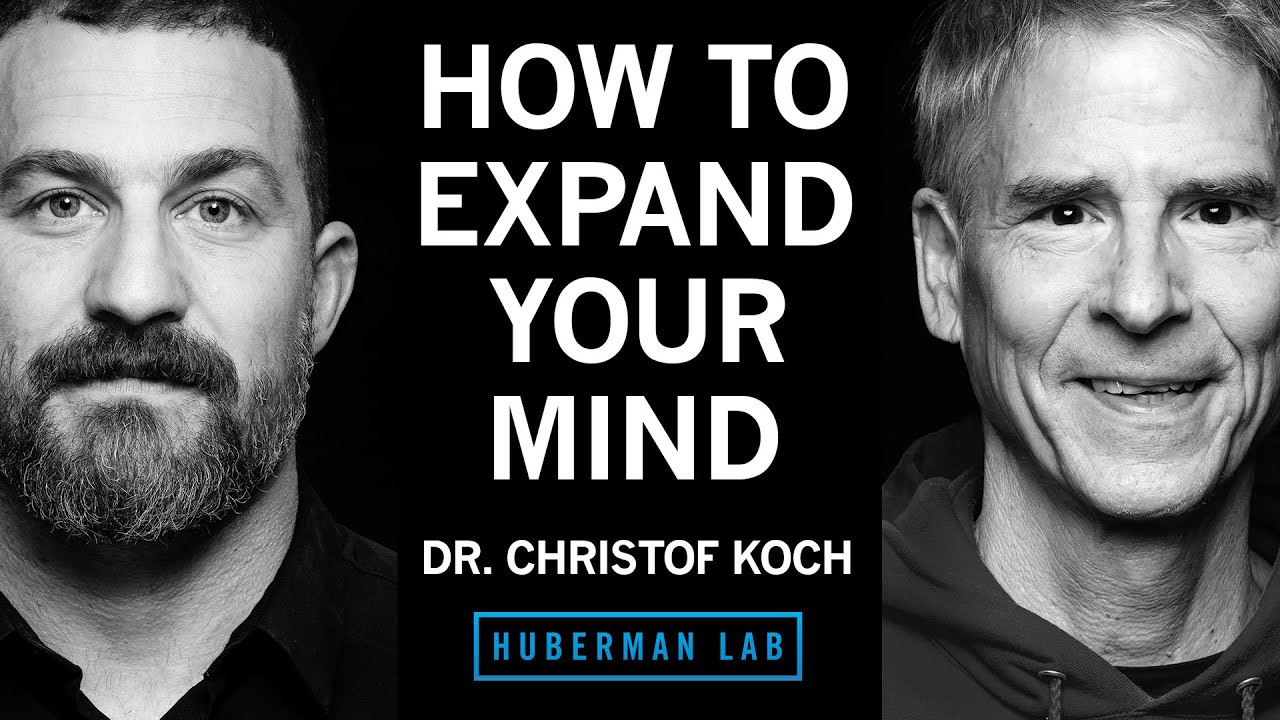
Consciousness is not what you can do. It is that anything is happening for you at all.
That single shift in framing, emphasized throughout the conversation with Dr. Christof Koch, changes how you interpret sleep, flow, meditation, psychedelics, and even daily disagreements. It also changes what “expanding consciousness” can realistically mean in a health context: less about becoming superhuman, more about becoming less trapped in automatic interpretation.
Consciousness as experience, not performance
The core definition offered is blunt and surprisingly practical. Consciousness is the fact that you hear, see, feel, love, hate, dream, dread, and imagine. Not the behaviors those experiences may lead to, but the experiences themselves.
A useful thought experiment appears early in the episode: imagine being offered a billion dollars, but in exchange, all conscious experience is removed. You would still “do” the motions of life, driving, talking, reacting, but there would be no inner light, no felt presence, no “you” from the inside. The immediate refusal is the point. The difference between those two conditions is what the conversation calls consciousness.
This view matters for cognitive health because it separates two things people often merge:
That separation shows up in medicine all the time. Someone can appear awake but be minimally responsive. Someone can be asleep yet dreaming vividly. Someone can be paralyzed but conscious. If you want to understand your mind, you have to stop using performance as the only proxy for what is going on.
Did you know? Sleep researchers distinguish between non-rapid eye movement (NREM) stages and rapid eye movement (REM) sleep, and vivid dreaming is more common in REM, but it can also occur in NREM. The mapping between “sleep stage” and “experience” is not perfectly clean, which is one reason sleep is such a useful window into consciousness. A helpful overview is available from the National Institute of Neurological Disorders and StrokeTrusted Source.
Why consciousness is hard to study (and easy to confuse)
One reason people argue endlessly about consciousness is not that the experience is vague. It is that the measurement is.
The discussion highlights a basic obstacle: you do not have direct access to another person’s conscious experience, and they do not have direct access to yours. In philosophy this is often described as the difference between first-person experience and third-person measurement. With most things in science, we can agree on objective properties. With consciousness, we infer it, often through speech, behavior, or physiology.
That inference problem creates two common confusions.
First, people confuse consciousness with self-consciousness. Many definitions that sound like “knowing I will die,” “knowing my name,” or “remembering breakfast” are really definitions of the autobiographical self, not of consciousness broadly.
Second, people confuse consciousness with intelligence. The episode pushes back on the popular idea that if a system can do what humans do, it must be conscious. The argument is that intelligence is largely about planning and executing behavior, while consciousness is about being in a state where experience exists.
This is why the conversation treats “artificial intelligence” and “artificial consciousness” as different questions. You can build systems that outperform humans in tasks, yet still not know whether anything is being experienced.
Practical implication: if you want to “expand consciousness,” you are not necessarily trying to become smarter or more productive. You are trying to become more aware of experience, and less dominated by automatic interpretations of it.
Sleep, anesthesia, and the blunt lesson of “nowhere”
The episode uses a simple, relatable example: early in the night, in deep NREM delta wave sleep, you do not exist for yourself in the same way. If someone wakes you abruptly and asks where you were, the answer is often some version of “nowhere.”
That is a dramatic contrast to dreaming later in the night, which is described as another form of conscious experience.
Anesthesia is treated similarly. Under general anesthesia, for most people, there is no felt passage of time, no inner narrative, no experience to report. Clinically, anesthesia is more complex than “sleep,” and awareness under anesthesia can occur in rare cases, but the everyday intuition remains useful: there can be a state where the body is alive and the brain is active, yet conscious experience is absent or profoundly reduced. For a grounded overview of anesthesia and how it works, see the American Society of AnesthesiologistsTrusted Source.
This matters for cognitive health because it frames consciousness as something that can come and go, and it invites a question that is both philosophical and practical:
If consciousness can disappear every night, what is the relationship between “me,” memory, and the ongoing feeling of continuity?
The edge case: liminal states
The conversation touches on liminal states between waking and sleep, including practices that aim to hover near sleep without fully losing awareness. These states can feel strange, sometimes including falling sensations or shifts in body perception.
If you have ever nodded off and jerked awake, or felt your body “drop” as you fall asleep, you have already sampled how unstable the boundary can be.
Important: If you experience frequent episodes of confusion on waking, terrifying hallucinations, sleep paralysis that feels unsafe, or you are worried about seizures or other neurological symptoms, it is reasonable to discuss this with a clinician. Sleep-related symptoms can overlap with medical conditions, and it is not something to self-diagnose.
Self-consciousness vs consciousness, the “planet ego” pull
A central nuance in the episode is that you can lose self-consciousness without losing consciousness.
This is the difference between:
The conversation uses memorable language: we live in the gravitational field of “planet ego.” Even when you are not explicitly thinking “me, me, me,” there are processes monitoring what matters for you, what threatens you, what benefits you.
From a health perspective, this is a double-edged sword.
On one hand, ego is protective. It helps you plan, avoid danger, and maintain social bonds.
On the other hand, ego can become rigid and noisy. It can catastrophize. It can misread neutral cues as insults. It can lock you into a narrow interpretation of events, and that narrowness can worsen stress.
Stress is not only a feeling. Chronic stress is associated with changes in sleep, immune function, cardiometabolic risk, and mental health. A broad overview of stress effects and coping approaches is summarized by the American Psychological AssociationTrusted Source.
The episode’s practical invitation is not “destroy the self.” It is to learn how to loosen it at times, especially when it is distorting perception.
Flow states: when the inner critic goes quiet
Flow is presented as a state where the inner critic can disappear, while conscious awareness becomes highly task-relevant.
The examples are concrete: expert climbing, coding, reading a gripping book, playing sports. You are not thinking about yourself as a character in a story. You are simply doing, perceiving, adapting.
Flow is described as addictive partly because it is quiet. That quiet is not sedation. It is relief from constant self-evaluation.
This framing aligns with mainstream flow research, which often describes flow as deep absorption, a balance between challenge and skill, and altered time perception. For an accessible overview of flow concepts and measurement, see work associated with Mihaly Csikszentmihalyi’s flow researchTrusted Source.
How flow expands consciousness in this episode’s sense
Flow does not necessarily add new information to your brain. It changes what is foregrounded.
Instead of “How am I doing?” the mind becomes “What is happening right now?”
That shift can be psychologically restorative, especially for people prone to rumination.
Pro Tip: If you want more flow, make the task slightly harder than your comfort zone, but not so hard that it becomes panic. In practice that often means shrinking the task until you can start, then increasing difficulty gradually.
Yoga nidra and regional sleep: practicing “being” on purpose
The conversation includes a detailed description of yoga nidra, also called non-sleep deep rest (NSDR). The practice described is deliberate: lie down, use long exhales to reduce autonomic arousal, and aim to stay awake while deeply relaxing.
A key instruction in the classic scripts is to move from thinking and doing to being and feeling, with attention placed on sensations like breathing, heartbeat, and the surface of the body.
The reported subjective effects are specific: losing past and future, becoming hyper-present, and sometimes feeling a falling sensation as the vestibular system seems to “let go” while awareness remains.
What makes this especially interesting for cognitive health is the mention of “regional sleep,” the idea that parts of the brain can show sleep-like activity while other parts remain more wake-like. This concept exists in neuroscience research, especially in the context of sleep deprivation and local slow waves. A review of local sleep phenomena is discussed in scientific literature, and a general sleep architecture overview is available via the National Institutes of HealthTrusted Source.
A practical way to use yoga nidra without mystifying it
You do not need to adopt metaphysical claims to benefit from the practice.
A grounded way to interpret “energy body” language is as interoception, meaning the perception of internal bodily signals. Interoception is increasingly studied in relation to anxiety, emotion regulation, and self-awareness. For a readable scientific overview, see an interoception primer from Nature Reviews NeuroscienceTrusted Source.
Here is a simple way to experiment, without forcing it.
One underrated benefit is that practices like this can teach you to notice the moment when your mind starts time traveling.
That moment is where your perception box often tightens.
The “perception box”: how priors shape reality and health
A major unique contribution of this episode is the emphasis on the “perception box,” a concept attributed to Elizabeth R. Koch in the conversation.
The basic idea is that each of us runs around with a subjective model of reality. It is not simply what we see. It is how we interpret what we see, and what we expect to see.
Modern cognitive science often describes this in Bayesian terms: the brain continuously combines sensory evidence with prior expectations to infer what is most likely true. The episode gives a clean, memorable explanation of Bayes as ongoing updating under uncertainty.
The Dress example: no “real color” in experience
The viral “Dress” example is used for a reason. Some people see white and gold, others see blue and black. The argument is not that one group is lying. It is that perception depends on priors, including assumptions about lighting.
The deeper point is provocative: there are photons and surfaces and biology, but the experienced color is constructed.
That same construction happens in social and political perception. The transcript begins to move toward examples like 9/11 and October 7th, where the same event is filtered through radically different priors, histories, and identities.
This is where cognitive health comes in.
If your perception box is chronically threat-biased, the world will feel more dangerous than it is.
If your perception box is chronically self-focused, the world will feel like a referendum on you.
Neither pattern is a moral failure. They are learned priors, reinforced by memory and attention.
What the research shows: Cognitive behavioral therapy (CBT) often targets maladaptive interpretations, not by denying reality, but by testing assumptions and generating alternative explanations. CBT is widely studied for anxiety and depression, and a general overview is provided by the American Psychological AssociationTrusted Source.
Transformative perspective shifts (VR, memory, and plasticity)
The episode includes a vivid story about a virtual reality experience designed to shift perspective about racism.
The mechanics described are specific: looking into a VR mirror and watching one’s face contort into a Black face while still feeling like “you,” then moving through scenarios like walking down the street and a job interview where subtle cues, including gaze and pupil behavior, are manipulated to create emotionally loaded social feedback.
The reported outcome is also specific: the experience is not forgotten, and it changes what is noticed later in real life, especially glances and social attention.
This is a strong example of rapid updating of priors. It is also an example of what the conversation calls a transformative experience, something that changes perception more quickly than most behavior-change programs do.
From a neuroplasticity standpoint, it is plausible. The brain updates models when prediction errors are strong and emotionally salient, especially when attention is high. A clear overview of neuroplasticity for lay readers is available from Harvard Health PublishingTrusted Source.
What this implies for “changing who you are”
The episode’s stance is nuanced.
Yes, the self is robust. It is the kernel of the operating system.
But aspects of the self, especially social expectations and interpretive habits, can change quickly when the right kind of evidence hits the system.
That suggests a practical approach to expanding consciousness: do not wait for lightning bolts. Create structured experiences that gently challenge your priors.
»MORE: If you want a simple worksheet-style resource, create a “Perception Box Log” for one week. Each day, write (1) a triggering event, (2) your instant interpretation, (3) an alternative interpretation, (4) what data would change your mind.
Psychedelics, derealization, and why edge cases matter
The episode discusses psychedelics in two distinct ways.
One is the often-reported capacity of psychedelics, especially at high doses, to dissolve the sense of self, revealing “how profound, beautiful the world is without you,” as the conversation puts it.
The other is the risk side, illustrated by derealization.
Derealization is described as a psychiatric condition where perception remains intact, but the world feels unreal, dreamlike, or “off,” and the person may try to “wake up.” The transcript includes a striking real-world anecdote about an airline pilot who reportedly used psychedelics days earlier and then experienced a derealization episode with dangerous, delusional reasoning.
This is not included for shock value. It functions as an edge case that clarifies a safety principle.
Altering the sense of reality is not inherently therapeutic.
It can be destabilizing.
Where research fits, carefully
Clinical research into psychedelic-assisted therapy is expanding, particularly for treatment-resistant depression and PTSD in controlled settings. But that is not the same as unsupervised use, and it is not risk-free.
For example, the National Institute on Drug AbuseTrusted Source summarizes known effects and risks of hallucinogens, including potential for panic, risky behavior, and persistent perceptual changes in some individuals.
Also, people with personal or family histories of psychotic disorders or bipolar disorder may be at higher risk of adverse outcomes with psychedelics, and screening is a standard part of clinical protocols.
Important: If you are considering any psychedelic use, it is worth discussing with a qualified clinician who understands your medical history and medications. Psychedelics can interact with mental health vulnerabilities and can be dangerous in certain contexts. This article is not endorsing or prescribing psychedelic use.
Expert Q&A Box 1
Q: Is “ego dissolution” the same thing as dissociation or derealization?
A: Not necessarily. “Ego dissolution” is a broad, non-medical phrase people use to describe reduced self-referential thinking or a loss of autobiographical boundaries. Dissociation and derealization are clinical phenomena that often feel distressing, impair functioning, and can include a persistent sense that the world is unreal.
If someone is seeking altered states to escape suffering, or if they have episodes where reality testing is impaired, it is safer to involve a licensed mental health professional. The goal is not intensity, it is stability plus insight.
Dr. Maya R., MD, Psychiatrist
A practical “consciousness expansion” plan you can try safely
The episode’s practical throughline is not “hack your brain.” It is “notice what is actually happening, and notice how your self-story shapes it.”
Below is a plan that stays close to that viewpoint, and avoids extreme methods.
Step-by-step: widening experience without destabilizing it
Practice “experience labeling” once per day (2 minutes). Pick a neutral moment and name what is present: sound, sight, body sensation, emotion, thought. Keep it descriptive, not interpretive. This trains the distinction between raw consciousness and self-narrative.
Schedule one flow-friendly block per week (30 to 90 minutes). Choose an activity where challenge and skill can be balanced, climbing, coding, music practice, sport drills, even focused reading. The goal is to create conditions where the inner critic naturally quiets, not to force silence.
Use yoga nidra or NSDR 3 times per week (10 to 30 minutes). Treat it as interoceptive training and nervous system downshifting. If you fall asleep sometimes, that is not failure. If you become anxious, shorten the session or stop.
Do one “perception box update” after a trigger. When you feel offended, panicked, or certain you know someone’s motives, write down your immediate story. Then write two alternative stories that could also fit the data. This is not about denying harm, it is about reducing overconfidence in your first model.
Protect sleep like it is mental hygiene. The episode uses sleep to illustrate the on and off nature of experience. In everyday life, poor sleep increases emotional reactivity and makes the perception box more rigid. If you want a general, evidence-based starting point, the CDC sleep guidanceTrusted Source is a good baseline.
A single practice rarely changes a life.
A small set of practices, repeated, can.
A short list of “expansion” cues you can use in real time
Expert Q&A Box 2
Q: If I try meditation or yoga nidra and I feel worse, does that mean something is wrong with me?
A: Not at all. For some people, quiet practices increase awareness of anxiety, trauma-related sensations, or uncomfortable body signals. That does not mean the practice is bad, but it may mean the approach should be gentler, shorter, or guided by a clinician, especially if there is a history of panic or PTSD.
If symptoms include intense derealization, fear of “losing control,” or worsening depression, it is wise to pause and talk with a healthcare professional. The safest plan is the one that improves stability, not the one that feels the most intense.
Dr. Elena S., DO, Family Medicine
Standalone statistic
Adults are generally recommended to get at least 7 hours of sleep per night on a regular basis, according to the CDCTrusted Source.
That recommendation is not about willpower. It is about keeping perception, mood, and cognition from becoming distorted.
Key Takeaways
Frequently Asked Questions
- What does it mean to “expand consciousness” in Dr. Koch’s sense?
- It mainly means expanding the range and clarity of experience, not becoming more productive. The emphasis is on noticing perception and emotion directly, and loosening the automatic self-story that narrows what feels possible.
- Is consciousness the same as self-awareness?
- No. Self-awareness is one type of conscious content, but you can be conscious without a strong sense of self, such as in flow states or some meditative states, where experience is vivid but self-talk is quieter.
- Why does sleep matter so much for understanding consciousness?
- Sleep shows how experience can switch off and on. Deep non-REM sleep often involves little or no reportable experience, while dreaming later in the night illustrates that consciousness can occur without normal waking input or behavior.
- Can practices like yoga nidra help mental health?
- They may help some people by reducing arousal and strengthening interoception, which can support emotion regulation. If the practice increases anxiety, panic, or derealization, it is reasonable to stop and consult a clinician.
- Are psychedelics necessary to experience “ego loss” or selflessness?
- No. The episode points to non-drug routes like flow states, meditation, and absorbed attention in reading or sport. Psychedelics can intensify these shifts but also carry psychological and safety risks, especially outside clinical settings.
Get Evidence-Based Health Tips
Join readers getting weekly insights on health, nutrition, and wellness. No spam, ever.
No spam. Unsubscribe anytime.