Healing From Grief: A Brain-Based Path to Integrate Loss

Summary
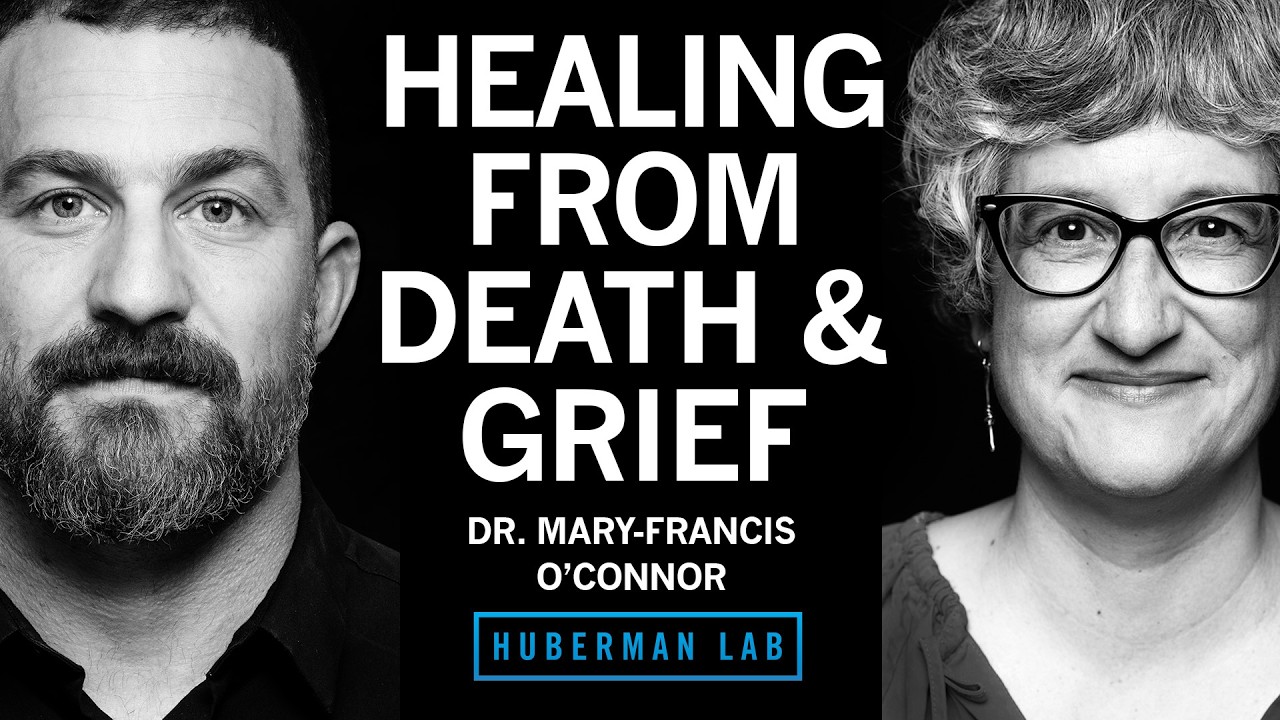
Grief is not just sadness, it is a whole-body learning process driven by attachment. In this conversation, Dr. Mary-Frances O’Connor reframes grief as the brain trying to reconcile two truths at once: your person is gone, and your bond still feels everlasting. That conflict can create waves of pain, yearning, and confusion that can last for years, even when life is moving forward. This article turns the episode’s core ideas into practical steps: how to work with protest and despair, why yearning is normal, how to build continuing bonds, and when to seek extra support.
Grief is one of the few human experiences that can make a person say, without exaggeration, “This hurts.”
In Dr. Mary-Frances O’Connor’s framing, that statement is not poetic, it is biological. Grief is the brain and body responding to the loss of an attachment figure, and the response can look like waves of emotion, changes in attention, disruptions in sleep and appetite, and a very real sense of physical distress.
This article follows the episode’s unique through-line: grief makes the most sense when you stop treating it like a mood you should “fix,” and start treating it like a form of learning. Learning how to live in a world that no longer matches what your attachment system expects.
Important: If grief is accompanied by thoughts of self-harm, inability to care for yourself, or dangerous substance use, it is a sign to seek urgent help. In the US, you can call or text 988 for the Suicide and Crisis Lifeline. If you are outside the US, local emergency services or crisis lines can help.
Grief can feel like physical pain, and that is not “just in your head”
Grief is not only emotional.
It can show up as tightness in the chest, nausea, fatigue, shakiness, appetite changes, and a body-wide sense of threat or disorientation. The discussion emphasizes that grief is a physical, emotional, and mental reaction to the death of someone close.
One reason this matters is shame. People often judge themselves for “overreacting,” especially if the loss is not socially validated, like the death of a pet, the end of a relationship, or losing a role that structured daily life. This perspective pushes back: the nervous system does not grade your loss on a curve. If your brain encoded someone (or something) as part of how you survive and function, their absence can register as danger.
There is also a practical implication: when grief is in the body, it needs body-level care too. That does not mean you can stretch, breathe, or meditate your way out of loss. It means that stabilizing sleep, eating regularly, and getting gentle movement can be part of keeping your physiology from spiraling while your brain does the slower work of adapting.
Did you know? Acute bereavement is linked with short-term increases in cardiovascular risk, including a higher risk of heart events soon after a major loss, especially in vulnerable people. This pattern is described in reviews of bereavement-related health effects, including the so-called “broken heart” phenomenon, also known as stress-induced cardiomyopathy (Takotsubo syndrome) (American Heart Association overviewTrusted Source).
Grief vs grieving: the “stock market” model of waves and trajectory
A key clarity from the conversation is the difference between grief and grieving.
Grief is what you feel in a moment. You could rate it, almost like a snapshot: “How intense is this wave right now?”
Grieving is the long process of how those waves change over time.
To make it intuitive, Dr. O’Connor uses a “stock market” analogy. Day to day, the graph can bounce all over the place, up, down, flat, then suddenly down again. But zoom out, and you can often see a trajectory that slowly shifts, even if some days still feel brutal.
This is one of the most relieving ideas for many people: grief may never fully disappear, because it is a human emotion that can reappear whenever you remember the person is gone. A wave 25 years later does not mean you are “back at zero.” It can simply mean you are human, and the bond still matters.
Why this model changes how you talk to yourself
If you expect grief to be linear, every bad day feels like failure.
If you expect waves, you can plan differently. You might still dread anniversaries, songs, smells, holidays, or the empty seat at a table. But you are less likely to interpret those triggers as proof that you are broken.
Pro Tip: When a wave hits, try a 10-second “name the conflict” check-in: “My brain expects them to be reachable, and reality says they are not.” Naming the mismatch can reduce the panic of “I’m losing my mind” and replace it with “My attachment system is doing what it was built to do.”
The core conflict: “gone” and “everlasting” at the same time
The episode’s central lens is attachment.
Attachment is not just affection. It is the deep bond that forms when you create an “us” with someone: “I will always be there for you, you will always be there for me.” It includes an implicit belief that time and distance do not erase the bond.
That is why, in ordinary life, absence often makes you think about someone more. If your child is missing, you search. If your partner is late, you call. If your friend is quiet, you check in. Increased effort makes sense because the brain assumes reunion is possible.
Death is the unique, terrible exception.
This is where the “gone but also everlasting” theory appears. You can have a clear memory of the phone call, the hospital room, the funeral. You know they are gone. At the same time, attachment neurobiology carries an implicit expectation: maybe they are still out there, and if you try hard enough you can reach them.
Those two streams of information cannot both be true in a literal sense. And when you become aware of the conflict, you get a wave of grief.
This framing also helps explain why grief can feel confusing or unreal. Part of your brain is tracking facts, another part is running an older survival program: “Find them.”
Why yearning is the hallmark of grief, and what dopamine has to do with it
Yearning is not a side effect of grief.
In this perspective, yearning is the hallmark.
Words like “pining” and “longing” are essentially “wanting” words. The conversation connects that wanting to the brain’s reward and motivation circuitry, including dopamine-related pathways.
What brain imaging adds to the story
The discussion describes neuroimaging work where bereaved people looked at photos of their loved one compared with a stranger. Many brain systems activate in grief, which is not surprising. Memory regions light up because photos trigger autobiographical recall. Emotion and regulation networks activate because the image carries meaning. Autonomic regulation regions may engage because the body is responding, not just the mind.
What stood out was a region deep in the brain, the nucleus accumbens, a part of the reward learning system. Activity there correlated with how much people reported yearning.
That matters because it suggests grief is not only “stress piled onto an already full plate.” The loss is more like an amputation of a part of the self that was built around the bond. The brain is still issuing a command: “Reach out.”
“Is grief an addiction?” A careful, useful analogy
The episode explicitly addresses a common reaction: “Is this the same brain area involved in addiction?”
The clinician’s answer is more nuanced than a headline. Instead of calling grief an addiction, the conversation offers a different analogy: thirst.
If you are hiking in the desert without water, you can become obsessed with water. Your attention narrows. Your imagination loops. You might even dream about it. But no one calls you addicted to water. Water is a basic need, and the body has homeostatic systems that push you to seek it, then settle when you are satiated.
Yearning can work like that. Attachment figures are basic to survival, and people can fail to thrive without them. The brain’s “wanting” system may be doing something fundamentally adaptive: pushing you toward the person who has helped you regulate emotion, plan life, and feel safe.
The painful twist is that death removes the possibility of ordinary reunion.
What the research shows: Dopamine is strongly linked with motivation and “wanting,” not just pleasure, and reward circuitry like the nucleus accumbens plays a key role in cue-driven seeking behaviors (National Institute on Drug Abuse, brain and addiction basicsTrusted Source). This does not mean grief is substance addiction, but it helps explain why yearning can feel urgent and consuming.
Anticipated loss vs sudden loss: why the brain may still say “I had no idea”
Many people assume that if a death is expected, grief will be easier.
Sometimes it is, in specific ways.
The conversation points to the value of “closure conversations” in hospice or palliative contexts. Being able to say things like “I love you,” “thank you,” “I forgive you,” “please forgive me,” and “goodbye” can become a stabilizing memory later.
But expected loss does not automatically rewrite attachment biology.
Attachment beliefs are implicit. They do not always respond to logic. That is why someone can describe a long terminal illness and still answer “Was the death sudden?” with “Yes, absolutely. I had no idea.” It is not stupidity. It is the attachment system refusing, at a deep level, to accept that the person will not be reachable.
This also explains a common experience: reaching for the phone to text someone who died, even when you consciously know they are gone. The brain is still running the old map.
In that sense, grieving can involve a different kind of learning than people expect. It is not only learning the facts of the death. It is learning how the relationship exists now that it no longer lives in shared time and space.
Stop aiming to “let go”, aim to integrate and build a continuing bond
“Letting go” is often the wrong target.
The episode’s language is clearer and kinder: integration.
Integration means adapting to a world where the person is physically absent while recognizing they remain deeply encoded in your brain. You cannot erase them, and trying to erase them can create needless guilt and inner conflict.
A major part of integration is forming a continuing bond, an internal relationship that remains meaningful. Historically, many cultures provided structures for this: religious frameworks, ancestor rituals, annual remembrance days, or shared community practices that answer questions like “Where did they go?” and “Will I see them again?”
Even for people who are not religious, the underlying psychological task can still exist: building a coherent story of where the relationship “lives” now.
This can be as simple as noticing moments of connection: “My mom would love that,” or telling the person about your day in your mind, or making a decision guided by what you learned from them.
The clinician also shares a personal example: losing her mother after years of illness, then later realizing she could still transform the relationship internally, including forgiveness and gratitude that might have emerged naturally with time if her mother had lived. The key point is that this internal work can change day-to-day functioning, even though the person is not physically present.
»MORE: If you want a structured way to do this, consider creating a “continuing bond list,” 10 small, specific ways you stay connected (a recipe, a phrase they used, a value they lived by, a song, a volunteer activity). Keep it on your phone for the days grief spikes.
Two emotional engines to work with: protest and despair
A practical insight from the discussion is that grief often includes two different emotional modes: protest and despair.
Protest is the part of you that refuses the loss. It is the inner “No.” It can show up as agitation, anger, bargaining thoughts, or relentless searching and mental replay.
Despair is the part of you that feels the emptiness and the helplessness. It can look like collapse, numbness, withdrawal, or the sense that the loss is endless.
Both need acknowledgment.
If you only protest, you can get stuck in constant searching and fighting reality. If you only despair, you can get stuck in hopelessness and disconnection from life.
The episode’s direction is to “transmute” these states into actions and feelings that keep the memory active while also moving forward.
That does not mean forcing positivity. It means giving both protest and despair somewhere to go.
Action steps you can try today: turning waves of grief into workable moments
Grief does not ask permission before it arrives.
So the most useful tools are often small, repeatable, and realistic.
Below are action-oriented steps that fit the episode’s framework, especially the idea that grieving is learning and integration.
How to respond when a wave hits (a simple 5-step sequence)
Name what is happening. Say, “This is a wave of grief.” Two sentences is enough. The goal is to reduce the fear that you are “going crazy.”
Locate it in the body. Notice where it lands, throat, chest, stomach, jaw, hands. This matches the episode’s emphasis that grief is physical as well as emotional.
Identify protest vs despair (or both). Ask, “Is this the part of me that wants to reach them, or the part of me that feels the emptiness?” You do not need a perfect answer.
Choose one small action that fits the emotion. Protest might need expression, like writing a message you cannot send. Despair might need care, like calling a friend to sit with you.
Close with a grounding cue. Something like, “Right now, I am safe enough to take the next step.” The point is not to eliminate grief, it is to help your nervous system re-enter the present.
Practical ways to “reach out” differently (Pattern A: intro + bullets)
Yearning is the brain’s push to reach your attachment figure. When the person has died, you may need alternative forms of reaching.
Have a continuing-bond conversation. Set a timer for 5 minutes and speak out loud or write: “Here is what happened today,” or “Here is what I wish you could see.” Many people find this surprisingly regulating because it matches the brain’s urge to connect.
Create a cue-based ritual for triggers. If a song, place, or holiday reliably activates grief, plan a small ritual ahead of time, like lighting a candle, making their favorite tea, or taking a specific walk. This gives the wave a container.
Share the story with someone safe. The episode highlights how telling the story of the death is part of how the brain processes it. Choose a person who will not rush you, fix you, or change the subject.
Meet attachment needs through living relationships. The discussion is clear that humans need attachment figures like food and water. Reaching out to a friend, sibling, partner, therapist, or community group can help your nervous system remember it is not alone.
A key point here is that none of these erase the bond. They help the bond take a new form.
A tiny body-based practice from the episode’s “clenched vs relaxed fist” idea
Near the end of the provided transcript snippets, there is a practical cue: noticing the difference between a clenched fist and a relaxed fist.
That simple contrast can be used during grief surges.
Make a fist for 5 seconds, then release for 10 seconds. Repeat 3 times.
The point is not that your hand fixes grief. The point is that your nervous system can learn, in a concrete way, the felt difference between bracing and releasing, even briefly. For some people, that creates just enough space to take the next step.
Health and functioning: why prolonged grief can carry real risks
The conversation flags something many people underestimate: grief can carry serious health risks.
Some of this is indirect. Sleep can fall apart. Eating can become irregular. Alcohol or substances can become a coping tool. Medical appointments may be skipped. Social isolation can increase.
Some of it is more direct. Bereavement is associated with increased stress physiology, and in certain people it may raise short-term cardiovascular risk. There is also evidence that social connection and perceived support relate to better health outcomes across many conditions.
A separate but related issue is when grief becomes persistently impairing.
In clinical settings, one term you may hear is prolonged grief disorder, a condition recognized in diagnostic systems when intense yearning and impairment persist beyond expected cultural norms. Not everyone with long grief has this disorder, and only a qualified clinician can assess it, but knowing the term can help people find appropriate care.
What the research shows: Prolonged grief disorder is recognized in DSM-5-TR, reflecting evidence that a subset of bereaved people experience persistent, impairing grief symptoms that may benefit from targeted treatment approaches (American Psychiatric Association, DSM-5-TR overviewTrusted Source).
When extra support helps, and what to ask for
Support is not only for people who are “not coping.”
Support can be part of how humans meet attachment needs while the brain adapts.
If you are considering therapy or grief counseling, it can help to be specific about what you want. Some people want a place to tell the story repeatedly without being judged. Others want help with panic-like body symptoms. Others want help rebuilding routines, parenting, or work functioning.
Here are practical questions to ask a clinician or group facilitator:
“Do you have experience with grief that includes strong yearning?” This aligns with the episode’s emphasis that yearning is central, and it can be the symptom people find most frightening.
“Do you use structured grief treatments?” There are evidence-based approaches for complicated or prolonged grief, and it is reasonable to ask about training.
“Can we include continuing bonds work?” Integration often involves maintaining an internal relationship in a healthy way, rather than trying to erase it.
“Can we also track sleep, appetite, and health behaviors?” Because grief is physical, it can help to monitor the basics.
Expert Q&A
Q: If I still cry years later, does that mean I am not healing?
A: Not necessarily. This framework expects waves of grief to recur, even decades later, because the bond remains encoded and reminders can reactivate the “gone versus everlasting” conflict. A later wave can coexist with a long-term trajectory of integration, meaning you can still love, work, and connect while sometimes feeling grief.
Mary-Frances O’Connor, PhD, Professor of Clinical Psychology and Psychiatry
Expert Q&A
Q: Is it unhealthy to talk to my deceased loved one in my head?
A: Many people maintain an internal relationship, and this episode frames that as a normal continuing bond, not something you must “let go” of. What tends to matter is whether the practice supports functioning and connection to life, or whether it replaces living relationships and keeps you stuck in constant searching.
Mary-Frances O’Connor, PhD
Key Takeaways
Frequently Asked Questions
- What is the difference between grief and grieving?
- Grief is what you feel in a specific moment, like a wave of emotion and body sensations. Grieving is the longer process of how those waves change over time as you learn to live in a world where the person is absent.
- Why does grief include so much yearning?
- This perspective frames yearning as the brain’s “wanting” system pushing you to reach an attachment figure. Neuroimaging work discussed in the episode links higher yearning with more activity in reward-learning regions like the nucleus accumbens.
- Is it normal to feel like the death was sudden even when it was expected?
- Yes, it can happen because attachment beliefs are implicit and do not always respond to logic. You can consciously know someone was dying and still feel shocked because another part of the brain expects they will remain reachable.
- Do I have to ‘let go’ to heal?
- The episode argues that “letting go” is often the wrong goal. Integration is more realistic, meaning you accept the physical absence while allowing a continuing internal bond that supports your life.
- When should someone consider professional help for grief?
- Consider extra support if grief is persistently impairing your ability to function, care for yourself, or connect with others, or if you feel stuck in intense yearning and distress for a long time. If there are safety concerns like self-harm thoughts, seek urgent help.
Get Evidence-Based Health Tips
Join readers getting weekly insights on health, nutrition, and wellness. No spam, ever.
No spam. Unsubscribe anytime.