Bone: Complete Guide
Bone is living tissue that constantly renews itself, supports movement, protects organs, and helps regulate minerals and blood cell production. This guide explains how bone works, what strengthens or weakens it, how to measure bone health, and the most practical, evidence-based steps to protect bone density and reduce fracture risk across the lifespan.
What is Bone?
Bone is a hard, living connective tissue that supports the body and helps protect vital organs. It is not an inert “scaffold.” Bone is metabolically active, richly supplied with blood vessels and nerves, and continuously remodeled in response to hormones, nutrition, inflammation, and mechanical loading.Bones form the skeleton, provide attachment points for muscles and tendons, and create levers that allow movement. They also serve as a major mineral reservoir (especially calcium and phosphorus), help maintain acid-base balance, and house bone marrow where blood cells are produced.
Two broad types of bone tissue make up most of the skeleton:
- Cortical (compact) bone: Dense outer shell that provides strength and resistance to bending. It is especially important in long bones like the femur.
- Trabecular (spongy) bone: Lattice-like inner structure with higher surface area and faster turnover. It is prominent in the spine, pelvis, and the ends of long bones, and it is often where early bone loss shows up.
How Does Bone Work?
Bone works through a dynamic balance of structure and biology. Its strength comes from both its mineral content and its protein matrix, and its resilience comes from constant repair.Bone composition: mineral plus matrix
Bone is a composite material:- Mineral phase (mostly hydroxyapatite) provides stiffness and compressive strength.
- Organic matrix (mostly type I collagen) provides flexibility and toughness, helping bone resist cracking.
Bone cells and remodeling
Bone is continuously remodeled by a coordinated “construction and demolition” system:- Osteoclasts break down old bone (resorption).
- Osteoblasts build new bone (formation).
- Osteocytes are former osteoblasts embedded in bone; they sense mechanical strain and help coordinate remodeling.
Mechanical loading: Wolff’s law, updated
Bones respond to mechanical strain. The most bone-building signals tend to come from:- High-intensity strain (heavy resistance training)
- High-rate loading (impact, jumping, fast changes of direction)
- Novel, multidirectional movement (sports, agility drills)
Hormones and bone
Several hormones strongly influence bone turnover:- Estrogen restrains osteoclast activity. When estrogen declines (notably in perimenopause and menopause), bone resorption rises and bone loss accelerates.
- Testosterone supports bone indirectly via muscle and directly via conversion to estrogen in men.
- Parathyroid hormone (PTH) regulates calcium; chronically elevated PTH (often from low vitamin D or low calcium intake) can increase resorption.
- Thyroid hormone in excess (overtreatment or hyperthyroidism) increases turnover and can weaken bone.
- Cortisol in excess (Cushing’s syndrome or long-term glucocorticoids) reduces formation and increases fracture risk.
Bone marrow: blood and immune connections
Inside many bones is marrow:- Red marrow produces red blood cells, white blood cells, and platelets.
- Yellow marrow stores fat and can shift with age and metabolic health.
Benefits of Bone
Healthy bone provides benefits that go far beyond “not breaking a hip.”Structural support and movement
Bones provide the rigid framework that allows muscles to create movement. Strong bones also help maintain posture, spinal alignment, and joint mechanics, which can influence pain and function.Protection of vital organs
The skull protects the brain, ribs protect the heart and lungs, and the spine protects the spinal cord. Bone strength and structure help reduce risk of catastrophic injury during falls or trauma.Mineral storage and metabolic stability
Bone stores most of the body’s calcium and a large portion of phosphorus. When dietary intake is inadequate, the body can pull minerals from bone to maintain critical blood levels, which over time can weaken the skeleton.Blood cell production
Bone marrow is essential for producing blood cells. While osteoporosis does not typically impair marrow function directly, overall bone health and marrow environment are linked to aging, inflammation, and metabolic health.Healthy aging and resilience
Bone density and fracture risk are strongly associated with independence. A major fracture can trigger loss of mobility, reduced activity, and downstream muscle loss. Protecting bone is a cornerstone of maintaining health span.> Practical framing: Bone health is a “systems” outcome. The same habits that build muscle, improve balance, and reduce inflammation often improve bone outcomes too.
Potential Risks and Side Effects
Bone itself is not a supplement, but “bone health strategies” can carry risks. The most common problems come from overcorrecting with supplements, training too aggressively, or missing medical causes of bone loss.Risks related to low bone density
- Fragility fractures (hip, spine, wrist) from low-trauma falls
- Vertebral compression fractures that can be silent but cause height loss and chronic pain
- Fear of movement after injury, which can accelerate muscle and bone loss
Risks from excessive or inappropriate supplementation
- Too much calcium from supplements (especially large single doses) can raise risk of kidney stones in susceptible people. Food-first calcium is generally preferred.
- Excess vitamin D can cause high calcium levels, leading to nausea, weakness, and kidney issues. Testing and appropriate dosing matter.
- High vitamin A (retinol) intake over time is associated with lower bone density and higher fracture risk in some research. Beta-carotene from foods is different.
Medication and medical-condition cautions
Bone loss can be driven or worsened by:- Long-term glucocorticoids (prednisone)
- Some breast and prostate cancer therapies that lower sex hormones
- Overtreated thyroid (excess thyroid hormone)
- Malabsorption (celiac disease, inflammatory bowel disease, bariatric surgery)
- Chronic kidney disease and disorders of calcium-phosphate balance
Exercise-related risks
- High-impact training can increase injury risk if introduced too quickly or if balance is poor.
- Heavy lifting with poor technique can aggravate the spine, especially in people with existing vertebral fractures.
> If you already have osteoporosis or a prior fragility fracture: avoid extreme spinal flexion under load (for example, heavy rounded-back sit-ups) and seek guidance for safe progression.
How to Build and Maintain Bone (Best Practices)
Bone responds best to a combined approach: measure, load, nourish, and reduce loss accelerators.1) Measure: know your baseline
DEXA (DXA) scan is the standard for measuring bone mineral density (BMD). It provides:- T-score (compared to a young healthy reference)
- Z-score (compared to age-matched peers)
- Normal: T-score -1.0 or above
- Osteopenia: T-score between -1.0 and -2.5
- Osteoporosis: T-score -2.5 or below
Additional tools your clinician may use:
- FRAX (10-year fracture risk estimate) with or without BMD
- Trabecular Bone Score (TBS) (software add-on to DEXA in some clinics)
- Vertebral fracture assessment (VFA) to detect silent spine fractures
2) Train: the “bone stimulus” blueprint
Bone needs progressive mechanical strain.#### Resistance training (foundation) Aim for 2 to 4 days per week focusing on:
- Squat or leg press patterns
- Hip hinge patterns (deadlift variations)
- Step-ups or lunges
- Push and pull movements
- Loaded carries
#### Impact and power (when appropriate) If joints and balance allow, add 2 to 3 sessions per week of short bouts of impact:
- Hops, jumps, jump rope
- Low box step-offs and landings
- Skipping, bounding, tennis or pickleball style movement
#### Balance and fall-proofing (often overlooked) Fracture risk is a combination of bone strength and fall risk. Include:
- Single-leg stands
- Heel-to-toe walking
- Reactive stepping drills
- Vision and vestibular-friendly balance work
3) Eat: nutrients that matter most
Bone nutrition is not only calcium.#### Protein (critical, commonly under-consumed) Protein supports muscle, which increases skeletal loading, and provides amino acids for bone matrix. Older adults often need more protein to maintain lean mass.
A practical target many clinicians use is 1.2 to 1.6 g/kg/day for active adults and older adults, adjusted for kidney disease and individualized needs.
If you want a structured approach, see our related article: “Muscle-Building Diet Over 50, A Nutritionist’s Day.” The protein-and-timing framework is highly compatible with bone goals.
#### Calcium (food-first) Most adults do well aiming for roughly 1,000 to 1,200 mg/day total calcium from food plus supplements if needed. Food sources include:
- Dairy (milk, yogurt, kefir, cheese)
- Fortified soy milk or other fortified beverages
- Canned salmon or sardines with bones
- Calcium-set tofu
- Some leafy greens (calcium varies by type and absorption)
#### Vitamin D (test-guided) Vitamin D helps calcium absorption and supports muscle function. Because responses vary, a blood test (25(OH)D) is useful for personalization.
Many adults require 1,000 to 2,000 IU/day to maintain adequate levels, while others need more or less depending on sun exposure, body size, and absorption. Avoid high-dose long-term supplementation without monitoring.
#### Vitamin K, magnesium, and overall diet quality
- Vitamin K (especially K2 in some research) is involved in activating proteins that help regulate calcium placement. Food sources include leafy greens (K1) and some fermented foods (K2).
- Magnesium supports bone mineralization and vitamin D metabolism.
- A whole-food, minimally processed diet tends to correlate with better bone outcomes, partly through lower inflammation and better micronutrient density.
4) Lifestyle: sleep, alcohol, smoking, and inflammation
- Sleep: Poor sleep is linked to hormonal and inflammatory changes that can negatively affect bone turnover.
- Alcohol: Heavy intake increases fracture risk through both bone effects and falls.
- Smoking: Strongly associated with lower BMD and higher fracture risk.
- Inflammation: Chronic inflammatory states can accelerate resorption. For joint and inflammation strategies, see our related content: “Stanford Rheumatologist’s 8-Week Joint Plan” and “Fix Menopause Joint Pain Naturally With Movement, Food.”
5) Special focus: perimenopause and rapid bone loss
Bone loss can accelerate during the menopause transition due to estrogen variability and decline. Our related article “Rapid Bone Loss in Perimenopause: What Drives It” emphasizes prevention: build peak bone mass earlier, train with progressive resistance and impact, and consider earlier assessment if risk is elevated.What the Research Says
Bone research is extensive, and the strongest evidence comes from large cohort studies (fracture outcomes), randomized trials (exercise and medications), and mechanistic studies (turnover markers, imaging).What we know with high confidence
- Bone remodeling is lifelong and responds to mechanical loading and hormones.
- Resistance training improves or preserves BMD, especially at the hip and spine, when intensity and progression are sufficient.
- Fall-prevention interventions reduce fractures, particularly in older adults, because many fractures result from falls rather than bone weakness alone.
- Adequate protein supports musculoskeletal health, particularly in older adults, and is associated with better outcomes when calcium and vitamin D are adequate.
- Calcium and vitamin D are important when intake or levels are low, and correcting deficiency reduces risk, especially in older or institutionalized populations.
What is likely true but more individualized
- Impact training can improve bone outcomes, but tolerance varies by joint health, balance, and prior fractures.
- Vitamin K2 supplementation shows promise in some studies for bone markers and possibly fracture outcomes, but results are mixed and depend on dose, population, and baseline diet.
- Collagen peptides may modestly improve bone markers in some trials, often when combined with resistance training and adequate micronutrients, but it is not a substitute for loading.
What remains uncertain or commonly misunderstood
- “More calcium is always better” is not supported. Once needs are met, extra calcium does not necessarily translate to stronger bones and may increase side effects.
- DEXA frequency: Frequent scans can be motivating, but meaningful BMD change often takes time. Many clinicians reassess every 1 to 2 years in higher-risk cases, and less often when stable.
- Bone density vs. bone quality: DEXA measures mineral density, not microarchitecture. Someone can have a “not terrible” T-score and still fracture due to falls, poor balance, medications, or degraded bone quality.
Who Should Consider Focusing on Bone?
Everyone benefits from bone-supportive habits, but certain groups get outsized returns.People who benefit most
- Perimenopausal and postmenopausal women (accelerated bone loss risk)
- Men over 60, especially with low testosterone, low activity, or prior fractures
- Adults over 50 who are losing muscle or strength, or who have low protein intake
- Anyone with a prior low-trauma fracture (a major predictor of future fracture)
- People on long-term steroids or hormone-lowering cancer therapies
- Individuals with malabsorption (celiac disease, IBD, bariatric surgery)
- Those with low body weight, under-fueling, or relative energy deficiency (including some endurance athletes)
Signs you should discuss bone testing sooner
- Height loss, new stooped posture, or unexplained back pain
- Family history of hip fracture
- Early menopause or long periods of low estrogen
- Multiple risk factors such as smoking, heavy alcohol use, or chronic inflammatory disease
Common Mistakes, Related Conditions, and Smart Alternatives
This section focuses on what derails bone progress and what to do instead.Mistake 1: Treating bone as a calcium problem
Calcium matters, but bone is an adaptation to load plus hormones plus nutrition. If you supplement calcium but do not strength train, sleep well, and address risk factors, results are often disappointing.Better approach: food-first calcium, adequate protein, vitamin D sufficiency, and progressive loading.
Mistake 2: Only doing walking
Walking is valuable, but it usually does not provide enough stimulus to build bone in higher-risk adults.Alternative: keep walking, then add 2 to 4 weekly strength sessions and a small dose of impact or power if appropriate.
Mistake 3: Avoiding strength training due to fear
People with osteopenia or osteoporosis often avoid lifting, yet supervised resistance training can be safe and beneficial.Alternative: start with machine-based or supported movements, focus on technique, and progress gradually.
Mistake 4: Ignoring inflammation and joint limitations
Pain reduces movement, movement reduces bone stimulus, and the cycle continues.Alternative: combine joint-friendly strength training, mobility, and anti-inflammatory eating patterns. Our joint-focused resources can help: “Fix Menopause Joint Pain Naturally With Movement, Food” and “Stanford Rheumatologist’s 8-Week Joint Plan.”
Related conditions that often travel with low bone density
- Sarcopenia (low muscle mass and strength)
- Osteoarthritis (affects activity and fall risk)
- Vitamin D deficiency
- Thyroid disease
- Chronic kidney disease-mineral and bone disorder (CKD-MBD)
When medications may enter the conversation
For people at high fracture risk, lifestyle may not be enough. Medications that reduce fracture risk include antiresorptives and bone-building agents. The choice depends on fracture history, T-score, risk profile, and tolerance. If medication is recommended, ask how success will be tracked (symptoms, DEXA, turnover markers) and what the planned duration and transition strategy is.> High-risk clue: A prior hip or vertebral fracture often justifies more aggressive therapy than lifestyle alone.
Frequently Asked Questions
How is bone density different from bone strength?
Bone density (BMD) is the mineral amount measured by DEXA. Bone strength also depends on bone size, microarchitecture, collagen quality, and turnover rate, plus real-world factors like balance and fall risk.Can you rebuild bone after menopause?
You can often slow loss and sometimes gain modest BMD, especially with progressive resistance training, adequate protein, vitamin D sufficiency, and appropriate calcium intake. Larger gains may require medications in higher-risk individuals.Is high-protein eating bad for bones?
In healthy adults with adequate calcium and vitamin D, higher protein intake generally supports musculoskeletal health. The outdated idea that protein “leaches calcium” is not supported as a practical concern for most people.What exercises are best for spine bone density?
Progressive resistance training that loads the hips and spine safely (for example squats or leg press variations, deadlift patterns, loaded carries) plus posture and back-extensor strengthening. Avoid repeated loaded spinal flexion if you have osteoporosis or prior vertebral fractures.How often should I get a DEXA scan?
It depends on risk and whether treatment decisions will change. Many clinicians repeat DEXA every 1 to 2 years in higher-risk people or after starting therapy, and less frequently when stable and low risk.Do collagen supplements help bones?
Some studies show improvements in bone turnover markers and small BMD changes, especially when paired with training and adequate nutrition. It can be a supportive add-on, but it is not a substitute for progressive loading, protein adequacy, and vitamin D sufficiency.Key Takeaways
- Bone is living tissue that constantly remodels in response to loading, hormones, nutrition, and inflammation.
- Bone strength is more than density. Architecture, collagen matrix, turnover rate, and fall risk matter.
- The most effective lifestyle “stack” is: progressive resistance training + (when appropriate) impact/power + protein adequacy + vitamin D sufficiency + food-first calcium + balance training.
- Perimenopause and menopause are high-risk windows for accelerated bone loss. Earlier assessment and proactive training can pay off.
- Over-supplementation (especially calcium and vitamin D) can backfire. Test and personalize when possible.
- If fracture risk is high, lifestyle alone may be insufficient. Discuss medical evaluation for secondary causes and evidence-based therapies.
Glossary Definition
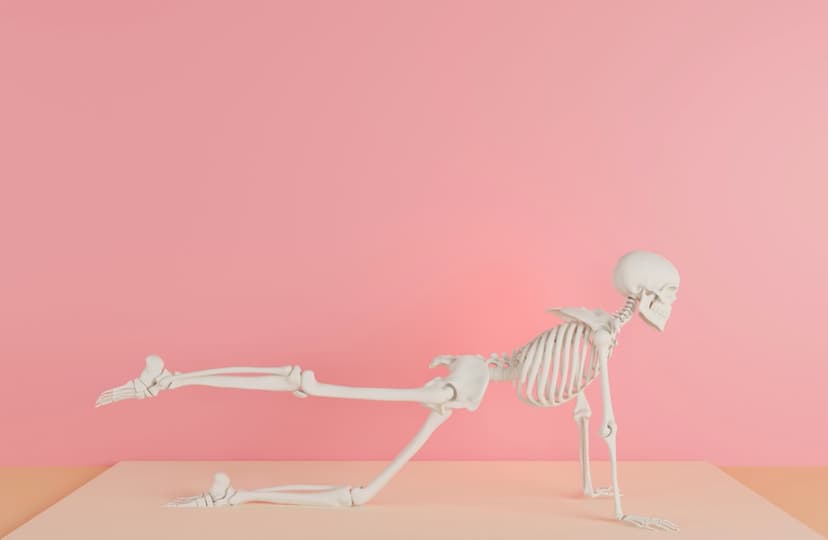
A hard tissue that supports the body and helps protect vital organs.
View full glossary entryHave questions about Bone: Complete Guide?
Ask Clara, our AI health assistant, for personalized answers based on evidence-based research.