Rapid Bone Loss in Perimenopause: What Drives It
Summary
Bone loss is not just an “older age” problem. The video’s central point is that when estrogen becomes variable and then declines in perimenopause, women can lose an estimated 15% to 20% of bone density, and the pace can double or triple compared to earlier adulthood. The discussion ties this to inflammation, an imbalance between bone-resorbing osteoclasts and bone-building osteoblasts, and even early changes in muscle power through myosin-actin function. The practical throughline is prevention: build the highest peak bone mass possible, train with heavy resistance plus multidirectional impact (jumping), and consider earlier bone density testing than standard guidelines suggest, especially with long periods of low estrogen.
🎯 Key Takeaways
- ✓Perimenopause can accelerate bone loss, with an estimated 15% to 20% decline in bone density tied to estrogen loss in this perspective.
- ✓Estrogen influences bone through inflammation control and by shifting the balance between osteoclasts (bone resorption) and osteoblasts (bone formation).
- ✓Early “I feel weaker” complaints may reflect changes in muscle contraction quality (myosin-actin bonding) before visible body-composition changes.
- ✓Bone is framed as more than structure, it acts like an endocrine organ and supports blood cell production in bone marrow.
- ✓For bone-building exercise, multidirectional impact and heavy lifting are emphasized over running alone.
- ✓Earlier baseline bone scans may help identify low bone density sooner, especially for women with years of missing periods or other low-estrogen states.
Bone loss is not a slow, gentle slope for everyone.
The unique warning in this conversation is that for many women, the perimenopause transition can be a period where bone density drops quickly, not gradually. The framing is blunt: if you do nothing, you may still be exercising, still “feel fine,” and still lose a meaningful chunk of bone during the years when estrogen becomes erratic and then declines.
The big takeaway: bone loss can speed up fast in perimenopause
The discussion starts with a familiar midlife question: around the end of what the speaker calls a “golden decade” (roughly the years leading up to mid-40s), do estrogen changes set up a natural decline in muscle, and a higher chance of osteopenia or osteoporosis later?
Yes, that is the expectation in this view, and the reason matters.
What makes this perspective stand out is the emphasis on rate. Men and women both build bone through youth and peak around age 25 (sometimes closer to 30). After that, bone loss tends to plateau for a while. Men, in this framing, lose about 1% per year, which is one reason devastating fractures often show up later, commonly in their 70s or 80s.
For women, the story changes when estrogen is lost.
The claim in the video is that the rate of bone loss can double or triple around the menopausal transition, and that women may lose an estimated 15% to 20% of bone density during the perimenopausal period from estrogen loss alone.
"70% of all hip fractures happen in women."
That statistic is used to underline the stakes. Hip fracture is not treated as an inconvenience here, it is framed as a life-altering event that can cascade into loss of independence, long-term care needs, and even increased mortality risk.
Did you know? Hip fractures are associated with substantial disability and higher risk of death in older adults, and prevention strategies often focus on fall risk, strength, and bone health. The NIH Osteoporosis and Related Bone Diseases Resource CenterTrusted Source provides an overview of why fractures matter and how osteoporosis is defined.
Why estrogen loss hits bone so hard (and why the pace changes)
This explanation is not framed as “bones get weaker with age” and stop there. It is framed as a multi-hit mechanism.
First, estrogen is described as a major anti-inflammatory signal in the body. Bone tissue is portrayed as highly sensitive to inflammatory chemicals, so when estrogen declines, a more inflammatory environment can tilt bone remodeling in the wrong direction.
Second, estrogen is described as directly affecting the balance between two major bone cell types: osteoclasts (cells that resorb bone) and osteoblasts (cells that build bone). The speaker uses a memorable image for the osteoclast, a “Pac-Man” bone-eating cell.
In well-hormoned times, the body aims for balance: take what you need, then build it back. But when estrogen is low or fluctuating, the argument is that osteoclast activity can outpace osteoblast rebuilding. Bone is still being built, but not fast enough to match what is being removed.
That imbalance is the engine of accelerated midlife bone loss in this telling.
To ground this in mainstream physiology, major medical organizations describe osteoporosis as a condition where bone remodeling becomes imbalanced over time, leading to lower bone mass and higher fracture risk. The National Institute of Arthritis and Musculoskeletal and Skin DiseasesTrusted Source explains risk factors and how bone density relates to fracture risk.
What is striking in the video is the prevention logic that follows: if estrogen supports bone, then earlier adulthood is not a waiting room, it is an opportunity.
Peak bone mass is a “starting line,” not a trivia fact
The discussion highlights that men often reach a higher peak bone mass than women, partly due to how testosterone interacts with bone. So women are encouraged to do “everything humanly possible” to start at the highest level they can.
This is not presented as a vanity goal. It is an insurance policy.
Peak bone mass is widely recognized as a key predictor of later-life osteoporosis risk. The International Osteoporosis FoundationTrusted Source discusses how building strong bones earlier can help reduce fracture risk later.
Muscle, power, and the “I got weaker overnight” feeling
A subtle but important point in the video is that midlife change is not only about losing muscle size.
It can be about losing power.
The speaker connects estrogen variability to changes in how muscle contracts at the protein level. Muscle contraction is described using the classic sliding filament idea: myosin and actin are contractile proteins that bind, pull, release, and repeat. The claim here is that estrogen influences how tightly myosin binds to actin, and that when estrogen becomes variable or declines, “myosin dysfunction” can show up as weaker contractions.
This is used to explain a pattern many people recognize: grip strength feels worse, power feels lower, and strength feels harder to access even before body composition visibly changes.
Then comes the actionable twist.
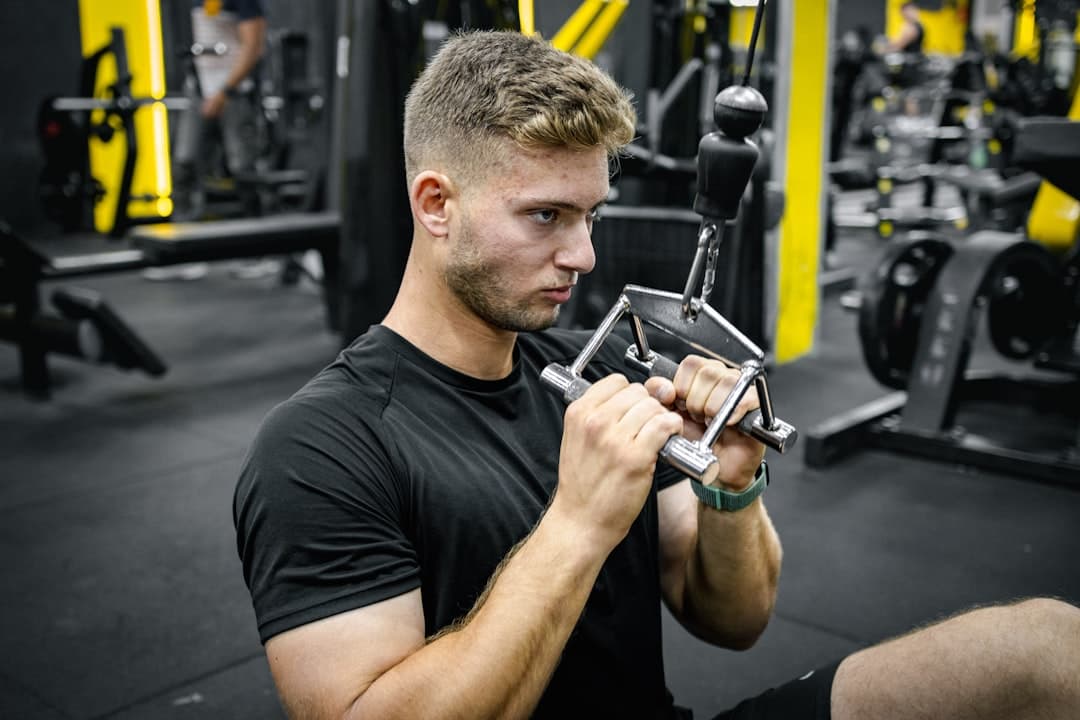
Heavy lifting is framed as a neuromuscular stimulus that can drive adaptation even when estrogen is not providing the same support. In other words, progressive strength training is presented as a way to “offshoot” some of the early contraction-quality changes that people feel.
Pro Tip: If you notice your power dropping before your body looks different, track performance metrics, not just scale weight. Examples include grip strength, how many quality reps you can do at a given load, and how fast you can stand from a chair.
This does not mean everyone should chase maximal loads. It means that progressive resistance training, ideally coached and individualized, is positioned as a protective habit to build before perimenopause, and to keep during it.
Training for bone: heavy lifting plus impact that bones can “hear”
The video’s training message is specific: running is not enough if your goal is to build or preserve bone density.
The key phrase is multidirectional stress.
Why? Bone responds to mechanical loading, but it responds best to loading that is novel, varied, and higher impact, within what your body can safely tolerate. The trainer in the conversation emphasizes that when you land from a jump, your body has to move, the ground does not. That creates ground reaction force that travels up through bone and can stimulate adaptation.
The speaker adds a vivid biological explanation: bone has a cell type called the osteocyte (introduced here as a “little cell” encased in bone). It is connected through tiny tunnels filled with fluid. When you jump, the biomechanical impulse shifts that fluid, and that mechanical signal is translated into biochemical signals that tell bone to build.
It is an elegant idea: your bones “listen” to impact.
From a research standpoint, weight-bearing impact and resistance training are commonly recommended components of bone health programs, though the right type and dose depend on fracture risk and medical history. The Royal Osteoporosis SocietyTrusted Source provides practical guidance on exercise types that support bone.
“Can I lift if I have osteoporosis?” The video’s answer is yes, with supervision
A major myth addressed is that osteoporosis means you cannot lift weights.
The conversation references the Australian LIFTMOR trial (often stylized as “Lift More”), which used heavy lifting under supervision. The protocol described is five sets of five reps, with a load heavy enough that five reps are near failure. In the retelling, participants with osteoporosis were able to do it safely under supervision, none broke during the study, and they improved bone.
What the research shows: Supervised high-intensity resistance and impact training has been studied in older women with low bone mass, and some trials report improvements in bone density and function with appropriate screening and coaching. One example is the LIFTMOR study, published in the Journal of Bone and Mineral ResearchTrusted Source (journal homepage).
The practical takeaway is not “everyone should do 5x5.” It is that progressive loading is not automatically off-limits, and that technique, supervision, and individual risk assessment are central.
Important: If you have osteoporosis, a history of fractures, significant back pain, or you are unsure what is safe, talk with your clinician and consider working with a physical therapist or qualified strength coach. Some movements and ranges of motion may need modification, especially if you have vertebral fractures or high fall risk.
A practical 1-hour midlife workout template from the video
The training plan described is refreshingly concrete. It is not “just move more.”
It is also not a single magic exercise. It is a blend that aims to hit mobility, strength, impact, and metabolic conditioning in one session.
Here is the workout structure the conversation builds toward.
How to build a bone-smart session (step-by-step)
Start with mobility to earn your positions. Spend a short block preparing joints and tissues for loading, especially hips, ankles, thoracic spine, and shoulders. This is less about stretching for its own sake and more about moving well enough to lift and land with control. If you feel stiff or “creaky,” this warm-up is where you begin to restore confidence.
Do heavy lifting as the anchor. The emphasis is progressive resistance, meaning you gradually increase load over time as form and tolerance allow. The point is to create a strong stimulus to muscle and bone, not to chase exhaustion. Many people do best with big compound patterns (squat or sit-to-stand variations, hinges like deadlifts, presses, and pulls), adjusted to their body and injury history.
Add jump training or an impact substitute. If straight plyometrics feel too aggressive, the trainer suggests options like band-assisted pogos (a lighter, supported bouncing drill) or low-depth jumps. The goal is impact that is tolerable and repeatable, not fear-inducing. Over time, this can progress, but only if landing mechanics and balance are solid.
Finish with plyometrics or sprints for metabolic stress (when appropriate). The conversation frames plyometrics as strength work too, and sprint-type training as a way to add metabolic stimulus. This does not have to mean all-out track sprints, it could be short hill efforts, bike intervals, or brisk incline walking intervals depending on joints and fitness. The intent is to keep the session “complete” without turning it into a long grind.
A key nuance: impact is not automatically safe for everyone. If you have pelvic floor symptoms, significant joint pain, advanced osteoporosis, or poor balance, you may need a different progression.
»MORE: If you want a simple tracking sheet, create a “bone training log” with three columns: your heaviest lift of the day, your impact drill and total contacts (for example, 3 sets of 10 low hops), and a 0 to 10 joint pain score the next morning.
Bone scans earlier than 65: the prevention argument
One of the most provocative parts of the video is the stance on screening.
The standard recommendation many people hear is that routine bone density screening begins at age 65 for women at average risk. The expert in the video argues that this is too late to be maximally helpful for prevention, calling it “out the barn” timing.
Instead, the approach described is to measure earlier to establish a baseline, especially if you have risk factors or you simply want to know where you are starting.
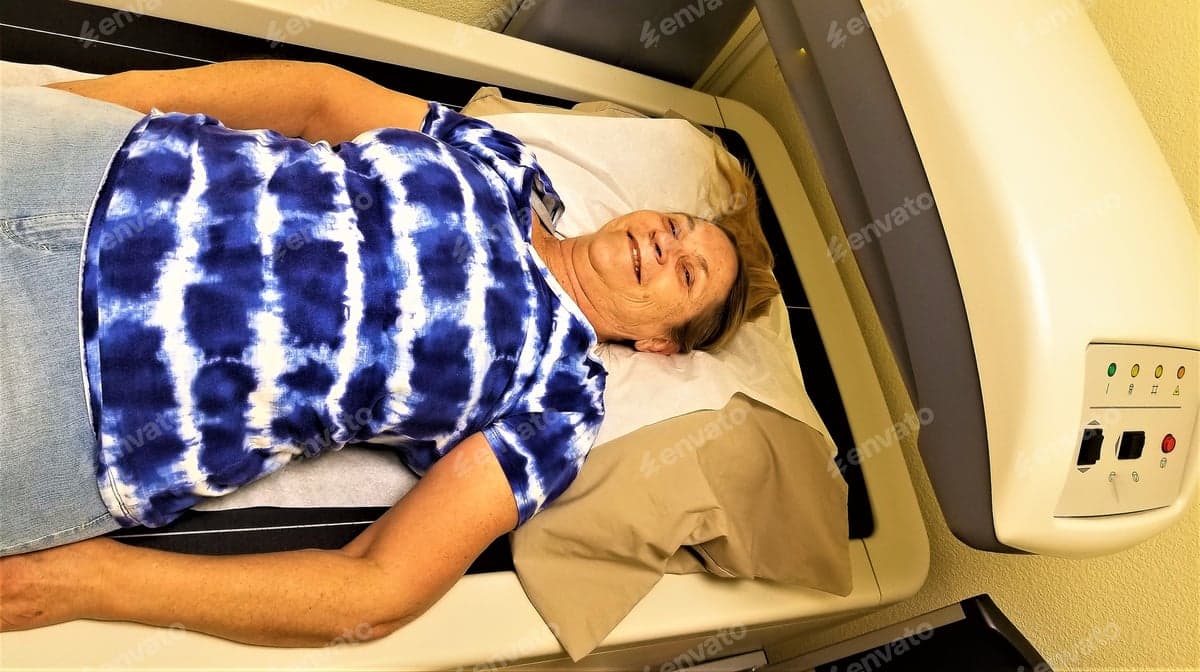
A DEXA scan (dual-energy X-ray absorptiometry) is described plainly as a bone scan to see bone density, and it can also estimate body composition, including lean mass, in many settings.
Guidelines do recommend earlier screening for people with higher risk (for example, prior fractures, long-term steroid use, very low body weight, certain medical conditions). The U.S. Preventive Services Task Force osteoporosis recommendationTrusted Source outlines age and risk-based screening.
Still, the video’s viewpoint is that many clinicians who regularly deal with osteoporosis would prefer earlier information, and that out-of-pocket DEXA options can make baseline testing feasible for some people.
This is also where the conversation brings up a time horizon that many people miss: changing bone density meaningfully can take time. The speaker mentions research suggesting that if estrogen is used to affect bone density, it may require about 10 years of use to meaningfully shift long-term outcomes.
That claim is not a directive to start hormones. It is an argument for thinking in decades, not months.
Bones are not just scaffolding in this telling
A memorable moment in the video is the insistence that you cannot separate muscle from bone. Muscle needs bone for leverage and locomotion.
Then the discussion expands bone’s identity further: bone is framed as an endocrine organ that secretes hormones influencing the brain, pancreas, muscle metabolism, and in men, testosterone production. It is also described as a site for blood cell production, with the pelvis highlighted as a key area where blood cells are made.
This broader framing is consistent with emerging science around bone as an active organ that communicates with other tissues. For an accessible overview of bone biology and remodeling, the NIH bone health overviewTrusted Source is a useful starting point.
Low estrogen is not only menopause: missing periods and bone risk
The final twist is a reminder that perimenopause is not the only time estrogen can be low.
The expert points out that some women in their reproductive years have prolonged periods of low estrogen, sometimes signaled by years without a period. The video treats “I haven’t had a period for 7 years, no big deal” as a red flag, not reassurance.
The concern is trajectory.
If you spend years not ovulating and living in a low-estrogen state during the very years you are supposed to be building or maintaining peak bone mass, you may be on a different curve, starting midlife with less bone in the bank.
In that context, earlier bone scans are framed as essential, because you want to know what is happening now, not discover it decades later after a fracture.
This is also where the speaker makes a strong clinical argument: bone health is described as one of the most acceptable medical reasons to consider estrogen treatment in younger women with prolonged low-estrogen states, because it can profoundly affect long-term bone health.
That decision is individualized and medical. If you have missing periods, disordered eating, high training load with low energy availability, thyroid issues, pituitary conditions, or other causes of amenorrhea, it is worth discussing evaluation and bone protection with a clinician. The ACOG patient guidance on osteoporosisTrusted Source includes risk factors and prevention concepts, and clinicians can tailor next steps to your situation.
Expert Q&A
Q: If I run regularly, isn’t that enough to protect my bones?
A: The perspective in the video is that running alone often does not provide the multidirectional stress that best stimulates bone adaptation. Bones respond to varied loading and impact, so adding progressive resistance training plus carefully scaled jumping or impact drills may provide a stronger stimulus.
If you already run, consider it one piece of a bone-health plan, not the whole plan. A clinician or physical therapist can help you choose impact options that match your joint health and fracture risk.
Video discussion summary, featuring a clinician and strength professional
Expert Q&A
Q: I feel weaker, but my weight and muscle size look the same. Is that real?
A: The video highlights that early perimenopause changes may affect muscle contraction quality and power, potentially related to how myosin and actin interact when estrogen is variable. That can make grip strength and “snap” feel lower before you see obvious body-composition changes.
Progressive strength training may help by driving neuromuscular adaptations, but it should be scaled to your experience level and any injuries. If weakness is sudden, severe, or accompanied by other symptoms, check in with a healthcare professional.
Video discussion summary, featuring a clinician and strength professional
Key Takeaways
Frequently Asked Questions
- How much bone density can women lose during perimenopause?
- In the video’s framing, the rate of bone loss can double or triple when estrogen declines, with an estimated 15% to 20% loss in bone density during the perimenopausal period. Individual risk varies, so discussing personal factors with a clinician is important.
- Is heavy lifting safe if you have osteoporosis?
- The video points to supervised research where women with osteoporosis lifted heavy loads and improved outcomes without fractures during the program. Safety depends on your fracture history, technique, and supervision, so it is best to get individualized guidance.
- Why does the video say running is not enough for bones?
- The argument is that bones need multidirectional stress and impact to stimulate adaptation, not just repetitive straight-line loading. Adding resistance training and scaled impact drills may provide a stronger bone-building signal.
- What is a DEXA scan and why consider it earlier?
- A DEXA scan measures bone density and can also estimate body composition in many settings. The video argues that waiting until 65 can miss years when prevention could be more effective, especially if you have risk factors or long low-estrogen periods.
- Can missing periods in your 20s or 30s affect bone health later?
- Yes, prolonged low estrogen during reproductive years can shift your bone trajectory, potentially lowering peak bone mass and increasing later risk. If you have absent periods for months or years, it is worth discussing evaluation and bone protection with a healthcare professional.
Get Evidence-Based Health Tips
Join readers getting weekly insights on health, nutrition, and wellness. No spam, ever.
No spam. Unsubscribe anytime.