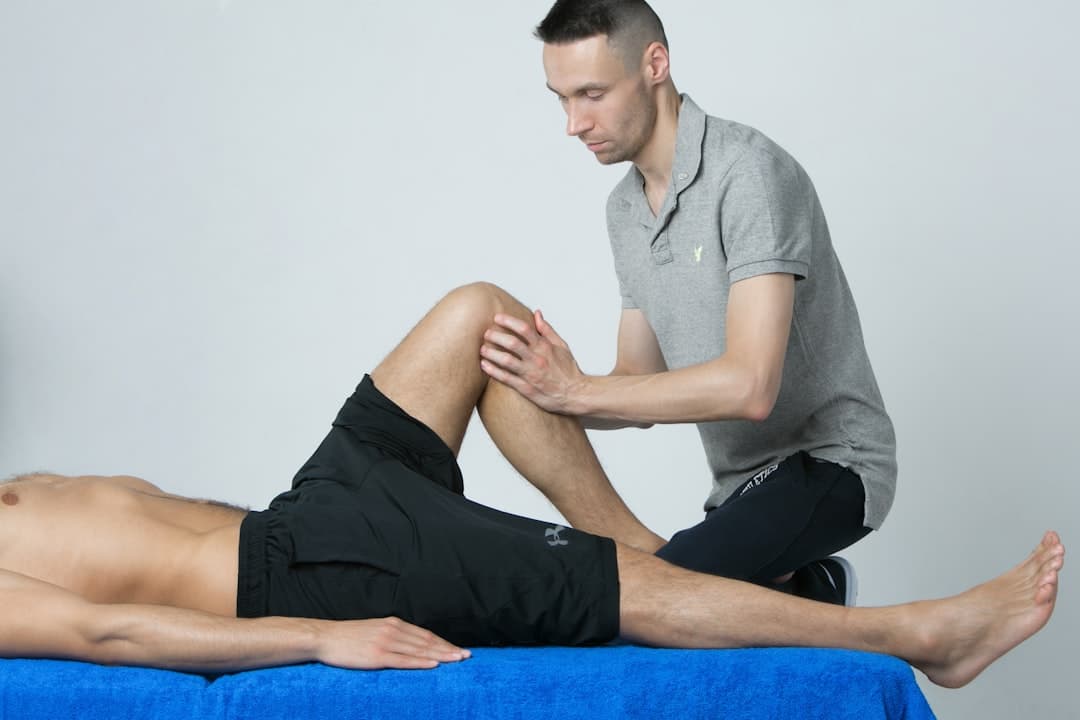
Frozen Shoulder: What It Means and How to Move Again

Summary
Frozen shoulder, also called adhesive capsulitis, is not about cold. It is a stiff, painful shoulder caused by a tightening capsule around the joint. The video’s core message is simple and no-nonsense: keep the shoulder moving, even when it hurts, because movement is the hallmark of recovery. Symptoms usually build slowly over months, often with night pain, and the full course can last 12 to 24 months. Care often starts with an exam, then focuses on pain control, physiotherapy, and at-home motion. Some people may also consider steroid injections, hydrodilation, or (in select cases) manipulation under anesthesia.
🎯 Key Takeaways
- ✓Frozen shoulder is really *adhesive capsulitis*, a stiffening of the shoulder capsule that can feel “leathery” and restrict motion.
- ✓It often starts without a clear injury and progresses slowly, commonly in the 30s to 50s, and more often in women.
- ✓The classic timeline is freezing (painful stiffening), frozen (less pain, still stiff), then thawing (motion returns), often over 12 to 24 months.
- ✓A key clinical clue is **true stiffness**: even if pain were removed, the shoulder still would not move normally.
- ✓The video’s main action step is **movement**, supported by pain relief options and guided physiotherapy.
- ✓Options like corticosteroid injections, hydrodilation, or manipulation under anesthesia may be considered to reduce pain or speed progress for some people.
Frozen shoulder can feel like your body is ignoring your effort.
You reach for a seatbelt, a light switch, or the top shelf, and your shoulder just will not go. Worse, it can ache at rest and spike at night, right when you are trying to sleep.
The perspective in this video is practical and blunt: this problem is slow, but it is usually not permanent, and movement is the cornerstone of getting your shoulder back.
Why “frozen shoulder” is such a frustrating name
The discussion starts with a complaint many patients share: the label can feel like a cop-out.
If you tell a clinician, “My shoulder feels frozen,” and the response is “You have frozen shoulder,” it can sound like the diagnosis is just repeating the symptom.
What’s useful here is the shift to the more anatomical name, adhesive capsulitis.
Adhesive capsulitis points to the tissue involved, the joint capsule, and the core problem, a progressive loss of shoulder motion that is not simply fear of pain or “guarding.” It also highlights an important reality from the video: it has nothing to do with temperature. People are not showing up because one shoulder is colder.
Did you know? Frozen shoulder affects an estimated 2% to 5% of the general population in many reports, with higher rates in certain groups. A clinical overview from the American Academy of Orthopaedic Surgeons (AAOS)Trusted Source notes it is more common in women and people ages 40 to 60.
What’s actually happening inside the shoulder capsule
The shoulder is a ball-and-socket joint, but it is not a deep, stable socket like the hip.
A helpful image from the video is “a golf ball on a golf tee.” The ball is large, the socket is shallow, and the body relies heavily on soft tissues to keep the joint centered.
The capsule, the “elastic pouch” that can turn rigid
A central concept is the capsule, described as an elastic pouch that “sucks” the ball onto the socket. In a healthy shoulder, this capsule stretches and allows the shoulder to be the most mobile joint in the body.
In frozen shoulder, the capsule can become thickened and stiff. The video uses a vivid comparison: instead of acting like an elastic band, the capsule starts to feel more like leather. That change helps explain why you can want to move and still cannot.
This framing matches broader medical descriptions. Frozen shoulder is generally understood as a condition involving capsular inflammation and fibrosis, leading to pain and progressive restriction of both active and passive range of motion, as summarized by OrthoInfo from AAOSTrusted Source.
Who tends to get it (and why immobility matters)
This condition is described as relatively poorly understood. In plain terms, there is not always a neat explanation for why one person develops it and another does not.
Still, the video emphasizes several patterns that matter for real-life decision-making.
Common risk factors highlighted
The discussion points to higher likelihood in people with:
It also notes a demographic trend: it is most common in the 30s to 50s, more often in women, and uncommon in teenagers or very young adults.
Immobility is a big, practical trigger you can sometimes control
One of the most actionable points in the video is the role of immobility.
If your arm is immobilized after a fracture, or your shoulder is kept still after surgery, stiffness risk rises. That does not mean you should ignore surgical instructions, it means you should ask early about safe movement, timelines, and supervised rehab.
Important: If you have had surgery or a fracture, do not “push through” restrictions on your own. Ask your surgeon or physiotherapist what movements are safe now, what must wait, and what pain levels are acceptable.
The 3 stages: freezing, frozen, thawing (what to expect)
The video organizes frozen shoulder into a simple, memorable storyline: freezing, frozen, thawing.
This is not just trivia. It changes what “progress” looks like, especially when pain improves before motion does.
Stage 1: Freezing (pain ramps up, motion drops)
This first phase is described as progressively stiffer and stiffer, with a tremendous amount of pain.
Night pain is a major theme. Many people cannot lie on the affected side, and symptoms can feel amplified at night.
Timeline matters here. The freezing stage can last 2 to 12 months, and many people seek care a couple months in, once sleep and daily tasks become too difficult.
Stage 2: Frozen (pain eases, stiffness stays)
Over months, pain may gradually subside, but the shoulder can remain markedly stiff.
This is where people can get confused or discouraged. Less pain does not automatically mean the capsule is normal again.
Stage 3: Thawing (motion returns)
In the thawing phase, motion starts to come back and pain continues to settle.
The whole process is described as slow. A typical total course is 12 to 18 months, sometimes up to 24 months.
A practical implication is patience with the timeline, paired with steady effort. The video’s tone is direct: the shoulder often improves, but it requires work.
How clinicians check it, and what “true stiffness” means
A key argument in the video is that frozen shoulder is not just “it hurts so I do not want to move it.”
That distinction matters because pain alone can cause someone to guard motion, but frozen shoulder includes a mechanical block.
The exam focuses on restricted motion that is “inherent”
The first step described is a physical examination where the clinician moves the shoulder.
The hallmark is inherent restriction in motion, meaning the joint will not move normally even when someone else tries to move it for you.
One striking line is that even if you were anesthetized, the shoulder would still not move normally. That is the idea of true stiffness rather than only pain-limited effort.
This is also consistent with standard descriptions that frozen shoulder restricts both active and passive range of motion, as noted by AAOS OrthoInfoTrusted Source.
Expert Q&A
Q: How can I tell if my shoulder is “frozen” or I’m just avoiding movement because it hurts?
A: A common clue is whether the shoulder is limited when someone else gently tries to move it for you. In adhesive capsulitis, both your own motion and assisted motion tend to be restricted in a similar pattern.
Pain can still be intense, especially early on, so it is worth getting examined. A clinician can compare sides, check passive motion, and consider other causes of shoulder pain.
Dr. Marcus Bishoff, Orthopedic Surgeon (as featured in the video)
What you can do now: a practical, movement-first plan
The video’s treatment message is refreshingly consistent: movement is the hallmark.
That can feel counterintuitive. If something hurts, most people protect it. Here, the argument is that protecting it too much can feed the cycle of stiffness.
Option A vs Option B: the mindset shift
Here is the comparison the video keeps coming back to.
Option A: Rest and avoid pain
Option B: Control pain enough to keep moving
This is not about reckless forcing. It is about consistent, safe motion, and getting help when pain blocks you.
Tools discussed for pain and inflammation
The video mentions common anti-inflammatory medications such as ibuprofen or naproxen (examples given include Advil, Aleve, Motrin) to reduce inflammation and help with pain relief.
Medication choices are personal and can be unsafe for some people, especially those with kidney disease, stomach ulcers, bleeding risk, or certain heart conditions. If you are unsure, it is worth asking your clinician or pharmacist before using over-the-counter anti-inflammatories.
Pro Tip: If night pain is your biggest barrier, talk with a clinician about a plan specifically for sleep, because better sleep often makes it easier to do your stretching and rehab the next day.
Physiotherapy and home movement, the core of the plan
Physiotherapy is presented as a key support for stretching and regaining mobility, and for coaching you to move on your own.
The message is repetitive on purpose: keep pushing, pushing, pushing. Not in a macho way, but in a consistent, daily way.
Here is a practical, action-oriented approach that fits the video’s logic.
How to start moving again (step-by-step)
Get a baseline exam and a plan. A clinician can confirm whether the pattern fits adhesive capsulitis and rule out other issues. If you have diabetes or thyroid disease, it is also a good moment to ask whether your condition is well controlled, since these are linked with higher risk.
Pick 2 to 4 simple movements you can repeat daily. The goal is frequent, tolerable stretching rather than occasional heroic sessions. A physiotherapist can tailor this, but the principle is to keep the capsule from “learning” stiffness.
Use pain control strategically, then move. The video’s sequence is practical: reduce pain enough to move, then do the movement. If you wait until you feel perfect, you may not start.
Track one functional win per week. Examples include reaching your back pocket, fastening a bra, putting on a coat, or reaching a shelf one notch higher. Frozen shoulder progress is slow, so small wins matter.
Injections mentioned: steroid and hydrodilation
The video describes two injection approaches.
These are typically outpatient procedures. Whether they are appropriate depends on your medical history, symptom stage, and access to skilled clinicians.
What the research shows: Clinical guidelines and reviews generally suggest corticosteroid injections can reduce pain and improve function in the short term for many people with adhesive capsulitis, especially earlier in the course. A patient-friendly overview from AAOSTrusted Source also lists steroid injections among common nonsurgical options.
Manipulation under anesthesia: a “speed up” option with tradeoffs
A more aggressive option discussed is manipulation under anesthesia.
The rationale is straightforward: since the condition often improves on its own but takes a long time, some people are too limited or frustrated to wait. In the operating room, with the patient asleep, the clinician moves the shoulder forcefully to break up capsular stiffness.
It is not risk-free. The video explicitly notes the risk of fracture. This is why it is not a do-it-yourself concept, and why careful patient selection and experienced technique matter.
The simplest but hardest takeaway: it is safe to move, and you have to
One of the strongest lines in the video is essentially this: even though it hurts, it is generally safe to move it, and there is no getting around it.
That does not mean ignoring sharp, alarming pain, new numbness, fever, or symptoms after a major injury. It means that in typical frozen shoulder, the path forward is not endless rest, it is guided motion.
Resource Callout
»MORE: Ask your physiotherapist for a one-page “frozen shoulder home plan” that lists 3 to 5 exercises, your target frequency, and what pain level is acceptable. Keeping it on the fridge can improve follow-through.
A note on “one side only,” and the good news
The video highlights a quirky feature: it usually affects one shoulder, not both.
Even better, once you have had it on one side, it is rare to get it again on that same side, according to the clinician’s experience shared in the discussion.
That is not a guarantee, but it is a reassuring frame when you are in month three and it feels like nothing will change.
Key Takeaways
Frequently Asked Questions
- How long does frozen shoulder last?
- The video describes a slow timeline, often 12 to 18 months, and sometimes up to 24 months. The early freezing stage alone can last 2 to 12 months, with pain often worst early on.
- Is it safe to move a frozen shoulder even if it hurts?
- The core message is that movement is essential and generally safe in typical frozen shoulder, even though it can be painful, especially early. If you had a recent injury or surgery, confirm safe limits with your clinician first.
- What are the main treatment options mentioned in the video?
- The discussion emphasizes movement and physiotherapy, often supported by anti-inflammatory medications for pain. It also mentions corticosteroid injections, hydrodilation injections, and in select cases manipulation under anesthesia.
- Who is more likely to get frozen shoulder?
- It is most common in middle age, often in the 30s to 50s, and more common in women. The video highlights higher risk with diabetes, thyroid disorders, cardiovascular disease, Parkinson’s disease, and after periods of shoulder immobility.
- Why does frozen shoulder often hurt more at night?
- The video notes night pain is common and can be amplified, making it hard to lie on the affected side. If sleep is a major issue, it is worth discussing targeted pain and positioning strategies with a clinician.
Get Evidence-Based Health Tips
Join readers getting weekly insights on health, nutrition, and wellness. No spam, ever.
No spam. Unsubscribe anytime.