Mental Health, Diet, and Mitochondria: Palmer’s View
Summary
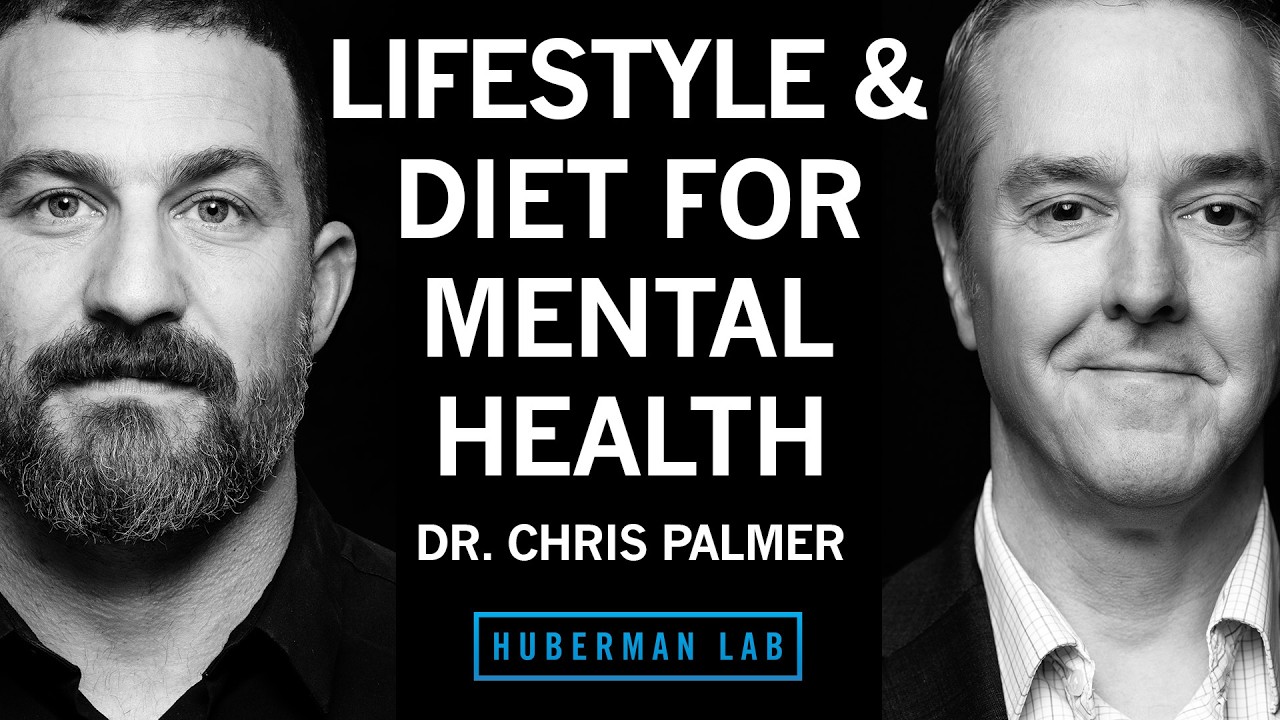
Most people still think mental health is mainly a “chemical imbalance” problem or a “talk therapy” problem. In this conversation, Dr. Chris Palmer reframes it as a **metabolic and mitochondrial** problem that can unify biology, psychology, and social stress. The core idea is simple: brain function is energy intensive, and mitochondria help run not only ATP production, but also neurotransmitter release, inflammation control, stress hormones, and gene expression. The episode explores what supports mitochondria (sleep, exercise, light, diet quality), why ketogenic diets can be therapeutic for some, and why nutrient deficiencies like iron and B12 can look like psychiatric illness.
What most people get wrong about mental health treatment
The most common mental health story still sounds like this: you feel depressed, anxious, unfocused, or exhausted because you are missing a brain chemical. Replace the chemical, and you should feel better.
That story is not completely useless, but in this conversation it is treated as incomplete.
A second popular story is more modern: treatments work because they open a “window” for neuroplasticity, then therapy, learning, and new behavior patterns reshape circuits. That view has real value too.
The unique perspective here is that both stories can be placed inside a larger, more practical umbrella: metabolism, specifically mitochondrial function. In this framing, neurotransmitters are not “the cause” so much as one layer of how the brain allocates energy, shifts priorities under stress, and changes itself over time.
The key insight is not that psychology and relationships do not matter. It is the opposite. This view argues that biology, psychology, and social context are all real, and mitochondria help connect them.
If that sounds abstract, the episode keeps returning to a concrete point: a neuron cannot be active, adapt, or rewire unless it can increase ATP production. In other words, “brain activity” and “brain energy” are inseparable.
Did you know? Palmer highlights data from adverse childhood experiences (ACEs) research, including the striking observation that people with very high ACE exposure can lose about 20 years of life expectancy compared with those with none. That is a mental health story and a metabolic story at the same time.
The “third column” Palmer wants people to see
Instead of choosing between “chemical imbalance” and “therapy changes circuits,” this framework adds a third column that influences both:
This is why the conversation repeatedly warns against searching for a single magic supplement. If the lifestyle terrain is damaging, no supplement “stands a chance” of reversing it.
Why mitochondria are more than the cell’s “powerhouse”
Most people remember mitochondria as the cell’s powerhouse, tiny organelles that turn food and oxygen into ATP.
That is true, but the episode insists it is not the whole story.
A more modern view, emphasized here, is that mitochondria are also coordinators. They influence neurotransmitter handling, immune signaling, hormone synthesis, stress adaptation, and gene expression patterns.
The discussion uses a memorable analogy: mitochondria are like a workforce inside a cell. They provide energy, but they also help orchestrate the work.
Here are the specific roles highlighted:
This is why the mitochondria-first approach can feel like it is “everything.” The episode leans into that: you cannot talk about biology without metabolism.
What the research shows: Mitochondria are central to cellular energy and signaling, and mitochondrial dysfunction is implicated across aging and many diseases. A widely cited overview describes mitochondria as hubs for metabolism and cell signaling, not only ATP production (Nature EducationTrusted Source).
A unifying story: trauma, stress, heart disease, and depression
A theme running through this conversation is that mental health labels can become life sentences.
Schizophrenia, bipolar disorder, “treatment resistant depression,” these diagnoses often get treated as if they are the cause. Palmer pushes back hard: these labels describe symptom clusters, and the cause is frequently unknown.
So what connects childhood trauma to later depression, PTSD, substance use, obesity, diabetes, cardiovascular disease, autoimmune disease, and even dementia?
This framing argues that mitochondria and metabolism are one of the few plausible bridges that can connect all those outcomes without denying psychology.
Stress is not only a feeling. It is a physiology.
The episode highlights four buckets of the stress response: cortisol, adrenaline, inflammation, and epigenetic changes, and then notes animal work where manipulating mitochondrial-related genes altered all four. The implication is not that mitochondria are the only driver, but that they may be a central switchboard.
Why this matters for energy and fatigue
If you are reading this through an energy and fatigue lens, this is where the mitochondria story becomes personal.
Fatigue is not just “low motivation.” It can be the brain and body reallocating energy away from exploration, libido, and risk-taking toward survival mode.
The episode uses the flu as a familiar example. When you are sick, you often feel exhausted, socially withdrawn, less motivated, less interested in sex, and more likely to stay in bed. This is treated as an inflammation-mitochondria interaction that directly affects mood and behavior.
Pro Tip: If your fatigue or mood symptoms appeared after a major stressor, illness, medication change, or diet shift, write down a simple timeline. Clinicians can often spot patterns faster when the sequence is clear.
Ultra-processed foods and mental health, the uncomfortable link
The conversation does something many nutrition discussions avoid. It names ultra-processed foods as a mental health issue, not just a waistline issue.
It also emphasizes uncertainty about the mechanism.
Do additives harm mitochondria directly? The episode’s position is cautious: we do not have adequate testing for tens of thousands of food chemicals, in part because of regulatory loopholes and limited research funding. At the same time, the population-level association between ultra-processed food intake and worse outcomes is described as “unequivocal.”
One of the most vivid points is the linearity: the more ultra-processed food, the worse mental health, with one cited dataset described as showing 58 percent poor mental health in the high intake group versus 18 percent in the low intake group.
Even if you do not buy every number, the direction of association is consistent with large reviews.
What the research shows: A large umbrella review found that higher ultra-processed food intake is associated with increased risk of multiple adverse health outcomes, including some mental health outcomes (BMJTrusted Source).
The addiction parallel
A unique part of the video’s perspective is the comparison between ultra-processed foods and tobacco.
The point is not that a cookie is identical to nicotine. The point is behavioral: highly palatable, cheap, accessible products can create compulsive cycles that resemble addiction patterns.
The conversation even reframes binge eating disorder as, in many cases, “addiction to ultra-processed foods,” noting that binges rarely involve steak and broccoli.
This is also where the public health critique appears. The episode argues that marketing, lobbying, and conflicts of interest can slow change, and that the U.S. has not invested enough in nutrition research.
Important: If you feel out of control around certain foods, shame usually makes the cycle worse. Consider discussing binge patterns with a licensed clinician, especially if you also have depression, anxiety, or disordered eating.
Ketogenic diets as a fasting-mimicking brain intervention
Ketogenic diets are presented here with two simultaneous messages:
First, they can be powerful.
Second, they are not for everyone, and they are not a moral identity.
The episode roots ketogenic therapy in epilepsy, describing it as a 100-year-old evidence-based intervention, including mention of Cochrane reviews and the claim that ketogenic diets can be substantially more likely than medication changes to produce seizure freedom in treatment resistant epilepsy.
From there, the conversation expands into psychiatry, citing a growing body of pilot trials, case series, and case reports across conditions like schizophrenia, bipolar disorder, depression, anxiety, and anorexia nervosa.
The most important framing detail is this: ketogenic diets are described as mimicking fasting.
That matters because fasting is a metabolic stressor. At one extreme, it becomes starvation. The episode’s caution is clear: if someone uses keto or fasting in a way that deprives essential nutrients or adequate calories, it can be harmful.
How keto is linked to mitochondria in this conversation
The mechanistic story offered is not “keto fixes serotonin.” It is broader.
The discussion highlights:
Resource callout: »MORE: If you are considering ketogenic therapy for mental health, create a one-page “keto safety sheet” to bring to your clinician: current meds, history of eating disorders, kidney issues, lipid concerns, and your goal (symptoms you want to track weekly).
Fasting cycles and “metabolic resets”, what’s plausible now
The episode treats intermittent fasting and fasting-mimicking diets as potentially useful tools, but it repeatedly returns to a practical problem: nutrition research is underfunded.
That means the evidence base is uneven.
Some studies show benefit, others show little, and the details matter, especially what people eat during their feeding window.
A specific example discussed is Valter Longo’s fasting-mimicking diet approach, described as a 5-day, very low calorie cycle repeated several times per year, with reported improvements in biomarkers related to metabolic health and aging.
This conversation’s stance is not that everyone should fast. It is that periodic metabolic switching may offer benefits for some people, and that human cultures have used fasting rituals for millennia, possibly because they observed real effects.
Standalone statistic: Only about 7 percent of U.S. adults meet ideal criteria across common metabolic syndrome markers, according to the figure cited in the conversation.
A simple trade-off lens for fasting
Fasting can be helpful, and fasting can be risky.
It may be more risky if you have a history of eating disorders, are pregnant, have diabetes on glucose-lowering medications, have low body weight, or have other medical vulnerabilities.
If you are considering fasting for energy or mental clarity, it is worth discussing with a clinician, especially if you take medications that can interact with changes in food intake.
Supplements through a mitochondria lens: creatine, methylene blue, urolithin A
This episode does not treat supplements as the main event.
They are treated as add-ons, sometimes useful, sometimes risky, and rarely a substitute for sleep, exercise, and diet quality.
Still, three supplements get a mitochondria-specific discussion.
Creatine
Creatine is described as a foundational energy molecule.
The key mechanism presented is the phosphocreatine shuttle: creatine enters mitochondria, becomes phosphocreatine, then helps move high-energy phosphate to where it is needed in the cell, including synapses.
The episode notes several associations:
It also notes that randomized trials exist suggesting creatine may improve depression symptoms or augment antidepressants, and may help in some cognitive impairment contexts, but the trials are often small.
What the research shows: Creatine has evidence for performance and potential brain effects, and its safety profile is generally considered good at common doses in healthy adults, though individual risks vary (International Society of Sports Nutrition position standTrusted Source).
Methylene blue
Methylene blue is presented as a primarily mitochondrial agent.
In this framing, it can act as an electron acceptor and donor, potentially reducing electron leakage from the electron transport chain that would otherwise form reactive oxygen species (oxidative stress).
But the conversation is careful: too much electron acceptance could push toward the opposite problem, reductive stress.
Another key caution is serotonin syndrome risk, especially when combined with serotonergic medications.
Important: Methylene blue can interact with antidepressants and other serotonergic drugs, raising the risk of serotonin syndrome. If you take an SSRI, SNRI, MAOI, or other psychiatric medication, do not experiment without medical supervision.
Urolithin A
Urolithin A is presented as one of the more promising supplements in this space because it has randomized controlled trials in older adults, mainly focused on muscle function and aging-related outcomes.
The conversation frames it as potentially helpful, but still secondary to lifestyle.
What the research shows: Human trials suggest urolithin A can improve biomarkers of mitochondrial function and some measures of muscle endurance in older adults (Nature MetabolismTrusted Source).
Nutrients that can masquerade as psychiatric symptoms: iron and B12
This part of the conversation is one of the most clinically urgent.
The claim is straightforward: if you lack key nutrients needed for mitochondrial enzymes and oxygen handling, your brain may not function normally. The symptoms can look psychological, but the driver can be metabolic.
Iron deficiency and the puberty mental health shift
The episode highlights a striking statistic: a large proportion of U.S. girls and young women may be iron deficient.
It links this to a familiar pattern: after puberty, rates of depression and anxiety rise sharply in girls.
This conversation does not claim iron deficiency explains all of that. It explicitly acknowledges social and psychological contributors, including trauma risk and social stress.
But it argues that iron deficiency is an underappreciated biologic contributor that can affect energy, cognition, mood, and overall brain function.
What the research shows: Iron deficiency is common in adolescent girls and young women, and iron is essential for oxygen transport and cellular energy metabolism (JAMATrusted Source).
Vitamin B12, diet patterns, and medication effects
B12 is described as central to mitochondrial function and neurologic health.
Food sources discussed are animal-sourced foods, including meat and eggs. The episode notes that vegans and vegetarians are at higher risk of deficiency unless they supplement.
It also highlights medication-related risk:
B12 deficiency is described as capable of producing severe neuropsychiatric symptoms, including psychosis-like symptoms, and the conversation emphasizes that neurologic damage can become permanent if not addressed.
Pro Tip: If you eat vegan or mostly vegetarian, ask your clinician to check B12 periodically, and do not assume a multivitamin automatically covers you. Some people need higher doses or different forms depending on absorption.
A newer twist: “central” B12 deficiency
One of the most unique pieces of this episode is the discussion of a newer autoimmune mechanism.
The claim is that some people can have normal blood B12 levels but very low B12 in the central nervous system due to antibodies affecting transport across the blood-brain barrier. This has been investigated using spinal fluid testing.
This is not presented as a do-it-yourself diagnosis. It is presented as an example of why symptom labels should not be treated as final answers.
Vaccines, inflammation, mitochondria, and the autism debate
This is the most sensitive section of the episode, and it is handled with a specific structure.
First, the conversation asks a more basic question: does inflammation impair mitochondrial function?
The answer given is yes, inflammatory cytokines like TNF-alpha and IL-6 can impair mitochondrial function, and this is well supported in biology.
Second, it asks: can inflammation during pregnancy affect neurodevelopment?
The episode points to decades of evidence linking maternal infection and inflammation to higher risk of neurodevelopmental outcomes in offspring. It references historical outbreaks (like rubella) and animal models where immune activation during pregnancy increases neurodevelopmental risk.
Third, it addresses vaccines: do vaccines create inflammation, and could a rare exaggerated inflammatory response in a vulnerable child plausibly contribute to neurodevelopmental disruption?
The answer given is nuanced: vaccines can produce an immune response, people vary in inflammatory responses, and in rare cases with pre-existing vulnerabilities, a strong inflammatory hit could plausibly contribute.
At the same time, the conversation notes that infections themselves can be dangerous and can also raise neurodevelopmental risk. So the risk-benefit analysis is not trivial.
Expert Q&A
Q: If inflammation can affect mitochondria, should parents avoid vaccines to protect brain development?
A: It is understandable to want control over anything that could affect a child’s development. From a medical standpoint, you usually have to weigh two risks: the immune activation from vaccination versus the immune activation and complications from the infection the vaccine prevents.
A practical step many families overlook is optimizing modifiable health factors around vaccination, such as ensuring a child is well, well rested, and well nourished, and discussing any history of severe reactions, immune disorders, or known metabolic conditions with the pediatrician.
Jordan M., MD (Family Medicine)
The “elephant in the room” argument
A major counterpoint raised is that autism rates are rising alongside metabolic dysfunction in the population.
The episode highlights associations between parental obesity, diabetes, and autism risk in offspring, and suggests these metabolic factors may be larger contributors at the population level than many people realize.
This is not presented as blame. It is presented as a prevention opportunity.
What the research shows: Maternal obesity and diabetes have been associated with higher risk of autism spectrum disorder in offspring in large observational studies and meta-analyses (JAMA PediatricsTrusted Source).
Can we measure “mitochondrial health” with a simple score yet?
A recurring practical question is: what blood test tells you your mitochondria are healthy?
The episode’s answer is blunt: there is no single definitive clinical blood test for mitochondrial health.
There are biomarkers that suggest metabolic dysfunction, and there are research groups working on panels intended to reflect mitochondrial disruption. The conversation mentions efforts ranging from multi-marker panels to smaller sets of biomarkers that may distinguish certain severe depression phenotypes from healthy controls.
The broader vision is a future where:
Expert Q&A
Q: I am not overweight. Does that mean my metabolism and mitochondria are fine?
A: Not necessarily. Some people have normal body weight but still have insulin resistance, abnormal lipids, high blood pressure, sleep deprivation, or nutrient deficiencies that can affect energy and brain function.
If you have persistent fatigue, mood symptoms, or brain fog, it can be reasonable to review basic labs with your clinician, including iron studies and B12, and to assess sleep, diet quality, and activity levels.
Alexis R., MD (Internal Medicine)
Key Takeaways
Frequently Asked Questions
- Is mitochondrial dysfunction a proven cause of depression?
- This episode frames mitochondrial and metabolic dysfunction as a unifying contributor that can influence neurotransmitters, inflammation, and neuroplasticity. Research supports links between metabolism and mood, but depression remains heterogeneous, and causes vary by person.
- Do ketogenic diets help mental health because they change mitochondria?
- The conversation argues ketogenic diets mimic fasting and may promote mitophagy and mitochondrial biogenesis, with downstream effects on brain excitability and signaling. Evidence is strongest in epilepsy, with growing but still developing evidence in psychiatric disorders.
- Can ultra-processed foods really affect mental health?
- Population studies associate higher ultra-processed food intake with worse mental health outcomes. The exact mechanisms may include higher calorie intake, addictive-like palatability, and potential effects of additives, but more targeted research is still needed.
- Should vegans take vitamin B12 for brain health?
- Because B12 is primarily found in animal-sourced foods, vegans are at higher risk for deficiency without supplementation. It is reasonable to discuss B12 testing and supplementation with a clinician, especially if fatigue, mood symptoms, or neurologic symptoms occur.
- Is creatine only for athletes, or can it help brain function?
- Creatine is described as part of cellular energy transfer and is found in brain tissue. Some small trials suggest potential benefits for mood and cognition, but evidence is not definitive, and it is best discussed with a clinician if you have medical conditions or take medications.
- Does the episode say vaccines cause autism?
- No. The episode presents a nuanced view: inflammation can impair mitochondria, and rare exaggerated inflammatory responses in vulnerable individuals could be biologically plausible contributors, but infections also carry risks, and existing population studies do not support a simple vaccines-cause-autism claim.
Get Evidence-Based Health Tips
Join readers getting weekly insights on health, nutrition, and wellness. No spam, ever.
No spam. Unsubscribe anytime.