Jesse James West’s Anti-Aging Reset: Don’t Die
Summary
Most longevity advice fails because it treats anti-aging like a checklist. In this conversation, the through-line is identity: adopt a “don’t die” mindset, then build daily systems that reduce self-sabotage, burnout, and extreme swings. Jesse James West describes how relentless work can double as self-worth, how “nothingness” can feel threatening, and how recovery, relationships, and food quality (ditching low-calorie gimmicks for real ingredients) become longevity tools. This article translates the video’s perspective into practical steps, plus a light layer of research to help you weigh trade-offs and stay medically grounded.
What most people get wrong about anti-aging
Most people treat anti-aging like shopping.
They collect tips, buy the “clean” products, copy a celebrity morning routine, and assume the body will simply comply. But the puzzle rarely gets solved that way, because aging is not just about what you add, it is also about what your lifestyle repeatedly takes away, sleep, calm, meaning, recovery, and consistency.
This conversation has a different center of gravity. It is not primarily about a supplement list or a perfect workout split. The unique perspective is that longevity begins as a belief system and an identity choice, then it becomes a set of practical constraints you build around your own personality.
The through-line is simple and intense: change your mindset to “don’t die.” It is said half-jokingly, like a cult tagline, but the point is serious. If you truly internalize “don’t die,” you start noticing how many everyday defaults quietly increase risk, chronic stress, poor recovery, and self-sabotage.
And if you are the kind of person who runs hot, high energy, always moving, always producing, that mindset has to include something uncomfortable.
You have to learn to stop.
The video’s core idea: “Don’t die” as a daily operating system
The anti-aging question in the video is framed as “top five tips I could change today.” The first answer is not food, not training, not biohacking. It is identity: adopt “don’t die” as your mindset. The discussion even calls it “more of a religion,” because it is meant to be all-encompassing, not a temporary challenge.
What does that mean in plain language?
It means you stop making health decisions as if you are temporarily borrowing your body for a photoshoot or a deadline. You start making decisions as if you plan to still be here, and still be capable, decades from now.
This framing emphasizes a key trade-off that many fitness-focused people miss:
If you have ever felt the “all gas, no brakes” pattern in your own life, this mindset can be clarifying. It does not ask you to stop being ambitious. It asks you to build ambition in a way that does not quietly cash out your future.
Did you know? Chronic stress is linked with worse cardiometabolic health and sleep disruption, both of which can influence long-term aging trajectories. Stress is not just a feeling, it can shape physiology over time, including through the hypothalamic-pituitary-adrenal (HPA) axis and inflammatory signaling. For an overview of how stress affects the body, see the American Psychological Association’s stress resourcesTrusted Source.
The “don’t die” mindset is not fear-based when done well. It is clarity-based. You stop pretending that your body will always bounce back from chaotic inputs.
Relentless energy, chaotic schedules, and the hidden longevity cost
A big part of the video is not about training at all. It is about pace.
The schedule described is extreme: days that run from around 7 a.m. to midnight, multiple shoots per day, travel, and the pressure to “get every ounce” out of a trip. There is also a pattern of swinging between 100 percent chaotic and nothing, with the “nothing” serving as recovery from the chaos.
That pattern is relatable, and risky.
Here is the trade-off. Batching work and going hard can be efficient and creatively energizing. But if your recovery is only reactive, meaning you rest only when you crash, you may miss the quieter signs that your system is strained: irritability, sleep fragmentation, caffeine dependence, reduced libido, persistent soreness, or feeling emotionally flat.
Longevity is often less about heroic effort and more about reducing repeated physiological whiplash.
A practical way to think about it is “inputs” and “outputs.” If your output is always high, your inputs must be reliable: sleep, nutrition, downtime, and relationships that calm you down.
Important: If you notice persistent fatigue, mood changes, reduced performance, or sexual health changes, it is reasonable to discuss it with a clinician. Overtraining, under-eating, sleep loss, depression, thyroid issues, and other medical problems can overlap. Lab testing and a real history matter more than guessing.
This is where the video’s title theme, “bodybuilding destroyed my hormones,” resonates as a cautionary idea even for natural athletes. You do not need steroids to create hormone stress. Chronic sleep restriction, aggressive dieting, and constant high training load can all contribute to endocrine strain.
Research on athletes and energy deficiency highlights that under-fueling relative to activity can disrupt hormones and recovery. The International Olympic Committee’s consensus on relative energy deficiency in sport (RED-S) describes broad effects beyond bone health, including metabolic and reproductive function, in both men and women IOC consensus statementTrusted Source.
When hard work becomes self-worth, and why that matters for health
One of the most revealing moments is the admission that the brain can register working hard as self-worth.
That is not a motivational poster. It is a health variable.
If your self-worth is tied to output, then rest can feel like danger. “Nothingness” becomes the enemy. Even when you want a break, you have to sit through discomfort before you can relax. That is described in the vacation example: the first couple of days feel itchy, then by day three or four the body finally downshifts.
This perspective suggests a longevity strategy that is not usually labeled as “anti-aging”: decoupling identity from productivity.
Why it matters physiologically:
This is not about becoming lazy. It is about being able to choose intensity instead of being compelled by it.
The dad lesson, and the growth edge
The family model described is powerful: a father who worked relentlessly, fixed everything himself, managed a job, handled rental properties, and lived by “never half-ass anything.” That kind of modeling can create competence, grit, and high standards.
It can also create a hidden rule: if you are not doing, you are failing.
Longevity-friendly ambition keeps the best part of that lesson, doing things fully, while adding a new skill: delegation, recovery, and strategic restraint.
Pro Tip: If you are “all or nothing,” practice becoming “all or something.” Pick one small recovery behavior you do even on chaotic days, like a 10-minute walk outside, a protein-forward meal, or a hard stop time for screens.
Learning to tolerate “nothingness” without spiraling
A surprisingly practical scene is the flight with no Wi-Fi.
At first, boredom feels almost intolerable. Then, after a while, the mind falls into daydreaming and creative wandering. That is a small example of something many high-performing people have lost: the ability to be unoccupied without anxiety.
The key insight here is that “nothingness” is not empty. It is where your nervous system can finally process.
If you never allow that space, you may mistake constant stimulation for wellness. You may even call it “high energy,” when part of it is agitation.
This does not mean you need to meditate for an hour a day. It means you need a few moments where you are not consuming, producing, or optimizing.
Here are a few ways to practice “nothingness” in a way that fits a relentless personality.
Short blank spaces can become a pressure release valve.
Research on mindfulness and stress suggests it can help reduce anxiety symptoms for some people, although results vary and it is not a replacement for mental health care when needed. A broad overview is available from the National Center for Complementary and Integrative HealthTrusted Source.
The “should” path vs the “meant to” path, stress, identity, and recovery
A major emotional arc in the video is the college lacrosse story.
From a young age, the path was set: top-ranked player, scholarship, a prestigious school, a family narrative of success. But internally there was another pull, fitness, social media, creating.
The distinction that emerges is between what you should do and what you are meant to do.
That difference is not just philosophical. When you live in “should” for too long, it can create chronic stress, loss of identity, and depressive symptoms. The description is vivid: feeling held down by the neck in shallow water, unable to get up.
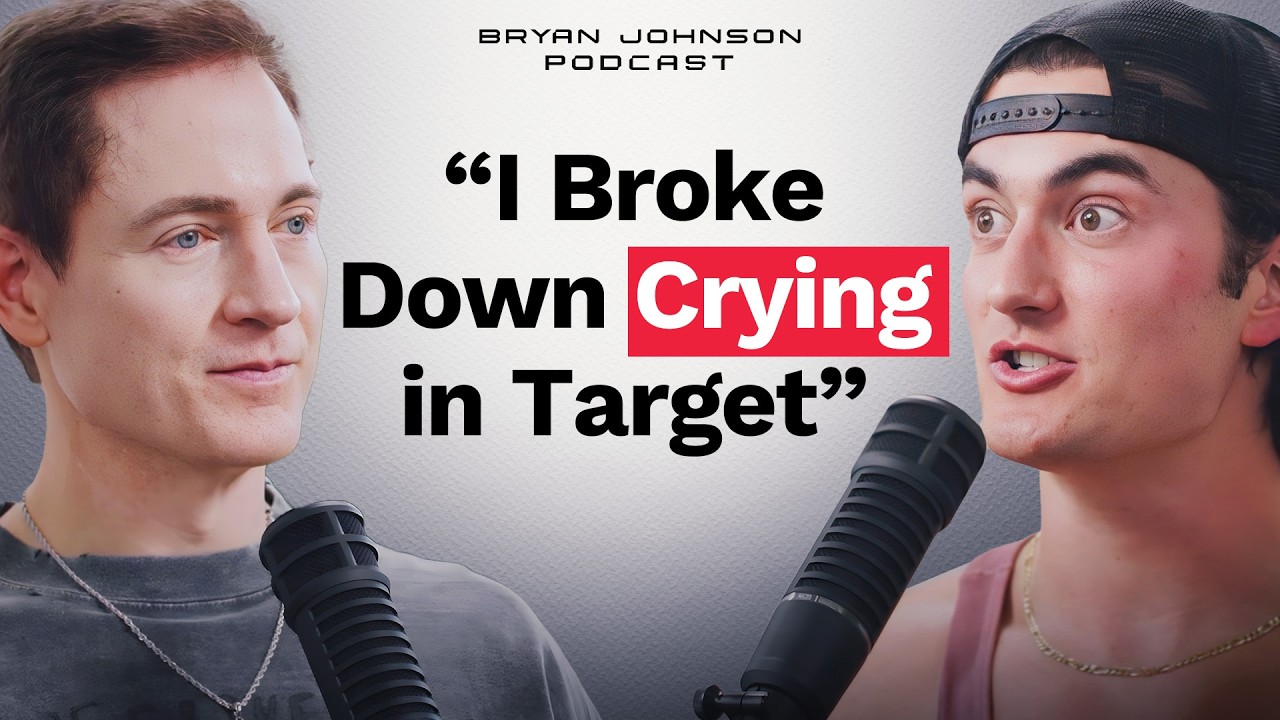
The turning point is not a productivity hack. It is a mental health wake-up call, crying in Target, admitting unhappiness, and making a hard, identity-altering decision to quit.
This matters for longevity because long-term health behaviors are hard to sustain when your life feels misaligned.
If your day-to-day identity is “I am trapped,” it is difficult to sleep well, eat well, or recover well. If your identity becomes “I can choose my path,” you tend to take better care of the vehicle that carries you.
What the research shows: Depression and chronic stress are associated with higher risk for cardiometabolic disease and can worsen sleep and inflammation over time. The relationships are complex and not purely causal, but they are clinically meaningful. For a plain-language overview of depression and health impacts, see the National Institute of Mental HealthTrusted Source.
A practical reflection you can try
If the “should vs meant to” theme hits home, try a quick journaling prompt:
This is not about quitting your job tomorrow. It is about reducing chronic misalignment.
Food quality over food tricks: the low-calorie syrup moment
One of the most specific, practical details is food-related: stopping the low-calorie substitutes, like low-calorie syrup.
The dynamic is almost comedic, the wife throws it out and insists on “you eat the real” version.
But there is a serious longevity point underneath: a lot of “diet food” keeps you psychologically stuck in a restriction mindset. It can also keep your palate trained to hyper-sweetness, which may make whole foods feel less satisfying.
This is not an argument that low-calorie products are inherently toxic. It is an argument about the trade-off.
A longevity-friendly approach is the one implied here: eat real food more often, and stop trying to outsmart hunger with engineered hacks.
Ultra-processed diets are associated with higher calorie intake and weight gain in controlled research settings. A well-known randomized controlled trial found that people eating an ultra-processed diet consumed more calories and gained more weight compared with an unprocessed diet, even when meals were matched for presented macros and other factors NIH study overviewTrusted Source.
That does not mean every low-calorie syrup is the villain. It means the overall pattern matters.
Here is a practical way to apply the “real food” rule without turning it into perfectionism.
If you have diabetes, reactive hypoglycemia, or a history of eating disorders, discuss major dietary changes with a clinician or dietitian.
Training for longevity when you love bodybuilding
The video centers on a natural bodybuilder who loves the process, the filming, the energy, the identity. The tension is that bodybuilding culture can reward extremes: aggressive bulks, aggressive cuts, chasing leanness, and always doing more.
Longevity training asks a different question: what kind of training makes you more capable at 35, 55, and 75?
Strength training is consistently associated with better function and lower risk of many chronic diseases, and it supports bone density and muscle mass with age. The CDCTrusted Source recommends muscle-strengthening activity at least two days per week for adults.
But “more” is not always better.
A longevity-friendly bodybuilding mindset keeps the joy and drops the self-punishment. It favors consistency, joint health, and recovery.
Here are trade-offs to consider if you lift hard and want to keep lifting for decades.
Q: Is bodybuilding automatically bad for longevity?
A: Not automatically. Resistance training is strongly linked with healthier aging, but the extremes sometimes associated with bodybuilding, like prolonged severe calorie restriction, poor sleep, and training through injuries, can work against long-term health.
A useful approach is to keep the foundation, progressive strength work, adequate protein, and recovery, while being cautious about chronic extremes. If you notice persistent symptoms like fatigue, low mood, or sexual health changes, consider discussing training and nutrition with a sports medicine clinician.
Jordan Smith, MS, CSCS (Strength and Conditioning Specialist)
Sleep, caffeine, and the entrepreneur nervous system
Sleep shows up in the conversation as a known non-negotiable, “we got to get that good sleep,” even amid chaotic travel.
That matters because sleep is one of the most powerful, boring longevity tools.
Adults generally need at least 7 hours of sleep per night for optimal health, according to the American Academy of Sleep Medicine and Sleep Research Society consensusTrusted Source.
The video also hints at a common pattern: caffeine plus a business fire equals anxiety.
Caffeine can be a performance tool, but it can also amplify nervous system arousal, especially when you are already stressed. If your day includes late work, travel, and stimulation, caffeine can push you into a wired state that feels productive but makes downshifting harder.
A simple caffeine boundary that many high performers tolerate well
Try this as an experiment, not a rule:
A lot of people try to fix sleep with supplements while keeping the same stimulation pattern.
Flip it. Fix the stimulation pattern first.
Resource callout
»MORE: If you want a simple sleep checklist that fits travel, build one page with three anchors: your wake time, your caffeine cutoff, and your wind-down cue. Keep it in your notes app and treat it like a packing list.
Relationships as a longevity intervention (the “control-delete” effect)
One of the most human longevity insights here is relational.
The wife is described as calm, grounding, and able to absorb anxiety and “hit control-delete on it.” That is not just romantic language. It points to co-regulation, the way nervous systems influence each other.
If you are a high-strung, high-output person, the people around you can either keep you activated or help you downshift.
This is a legitimate health lever because stress affects sleep, appetite, recovery, and decision-making.
It also changes what you do when you are not working. The video notes that doing “nothing” feels okay when it is time with loved ones, but not when alone. That suggests a practical strategy: schedule recovery as connection, not just isolation.
Longevity is not only built in the gym. It is built in the hours that make your nervous system feel safe.
Q: If I feel guilty resting, should I force solo relaxation?
A: You can build tolerance gradually. Some people do better starting with restorative connection, like calm time with a partner or friend, then slowly adding short periods of solo downtime.
If guilt around rest is intense or tied to anxiety or depression, talking with a mental health professional can help you build skills without turning rest into another performance metric.
Alicia Nguyen, PhD (Clinical Psychologist)
A practical “Don’t Die” starter protocol you can try this week
The video’s vibe is action-oriented: high energy, high standards, and an honest look at what the pace costs.
So here is a simple starter protocol that matches that tone. It is not medical advice, and it is not meant to be perfect. It is meant to be doable.
Step 1: Pick your “don’t die” identity sentence
Write one sentence that you can actually believe.
Examples:
If the sentence is too grand, you will not use it.
Step 2: Build one recovery anchor for chaotic days
Choose one behavior that happens even when you travel or work late.
Make it embarrassingly small if needed. Consistency beats intensity.
Step 3: Replace one “food trick” with a “food truth”
If you use lots of low-calorie substitutes, pick one to remove for a week.
Notice what happens to cravings, satisfaction, and mood.
Step 4: Schedule “nothingness” like a shoot
Put it on the calendar.
Try 2 to 3 sessions this week of 5 minutes each. No phone. No music. Just sit.
If your brain screams, that is normal. You are training a capacity.
Step 5: Do a weekly check-in that is not about aesthetics
Once per week, rate these from 1 to 10:
If multiple scores trend down for two to three weeks, that is data. Consider adjusting training volume, caffeine timing, work hours, or nutrition. If symptoms are significant or persistent, consider medical evaluation.
One more key trade-off to remember: the body can tolerate short sprints. It struggles with endless sprints.
Key Takeaways
Frequently Asked Questions
- What does “don’t die mindset” mean for everyday health?
- It means treating longevity as your default goal, not a side project. In practice, you prioritize repeatable basics like sleep, recovery, real food, and stress downshifts, and you get more cautious about chronic extremes.
- Are low-calorie syrups and diet substitutes bad for you?
- Not always, but they can keep some people stuck in a craving and restriction loop. A useful experiment is replacing one substitute with a smaller amount of the real food for a week and seeing how hunger, satisfaction, and snacking change.
- Can intense training affect hormones even without steroids?
- Yes, especially when combined with under-eating and poor sleep. If you notice persistent fatigue, mood changes, or sexual health changes, it is reasonable to discuss training load, nutrition, and possible lab testing with a clinician.
- How can I rest if I feel guilty doing nothing?
- Start with short, timed sessions and make them winnable, like 3 to 5 minutes without your phone. Many people also find it easier to begin with restorative connection, calm time with loved ones, then gradually add solo downtime.
- What is the most important anti-aging habit if I can only pick one?
- For many people, it is protecting sleep because it supports mood, appetite regulation, training recovery, and cardiometabolic health. A simple first step is setting a caffeine cutoff and a consistent wake time.
Get Evidence-Based Health Tips
Join readers getting weekly insights on health, nutrition, and wellness. No spam, ever.
No spam. Unsubscribe anytime.