Typhus, Lice, and Courage, Fleck’s Wartime Lesson
Summary
Typhus is often framed as a disease of the past, but this video’s story shows why it still matters for preventive health today. In WWII ghettos and camps, body lice thrived in crowded, cold conditions where people could not bathe or change clothes, and typhus tore through communities with high fever, rash, delirium, and death. Inside Buchenwald, scientist Dr. Ludwik Fleck helped identify a vaccine production error, then led a daring sabotage: fake vaccine for Nazi troops, real vaccine for prisoners. The journey highlights a modern lesson, when hygiene systems collapse, lice-borne disease can return.
Preventive health is often sold as a checklist, eat well, exercise, get your screenings.
This video forces a harder truth into view: sometimes prevention is not a personal habit at all. Sometimes it is access to soap, clean clothes, and a place to sleep that is not packed wall to wall with other bodies.
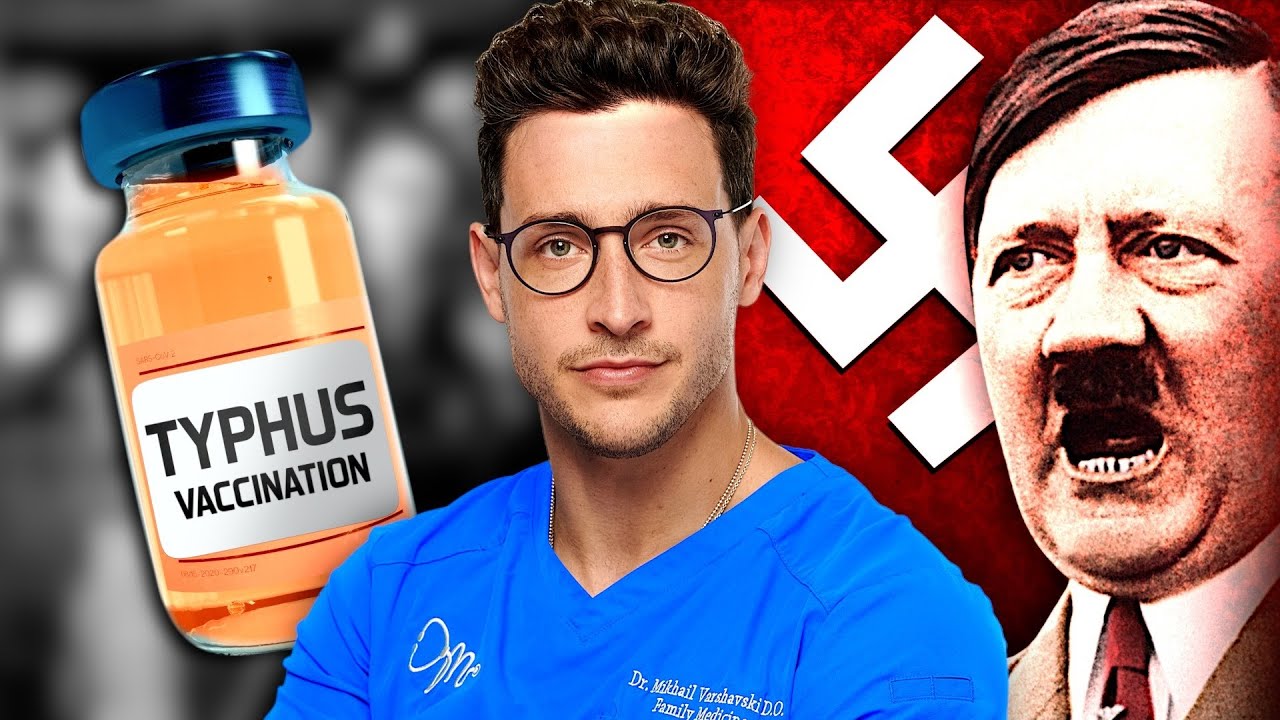
“The Doctor Who Tricked The Nazis” tells a grim medical story from the Holocaust, but it is also a practical lesson in how infectious disease behaves when basic infrastructure collapses. Typhus is the thread that runs through it all, a louse-borne infection that thrives in crowding, cold, and deprivation.
Why this story matters for preventive health
The journey begins in occupied Poland, where Jewish families were forced into ghettos with little food and almost no medicine. In that setting, disease was not a side plot. It was a weapon of circumstance.
The discussion centers on a preventive health paradox: the same conditions that make infection spread are the conditions that make prevention nearly impossible.
Dr. Ludwik Fleck, a Jewish biologist, is introduced as someone who had a professional life, a wife, a son, and a place in Poland’s academic world. Then the war dismantled everything. What remains in the story is his scientific skill, and his ability to stay calm inside a system designed to erase him.
A key insight here is that typhus was not just killing civilians in ghettos. It was also threatening Nazi soldiers at the front, men stuck for months in trenches, wearing the same uniforms, avoiding bathing because wet clothes in freezing weather could mean death. When an infectious disease threatens an army, it becomes a strategic problem, and the people with lab skills become valuable, even if they are prisoners.
Did you know? Epidemic typhus is caused by Rickettsia prowazekii and is classically associated with crowding and poor hygiene, because it spreads through body lice, a pattern described by the CDCTrusted Source.
Typhus in the video: a disease built from cold, crowding, and lice
This framing emphasizes something many people miss: typhus is not “just a germ.” It is a whole chain of events.
In the video, the chain starts with body lice, not hair lice. That distinction matters. Body lice live in clothing seams and fibers, then crawl onto skin to feed. In normal life, regular bathing and laundry interrupt that life cycle. In ghettos and war zones, people may go weeks or months without removing clothes, especially in winter, because removing layers can mean losing warmth.
Once lice are established in clothing, the risk rises quickly. The video describes how lice feed, then leave infected waste on the skin. Scratching creates tiny breaks in the skin, and that is one pathway for bacteria to enter the body.
The practical preventive message is blunt: when laundry stops, lice can become a public health emergency.
Why “body lice in clothing” changes prevention
Hair lice control is often discussed in schools, and it usually focuses on head-to-head contact. Body lice prevention is different.
Pro Tip: In humanitarian or shelter settings, prioritizing access to clean clothing and reliable laundry can be as important as distributing hygiene kits.
The symptoms described: when fever turns into a crisis
Typhus is not presented as a mild illness that “runs its course.” The video paints it as a terrifying clinical picture.
First comes headache and fatigue. Then pallor, slowed reflexes, and a rash described as tiny red circles on the arms, shoulders, and torso. The story escalates into what made typhus infamous: very high fever, severe delirium, hallucinations, and loss of bowel control.
“Fever up to 108°F” is mentioned in the transcript. Any extremely high fever is dangerous, and confusion or hallucinations in the setting of fever should be treated as an emergency, regardless of the exact number. In historical outbreaks, epidemic typhus carried high mortality, especially without antibiotics and supportive care.
The video’s description of patients screaming, thrashing, and needing restraints in hospitals reflects how severe central nervous system effects can look during serious infections. Even today, delirium can occur with high fever, dehydration, low oxygen, or overwhelming infection, and it is a sign someone needs urgent evaluation.
Important: A high fever plus new confusion, severe weakness, fainting, trouble breathing, or a spreading rash warrants urgent medical care. If someone has possible exposure to lice in a crowded setting, clinicians may consider typhus among other causes.
What the research shows: Public health references continue to link epidemic typhus outbreaks to conditions of crowding and limited hygiene, and emphasize lice control and early treatment as key measures (CDCTrusted Source).
A vaccine under coercion: what “prevention” looked like in Block 50
The story takes a sharp turn when prevention is no longer about community health. It becomes about power.
A Nazi physician, Erwin Ding, is portrayed as ambitious and unscrupulous. He wants credit for solving the Nazi typhus problem, and he pulls imprisoned people into Block 50 at Buchenwald to manufacture a vaccine. The video’s viewpoint is clear: this is not heroic medical innovation. It is exploitation built on brutality.
The lab itself is described as well-equipped, stocked with stolen instruments from universities across Europe. There are also instructions derived from earlier work by Dr. Rudolf Weigl and Dr. Fleck in Poland.
The production problem that set the stage
In the transcript, the Block 50 team struggles because they are not actually producing typhus material. They mistakenly identify rabbit white blood cells as the pathogen. That error is both tragic and revealing.
It shows how complex vaccine production is, and how easily a process can fail when the people running it are coerced, underfed, and threatened. It also shows why quality control matters in any medical manufacturing system.
When Fleck is transferred from Auschwitz to Buchenwald, he reviews the process and finds the mistake quickly. He can fix it.
This is where the video’s unique perspective becomes unforgettable: the moment he realizes he can make a working vaccine is also the moment he and other prisoners see an opportunity to resist.
»MORE: If you want a practical companion to this story, create a personal “outbreak readiness” list for your household: a few days of clean clothes, soap, detergent, and a way to wash and dry items if services are disrupted.
Fleck’s sabotage and the preventive lesson hidden inside it
The sabotage is described as both daring and methodical.
Instead of reporting the corrected process honestly, Fleck gives Ding a false update. The lab begins producing fake vaccines made from rabbit white blood cells, then ships them to Nazi soldiers. At the same time, the team produces a real vaccine, marks it with a red dot, and keeps it for fellow prisoners.
In the video’s telling, this is prevention reclaimed. It is not prevention as a tool of the state, it is prevention as a tool of survival.
There is another detail that lands hard: rabbits used for vaccine work were secretly cooked and shared among starving prisoners. That piece is not about typhus directly, but it underlines the broader health reality in camps, malnutrition, starvation, and the constant tradeoff between risk and survival.
The sabotage continues for 16 months. Ding eventually gets a call from Berlin: the vaccine does not work. Fleck stays calm, offers an explanation that transport or administration must be at fault, and hands over a sample of the real vaccine for testing. It works, and Ding is temporarily exonerated.
What’s interesting about this approach is the psychological precision. The plan is not just scientific, it is behavioral. It anticipates how an insecure authority figure will react, and it gives him just enough “proof” to keep him from destroying the operation.
The ethical tension, and why the courtroom laughed
After the war, the sabotage comes out during the Nuremberg trials. A Nazi official expresses outrage at Fleck’s “lack of medical ethics,” and the courtroom laughs at the irony.
The video’s point is not to turn ethics into a punchline. It is to show how moral language can be twisted by people committing atrocities.
For modern readers, the preventive health takeaway is subtle: ethics in medicine is not only about rules, it is about who is protected, who is harmed, and who gets to access prevention.
What reduces typhus risk today, even outside war zones
Typhus has not been eradicated, but it is far less common in many places because daily life interrupts the louse cycle.
The transcript highlights the basics: showers, laundry, and fresh clothes. Those sound simple until they are not available, during war, displacement, homelessness, incarceration, or natural disasters.
The video also mentions a modern treatment: doxycycline. That reflects current clinical reality, antibiotics can be effective for rickettsial infections, and early treatment is important. For readers, the key is not to self-treat, but to recognize when a situation warrants medical evaluation and public health support.
To ground this in reliable guidance, the CDC describes typhus as a group of diseases, including epidemic typhus associated with body lice, and emphasizes prevention through avoiding vectors and maintaining hygiene where possible (CDC typhus informationTrusted Source).
Practical prevention steps that match the video’s lesson
This is not about perfection. It is about breaking the chain.
A final modern point is worth stating plainly. Antibiotics changed the stakes, but they did not erase the conditions that allow outbreaks to happen.
If you work in a shelter, emergency response, corrections, or healthcare, this story is an argument for investing in basic hygiene infrastructure as a disease prevention tool, not as a luxury.
Expert Q&A
Q: If typhus is rare now, why should I care about it?
A: Typhus is rare in many communities because people have regular access to showers, laundry, and clean clothes, and those basics disrupt body lice. When those systems break down, during displacement, conflict, or major service interruptions, the same conditions that fueled historic outbreaks can return.
If you are traveling, working in humanitarian settings, or living in crowded housing, it can help to know that fever plus rash after possible louse exposure is a reason to seek medical care quickly.
Health Writer, MPH
Expert Q&A
Q: Can I prevent body lice the same way I prevent head lice?
A: The strategies overlap, but body lice prevention focuses more on clothing and bedding, because body lice live in fabric seams and move onto skin to feed. Regular laundering and access to clean clothes are central, especially in crowded environments.
If you suspect lice in a group setting, it is a good idea to involve a clinician or local public health resources, rather than trying to manage an outbreak alone.
Health Writer, MPH
Key Takeaways
Frequently Asked Questions
- What is the difference between body lice and head lice?
- Body lice typically live in clothing and bedding seams and move onto skin to feed, while head lice live on scalp hair. That is why laundry and clean clothing are central to preventing body lice related illness.
- Can typhus still happen today?
- Yes. Typhus is less common in many places, but it can reappear when people are crowded together and lack access to bathing and laundry, such as during conflict or displacement, as described by the CDC.
- What symptoms in the video suggest typhus can be severe?
- The transcript describes intense headache and fatigue followed by rash, very high fever, and delirium or hallucinations. Severe confusion with fever is a reason to seek urgent medical care.
- Is there treatment for typhus now?
- The video notes doxycycline as a modern treatment option, and clinicians may use antibiotics for suspected rickettsial infections. If typhus is possible, it is important to get evaluated promptly rather than self-treating.
Get Evidence-Based Health Tips
Join readers getting weekly insights on health, nutrition, and wellness. No spam, ever.
No spam. Unsubscribe anytime.