Best and Worst Glute Exercises, Ranked by Science
Summary
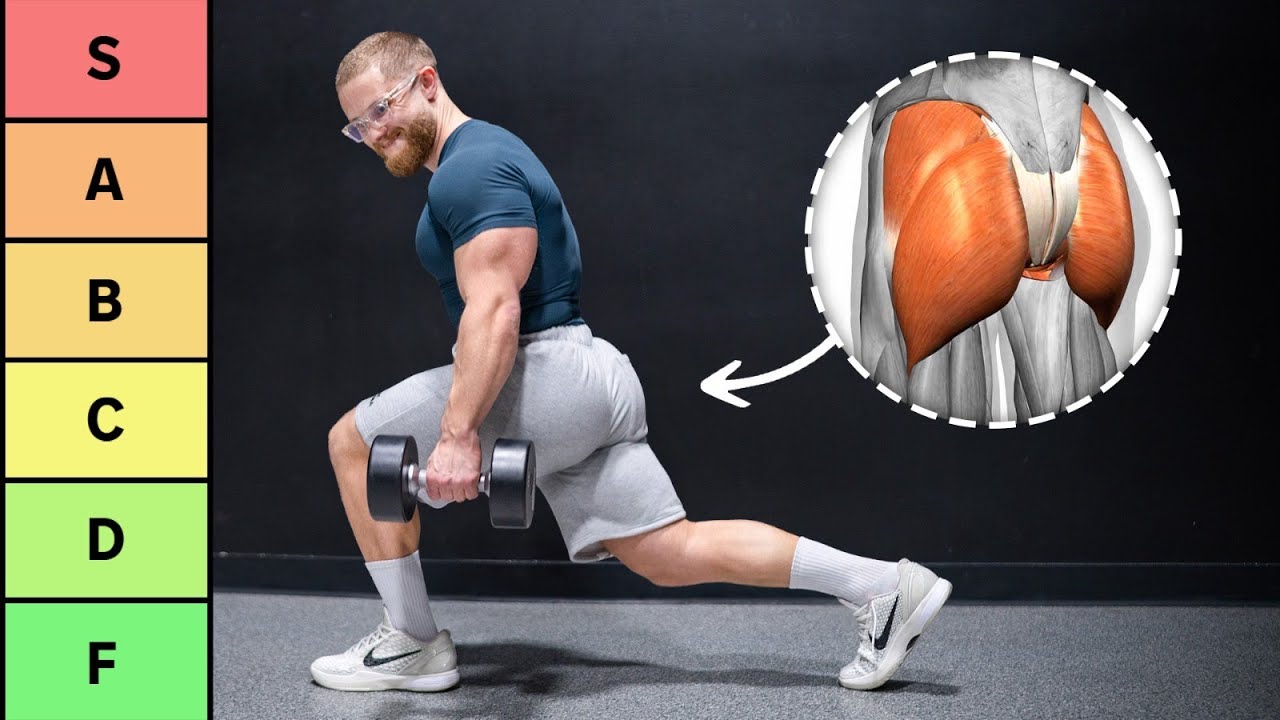
Most people chase glute growth with trendy “burn” moves that are hard to overload and barely challenge the glutes when they are stretched. This video’s core message is simple: the best glute exercises combine high tension, a useful range of motion (often including a stretch), comfort for your hips and back, and clear progression over time. You will learn which moves land in S tier (like walking lunges, machine hip abductions, and 45° back extensions), which are solid but imperfect (like hip thrusts and squats), and which are mostly warm-ups (like donkey kicks and fire hydrants).
What most people get wrong about glute training
Most people pick glute exercises based on what looks good on social media, what creates the biggest “burn,” or what they can feel the most in the moment.
This perspective flips that idea on its head. The best glute builders are the ones that create high tension, especially when the muscle is stretched, feel good on your hips, knees, and low back, and can be progressed for months.
A set that feels like cardio is not automatically a set that grows muscle.
If your glute routine is mostly light bands, floor drills, and “activation circuits,” you might get better at doing those drills without giving your glutes a strong reason to grow.
Pro Tip: If you can repeat the same glute workout for 8 weeks without adding reps, load, or control, you are probably practicing, not building.
Glute anatomy in plain language, and why it matters
The glutes are not one muscle. They are three, and each has a slightly different job.
Gluteus maximus is the big powerhouse. It extends the hip (think deadlifts, hip thrusts, coming up from a squat) and helps with external rotation (turning the thigh outward, like a slight toe-out stance).
Gluteus medius is smaller (roughly described here as about one third the size of glute max), but still significant, about delt-sized in total muscle mass. Because it sits higher, building it can create more of that “upper glute shelf” look. Functionally, it is heavily involved in hip abduction (moving the leg out to the side) and stabilization, especially during single-leg work.
Gluteus minimus is smaller again (roughly half the size of glute medius), but it also contributes to stabilization and can add to upper glute size.
Upper, middle, and lower glutes, the practical view
The video also uses a practical “map” of the glutes: upper, middle, and lower regions.
That matters because some exercises feel amazing for one region and just okay for another. A hip thrust pattern may hammer the middle portion in the shortened position, while a lunge or RDL may challenge the lower portion more in the stretched position.
The key idea is not to find one magic move. It is to cover the glutes from multiple angles and muscle lengths.
Did you know? The glutes are among the largest muscles in the body, which is one reason they can handle meaningful training volume and load, when technique and recovery are appropriate. The American Council on Exercise highlights how strongly the glute max contributes to hip extension and whole-body movement efficiency, not just aesthetics (Gluteus maximus overviewTrusted Source).
The ranking criteria, tension, comfort, progression
This ranking system is not about what is “hard.” It is about what is most likely to build glute muscle over time.
To reach S tier in this framework, an exercise should:
One more subtle point shows up again and again: stability. When the setup is stable, you can often focus more on the target muscle and less on balancing and bracing.
Important: If you have hip, knee, or low back pain, or you are postpartum, recovering from surgery, or managing pelvic floor symptoms, it is worth checking in with a licensed clinician before pushing load or range of motion. The “best” exercise on paper is not best if it aggravates your body.
Hip thrust family, great for the “middle meat”, with caveats
The hip thrust is the internet’s favorite glute lift for a reason. It is one of the more studied glute movements, and research generally supports it as an effective way to train the gluteus maximus, often with high glute activation in the shortened position (hip thrust vs squat discussionTrusted Source).
Still, this take is more nuanced than “hip thrusts are king.” The barbell hip thrust lands in high B tier here, not S tier.
Barbell hip thrust (high B tier)
Strengths are clear: it trains hip extension directly, it hits upper, middle, and lower portions, and it is easy to progressively overload in a practical rep range (roughly 5 to 15 reps).
The main drawbacks are also practical. Many people experience uncomfortable barbell pressure or pinching at the hips, setup can be time-consuming, and even a deep hip thrust typically only reaches around 90 degrees of hip flexion, which is less stretch than many people can reach in other lifts.
That limited stretch is not necessarily a deal-breaker. The video points to a study in untrained people where hip thrusts and squats produced similar glute growth despite squats involving more stretch. Taken together with other research, the practical takeaway is that glutes may respond well to a mix of shortened-position work (hip thrusts) and lengthened-position work (squats, lunges, RDLs).
Hip thrust machine (high A tier), and the “middle glute” pick
A good hip thrust machine (the example given is the Nautilus Glute Drive) solves several real-world issues. It is more comfortable than a barbell, faster to set up, and stable enough that you can focus on driving with the glutes.
In this ranking, it earns high A tier, and it is chosen as the number one option for the middle aspect of the glutes.
Its main limitation remains the same: not a huge deep stretch. That is why it pairs well with lunge, squat, or hinge variations.
Single-leg dumbbell hip thrust (A tier)
Single-leg versions still train hip extension, but they add a stability demand that can recruit more glute medius and minimus. They also help address left-right imbalances.
This approach emphasizes control over load. Sticking to about 12 to 15 reps and owning each rep is the point.
Glute bridge (low B tier) and frog pumps (high C tier)
A glute bridge is essentially a hip thrust with less range of motion. It is easier to set up and can be beginner-friendly, but it is generally less potent than a full hip thrust.
Frog pumps (feet together, hips externally rotated) can shift emphasis toward the upper glutes by adding abduction, and they can work as a high-rep finisher. But they are hard to load and do not provide much stretch.
What the research shows: In a randomized trial comparing hip thrust and squat training in untrained adults, both approaches increased glute size, suggesting more than one path can work when training is consistent and progressive (study summaryTrusted Source).
Squats, split squats, and lunges, where the stretch pays off
This viewpoint argues that squats are underrated as glute builders, especially online where “glutes only” content often downplays them.
Squats train hip extension, and they can load the glutes in a more stretched position than hip thrusts. For many lifters, a large portion of glute development comes from squat patterns, especially when depth is solid.
But there is a tradeoff. Squats are not a pure glute isolation exercise, they also strongly stimulate the quads.
Squats (A tier) and Smith machine squats (A tier)
Barbell squats earn A tier. To make them more glute dominant, the cues here are:
Depth matters. Research suggests deeper squats increase glute involvement compared with partial squats, and deeper ranges can increase muscle growth stimulus for some lifters, when mobility and joint tolerance allow (squat depth and muscle activationTrusted Source).
Smith machine squats also earn A tier, largely because you can place the feet farther forward to bias the hips and glutes, and stability demands are reduced.
Bulgarian split squats (high A tier)
Bulgarian split squats get a deeper glute stretch than many standard squat variations, and because they are single-leg, they bring in more stabilization, which can increase upper glute involvement.
They are close to S tier here, but they are also brutally fatiguing and can be harder to overload, especially with dumbbells. A practical approach is fewer hard sets (the example given is two sets per leg).
Walking lunges (S tier, and the S+ “best of the best”)
Walking lunges are treated as a standout because they hit the whole glute complex: stabilization for the upper glutes, hip extension for the mid glutes, and a deep stretch that can bias the lower glute region.
They are also psychologically motivating for some people because you move through space rather than doing all reps in place.
Small technique choices matter:
Even though soreness is not a perfect measure of growth, this approach notes that lunges often create notable glute soreness, which may reflect the large stretch and high effort.
Smith machine lunges (high A tier) and front-foot elevated lunges (S tier)
Smith machine lunges keep the benefits but remove some balance demands. They land in high A tier mainly due to personal preference about being “stuck in place.”
Front-foot elevated lunges increase range of motion just enough to earn S tier in this ranking.
Curtsy lunges (low B tier)
Curtsy lunges can increase glute medius involvement because of balance and the diagonal step. But they are harder to overload and are not viewed as superior to standard lunges.
Q: Do I have to squat deep for glute growth?
A: This perspective emphasizes that deeper squats tend to involve the glutes more, especially as hip flexion increases. That said, depth should be individualized, if deeper ranges cause pain or you cannot control your spine and pelvis, a slightly higher depth plus lunges or RDLs can still train the glutes hard.
A clinician or qualified coach can help you find a depth that is challenging but joint-friendly.
Jordan Smith, DPT (Doctor of Physical Therapy)
Upper glutes, why abduction work earns S tier
If you want to bias the “upper shelf,” you need to respect what the upper glute fibers do.
A big part of that is hip abduction and stabilization.
Kickbacks, step-ups, and abduction work
Kickbacks are rated low A tier. The key cue is to kick “up and out” diagonally, not straight back, because that combines hip extension with abduction, which can better match upper glute fiber function. They are stable if you brace well, and they can isolate glutes without much quad involvement.
Step-ups are also low A tier, largely due to the single-leg stability demand that recruits glute medius and minimus. A higher box (around knee height or slightly above) can increase glute demands, and holding a support can improve balance and allow better loading.
Machine hip abduction (S tier), the number one upper-glute pick
Machine hip abductions are the first S tier exercise in the ranking, and the number one pick for the upper glutes.
The reasons are straightforward:
Rep ranges here are often higher, such as 15 to 20 reps, although heavier lower-rep work can also be used.
Cable hip abductions do a similar job but are rated B tier because they are less stable, harder to overload, and more annoying to set up.
Lateral band walks are rated C tier for hypertrophy because bands provide little tension in the stretched position. They may still help as warm-ups or to improve glute medius engagement.
Important: Hip abduction machines can irritate the outer hip for some people if range of motion is forced. Use a controlled range you can own, and stop if you feel sharp pain or nerve-like symptoms.
Lower glutes and the glute-ham tie-in, deadlifts vs RDLs
The “lower glute” discussion in the video is really about exercises that load the glutes hard in hip flexion, when the glutes are lengthened.
That usually means hinge patterns.
Conventional deadlift (low B tier)
Conventional deadlifts train hip extension and provide a big stretch, but they are extremely fatiguing. The stimulus-to-fatigue ratio is not great for pure glute hypertrophy because so much fatigue lands in the spinal erectors and whole system.
Deadlifts can still be excellent for strength and athleticism.
They are just not the most efficient “glutes only” builder for many lifters.
Sumo deadlift (high B tier)
Sumo deadlifts are rated slightly higher here. An EMG study is referenced as showing no major difference in glute max activation between conventional and sumo, but the wider stance, hip abduction, and external rotation may increase glute medius involvement.
If sumo feels better for your hips and back and you can progress it, that matters.
Romanian deadlift (high A tier), the number one lower-glute pick
The Romanian deadlift (RDL) is highlighted as the better hypertrophy choice, especially for the lower glutes and the glute-ham tie-in area.
It still trains hamstrings hard, but it is viewed as a strong compound lift for progressive overload and lengthened tension.
A simple way to think about RDLs is “hips back, shins mostly vertical, feel the stretch, then stand tall by driving the hips forward.” If you are new to hinging, learning with light loads and good coaching is worth it.
What the research shows: Muscle growth is often robust when training includes challenging work at longer muscle lengths. Reviews of hypertrophy research suggest lengthened training can be a useful tool, especially when paired with progressive overload and adequate recovery (hypertrophy mechanisms reviewTrusted Source).
The sleeper S-tier move, plus the “worst” exercises and why
Not every great glute exercise is a “glute exercise” in name.
45 degree back extension (S tier)
The 45 degree back extension is treated as an S tier sleeper pick. Many people think it is only for the low back, but if you focus on hip extension, the glutes work hard at the bottom (lengthened) and top (shortened).
A notable cue here is to round the upper back slightly, which can help you feel the glutes more and reduce the tendency to turn it into a pure spinal extension movement.
Progression can be as simple as adding reps. You can also load it by holding a plate at the chest.
Cable pull-throughs (low B tier)
Cable pull-throughs are described as okay, especially for beginners. Over time, loading can become awkward because the limiting factor may be how much weight you can comfortably hold and manage between the legs.
Kettlebell swings (low D tier for hypertrophy)
Kettlebell swings can be great for conditioning and explosive power, but this ranking places them low for glute hypertrophy. The issue is not that they do nothing, it is that they may not provide enough consistent high tension for muscle growth compared with better options.
Donkey kicks and fire hydrants (low D tier), “worst of the worst”
These are not labeled useless. They can help beginners feel glute engagement and can fit as warm-up drills.
But as primary hypertrophy exercises, they are rated poorly because:
This is why the “worst” label is really about long-term growth potential, not about whether the movement can ever be appropriate.
Q: Are donkey kicks and fire hydrants ever worth doing?
A: They can be useful as low-load drills to practice glute contraction, warm up the hips, or build confidence with movement. They are usually not ideal as your main growth drivers because it is difficult to add meaningful load and create high tension through a large range.
If you like them, consider using them as a short primer before heavier work, rather than the centerpiece of your program.
Alyssa Chen, MS, CSCS
A simple way to combine the “best” ideas (without copying a full program)
This approach repeatedly returns to a practical template: pair one exercise that loads the glutes in a stretched position with one that loads them in a shortened position, then add targeted upper-glute work.
Here is one example structure you could discuss with a qualified coach:
Shorter is often better than random. Three well-chosen movements done hard and progressed beats eight “pump” drills done inconsistently.
Where metabolic health fits in
Even though this is a physique-focused ranking, the closing message connects training to nutrition. Building muscle, including glutes, is supported by adequate calories and protein.
Muscle is metabolically active tissue, and resistance training is associated with improved insulin sensitivity and cardiometabolic health markers in many populations, although individual results vary and depend on overall lifestyle (American Diabetes Association, physical activity guidanceTrusted Source).
If you are trying to change body composition, tracking intake can be useful. The video mentions using a nutrition app to better match calories and protein to the goal of muscle growth.
»MORE: Want a one-page checklist? Create a “glute session scorecard” with three lines: (1) did I train a stretch pattern, (2) did I train a thrust pattern, (3) did I train abduction, plus the loads and reps you used.
Key Takeaways
Frequently Asked Questions
- What is the single best glute exercise according to this ranking?
- Walking lunges are picked as the S+ option because they combine a deep glute stretch, high effort, and strong activation across the glutes. Technique matters, a longer stride and a slight forward lean can make them more glute focused.
- Are hip thrusts overrated for glute growth?
- They are still considered very effective, especially for loading the glutes in the shortened position and progressing week to week. The main limitations are comfort and a smaller stretch compared with squats, lunges, or RDLs, so pairing them with a stretch-based lift may be helpful.
- How do you target the upper glutes specifically?
- Upper glutes are strongly tied to hip abduction and stabilization, so machine hip abductions are emphasized. Leaning forward around 30 degrees and using controlled reps in a higher range like 15 to 20 can improve the feel and stretch for many people.
- Why are donkey kicks and fire hydrants ranked so low?
- They are difficult to progressively overload and typically provide little tension when the glutes are stretched. They can still be useful as warm-up or activation drills, especially for beginners learning to feel the glutes.
- Do I need to squat to grow my glutes?
- Not necessarily. Squats can be a strong glute builder, especially with good depth, but lunges, split squats, RDLs, and hip thrust variations can also cover the glutes well when progressed over time.
Get Evidence-Based Health Tips
Join readers getting weekly insights on health, nutrition, and wellness. No spam, ever.
No spam. Unsubscribe anytime.