Metabolic Health

Grow Upper Traps With Overhead L-Raises and Shrug-Rows
Grow Upper Traps With Overhead L-Raises and Shrug-Rows
ByHealthy Flux Editorial Team
Published 12/20/2025 • Updated 12/31/2025

Summary

Upper traps can be stubborn, and the video’s core idea is that classic shrugs may miss the best stimulus for some people. Instead, it emphasizes loading the traps when the arms are overhead (with an overhead cable L-raise) and thickening the zone between the mid and upper traps (with a high incline dumbbell shrug-row). This approach is practical: pick angles that feel strong, create big tension, and use a clear squeeze-and-stretch rhythm. Because trap training also interacts with neck and shoulder mechanics, thoughtful setup and symptom awareness matter.
Grow Upper Traps With Overhead L-Raises and Shrug-Rows
▶️
▶️ Watch Video
⏱️1 min read

Why trap training matters for health, not just looks

Strong trapezius muscles help coordinate the shoulder blades, support stable overhead motion, and can influence how your neck and upper back tolerate daily loads.

This matters for metabolic health, too. Resistance training supports insulin sensitivity and muscle maintenance, which are linked to healthier glucose regulation over time, according to physical activity guidance from the American Diabetes AssociationTrusted Source.

The video’s unique angle is simple: if your upper traps are a weak point and shrugs have not moved the needle, it may not be effort, it may be position.

Did you know? The trapezius is commonly described in upper, middle, and lower regions with different roles in shoulder blade motion, as outlined in anatomy references like StatPearlsTrusted Source.

Move 1: Overhead cable L-raise for upper trap tension

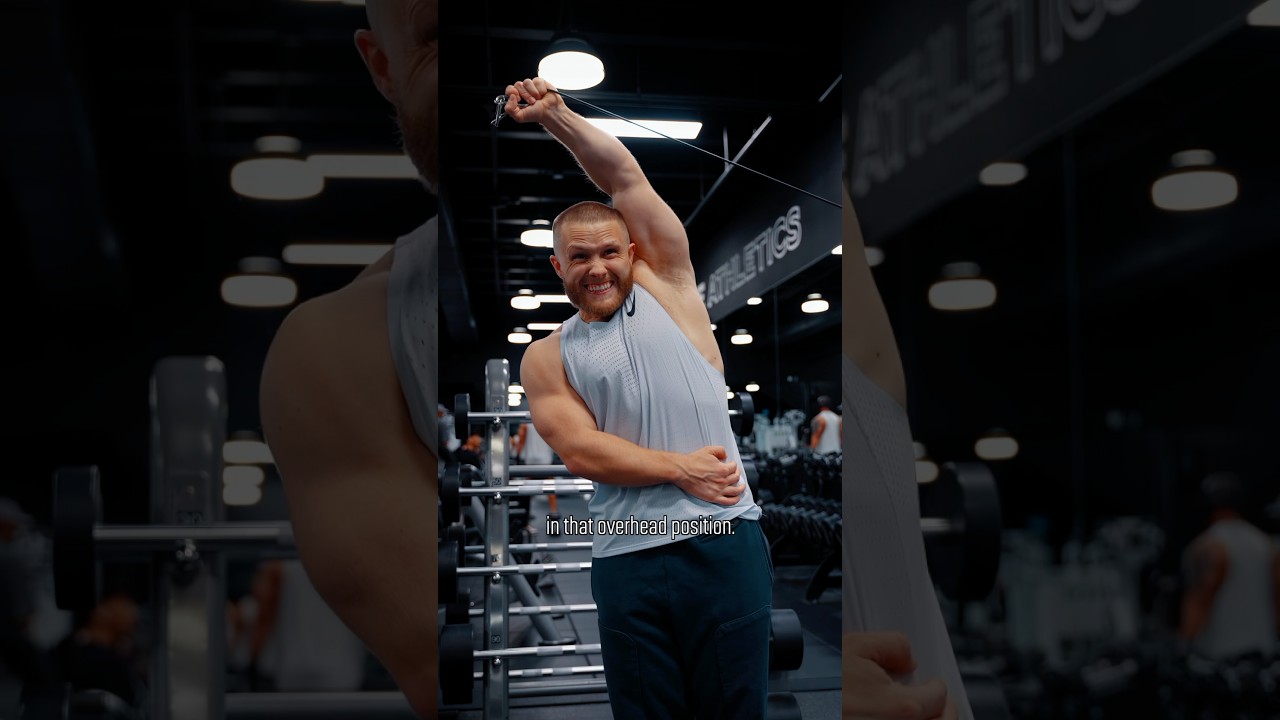
The key insight here is that upper traps can fire harder when your arms are overhead. The speaker tried overhead shrugs to leverage that, but found them awkward, so he switched to a more stable option: the overhead cable L-raise.

How to set it up

Set a cable at around shoulder height. This keeps the line of pull consistent and makes it easier to control.
Stand so the cable pulls slightly out to the side, then lift your arm up toward your ear. The cue given is essentially “arm to ear,” not “shoulder to ear.”
Move slowly enough to feel continuous tension in the overhead range, where the exercise is meant to shine.

Pro Tip: If you feel neck pinching, reduce load and think “reach tall through the arm” while keeping ribs down. A small stance adjustment can change the cable angle and comfort fast.

Move 2: High incline dumbbell shrug-row for the “in-between” zone

Building an “upper yoke” is not only about the very top of the traps. This framing emphasizes thickening the zone between mid traps and upper traps, which can change how your upper back looks and how your shoulder blades sit.

What makes it different

This is a hybrid between a shrug and a row, done on a high incline bench. Instead of shrugging straight up, you shrug up and slightly back while letting the arms bend a bit.

At the top, aim for a huge squeeze without craning your neck forward.
At the bottom, allow a big stretch, but keep control so the shoulders do not dump forward abruptly.

Important: Stop and reassess if you get sharp pain, tingling, or numbness into the arm or hand. Those symptoms can suggest nerve irritation and deserve medical guidance.

How to program these without irritating your neck or shoulders

Progress is usually about repeatable, high-quality reps. For hypertrophy, general guidance from the American College of Sports MedicineTrusted Source supports using multiple sets with moderate to heavy loads, but exercise selection and tolerance still rule.

A practical, video-faithful approach

Pick one overhead-focused move and one thickness-focused move. The overhead L-raise covers the “arms up” stimulus, the incline shrug-row covers the in-between region.
Chase tension, not awkwardness. If overhead shrugs feel unstable, the cable setup may let you load the same concept more comfortably.
Use a squeeze-and-stretch rhythm. The video repeatedly highlights the top squeeze and bottom stretch as the feel markers.

Q: Are shrugs “bad,” or just not enough for some people?

A: Shrugs are not inherently bad, but they can become a poor match if you cannot create meaningful tension or if your form turns into neck jutting and momentum. This video’s point is that changing joint position (arms overhead) and direction (up and slightly back) may better match your anatomy and training response.

Jordan Ellis, MS, Exercise Science

Key Takeaways

Upper trap growth may respond better to overhead loading than standard shrugs for some lifters.
The overhead cable L-raise is positioned as a less awkward way to train traps with arms elevated.
The high incline dumbbell shrug-row targets thickness between mid and upper traps via a shrug-plus-row pattern.
Prioritize a controlled squeeze at the top and stretch at the bottom, and scale load if neck or shoulder symptoms appear.

Frequently Asked Questions

Can I do the overhead cable L-raise if I have shoulder pain?
If overhead positions reliably aggravate your shoulder, it may be worth discussing with a clinician or physical therapist before loading that range. You can also try lighter resistance and a smaller range of motion to see if symptoms change.
How do I know if I’m using my traps instead of just bending my elbows?
A useful cue is to feel your shoulder blade elevate and rotate upward while the arm travels toward the ear. If the movement becomes mostly elbow bend with little shoulder blade motion, reduce weight and slow the tempo.
Do I need both exercises to grow my traps?
Not necessarily. The video’s strategy is to cover two angles, overhead tension and the in-between thickness zone, but your best plan depends on what you can do pain-free and consistently.

Get Evidence-Based Health Tips

Join readers getting weekly insights on health, nutrition, and wellness. No spam, ever.

No spam. Unsubscribe anytime.
More in Metabolic Health

View all
Boost Leg Strength Naturally: 10 Essential Foods to Include

Boost Leg Strength Naturally: 10 Essential Foods to Include

Many people search for a single “magic” nutrient for leg strength, but the presenter argues that approach misses the real problem. Legs often weaken first with age, raising fall risk, hip fractures, and loss of mobility that can spiral into brain decline. His core message is that strong legs require two inputs: exercise as the signal, and food as the building materials plus metabolic support. That means prioritizing foods that provide high-quality protein, essential fats, vitamins and minerals, and also reduce inflammation and support the gut-brain axis for clean neuromuscular signaling. He highlights 10 foods, from whole eggs and fatty fish to yogurt, bone broth, vegetables, nuts, legumes, berries, and avocado, with a strong emphasis on food quality and carbohydrate tolerance. The goal is strength plus balance and coordination, not just bigger muscles.

Exploring Fitness Knowledge with Influencer Will Tennyson

Exploring Fitness Knowledge with Influencer Will Tennyson

In the video 'Do Fitness Influencers Actually Know Fitness? (Ep. 2 Will Tennyson)', Will Tennyson faces a series of fitness-related questions to test his knowledge. He addresses misconceptions about protein absorption, muscle engagement during exercises, and the importance of dietary choices. This article delves into Tennyson's insights, supported by scientific research, to provide a comprehensive understanding of metabolic health.

Not Moving: The 24-Hour Slide Into Body Breakdown

Not Moving: The 24-Hour Slide Into Body Breakdown

This video’s core idea is blunt: your body is built to move, and when movement drops, multiple systems start downshifting quickly, not just your waistline. The discussion connects bed rest and “coma-level” inactivity to everyday sedentary living, arguing the same degeneration happens on a slower timeline. It emphasizes muscle protein turnover, loss of neuromuscular timing, and a brain that is largely fed by movement, posture, and gravity signals. The practical takeaway is not “burn more calories,” but “create more signals,” through frequent, varied movement, plus supportive nutrition to reduce inflammation and improve mobility.

Leg Strength First: 10 Moves to Stay Steady With Age

Leg Strength First: 10 Moves to Stay Steady With Age

Legs often weaken early with aging, and the real danger is not just smaller muscles, it is slower balance, coordination, and reaction time. This video’s approach treats leg training as a fall prevention plan: build strength, practice balance under control, and use progressions that match your current ability. You will learn 10 exercises, from calf raises and chair squats to step-ups and lunges, plus form cues like keeping knees and toes aligned and loading the heels. The goal is simple: train the muscles and the brain together, safely, and consistently.

We use cookies to provide the best experience and analyze site usage. By continuing, you agree to our Privacy Policy.