Veggie Starters: A Simple Way to Tame Glucose Spikes
Summary
Eating a plate of non-starchy vegetables before the rest of a carb-heavy meal may help blunt glucose spikes, reduce insulin release, and keep you fuller longer. This “veggie starter” approach, popularized by biochemist Jessie Inchauspé (Glucose Goddess), leans on fiber’s ability to slow digestion and on gut hormones like GLP-1 that support satiety. It is intentionally simple: add vegetables first, then eat your usual meal. It can be done at home, at restaurants, and even paired with vinegar as a salad dressing. It is not a free pass for ultra-processed foods, but it can make everyday meals feel better.
🎯 Key Takeaways
- ✓Eating vegetables first can reduce the size of a post-meal glucose spike, even when the rest of the meal stays the same.
- ✓Fiber up front may form a viscous “mesh,” slow gastric emptying, and support satiety hormones like *GLP-1*.
- ✓You do not need to wait between the veggie starter and the main course, sequence alone appears to matter.
- ✓A little counts, but a practical target is a veggie starter about half the size of your main dish.
- ✓At restaurants, a side salad or side vegetables eaten first can make the approach easy to stick with.
The big takeaway: eat vegetables first
If you want one simple nutrition change that can make carb-heavy meals feel easier on your body, start the meal with vegetables.
This approach, often called a veggie starter, is exactly what it sounds like: you eat a plate of non-starchy vegetables at the beginning of lunch or dinner, then you eat the rest of your meal as usual.
The unique promise in this perspective is practical, not perfectionistic. You are not being asked to redesign your whole diet. You are adding one step that may reduce post-meal glucose and insulin spikes, and in many people, that can translate into fewer cravings, steadier energy, and less “I am hungry again already” feelings.
Pro Tip: If you only do this once per day, do it before the meal that is highest in carbs or sugar. For many people, that is dinner.
This framing also leans on a reassuring idea: you can often feel the difference even without a glucose monitor. The goal is not to chase perfect numbers, it is to make meals work better for your body.
Why glucose spikes matter (and how they can feel)
Meals that are heavy in starches and sugars can raise blood glucose quickly. In the video’s examples, foods like spaghetti, dumplings (often made with rice-based wrappers), and bread-heavy sandwiches are highlighted as common “spike” meals because starch breaks down into glucose during digestion.
A spike is not automatically “bad” in isolation. Your body is designed to handle glucose. The concern is the pattern: frequent large spikes, day after day, may be linked with metabolic strain and symptoms people notice in daily life.
In this viewpoint, the consequences are described in very human terms: fatigue, cravings, mood disturbances, and feeling hungry all the time. The discussion also connects repeated spikes to higher insulin levels, and insulin is a key hormone involved in how the body stores and uses energy.
The practical puzzle many people face is this: “I eat a normal meal, and then I crash, snack, and crave sweets later.” This approach suggests that the order you eat food in can meaningfully change that post-meal arc.
Did you know? In the video, it is noted that only 5% of Americans meet the recommended daily fiber intake, and fiber is described by the US government as a nutrient of public health concern.
That fiber gap matters here because the entire hack depends on fiber-rich foods showing up early in the meal.
What changes when you add a veggie starter
The most memorable part of the video is the “same meal, different curve” idea.
A bowl of spaghetti on its own is presented as a classic glucose spike. Add a small arugula salad first, then eat the same spaghetti, and the glucose spike appears smaller.
The same pattern is shown with dumplings. Dumplings alone spike, but radishes first, then dumplings, and the spike is reduced.
And with a French-style ham-and-cheese sandwich on bread, adding a kale starter before the sandwich is shown with a smaller spike again.
The key insight is not that vegetables contain “magic.” It is that sequence changes how quickly glucose from the starch portion reaches the bloodstream.
What the research shows: A study on eating vegetables before carbohydrates found improvements in post-meal glucose responses when vegetables were consumed first, supporting the food-order concept described in the video (NIH full textTrusted Source).
This is also why the hack is positioned as unusually sustainable. Instead of telling you to remove pasta, dumplings, or bread forever, it suggests a way to make those foods hit differently.
How fiber-first may work inside your gut
The “why” in this approach centers on fiber, described as the main character.
Fiber is the part of plant foods that your body cannot fully digest. When vegetables arrive first, the fiber can change the physical and hormonal environment of digestion.
1) A viscous “mesh” that slows glucose absorption
One mechanism described is that fiber can create a viscous protective mesh in the digestive tract. Think of it like a gel-like barrier that slows how quickly glucose molecules from the rest of the meal move from the gut into the bloodstream.
This matters because speed is a big deal. A rapid arrival of glucose tends to create a higher peak. Slowing the arrival can create a smaller rise and a gentler curve.
2) Slower gastric emptying
A second mechanism is slower gastric emptying (the speed at which food moves from the stomach into the intestine). When the stomach empties more slowly, the intestine receives glucose-containing food more gradually.
This is one reason “order” can still matter even though food mixes in the stomach. The stomach is not a blender that instantly turns everything into the same uniform soup. Timing and texture can change how quickly nutrients are delivered downstream.
3) Satiety hormones and GLP-1
A third mechanism highlighted involves intestinal cells sometimes called L cells, which help produce GLP-1 (glucagon-like peptide-1). In plain language, GLP-1 is a gut hormone involved in satiety and glucose regulation.
This perspective suggests that starting with vegetables may support a stronger GLP-1 response, which can mean you feel fuller sooner and stay satisfied longer.
That satiety angle is not just about willpower. If you feel fuller, you may naturally snack less, crave less sugar, and feel less “pulled” toward dessert or late-night grazing.
Important: If you take medications that affect blood sugar (including insulin or certain diabetes medications), changing meal patterns can sometimes change glucose responses. Consider discussing major dietary shifts with your clinician, especially if you have a history of hypoglycemia.
How to do the veggie starter hack in real life
This is meant to be easy. But “easy” still helps to have a plan.
The practical target offered is flexible: a little is better than nothing, and a bigger starter may work better.
Here is a simple way to implement it without overthinking.
Your realistic portion target
If you are just starting, even one bite counts.
If you want a more structured goal, aim for the veggie starter to be about one-third of the total meal by volume, which is restated in the video as: make your veggie starter about half the size of your main dish.
What qualifies as a veggie starter?
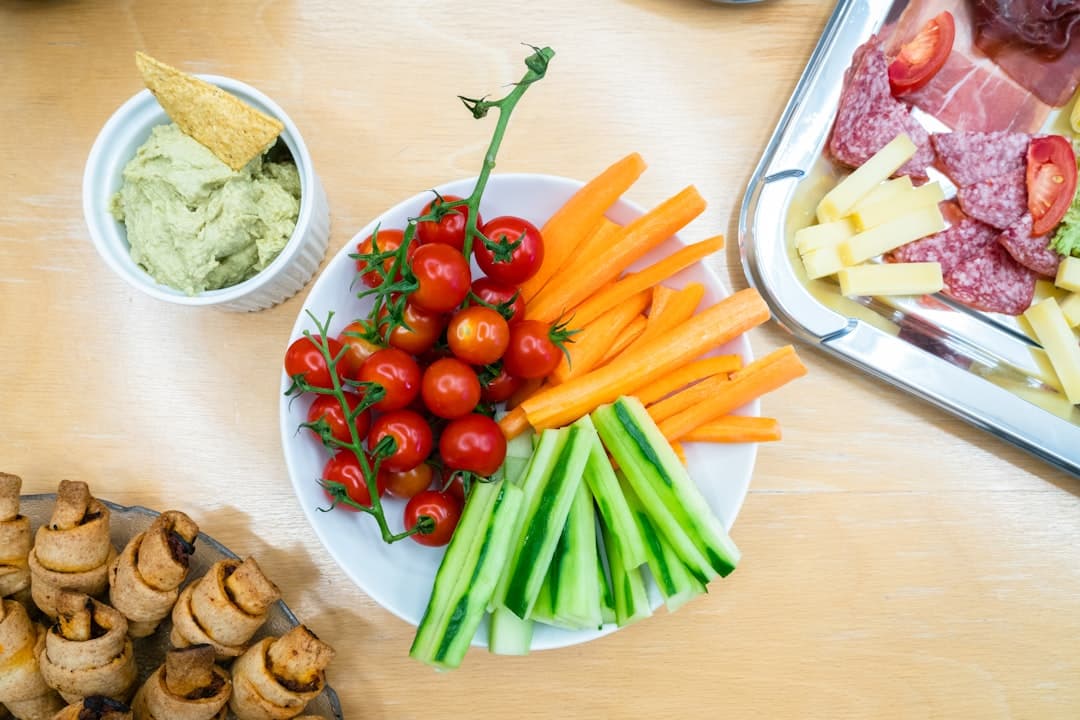
Any vegetable you like, raw or cooked, as long as it is a true vegetable and not mostly starch.
A key caution from the video is about potatoes.
Potatoes are a starch, not a non-starchy vegetable in this context. A potato soup is not the same as a vegetable starter because it can raise glucose like other starches.
Step-by-step: the simplest sequence
Start with vegetables. Eat your plate of vegetables first, before the starch-heavy part of the meal.
Continue with your usual meal. Eat what you planned to eat anyway. The point is addition, not restriction.
Notice the after-effects. Pay attention to your energy, cravings, and hunger timing over the next few hours. Many people find the benefit shows up as “I did not crash” or “I did not need a snack as soon.”
Short version: vegetables first, then everything else.
»MORE: If you like tracking experiments, consider keeping a 3-day “meal order” log. Write down what you ate, what order you ate it in, and how hungry you felt 2 to 3 hours later.
Restaurants, fast food, and pairing with vinegar
Real life includes restaurants, travel, and meals you did not cook.
The restaurant strategy is straightforward: order a side of vegetables and eat it first.
The vinegar pairing
The video also highlights pairing the veggie starter with a vinegar dressing.
The vinegar approach described is 1 tablespoon of vinegar at the beginning of the meal, always diluted in water if you drink it. A simpler option is to use vinegar as salad dressing on your veggie starter.
This pairing is presented with a provocative example: a fast-food meal (cheeseburger and large fries) created a large spike on its own, but adding a green salad plus vinegar from a packet before the meal reduced the spike on a different day.
That example comes with an important boundary.
The point is not “eat junk food freely as long as you have salad.” The point is that if you are eating your usual foods, adding vegetables first may reduce the metabolic hit.
Important: Vinegar can irritate the throat or stomach for some people and may worsen reflux symptoms. If you try it, keep it diluted and stop if you notice burning, nausea, or worsening heartburn.
Common questions and practical troubleshooting
Do I need to wait between the veggie starter and the rest of the meal?
No waiting is required in this approach.
The video emphasizes that studies still show benefits even when people do not pause between courses. So you can simply eat vegetables first, then move right into the rest of the plate.
What about soup as a veggie starter?
Soup can be better than nothing, but it depends on the soup.
A blended vegetable soup may be less effective because blending can break down fiber structure. A chunky vegetable soup may preserve more texture than a fully pureed soup.
Also, starch-based soups like potato soup are not ideal for this specific goal because potatoes can behave like other starches.
What if I cannot do a veggie starter every time?
Then do it the next time you can.
This hack is framed as a tool, not a rule. Even using it a few times per week can increase fiber intake and may improve how you feel after meals.
Are fiber supplements a good substitute?
The video discourages relying on fiber pills as a replacement because you might need many capsules to approximate the amount of fiber you would get from a plate of vegetables.
Whole vegetables also bring water, volume, micronutrients, and a texture that can support fullness. Supplements do not always replicate that eating experience.
What about “anti-spike” supplements mentioned in the video?
The speaker mentions a product (Anti-Spike) and highlights ingredients like mulberry leaf, described as a non-fiber approach that may reduce glucose spikes.
If you are considering any supplement for glucose support, it is reasonable to discuss it with a clinician or pharmacist, especially if you are pregnant, breastfeeding, have kidney or liver disease, or take medications that affect blood sugar.
Simple veggie starter ideas from the video
These are intentionally low-effort.
Quick Tip: If your household resists “salad before dinner,” try making the starter taste like a treat. Use vinegar-based dressing, herbs, garlic, or a small amount of cheese or olive oil to boost satisfaction.
Expert Q&A: making it safe and realistic
Q: I have prediabetes or type 2 diabetes. Is eating vegetables first actually worth trying?
A: For many people, yes, it is a low-risk experiment that can be practical. Eating non-starchy vegetables before carbohydrates may slow glucose absorption and can reduce post-meal spikes, which is supported by research on food order (NIH full textTrusted Source).
If you use glucose-lowering medications, you should be mindful that changing meal patterns can change readings. Bring the idea to your diabetes clinician, especially if you have had low blood sugar episodes, so you can monitor safely and adjust routines with guidance.
Dr. Maya Patel, MD, Family Medicine
Q: Does this mean I can eat pasta, fries, or dessert as long as I eat salad first?
A: Think of the veggie starter as a harm-reduction tool, not a free pass. Vegetables first may blunt the glucose rise from a carb-heavy meal, but it does not erase other effects of ultra-processed foods, like high sodium, low micronutrient density, and easy overconsumption.
A balanced approach is to keep your usual meal quality goals, then add the veggie starter to improve the meal’s metabolic “shape.” If you notice it helps cravings and hunger, it may indirectly make it easier to choose nourishing foods more often.
Dr. Elena Ruiz, MD, Internal Medicine
Key Takeaways
Sources & References
Frequently Asked Questions
- How many vegetables do I need for a veggie starter?
- A small amount is still helpful, even a few bites. For a more structured goal, aim for a veggie starter about half the size of your main dish, or roughly one-third of the meal by volume.
- Do I have to wait before eating the rest of my meal?
- No. The approach described in the video suggests the benefit shows up even without a waiting period. Just eat vegetables first, then continue with your meal.
- Can I use soup as my veggie starter?
- A vegetable soup can be better than no starter, especially if it is chunky. Fully blended soups may be less effective because blending can break down fiber structure, and potato-based soups are more likely to raise glucose because potatoes are starchy.
- What is the easiest veggie starter at a restaurant?
- Order a side salad or a side of vegetables (like spinach or green beans) and eat it first. You can order it with your main dish and simply change the order you eat.
- Is vinegar necessary for the veggie starter hack?
- No. Vinegar is presented as an optional add-on that may further reduce post-meal glucose rises for some people. If you try it, use about 1 tablespoon and dilute it in water if drinking it, or use it as salad dressing.
Get Evidence-Based Health Tips
Join readers getting weekly insights on health, nutrition, and wellness. No spam, ever.
No spam. Unsubscribe anytime.