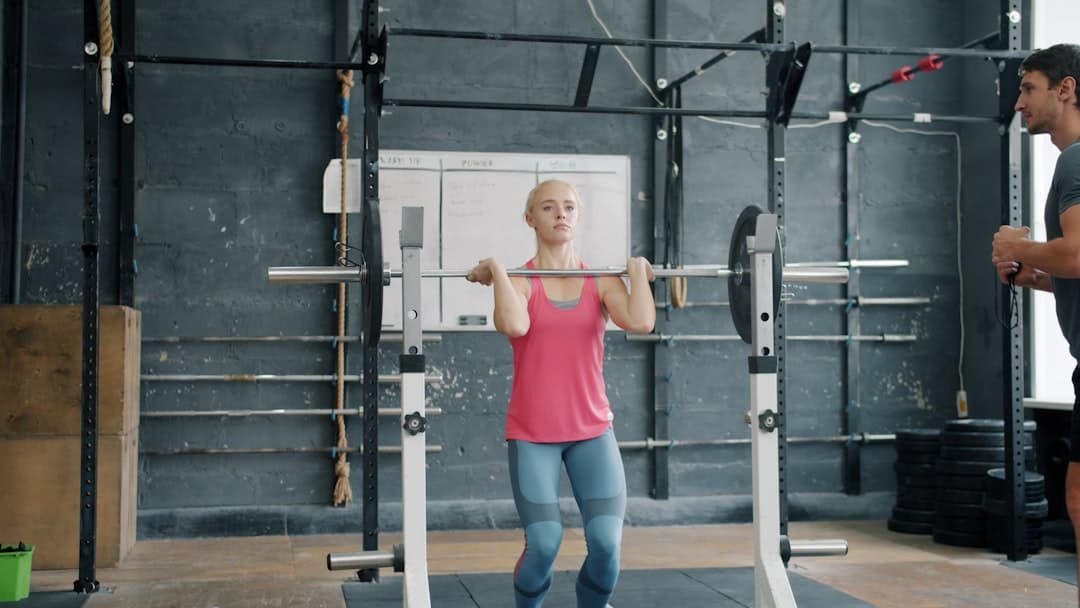
Perimenopause Fat Gain: HRT, Protein, HIIT, Weights

Summary
Most people blame midlife fat gain on “stress” or “getting older.” This video’s perspective is different: the core issue is shifting estrogen to progesterone ratios across a long perimenopause window, often starting around 35 and lasting until menopause (average 52). Those shifts can disrupt sleep, mood, cholesterol, blood sugar markers, and body composition, even when your workouts stay the same. The practical focus is on using external stressors, especially high intensity intervals, power based resistance training, plyometrics, and higher protein, plus lifestyle tools like sauna. Menopause hormone therapy is framed as a low dose tool to attenuate severe change, not “anti aging.”
🎯 Key Takeaways
- ✓Perimenopause can start around 35, and the long transition to menopause (average 52) can quietly change body composition and metabolic markers.
- ✓This viewpoint centers on hormone ratio shifts, not “lack of willpower,” as a driver of visceral fat gain, sleep disruption, and reduced training response.
- ✓Less volume and more quality training, especially true high intensity intervals and power based resistance training, is emphasized to support insulin sensitivity and muscle.
- ✓Higher protein, spread across the day, plus colorful plants to support gut microbiome diversity, is a practical nutrition anchor.
- ✓Menopause hormone therapy is framed as low dose symptom and change attenuation, not “replacement” to youthful levels or a proven dementia prevention strategy.
What most women get wrong about perimenopause changes
Most women think the sudden “squishy” feeling, stubborn belly fat, and flat workouts mean they are doing something wrong.
This video’s framing is more blunt: a lot of the time, it is not your discipline, it is your physiology shifting for years before your final period.
The discussion places perimenopause in a wide window, roughly age 35 up to menopause, with menopause averaging around 52. That is a long stretch where the ratio of estrogen to progesterone can change enough to affect how your body responds to training, how you sleep, and how you feel day to day.
In the early phase, the changes can look “non hormonal” on the surface. You may notice you are not adapting to training the way you used to, you are gaining body fat, sleep is disrupted, and mood is more volatile. A key point raised is that women are often told this is just stress and busyness, sometimes even offered a serotonin reuptake inhibitor, when the pattern may fit hormone ratio shifts.
The practical takeaway is to treat this as a signal to reassess, not a personal failure.
How do you even know it is perimenopause?
A distinctive point in the video is that there is not a single definitive blood test that can label someone “perimenopausal” in a one off visit. Hormones fluctuate too much, and you would need frequent testing over time to interpret patterns, which most people do not do.
So the strategy becomes symptom based and history based. The conversation highlights tracking cycle changes, for example whether cycles are becoming shorter or longer, and what is changing about the bleed phase. In mid to late 40s, it often becomes more obvious because multiple systems start shifting at once.
Pro Tip: If you still cycle, write down cycle length, sleep quality, mood shifts, and training performance for 2 to 3 months. Patterns often show up faster than you expect, and it gives your clinician something concrete to work with.
Why visceral fat shows up, even if your habits did not change
The “menopot” is not just cosmetic in this framing.
It is treated as a sign of visceral fat, the type of fat stored around organs that is more strongly linked with cardiometabolic risk than subcutaneous fat.
The video ties several perimenopause shifts together. In mid to late 40s, women may see blood lipids change, including rising low density lipoprotein (LDL), even if cholesterol was never an issue before. A1C can creep up as well, a marker used in screening for prediabetes and diabetes. What makes this especially frustrating is the common experience of “I did not change anything, but my body did.”
This perspective also brings in the gut microbiome. With fewer sex hormones, there may be a drop in gut microbiome diversity, which can affect serotonin signaling, vitamin production, and parasympathetic drive. The argument is not that the microbiome is the only driver, but that it becomes part of the domino effect.
Then comes the mechanism that explains the belly shift in plain terms.
The framing suggests that with less estrogen, you may lose some anti inflammatory support and some ability to pull circulating free fatty acids into mitochondria in skeletal muscle to be used as fuel. If those fatty acids keep circulating, the liver may shift them into esterified fatty acids, which are more likely to be stored, including as visceral fat.
That is the “why” behind the lived experience of gaining 10 pounds in months, or seeing a sudden change in abdominal adiposity while doing the same workouts.
Did you know? Visceral fat is metabolically active and is associated with higher cardiometabolic risk. Major medical organizations emphasize addressing midlife risk factors like cholesterol, blood pressure, and glucose as menopause approaches, even if prior labs were normal. See the American Heart Association overview of cholesterol and heart riskTrusted Source.
Exercise that matches the moment: less volume, more quality
The core training message is simple: you cannot rely on hormones the same way, so you need an external stress that pushes adaptation.
This is not an argument to exercise more and more. It is the opposite.
The discussion highlights estrogen as important for muscle protein synthesis, strength, and power, and progesterone plus estrogen as important for bone growth and bone density. As those supports fluctuate and trend downward, training needs to become more intentional.
The type of exercise emphasized in the video
The focus is on high intensity work and power based resistance training, not long, moderate sessions.
The video also makes a strong scheduling point: less volume, more quality. Instead of 90 minutes daily, the suggested structure is power based resistance training around three times per week, with cardio two to four times per week, leaning toward short, sharp intensity.
Why not rely on long slow training or lots of zone 2? The argument is that moderate intensity work may not create a strong enough stress signal to drive the specific muscular and metabolic changes needed during this phase.
Important: If you have cardiovascular disease, uncontrolled high blood pressure, significant joint pain, or you are new to exercise, do not jump straight into maximal sprints or high impact plyometrics. Ask a clinician for clearance and consider working with a qualified trainer to scale intensity safely.
Sauna as a practical add on
The video also calls out sauna use as a tool for hot flash control and temperature regulation. The reasoning is that repeated heat exposure can help the brain and body better interpret heat signals, supporting thermoregulation.
Evidence on sauna and menopause symptoms is still emerging, and individual tolerance varies. Still, heat exposure has documented physiologic effects, and some people find it helpful for relaxation and sleep. For a general overview of sauna safety and considerations, see Harvard Health’s sauna reviewTrusted Source.
A simple perimenopause training week (step by step)
You do not need a perfect plan. You need a plan you can repeat.
Below is a step by step structure that mirrors the video’s priorities: power based resistance training, short high intensity cardio, and enough recovery to keep quality high.
Pick 3 non consecutive strength days, and keep them power focused. Choose full body sessions that emphasize big patterns (squat, hinge, push, pull, carry). Use loads and rep ranges you can control with good form, and move with intent on the lifting phase. If you are not sure what “power based” means for you, it can be as simple as choosing a moderate weight you can lift explosively while staying safe.
Add 2 to 4 short high intensity cardio sessions per week. This can be sprint intervals on a bike, rower, incline walk, or running, depending on joints and experience. Keep sessions short enough that intensity stays high, and stop before form collapses. If you are newer, start with fewer rounds and longer recovery, then build gradually.
Use plyometrics only if your body is ready for impact. Jumping, hopping, and bounding can be powerful tools, but they should be earned. Start with low amplitude options, for example small pogo hops or step downs, and consider swapping in uphill sprints or cycling intervals if impact is not tolerated.
Protect sleep like it is part of the program. The video repeatedly links disrupted sleep with worsening body composition and training response. A practical move is to avoid stacking hard training late at night if it revs you up, and to keep a consistent sleep window when possible. If hot flashes are waking you, talk with a clinician about symptom management options.
Track outcomes that matter, not just scale weight. In this phase, pay attention to waist measurements, strength numbers, interval performance, and how you recover. The video’s point is that body composition and metabolic markers can change even when habits look stable, so tracking helps you adjust earlier.
»MORE: If you want a simple tracking sheet, create a one page “Perimenopause Dashboard” with five lines: sleep quality, cycle notes, strength (one lift), intervals (one metric), and waist measurement. Bring it to appointments.
Food priorities: protein, plants, and the gut microbiome angle
The nutrition advice in the video is not trendy, it is targeted.
The anchor is higher protein, plus regular distribution across the day, and a strong emphasis on colorful fruits and vegetables to support blood glucose control and microbiome diversity.
Why protein matters more now
A key point is anabolic resistance, meaning that as we age, the body may not respond as robustly to amino acids. So you often need a higher protein dose to stimulate muscle protein synthesis and support tissue repair.
The discussion also critiques the idea that the protein RDA is automatically “enough,” noting that many recommendations were not built around active midlife women trying to preserve lean mass.
What you can do today:
For readers who want numbers, protein needs vary by body size, age, and activity. A common evidence based range for active adults is roughly 1.2 to 2.0 g/kg/day in some contexts, but personal targets should be discussed with a clinician, especially with kidney disease or other medical conditions. For an accessible overview, see the International Society of Sports Nutrition position stand on proteinTrusted Source.
The gut microbiome, explained in practical terms
The video links lower sex hormones with reduced microbiome diversity, which may affect serotonin signaling, vitamin production, and metabolic regulation.
You do not need to “biohack” this.
Try a food first approach:
What the research shows: Menopause is associated with changes in body fat distribution and cardiometabolic risk, and lifestyle factors like diet quality and physical activity remain key levers. For a broad clinical overview, see the North American Menopause Society information on menopauseTrusted Source.
Menopause hormone therapy vs “replacement,” and what it is not
Language matters here, and this is one of the video’s most unique contributions.
Instead of defaulting to “HRT,” the speaker prefers menopause hormone therapy (sometimes called menopausal hormone therapy, MHT). The reasoning is that in natural perimenopause and menopause, the goal is not to “replace” hormones back to youthful reproductive levels. It is to use low physiologic doses as a tool to attenuate severe changes, for example vasomotor symptoms, mood disruption, and major quality of life distress.
That is a different promise than “stay young.”
The video also critiques a cultural undercurrent, the idea that women are expected to look unchanged with age, while men are allowed to look “distinguished.” In that context, “replacement” language can accidentally reinforce the idea that menopause therapy is an anti aging strategy.
What this perspective says about dementia claims
Another clear point is about brain health messaging. The video states that evidence is not there to claim hormone therapy will prevent dementia.
That does not mean hormones have no effects on the brain. It means you should be wary of absolute promises. If you are considering therapy, talk with a clinician about your personal risks, symptom severity, timing, and goals.
For balanced, patient friendly guidance on benefits and risks, see:
Expert Q&A
Q: If there is no definitive blood test, how do I talk to my doctor without being dismissed?
A: Bring a short symptom timeline: cycle changes (shorter or longer), sleep disruption, mood shifts, hot flashes, and changes in training response or body composition. This video’s approach is that the pattern across time matters more than a single lab value.
Ask directly about perimenopause, and ask what non hormonal options can be tried first (exercise structure, sleep strategies, nutrition), and when it makes sense to discuss menopause hormone therapy as a tool for symptom relief.
Health education summary based on the video’s clinical framing
The overlooked good news: the other side can feel better
Perimenopause gets the spotlight, but the “after” matters.
A closing message in the video is that it gets better on the other side. Once the hormone shifts settle into a new baseline, many people find a new normal that can feel more stable than the turbulent transition.
This does not mean you ignore bone health, muscle loss risk, or cardiometabolic markers. The point is that if you put the right lifestyle interventions in place, especially training for muscle and bone and eating to support recovery, you can come through this phase with less pain and dysfunction.
The hopeful framing is also practical: you are not doomed to feel broken for the next decade. You are adapting to a major physiologic transition, and the plan is to reduce the severity of the swing.
Expert Q&A
Q: Does having more body fat make menopause symptoms worse?
A: This video notes a greater incidence of vasomotor symptoms like hot flashes in women with higher body fat. It also highlights that having more lean mass is associated with a lower incidence of insulin resistance.
If this feels personal or discouraging, reframe it as actionable: building lean mass and improving fitness can be part of symptom management, alongside medical care when needed.
Health education summary based on the video’s key points
Key Takeaways
Frequently Asked Questions
- What age does perimenopause typically start?
- The video describes perimenopause as potentially starting around age 35 and extending until menopause, with menopause averaging about 52. Individual timing varies, so tracking cycle and symptom patterns can be useful.
- Why am I gaining belly fat even though I am exercising?
- This perspective links abdominal and visceral fat gain to shifting estrogen and progesterone ratios that can change how the body handles circulating fatty acids and glucose. It also emphasizes that exercise may need to shift toward higher intensity and power focused work to drive adaptation.
- Is there a blood test to confirm perimenopause?
- The video argues there is not a definitive single blood test, because hormones fluctuate a lot. Symptom history, cycle changes, and overall pattern over time are often more informative in real world care.
- What kind of workouts are emphasized for perimenopause?
- The video prioritizes short, true high intensity intervals, plyometrics when appropriate, and power based resistance training, with less overall volume. The goal is to create a strong enough stress signal to support insulin sensitivity, muscle, and body composition.
- Is menopause hormone therapy the same as hormone replacement therapy?
- In the video, menopause hormone therapy is framed as low dose support to attenuate symptoms and severe changes during the transition, not a return to youthful hormone levels. The language shift is meant to reduce the idea that therapy is “anti aging.”
Get Evidence-Based Health Tips
Join readers getting weekly insights on health, nutrition, and wellness. No spam, ever.
No spam. Unsubscribe anytime.