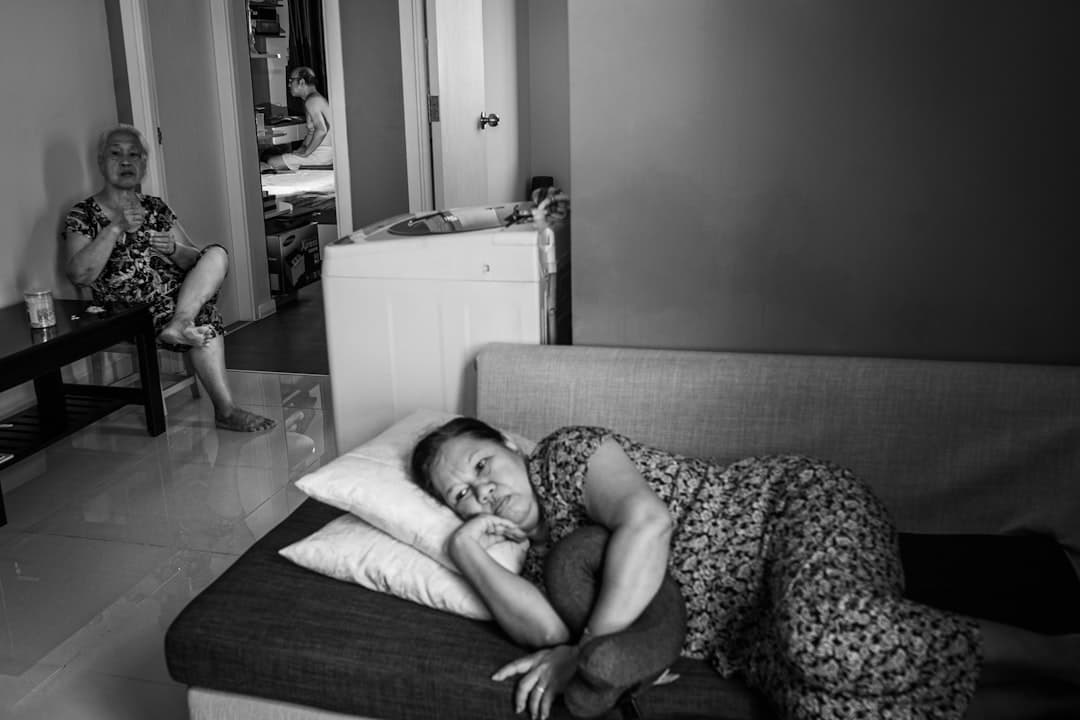
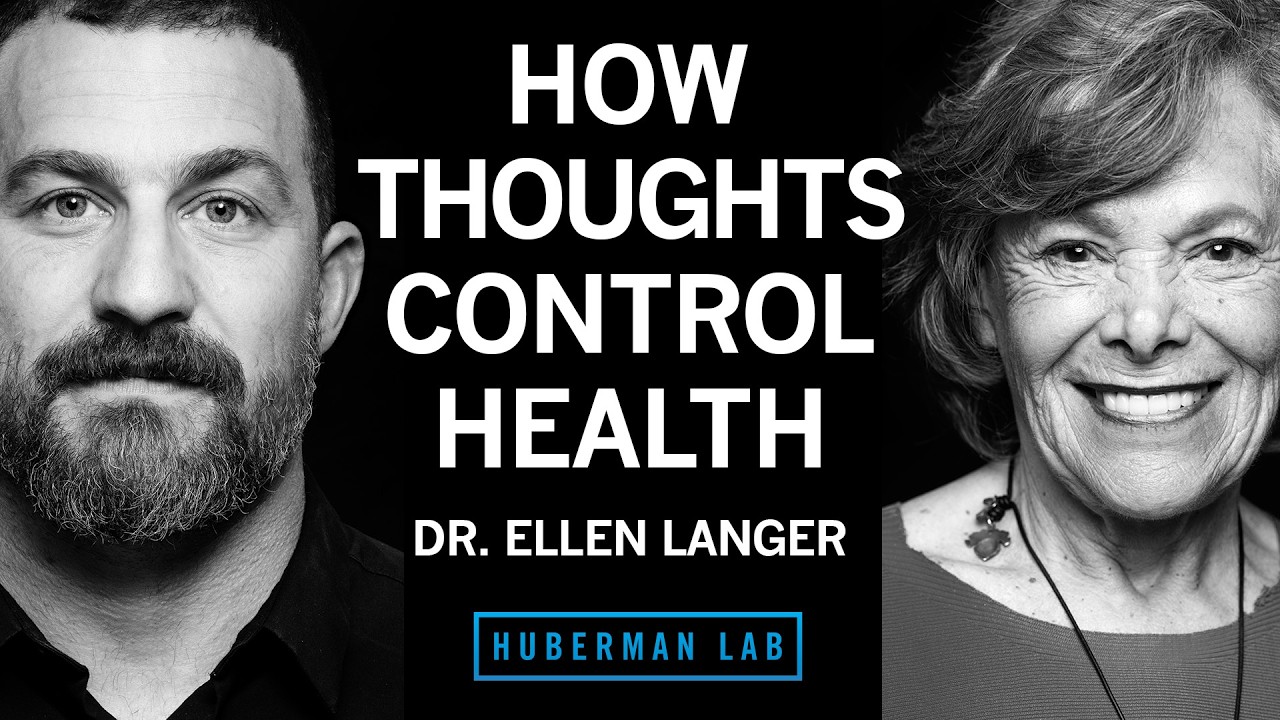
Mindset, Mindfulness, and Sleep, Dr. Ellen Langer
Summary
Dr. Ellen Langer’s perspective flips a common sleep message on its head: your body is not a machine that responds only to inputs like hours slept, exercise minutes, or perfect routines. It also responds to meaning, expectations, labels, and what you notice. In this Huberman Lab conversation, Langer argues that “mindfulness” is not meditation, it is active noticing, and it can alter health outcomes, including sleep, healing, and aging markers. The practical takeaway is not magical thinking, it is learning to treat health “facts” as probabilities, reducing sleep anxiety, and training yourself to notice variability so you regain agency.
The headline takeaway, sleep is not just biology, it is meaning
If you want one idea from this conversation to change your sleep, it is this: your sleep is not only something you “get,” it is something your brain and body interpret.
That sounds abstract until you connect it to everyday behavior. A sleep tracker says you slept poorly, you feel doomed, you scan for fatigue, you drink more caffeine, you get anxious at bedtime, then you actually sleep worse. The “data” did not just measure your sleep, it participated in it.
This is the unique angle Dr. Ellen Langer brings to sleep health. She is not arguing that physiology does not matter. She is arguing that mindsets (expectations, labels, and what you notice) are part of physiology.
In the Huberman Lab discussion, the most sleep-specific claim is striking: in a sleep lab study, biological and cognitive functioning followed perceived sleep duration, meaning how much people thought they slept, not only how much they actually slept.
Did you know? Research on placebo and nocebo effects shows that expectations can meaningfully change symptoms like pain, fatigue, and even side effects, sometimes even when people know they are taking a placebo. A major overview in The New England Journal of MedicineTrusted Source explains how brain and body pathways translate expectation into real physiological changes.
The investigative question is not, “Is sleep real?” It is, “How much of what we call sleep problems is biology, and how much is the way we frame biology?”
Mindfulness, as Langer uses the word, is noticing, not meditating
Most people hear “mindfulness” and think “meditation.” Langer pushes back hard.
Her definition is blunt: mindfulness is a way of being, the process of noticing. Meditation can be a practice that sometimes leads to mindfulness, but it is not the same thing.
That distinction matters for sleep because many people turn mindfulness into another performance task. They try to meditate perfectly, track streaks, and judge themselves for “doing it wrong.” In Langer’s frame, that is a fast path back to mindlessness.
Two doorways into mindfulness
Langer describes two routes.
A key move in her thinking is that mindfulness is not “focus” in the rigid sense. She calls focus mindless when it means trying to hold experience still, like a camera freezing a frame. Instead, mindful attention allows variation, because the world is varying anyway.
For sleep, this is a subtle but important trade-off.
Rigid focus often becomes, “I must fall asleep now.” That is a struggle.
Noticing becomes, “What is different about tonight?” That is information.
Pro Tip: If you are lying awake, try Langer’s “three new things” method on something boring and nearby, the ceiling, the pillowcase texture, the pattern of sounds in the room. The goal is not distraction, it is shifting from certainty (“I cannot sleep”) to curiosity (“What is happening right now?”).
Sleep tracking and the “sleep score” trap, when information becomes a nocebo
Wearables can be useful. They can also become sleep’s version of reading your own lab results without context.
Langer’s sleep-lab finding, as discussed in the episode, is that when people woke up and were shown a clock indicating they got two hours more sleep, two hours less, or the correct amount, next-day functioning tracked what they believed.
This is exactly the kind of result that makes people uncomfortable, because it suggests that a sleep score can act like a nocebo.
A nocebo is the negative mirror image of a placebo. If placebo is “something inert helps because you expect it to,” nocebo is “something neutral harms because you expect it to.”
In her broader examples, she describes classic demonstrations, like people developing a rash when they believe a harmless leaf is poison ivy, and not developing a rash when they believe poison ivy is harmless.
The investigative implication for sleep health is not that trackers are “bad.” It is that sleep data changes the story you tell yourself, and the story can change your body.
When tracking helps
Tracking may be useful when it supports experimentation.
For example, you might test whether alcohol changes your awakenings, or whether a cooler room changes your sleep continuity. That is “noticing variability,” and it is aligned with Langer’s approach.
When tracking harms
Tracking tends to backfire when it becomes a verdict.
If your device labels you as a “bad sleeper,” you may start acting like one. If it says you only got 5 hours, you may interpret normal morning grogginess as evidence you are broken.
This is not hypothetical. The sleep field increasingly talks about “orthosomnia,” a pattern where obsession with perfect sleep metrics worsens insomnia symptoms.
What the research shows: A clinical review in Sleep Medicine ReviewsTrusted Source describes orthosomnia as a phenomenon where wearable-driven sleep perfectionism can increase anxiety and perpetuate insomnia.
How many hours of sleep do you need, her answer is deliberately annoying
Langer challenges the question itself.
She argues that asking “How much sleep do you need?” invites a single, absolute answer, and that is exactly the kind of mindless certainty that causes problems.
Her reasoning is practical. If you ran a marathon today, your sleep need tonight might differ from a day spent resting. Age, stress level, light exposure, and evening wind-down may all change what “enough” sleep is.
She also shares a personal observation: if she relaxes in the 2 to 3 hours before bed and dims lights, she reports needing 2 to 3 fewer hours of sleep to wake refreshed.
That is not a prescription. It is a perspective shift.
The anchor she proposes is not a number, it is a criterion: what does it take to wake feeling reasonably refreshed?
This view has trade-offs.
To balance those trade-offs, it helps to keep mainstream sleep guidance in view. Large public health bodies generally recommend that most adults aim for at least 7 hours of sleep per night, with individual variability. The CDC sleep recommendationsTrusted Source are a good reference point.
Langer’s contribution is not to replace that guidance. It is to question what happens when the guidance becomes a rigid identity.
Aging, insomnia, and the counterclockwise idea, environments cue biology
The episode highlights Langer’s famous “counterclockwise” study, where older men lived for several days in an environment retrofitted to resemble life 20 years earlier, and were encouraged to inhabit that earlier time psychologically.
Reported outcomes included improvements in vision, hearing, memory, strength, and even looking younger.
The deeper point she draws from this is not nostalgia. It is cueing.
Many environments constantly cue decline.
She describes how even in her study, simply telling participants they were responsible for their own suitcases changed behavior and engagement. The comparison group also improved, just less.
For sleep, this matters because bedrooms cue sleep, or cue struggle.
A bedroom can become a lab, full of devices, rules, and pressure. Or it can become a place where you notice comfort, variability, and small levers you can adjust.
Important: If an older adult is considering a stair lift or major home change, it can be helpful to discuss safety and fall risk with a clinician. The mindset lens is useful, but it should not replace practical fall prevention.
Exercise, weight, and the housekeeper study, expectations change outcomes
Langer describes a study with hotel housekeepers that became a flagship example of mindset affecting physiology.
The setup was simple.
The results she describes are dramatic: without changing diet or workload, the re-framed group showed weight loss, improved waist-to-hip ratio, reduced BMI, and lower blood pressure.
This is where her “epiphenomenon” provocation comes in. She entertained the idea that some benefits of exercise might be partly mediated by the belief that one is exercising.
This is not an argument against movement.
It is an argument against the narrow story: “Only gym workouts count.”
For sleep health, this has a direct application. Many people discount the movement they do during the day, then feel they “failed” to exercise, then feel less healthy, then sleep worse.
Reframing can reduce that stress.
What the research shows: The housekeeper study was published in Psychological ScienceTrusted Source and is often cited as evidence that beliefs about activity can influence health markers.
Healing and time perception, why the clock on the wall might matter
One of the most unusual experiments discussed is about wound healing and time perception.
Participants had a small wound and sat in front of a clock. Unbeknownst to them, the clock ran at normal speed, half speed, or double speed.
Healing tracked clock time, not objective time.
If you take this seriously, it raises uncomfortable questions about medical certainty.
When a clinician says, “This will take a month to heal,” it can become a self-fulfilling timeline. People organize their expectations, activity, and attention around that number.
Langer does not argue clinicians should say nothing. She argues they should speak in probabilities and ranges, and acknowledge uncertainty.
There is a practical sleep parallel.
When people with insomnia are told, “You need eight hours,” they may interpret anything less as failure. That can worsen arousal and perpetuate insomnia.
A more flexible message might be, “Most people function best with a range, and your body can sometimes do surprisingly well on less, especially if you reduce stress around it.”
Chronic symptoms and the power of variability, a practical method that avoids hype
Langer’s most actionable clinical-style tool in the episode is not a supplement, a device, or a rigid routine.
It is a question.
When symptoms are present, ask repeatedly:
She describes using periodic calls to prompt this reflection in conditions like multiple sclerosis, chronic pain, Parkinson’s disease, and stroke.
This does several things at once.
First, it reduces helplessness, because you are engaged.
Second, it breaks the illusion that symptoms are constant. “Always” is often a cognitive shortcut.
Third, it triggers mindful search, and she argues mindfulness itself is physiologically beneficial.
Fourth, it increases the chance of finding patterns you can act on.
For sleep, this is powerful because insomnia often feels absolute.
“I never sleep.”
But if you track variability mindfully, you might find:
Those are levers.
»MORE: Create a one-page “sleep variability map.” Each morning, write: (1) estimated sleep quality, (2) what was different yesterday, (3) what was different at bedtime, (4) one hypothesis. After two weeks, look for patterns.
Stress, hospitals, and “mindful checklists”, reducing burnout and sleep disruption
Langer makes a strong claim: stress is a major killer, and hospitals are inherently stressful environments.
She also argues that burnout is a mindlessness problem as much as a workload problem. If staff assume every patient is “the same as yesterday,” work becomes draining. If staff notice new details, the work can be more engaging, and patients feel more cared for.
That is where her “mindful checklist” idea comes in.
A standard checklist can become mindless yes-no responding. A mindful checklist forces observation.
Instead of “Is the patient in bed, yes or no?” it becomes “What position are they in?” or another question that cannot be answered without looking.
This matters for sleep health because stress and vigilance are insomnia’s fuel.
Hospital sleep is notoriously poor, due to noise, light, interruptions, and anxiety. Improving hospital sleep is a complex systems problem, but Langer’s angle is that better noticing and better communication about uncertainty may reduce stress responses that worsen sleep.
For readers at home, the same principle applies in miniature.
If your bedtime routine is a checklist you rush through while worrying, it is mindless.
If your bedtime routine is a noticing practice, it can be calming.
A practical sleep plan based on Langer’s lens, not rules, noticing
This is not a list of “sleep hacks.” It is a way to run sleep like an experiment, without turning your life into a lab.
How to apply “noticing” to your evenings
Here is a structured approach that fits her philosophy while still being practical.
Pick one sleep metric that is human, not device-based. Use “How refreshed do I feel 30 minutes after waking?” on a 0 to 10 scale. This reduces orthosomnia risk while still giving you data.
Notice three new things about your wind-down each night. One can be environmental (light level), one behavioral (what you did in the last hour), one internal (body tension, mental speed).
Treat sleep needs as variable. Instead of “I need 8 hours,” try “My sleep need fluctuates, and I can influence it by lowering stress and improving conditions.”
If you sleep poorly, do not let the label become the day. Ask, “Is this a tragedy or an inconvenience?” This is one of her favorite reframes. Then choose one supportive action, light exposure, a walk, a short nap if appropriate, or earlier wind-down.
Use tracking only for experiments, not for judgment. If you use an Oura, Whoop, Apple Watch, or mattress tracker, decide in advance what question you are testing. Stop tracking when it becomes a verdict.
A key trade-off here is that some people want certainty to feel safe. Langer’s approach asks you to find safety in flexibility instead.
It can be uncomfortable at first.
It can also be freeing.
Expert Q&A
Q: If my wearable says I slept badly, should I ignore it?
A: You do not have to ignore it, but it helps to treat it as one data point, not a diagnosis. If the score makes you anxious or makes you feel worse than you otherwise would, consider using the device only to test specific patterns, like alcohol, late meals, or room temperature.
A useful compromise is to check your subjective feeling first, then look at the score later, so you learn whether the score is shaping your perception.
Dr. Ellen Langer, Professor of Psychology
Quick Tip: If you tend to clock-watch at night, turn the clock face away. For many people, “What time is it?” becomes “How much sleep am I losing?” and that cognitive arousal can keep sleep away.
Key Takeaways
Frequently Asked Questions
- Is mindfulness the same as meditation in Dr. Langer’s approach?
- No. She defines mindfulness as the active process of noticing new things. Meditation may be one route that can lead to mindfulness for some people, but mindfulness itself is a way of being rather than a set practice.
- Can a sleep tracker make insomnia worse?
- It can for some people, especially if the score increases anxiety or becomes a verdict about health. Research and clinical commentary describe “orthosomnia,” where pursuit of perfect sleep metrics perpetuates insomnia symptoms.
- How does Dr. Langer think about how much sleep you need?
- She emphasizes variability and context rather than a single fixed number. Her suggested anchor is how refreshed you feel, and she argues that stress, expectations, and routines can change perceived sleep need.
- What is the simplest way to apply her mindfulness idea to sleep tonight?
- Try noticing three new things in your bedroom or in your body while you wind down, such as light, sound, temperature, and muscle tension. The goal is to shift from certainty and struggle to curiosity and observation.
- Does this perspective mean sleep problems are “all in your head”?
- No. The view is that mind and body are not separate, and expectations and attention can influence physiology. It does not deny biological contributors like pain, medications, sleep apnea, or circadian disruption.
Get Evidence-Based Health Tips
Join readers getting weekly insights on health, nutrition, and wellness. No spam, ever.
No spam. Unsubscribe anytime.