Menopause and Lifting Heavy: A Practical Plan
Summary
Heavy lifting in perimenopause and menopause is not about becoming bulky, it is about replacing a fading estrogen signal with a strong nervous system signal. In this video, Dr. Stacy Sims argues that higher-load, low-rep strength work is the “big rock” for maintaining muscle, power, and long-term function. The practical twist is that “heavy” is relative, and the first step is learning to move well, not maxing out. Once technique is solid, short sets taken close to form-failure can drive strength, support glucose control, and improve confidence in everyday tasks.
🎯 Key Takeaways
- ✓This approach treats heavy resistance training as the “big rock” for menopause fitness because estrogen’s support for muscle and power declines.
- ✓“Heavy” is defined by fatigue and form, not a number, the fifth set is where you should be close to only 1 good rep.
- ✓The mechanism emphasized is a central nervous system response, recruiting more muscle fibers quickly to replace some lost hormonal drive.
- ✓Start with movement quality first (mobility, squat pattern, single-leg control, safe landings), then add load to reduce injury risk.
- ✓The video directly challenges the “bulky” fear and points out that significant hypertrophy typically requires high volume, lots of food, and minimal cardio.
Research shows many women hesitate to lift heavy in midlife because they fear injury or “bulking up.”
This video takes a no-nonsense stance: if estrogen is no longer providing the same support for strength, power, and muscle, you need a different driver. The argument is that heavy resistance training can provide it.
Why menopause changes the training problem
The framing starts with a blunt point: many people do not really understand perimenopause on a practical level, so the training advice they follow often does not match what their body is doing.
In this perspective, estrogen is not just about reproduction, it is tied to how you maintain muscle, strength, and power. When estrogen declines across perimenopause into postmenopause, the “default” support for muscle maintenance is reduced. That is why doing the same workouts you used to do can suddenly feel less effective.
This is where the video’s logic becomes very action-oriented. If the old signal is fading, you do not respond by doing more of the same (more classes, more reps, more cardio). You respond by choosing a training stimulus that can still drive adaptation.
Did you know? Muscle-strengthening activity is recommended at least 2 days per week for adults in major public health guidelines, alongside aerobic activity. See the CDC physical activity guidelinesTrusted Source.
The video’s core claim is that resistance training is not a “nice to have” in this life stage. It is the anchor.
The big rock: lift heavy (and what “heavy” actually means)
Heavy lifting is presented as the “big rock” for building and keeping muscle.
Not 10 reps. Not 15 reps.
The unique angle here is why those higher-rep sets may miss the target. The goal is to create a central nervous system response, because muscle contraction is driven by nerve signals. In other words, when hormonal support is lower, you can lean more on the nervous system’s ability to recruit muscle fibers efficiently.
The mechanism in plain language
This approach emphasizes coordination: your nerves have to recruit a lot of muscle fibers quickly, and get them to fire together, to move a heavy load. That “recruit more, recruit faster” demand is the stimulus.
Over time, the argument goes, that nervous system demand also pushes the body toward building or preserving more muscle because more muscle is needed to handle the load.
What the research shows: Resistance training is consistently associated with improvements in strength and physical function in midlife and older adults, and it can support metabolic health markers. Reviews summarized by the American College of Sports MedicineTrusted Source highlight broad benefits across ages.
The takeaway is not that lighter training is useless. It is that, for the specific menopause-related problem of strength and power slipping, intensity matters.
First, learn to move well (especially if you are new)
The video does not tell beginners to walk into a gym tomorrow and deadlift 50 to 60 kilograms.
That would be a setup for injury.
Instead, the first phase is movement competency, especially because this is framed as a lifelong plan, not a short training block.
The practical checklist is refreshingly basic and very functional, it is about moving like a capable human before chasing numbers.
This stage also acknowledges a real midlife barrier: more soft tissue injuries and joint pain can show up, and technique flaws become more costly. Working with a physiotherapist or qualified trainer to identify “sticky points” is positioned as a smart, not indulgent, step.
Important: If you have new joint swelling, sharp pain, numbness, chest pain, dizziness, or you are recovering from surgery, talk with a clinician before starting heavy resistance training. Consider asking for a referral to a physical therapist for form and progression.
A simple heavy-lifting template you can test in real life
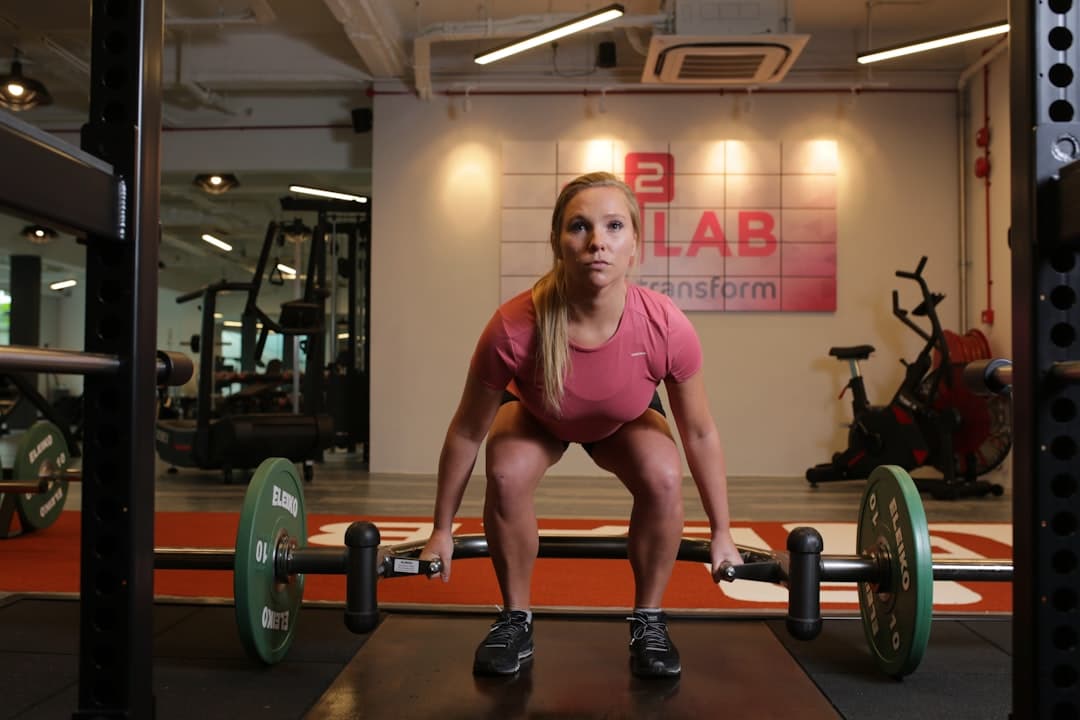
The video uses the deadlift as the example because it maps to real life: picking groceries up off the ground.
The “how” is very specific, and it is built around fatigue with good form.
How to find “heavy” using the 3-rep test
Pick a load you can lift for 3 good reps. Think: lift, set down, repeat, until you complete three with solid technique. If your form is sloppy on rep two, it is too heavy right now.
Repeat that set 5 times with rest. You are not chasing cardio fatigue. Rest enough to keep form crisp, then do another 3-rep set.
Use the fifth set as your reality check. By the fifth round, you might only be able to do one rep with proper form. That is the point. That is the “heavy” stimulus in this framework.
This is a very different mindset from “I did 3 sets of 12, I felt the burn.” Here, the target is near-failure while staying technically clean. The video’s logic is that this is what tells the nervous system it must recruit more muscle fibers, and it is what creates a reason for the body to keep, or build, muscle even when estrogen is no longer providing the same push.
Pro Tip: Track your “last good rep.” If your fifth set drops from 3 reps to 1 rep with good form, you are likely in the right intensity zone for this specific goal.
If you are new, this template can be applied to many patterns, not only barbell deadlifts. A kettlebell deadlift, trap bar deadlift, or even a heavy dumbbell from blocks can be a safer stepping stone, depending on your space and experience.
»MORE: Want a printable session log? Create a one-page sheet with columns for exercise, load, sets of 3, and “last good rep.” Keep it in your gym bag so progression is obvious.
The “bulky” myth and the cardio conditioning we grew up with
One of the biggest barriers addressed is fear.
Specifically: “If I lift like that, I’m going to get super bulky.”
The video argues this is close to impossible for most women in perimenopause through postmenopause, especially without a very specific bodybuilding-style lifestyle. The example offered is a well-known older lifter who became dramatically stronger and healthier over years of training, deadlifting roughly 80 to 100 kilograms and bench pressing around 50 kilograms, yet not appearing “bulky.”
The point is not that muscle growth cannot happen. It is that substantial bulk typically requires several things at once: very high training volume, long gym sessions, a large calorie surplus, and often minimal cardio. Most general-population women are not living that plan.
The sociocultural script that pushes women away from weights
What is unique here is the social critique. The video describes a common gym interaction:
That default script becomes a barrier, and it can keep women out of the weight room precisely when strength training may matter most for long-term function.
Expert Q&A
Q: How do I know I will not “turn into the Hulk” if I lift heavy?
A: The practical answer in this video is that visible bulk usually requires a very specific combination: lots of lifting volume, lots of food, and hours in the gym most days. For many women in perimenopause and menopause, building muscle is described as difficult, not automatic.
If your goal is strength and definition, a heavy, low-rep plan paired with normal life and some cardio is unlikely to create sudden dramatic size changes. If body changes worry you, consider taking measurements and photos monthly rather than reacting to day-to-day scale shifts.
Dr. Stacy Sims, PhD (as featured in the video)
Benefits beyond looks: glucose, gut, brain, longevity
The video does not sell lifting as a cosmetic project.
It sells it as a longevity tool.
Several benefits are highlighted in rapid sequence, and they are practical in the everyday sense, not abstract.
A key practical implication: if your training has been mostly cardio, adding heavy lifting is not “abandoning health.” It may be filling the biggest gap.
“Strength is not vanity in menopause,” is the underlying message.
Expert Q&A
Q: I have never lifted before. What is the safest first move?
A: Start by learning movement patterns without chasing heavy loads: squat mechanics, hip hinge, single-leg balance, and controlled step-downs. This video also suggests working with a physiotherapist or qualified coach to identify mobility limits and technique issues before adding load.
Once you can move well, gradually load the patterns and use a low-rep approach where fatigue shows up without form breaking down.
Dr. Stacy Sims, PhD (as featured in the video)
Key Takeaways
Frequently Asked Questions
- How heavy should I lift during perimenopause?
- In this approach, “heavy” means the load makes you fatigue quickly while keeping good form. A practical test is 3 reps repeated 5 times, by the fifth round you may only manage 1 clean rep.
- Is lifting heavy safe if I have joint pain in menopause?
- It can be, but the video emphasizes learning to move well first and getting help with technique if needed. If pain is new, sharp, or worsening, it is wise to discuss it with a clinician or physical therapist before progressing load.
- Will heavy lifting make me bulky after menopause?
- The video argues significant bulk is unlikely for most women without very high training volume, lots of food, and hours in the gym. Many women find they get stronger and more defined rather than dramatically larger.
- Do I need to stop cardio to build strength in menopause?
- This perspective suggests you do not need to eliminate cardio to benefit from heavy lifting. The key is not relying on cardio alone for body composition and strength, and ensuring strength work is a consistent priority.
Get Evidence-Based Health Tips
Join readers getting weekly insights on health, nutrition, and wellness. No spam, ever.
No spam. Unsubscribe anytime.