Bee Stings, EpiPens, and Breathing Emergencies
Summary
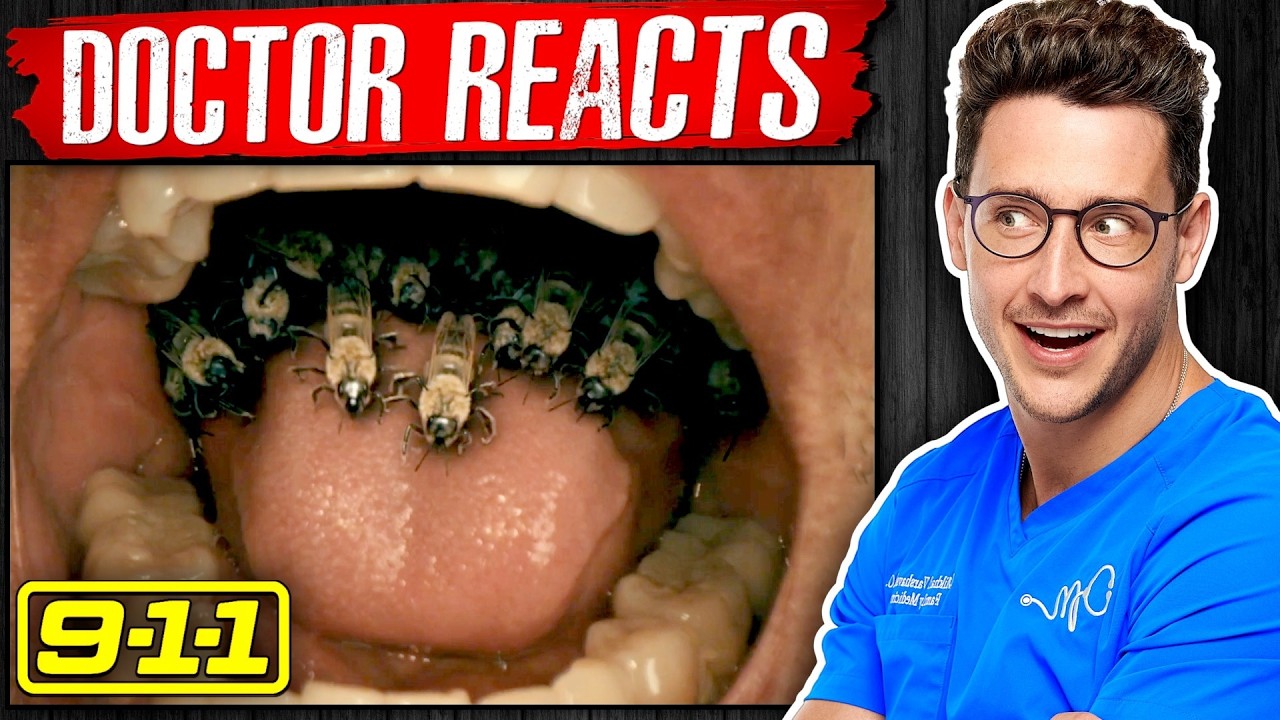
Breathing emergencies can unfold fast, especially with bee stings, panic, trauma, or low oxygen. In this 9-1-1 reaction video, a physician and a pilot (Captain Steve) critique what the show gets right and wrong: when an allergy becomes anaphylaxis, why chest compressions matter, how airway swelling threatens breathing, and why some dramatic “diagnoses” (like high altitude pulmonary edema) are hard to justify from a few seconds of symptoms. The discussion also flags risky internet-style hacks, including the idea of extracting a “second dose” from an auto-injector, and highlights practical priorities: epinephrine use, calling for help, and focusing on airway and circulation.
Why this scenario matters for the respiratory system
Breathing problems are one of the fastest ways a medical situation becomes an emergency.
That is the thread tying together this unusually chaotic 9-1-1 episode reaction, a “bee attack” that spirals into allergy, panic, trauma, and oxygen issues, all while aviation drama runs in parallel.
What makes the video’s perspective distinctive is the dual lens. The clinician keeps returning to physiology and triage, while Captain Steve keeps returning to what is plausible in an aircraft, what is not, and why some “quick fixes” do not map onto real systems.
The most practical theme is simple: in airway and breathing emergencies, you do not get unlimited time to think. You need a short list of priorities, and you need to avoid actions that make things worse.
Did you know? Severe allergic reactions can affect breathing and circulation at the same time, so a person may look like they are “just having trouble breathing” right before they faint or collapse. Quick recognition is a major safety factor. See the clinical overview of anaphylaxis from the NIAID/FAAN criteria summaryTrusted Source.
Bee stings and breathing, when “allergic” becomes anaphylaxis
Early in the reaction, a key moment happens in a single line: the caller says her eight-year-old is “allergic to bees.” The clinician immediately focuses on what many people miss, “How severe is the allergy?”
That question is not nitpicking. It is triage.
Some people have large local reactions, meaning a big swollen area near the sting, but no dangerous breathing or blood pressure problems. Others can develop anaphylaxis, a rapid systemic reaction that can include bronchospasm (tight airways), laryngeal edema (swelling near the voice box), and circulatory collapse.
What “severe” can look like
The video’s framing emphasizes throat closing as the nightmare scenario. Clinically, signs can vary, and they can stack quickly. A person may have hives and still breathe fine at first, or have minimal skin findings and still be in serious trouble.
Common red flags that should raise urgency include:
This aligns with widely used criteria for anaphylaxis recognition, which focus on the sudden involvement of skin or mucosa plus respiratory compromise or low blood pressure, or a rapid reaction after exposure to a likely allergen with respiratory or circulatory features. You can read the consensus criteria discussion in the NIAID/FAAN anaphylaxis criteria publicationTrusted Source.
Important: If someone has known anaphylaxis risk and develops breathing trouble, throat tightness, fainting, or rapidly worsening symptoms after a sting, treat it as an emergency and seek urgent care. Do not “wait it out” to see if it passes.
Epinephrine auto-injectors on TV, what’s solid, what’s shaky
The episode includes a familiar, high-stakes sequence: the parent finds an epinephrine auto-injector, hesitates, then is coached to give it.
The reaction highlights a few things that are genuinely useful for viewers.
First, giving epinephrine into the outer thigh is standard for auto-injectors, and speed matters when anaphylaxis is suspected. Major allergy organizations describe epinephrine as the first-line treatment for anaphylaxis, with delayed use associated with worse outcomes. See guidance from the American Academy of Allergy, Asthma and ImmunologyTrusted Source.
Second, the video calls out a common real-world problem: people have the device but are unsure how to use it under stress. Training and practice with a trainer device can reduce hesitation.
“Blue to the sky, punch to the thigh” and other memory aids
The episode uses a punchy phrase that resembles real manufacturer teaching cues for certain devices. The deeper lesson is not the slogan, it is the idea that in a crisis, simple steps beat perfect recall.
Still, auto-injectors differ. Cap colors, safety mechanisms, hold times, and needle exposure can vary by brand and country. The safest approach is to learn your exact device ahead of time and review the instructions periodically.
Pro Tip: If you or your child carries an auto-injector, ask your clinician or pharmacist to demonstrate your specific brand, then practice with a trainer. In an emergency, muscle memory matters.
The “second dose inside the pen” hack
A uniquely memorable part of the reaction is the show’s claim that if you crack open an auto-injector, you can pull out a syringe and get an extra dose. The clinician is skeptical, and Captain Steve compares it to discovering a “fourth engine” you never knew existed. The vibe is clear: this is a dramatic, internet-style trick, and it is not something most clinicians are taught as standard.
From a safety standpoint, this matters because epinephrine dosing is specific, devices are designed to reduce user error, and improvised extraction introduces risks like needle injury, contamination, inaccurate dosing, and delay.
Public-facing guidance typically recommends carrying two auto-injectors because some reactions need a second dose, not because you can reliably “harvest” one from a device. For example, Food Allergy Research and Education notes that some people may need more than one dose and many are advised to carry two. See FARE’s anaphylaxis and epinephrine overviewTrusted Source.
The practical takeaway from the video’s debate is not “try this hack.” It is the opposite.
Plan for reality: devices can misfire, symptoms can rebound, and EMS response can take time. Carrying appropriately prescribed backup and having an action plan is safer than improvising.
No pulse in the street scene, the CPR priorities the video nails
One of the cleanest medical moments in the reaction is almost a mini teaching session.
“If you find someone with no pulse, what would you do?” Captain Steve answers, “call 911,” then admits he would panic. The clinician’s next line is the point: chest compressions.
This is one of the rare times TV drama aligns with a real, high-impact public health message. Immediate bystander CPR can improve outcomes in cardiac arrest.
What matters most in the first minute
The video’s framing is blunt: compressions circulate remaining oxygenated blood by squeezing the heart.
In real life, you do not need to diagnose the cause of collapse before starting CPR if the person is unresponsive and not breathing normally. Many organizations emphasize early compressions and early defibrillation when available. The American Heart Association’s CPR guidance is here: Hands-Only CPRTrusted Source.
Here is a simple sequence consistent with common public guidance:
A key nuance is that many laypeople waste time checking for a pulse, which can be hard even for trained responders in a chaotic setting. Hands-only CPR messaging exists partly to reduce that delay.
What the research shows: Communities with higher bystander CPR rates tend to have better survival from out-of-hospital cardiac arrest. Early compressions and early AED use are repeatedly associated with improved odds. See the AHA’s public education resources on why CPR mattersTrusted Source.
Airway, oxygen, and the limits of remote triage mid-crisis
The mid-air portion of the episode becomes a strange mashup of tele-triage and disaster medicine. A person describes “quick, short breaths,” and the show’s remote clinician quickly labels it a panic attack.
The reaction pushes back hard on that.
The clinician’s critique is not that panic cannot happen. It is that you cannot responsibly rank it at the top of the list from one sentence when the context includes oxygen masks dropping, a collision, and multiple injuries.
That is a useful lesson for real life, too.
Shortness of breath is a symptom, not a diagnosis. In a high-stress event it could be anxiety, but it could also be asthma, anaphylaxis, blood loss, lung injury, heart rhythm problems, or low oxygen.
A practical way to think about “can’t breathe”
In emergencies, many clinicians mentally sort breathing problems into a few buckets:
The episode also shows responders “checking his airway for obstruction,” which is at least directionally correct as a first assessment step.
Oxygen is another recurring theme. Captain Steve notes that aircraft oxygen is designed to get passengers through descent, roughly on the order of minutes, not hours. That detail matters because it highlights a broader point: oxygen can be a bridge, but it is not always the fix.
If oxygen is not helping, the right next step depends on the cause, and in real life that decision requires more data than a dramatic one-liner.
»MORE: If you want a simple home reference for emergencies, consider keeping a one-page “family action plan” that lists allergies, medications, and where auto-injectors are stored. Many allergy organizations provide templates, including educational resources from FARETrusted Source.
High altitude pulmonary edema and “nebulized Viagra”, a useful lesson from a wild plot
The most scientifically interesting part of the episode is also the most absurd.
A passenger coughs up pink foam, and the show’s clinician calls it high altitude pulmonary edema (HAPE). The reacting clinician immediately flags how extreme that is to diagnose remotely, and Captain Steve questions the altitude shown in the external shots.
The reaction’s core point is methodological: diagnosing a rare, severe condition from a single visual cue, without vitals, exam, or altitude context, is a stretch.
What HAPE is, and why the show’s leap is so big
High altitude pulmonary edema is a form of non-cardiogenic pulmonary edema that can occur after rapid ascent, often at higher elevations, and is linked to hypoxia-driven pulmonary vasoconstriction and elevated pulmonary artery pressures.
It can cause shortness of breath, reduced exercise tolerance, cough, and in severe cases frothy sputum, sometimes pink. Treatment generally includes descent and oxygen, and sometimes medications under medical guidance.
For a plain-language overview, see the CDC Yellow Book section on altitude illnessTrusted Source.
Now to the episode’s “solution.” The show suggests sildenafil, a medication widely known for erectile dysfunction, because it can reduce pulmonary artery pressure. That mechanism is real in certain contexts, and sildenafil is used in pulmonary arterial hypertension under clinician supervision.
But the show turns it into a scavenger hunt for erectile dysfunction pills, then implies nebulizing it with a COPD nebulizer.
The reaction captures why that is both funny and concerning. Medication route matters. Dose matters. Indication matters.
A detailed step-by-step list, what to do instead when breathing suddenly worsens
This is where the video’s chaos can be converted into something usable. If someone suddenly develops significant breathing difficulty, especially after an allergen exposure or injury, a structured response helps.
Call emergency services early, and do not minimize symptoms. Breathing can deteriorate quickly, and you may need professional airway support, oxygen, or advanced treatments. If you are in a remote setting, activate whatever emergency plan is available immediately.
Look for anaphylaxis clues and use the prescribed auto-injector if indicated. Rapid onset after a sting or food exposure, plus throat tightness, wheeze, widespread hives, vomiting, fainting, or collapse should raise urgency. Follow the person’s action plan if they have one, and use epinephrine as instructed by their clinician.
Position and monitor, then reassess every few minutes. Many people breathe better sitting upright. Watch for worsening voice changes, increasing work of breathing, bluish lips, confusion, or fainting. If the person becomes unresponsive and is not breathing normally, start CPR.
Avoid improvised medication experiments. Using someone else’s prescriptions, changing a drug’s route (like nebulizing a pill), or attempting device “hacks” can delay effective care and introduce new risks. Bring the medication devices and packaging to EMS so responders know what was given.
Prepare for a second wave. Some allergic reactions can recur after initial improvement, and some people need additional doses per their plan. This is one reason many are advised to carry two auto-injectors, as described in public education materials from FARETrusted Source.
A single TV scene cannot teach clinical judgment, but it can teach process. The process is what saves time.
Expert Q&A
Q: If someone is “just panicking,” can they still need urgent care?
A: Yes. Panic can cause intense shortness of breath and chest tightness, but similar symptoms can also occur with asthma, anaphylaxis, heart rhythm problems, or injuries. If symptoms are sudden, severe, or linked to an allergen exposure or trauma, it is safer to treat it as urgent until a clinician can assess it.
Dr. (Video Clinician), MD
Penetrating trauma in the cockpit and why “leave it in” can be lifesaving
Another moment where the reaction becomes genuinely educational is the cockpit injury.
A co-pilot is shown with an object lodged in his leg. The reacting clinician points out a critical trauma principle: removing an embedded object can unleash massive bleeding because the object may be providing pressure that temporarily limits hemorrhage.
That is not TV drama. That is basic trauma logic.
In prehospital care, the usual approach is to stabilize the object in place and get the person to definitive care, rather than pull it out in the field. The exact steps depend on the situation, location, and training level, but the concept is consistent.
The reaction also notes the tourniquet challenge if the injury is very high up on the leg. This is an important nuance: tourniquets are most straightforward on limbs where you can place them “high and tight” above the wound, but very proximal injuries can be harder to control with standard devices.
If you want a public-facing overview of bleeding control concepts, the American College of Surgeons supports public training through Stop the Bleed initiatives. You can find resources here: Stop the BleedTrusted Source.
One more subtle respiratory connection: massive bleeding and shock reduce oxygen delivery to tissues even if the lungs are working. So a trauma scene can look like a “breathing problem” when the deeper issue is circulation.
Quick Tip: In traumatic injuries, focus on the big killers first, severe bleeding, airway, and breathing. If you are not trained, prioritize calling for help and following dispatcher instructions.
Key Takeaways
Frequently Asked Questions
- How can you tell if a bee sting is causing anaphylaxis?
- Anaphylaxis often involves rapid symptoms affecting breathing or circulation, such as wheezing, throat tightness, fainting, or severe weakness, sometimes with hives or swelling. If symptoms are sudden, worsening, or involve breathing or consciousness, treat it as an emergency and seek urgent care.
- Should you ever try to get a second dose out of an epinephrine auto-injector?
- In general, it is safer to follow your prescribed action plan and carry the recommended number of auto-injectors rather than trying to dismantle a device. Improvising can delay care and increase the risk of dosing errors or needle injury.
- What should you do first if someone has no pulse?
- Call emergency services (or have someone else call) and start chest compressions right away if the person is unresponsive and not breathing normally. Use an AED as soon as it is available and follow its prompts.
- Can panic attacks cause shortness of breath that feels dangerous?
- Yes, panic can cause rapid breathing, chest tightness, and a feeling of air hunger. But similar symptoms can occur with asthma, anaphylaxis, heart problems, or injuries, so severe or sudden symptoms deserve urgent medical assessment.
- Why is it dangerous to remove an object stuck in someone’s body?
- An embedded object may be compressing damaged blood vessels and limiting bleeding. Removing it can release that pressure and trigger severe hemorrhage, so it is typically stabilized in place until definitive medical care is available.
Get Evidence-Based Health Tips
Join readers getting weekly insights on health, nutrition, and wellness. No spam, ever.
No spam. Unsubscribe anytime.