Hospice Nurse Julie on Dying, Breath, and Peace
Summary
Many people quietly wonder, “What does dying actually feel like, especially at the end when breathing changes?” In this conversation, Hospice Nurse Julie shares a blunt but compassionate view shaped by years in the ICU and hospice. Her central claim is that fear decreases when we tell the truth early, use plain language, and focus on preventing suffering, not just prolonging life. She contrasts the ICU’s machine driven momentum with hospice’s time for education and choice. You will learn what families often misunderstand about CPR, morphine, and “actively dying,” plus how to prepare for common end of life breathing changes.
🎯 Key Takeaways
- ✓Saying “I’m scared” is normal, and naming fear often helps people die more peacefully because it opens the door to real planning and support.
- ✓A major driver of suffering is not death itself, but fragmented communication and default ICU escalation when goals of care are unclear.
- ✓Hospice is framed as a program for “living while dying,” prioritizing comfort, time, and patient choice rather than automatic life prolonging interventions.
- ✓Families often agree to “do everything” without understanding what CPR, intubation, and prolonged ICU care can look like in the body.
- ✓Breathing changes near the end of life are common, often reflect the body’s natural shutdown, and can look alarming even when the person is not experiencing distress.
Why are we so afraid of dying, especially of “not being able to breathe”?
A lot of people carry a private question: Will I suffer at the end, and will I feel like I am suffocating?
That fear is not irrational. Breathing is the one body function you can feel every minute, and changes in breathing are one of the most visible parts of serious illness and dying. Even when a person is not consciously distressed, family members can be deeply alarmed by noisy breathing, long pauses, or rapid, shallow breaths.
The unique perspective in this conversation is that fear is not mainly a personality problem. It is often an information problem.
Hospice Nurse Julie describes how fear of death sometimes surfaces slowly, not as a single dramatic confession, but as a breakdown during ordinary conversation: “I’m really scared,” “I feel overwhelmed,” “this feels scary.” Her response is strikingly validating. She treats the admission as evidence of health and honesty, not weakness.
She even frames it as a kind of milestone: people who are willing to say the truth, even when it is terrifying, “usually die more peacefully.”
That is not a promise. It is a clinical pattern she has watched repeatedly.
From a respiratory health angle, this matters because breath related fear can escalate symptoms. Anxiety can increase respiratory rate, tighten chest wall muscles, and intensify the sensation of air hunger. For someone already living with lung disease, heart failure, cancer, or frailty, that loop can make the experience feel worse than the physiology alone.
Did you know? Shortness of breath (also called dyspnea) is one of the most common and distressing symptoms in advanced illness, and it can occur even when oxygen levels are not severely low. This is one reason comfort focused care often targets the sensation of breathlessness, not only the pulse oximeter number. Learn more about dyspnea basics from the American Lung AssociationTrusted Source.
The conversation also highlights another fear: not death itself, but losing control in a system that moves fast, uses jargon, and makes high stakes decisions during emergencies.
That system level fear is a theme throughout.
Julie’s core idea: truth reduces fear, euphemisms increase it
One of the strongest through lines is a communication rule: avoid euphemisms.
In the ICU, families may hear “we are doing everything,” “they are stable,” “we will keep them comfortable,” or “we will see how they do.” Those phrases can be technically true and emotionally misleading at the same time. “Stable” can mean “not dead yet.” “Comfortable” can mean “sedated because the interventions are intolerable.”
Julie points to a different approach, plain English that respects the family’s intelligence.
She describes a clinician she admired in the ICU, an attending physician who took time and spoke without medical code. Instead of circling around the reality, the message was more like: they are unlikely to get better, they may not leave the ICU, and if they did, the road ahead would still be hard. Then comes the question that changes everything: If you know time may be short, how would you like them to die?
That question sounds blunt because it is.
But it is also a mechanism for restoring autonomy. When families understand the likely trajectory, they can choose the setting, the priorities, and the trade offs.
The conversation also calls out a common clinical script that fails patients: “If something happens, do you want us to do everything to save your life?” People almost always say yes, because the alternative sounds like abandonment. The problem is that “everything” is not defined.
Without definitions, consent is not truly informed.
Research and policy groups have pushed for better advance care planning precisely because emergency decisions are often made without context. The National Institute on AgingTrusted Source explains advance care planning as a process of learning about decisions, considering values, and communicating wishes, not just signing a form.
Pro Tip: If the only question you are asked is “Do you want everything done?”, ask back, “Can you describe what ‘everything’ would look like for my condition, and what recovery would realistically involve?”
Julie’s view is that education is the key intervention. Not a medication, not a machine, education.
And the timing matters. Waiting until a code blue is the worst time to teach.
ICU vs hospice, two different biological stories of the body
Julie’s career pivot is not framed as burnout alone. It is framed as a moral and biological mismatch.
She describes starting in the ICU with a plan, ICU for two years, then anesthesia training. But after years in that environment, she felt “my soul is dead,” and she recognized, in hindsight, that ego and prestige shaped her early choices.
In the ICU, she experienced care as impersonal and task oriented: sedated patients, intubation, machines, constant urgency. She wanted to know the patient and the family, and she wanted time to talk about what was happening.
That desire is not sentimental. It is clinical.
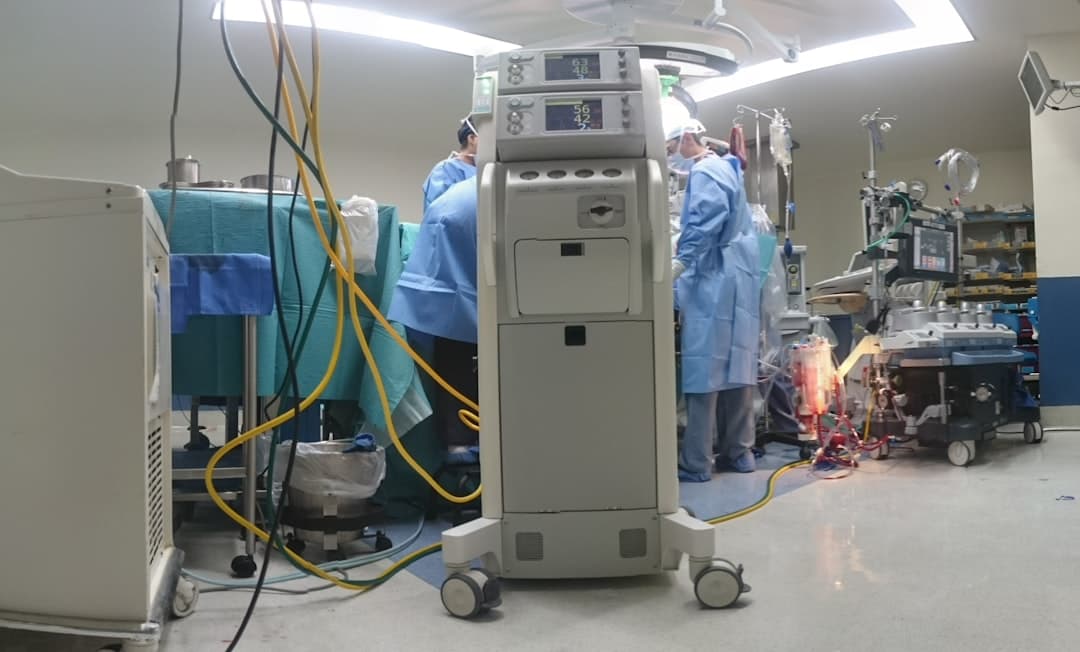
When goals are unclear, the ICU defaults to escalation, more pressors, more lines, more procedures. Julie paints a vivid picture of prolonged ICU trajectories that many families never imagine.
Here is the biological logic she is pointing to.
In critical illness, the body is often failing multiple systems at once. To keep blood pressure up, clinicians may use vasopressors, medications that constrict blood vessels. That can preserve blood flow to the brain and heart, but it can reduce circulation to fingers and toes. Over time, tissue can die.
She describes seeing black, necrotic toes and fingers, wound care, skin breakdown, repeated infections, diarrhea management devices, feeding tubes, fluid overload, and cycles of interventions that keep the body alive while it is also disintegrating.
This is not presented as a condemnation of ICU care. ICU care saves lives every day.
It is presented as a warning about what happens when ICU tools are used without a realistic plan for recovery.
Hospice, in contrast, is framed as allowing the body to die in a way it is biologically prepared to do. That does not mean it is easy. It means the body has patterns of shutting down that can be supported with comfort, not fought with endless escalation.
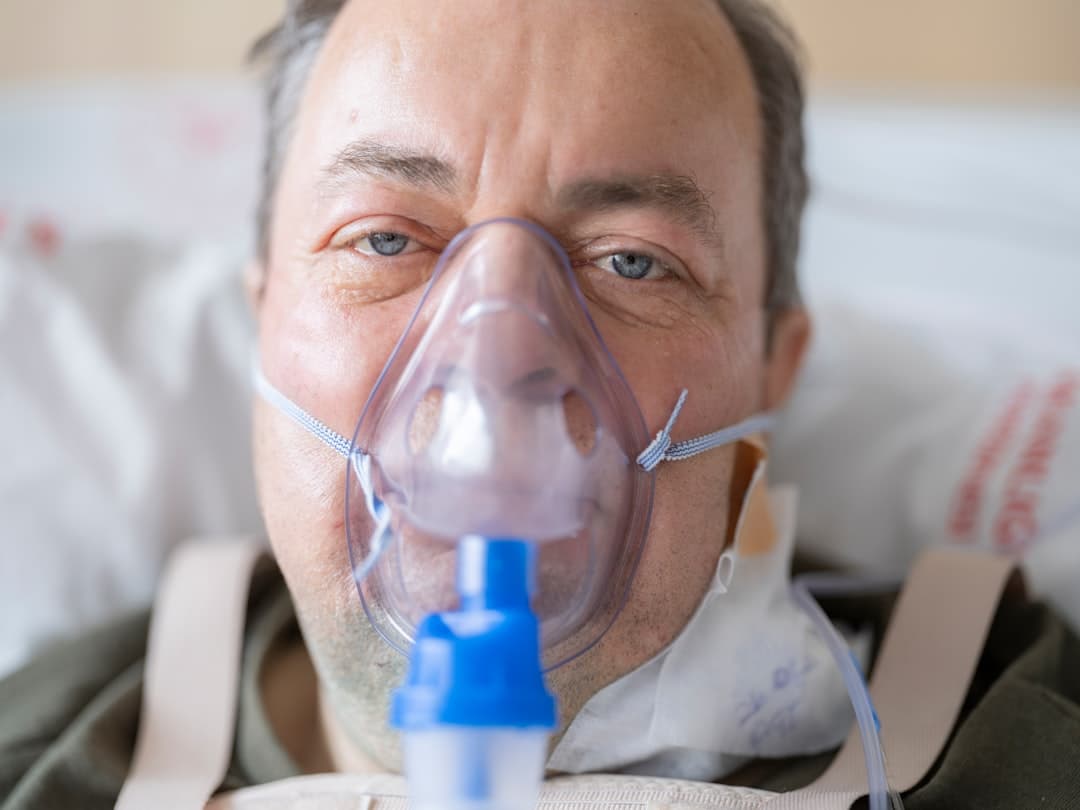
For readers thinking about respiratory illness, this contrast matters because the ICU often centers on mechanical ventilation, intubation, and aggressive oxygen strategies. Hospice centers on symptom relief: easing breathlessness, calming anxiety, and reducing the work of breathing.
The World Health OrganizationTrusted Source describes palliative care as improving quality of life through prevention and relief of suffering, including physical, psychosocial, and spiritual problems. Hospice is a specific model of palliative care for people nearing the end of life.
What “a natural death” can look like in the respiratory system
Families often ask for a “peaceful death,” but few people know what that looks like in the lungs.
Breathing commonly changes as the body shuts down. The brain’s respiratory drive can become less responsive, muscles weaken, secretions shift, and swallowing becomes less coordinated. These changes can be dramatic to witness.
A key hospice insight is that appearance does not always equal suffering.
Common breathing changes near the end
Different illnesses have different patterns, but several respiratory changes are widely reported in end of life care.
Periods of rapid breathing followed by pauses. Some people develop irregular rhythms where breathing speeds up, then slows, then stops briefly. Clinicians may call this Cheyne-Stokes respiration (a specific pattern), but families usually just see “they stop breathing for a bit.” The pauses can be frightening.
Noisy, wet sounding breathing. This is often called the “death rattle,” and it usually reflects pooled secretions that the person is too weak to clear. It can sound like choking, even when the person is not conscious or not distressed.
Shallower breaths and less talking. As energy declines, speaking becomes tiring. People may conserve breath, answer with a few words, or stop talking.
More mouth breathing. Nasal congestion, weakness, and lower alertness can shift breathing to the mouth.
Episodes of air hunger. Some people do experience the sensation of not getting enough air, especially in advanced lung disease, heart failure, pneumonia, or anxiety.
The practical point in Julie’s perspective is that families do better when they are told what may happen ahead of time, in plain language, without euphemisms.
That pre teaching changes the entire nervous system response of the room. When people expect irregular breathing, they are less likely to panic, and panic itself can escalate distress.
Important: Any new or sudden breathing difficulty in someone who is not clearly at the end of life should be evaluated urgently. End of life patterns are not a substitute for medical assessment, especially when symptoms change quickly.
Why breathing can look worse than it feels
Breathlessness is a sensation created by the brain, not a direct readout of oxygen.
A person can have relatively low oxygen and feel little distress, or have near normal oxygen and feel intense air hunger. Carbon dioxide levels, muscle fatigue, anxiety, fever, pain, and the effort of breathing all influence the sensation.
This is one reason comfort focused care may include strategies that reduce the work of breathing and reduce the brain’s alarm response.
For example, a cool fan to the face can reduce dyspnea in some people by stimulating facial nerves and changing perception. The American Thoracic SocietyTrusted Source discusses practical approaches to managing breathlessness, including positioning, pacing, and airflow.
Julie’s larger point is not that every death is easy. It is that the body often has a recognizable shutdown sequence, and when families are prepared, the experience can be less chaotic.
“Do everything” explained: CPR, intubation, and what families often do not picture
One of the most emotionally charged moments in hospital care is the code.
The conversation describes the reality many clinicians know: end of life discussions sometimes happen during CPR, in the hallway, while a team is actively compressing a person’s chest. That is a terrible time to teach anyone what CPR entails.
Julie’s critique is not aimed at families. It is aimed at a system that delays honest conversations until there is no time.
Here is what “everything” can include in respiratory and cardiac emergencies.
Chest compressions and possible rib fractures. CPR is forceful by design. For frail older adults or people with advanced cancer, the chance of meaningful recovery after in hospital CPR can be low, and injuries can occur.
Intubation and mechanical ventilation. A breathing tube passes through the mouth into the trachea. Sedation is often required. The ventilator breathes for the person, but it can also lead to complications like pneumonia, delirium, and prolonged weakness.
Vasopressors. Julie specifically mentions pressors that constrict blood vessels. These can keep blood pressure up, but can reduce blood flow to extremities, contributing to tissue injury.
Lines, tubes, and restraints. Central lines, arterial lines, feeding tubes, urinary catheters, and sometimes restraints to prevent tube removal. This is part of the “impersonal” experience she described.
A crucial nuance is that these interventions can be appropriate when there is a reversible problem and a realistic path back to a life the person would want.
They can also become a pathway to prolonged suffering when the underlying disease is not reversible.
The American Heart AssociationTrusted Source provides CPR facts and general outcomes, and many hospitals also have decision aids for code status conversations. If you are facing this decision, ask your clinician for local, condition specific expectations.
What the research shows: Outcomes after CPR vary widely by age, setting, and underlying illness. Survival to discharge is generally higher for monitored, shockable rhythms and lower for advanced chronic illness. Decision making is best when it includes the person’s baseline function and goals, not just the event itself. See the National Library of Medicine overview on CPR decision makingTrusted Source for background.
Julie’s bigger claim is that families often do not understand what the ICU journey looks like after the initial rescue.
That missing picture is where suffering grows.
Morphine, fear, and the difference between comfort and “giving up”
Few topics create as much fear as morphine.
Julie describes hearing clinicians say, “They’re actively dying, we start morphine, they need morphine because they’re actively dying,” and she calls out two problems: families do not know what “actively dying” means, and many are scared that morphine equals hastening death.
This is where plain language and mechanism matter.
Morphine is an opioid medication that can reduce pain and can also reduce the sensation of breathlessness. In palliative care, opioids may be used in carefully titrated doses to ease air hunger and reduce the work of breathing. The intent is symptom relief.
It is also true that opioids can suppress respiratory drive, especially at high doses or in opioid naive people. That is why dosing and monitoring matter, and why these decisions should be individualized and supervised by a qualified clinician.
A family’s fear is often fueled by silence. If no one explains what the medication is for, how it will be used, and what changes to expect, the medication becomes a symbol, not a tool.
The National Institute on AgingTrusted Source discusses comfort care at the end of life, including symptom management and common concerns families have.
Julie’s unique angle is that the “fix” is not a better script alone. It is time.
Time to explain, time to answer the same question five times, time to let fear show up without being punished.
What “actively dying” usually means in plain terms
Clinicians use “actively dying” to describe the last phase of life when the body is shutting down and death is likely near. But families often hear it as a vague warning or, worse, as a justification for decisions they do not understand.
If someone uses that phrase with you, it is reasonable to ask:
Those questions turn labels into plans.
Communication breakdowns that create suffering, and how to interrupt them
“Suffering is far, far worse than death.”
That is Julie’s most forceful statement.
She links suffering to years of watching prolonged ICU trajectories where the body is kept alive while deteriorating, and where families “don’t get what’s happening.” The mechanism she returns to is communication breakdown.
In her view, suffering is amplified by three predictable failures.
This is not about blaming individual clinicians. It is about how modern care fragments responsibility.
The conversation also highlights why primary care continuity can matter. A long term clinician can advocate, translate, and remind the hospital team of the patient’s values.
»MORE: If you want a structured way to document values, look for an advance care planning worksheet or conversation guide such as The Conversation Project Starter KitTrusted Source.
A practical way to “interrupt the momentum”
Julie describes a moment in the ICU when she spoke up and asked for a family meeting. The family ultimately chose to remove machines, and the experience was profound for her.
That moment illustrates a real clinical lever: you can request a goals of care meeting.
Here is a step by step approach that often helps families and patients, even outside hospice.
Ask for a dedicated meeting, not a hallway update. Say, “We need 30 minutes to talk about the big picture, prognosis, and options.” This reduces rushed, fragmented communication.
Request plain language. Ask, “Can you explain this without medical terms?” If you do not understand, it is not your fault. It is a translation problem.
Clarify the best case, worst case, and most likely case. This framework forces realism without claiming certainty.
Connect choices to values. Ask, “Given who they are and what they value, what option fits best?” This shifts the focus from procedures to goals.
Document and repeat. In complex illness, decisions need revisiting. Write down what you heard and confirm it the next day.
This is not a guarantee of a good outcome. It is a way to reduce avoidable suffering created by confusion.
How to talk about dying in plain language (without taking away hope)
Many families fear that talking about death will make it happen sooner.
The perspective here is the opposite: avoiding the topic tends to push people into crisis driven decisions that increase suffering.
Hope does not have to mean hope for cure.
Hope can mean hope for time at home, for comfort, for meaningful conversations, for less fear, for a death that aligns with the person’s values.
Julie also challenges the idea that straightforward talk is “jaded.” She frames it as educated and owed to the patient.
Here are communication moves that match the tone of this conversation.
Name the reality and the uncertainty together. “Based on what we see, it is unlikely they will recover to where they were. We cannot know the exact timeline.” This is honest and humble.
Use the word “die” when appropriate. It can feel harsh, but euphemisms can create more fear and confusion later.
Ask preference questions early. “If time is shorter than we want, where would you want to be?” The question restores agency.
Explain what comfort care actually includes. Comfort is not “doing nothing.” It is active symptom management, planning, and support.
Invite emotion explicitly. Julie celebrates when patients say, “I’m scared.” If you are a family member, you can do the same: “It makes sense to be scared. Can we talk about what scares you most?”
Expert Q&A
Q: If we talk about dying, will it make my loved one lose hope?
A: Talking about dying does not remove hope, it often changes what hope is anchored to. Many people can hold two truths at once: “I hope for more time,” and “I want a plan if time is short.”
Plain language can actually reduce anxiety because it replaces vague dread with specific expectations and choices. If the conversation feels overwhelming, ask the care team for a palliative care consult, they specialize in these discussions.
Julie McFadden, RN (Hospice Nurse Julie), as discussed in this interview
Making room for meaning: living while dying, Julie’s hospice definition
Hospice is described in eighth grade language: a program that helps people during end of life.
Then comes her signature reframing: hospice is about living when you are dying.
She acknowledges it sounds cheesy, then insists it is true.
This is not just an emotional framing. It is a practical care model.
Hospice typically brings an interdisciplinary team that may include nurses, physicians, social workers, chaplains, and home health aides, depending on the program. The goal is to manage symptoms, support caregivers, and help a person spend remaining time in a way that matches their priorities.
From a respiratory standpoint, hospice and palliative care often focus on:
Reducing the sensation of breathlessness. That may include positioning, airflow, relaxation strategies, and medication plans determined by the clinical team.
Preventing panic spirals. Education and reassurance can reduce fear driven hyperventilation and distress.
Planning for predictable changes. Families cope better when they know what noisy breathing, pauses, and decreased appetite can mean.
Avoiding unwanted hospital cycles. For some, repeated ER visits and ICU admissions may not align with goals.
Julie also shares a personal practice: contemplating mortality daily. She argues it is not morbid, it is freeing, and it clarifies what matters.
This is a broader health outcome point. When people are clearer on values, they may choose care that reduces suffering, reduces unwanted interventions, and supports mental health for both patient and family.
The Centers for Medicare and Medicaid ServicesTrusted Source explains hospice eligibility and services under Medicare, including the focus on comfort and quality of life.
Quick Tip: If you are considering hospice, ask, “What support is available after hours for breathing distress?” Knowing who to call at 2 a.m. can prevent panic and unnecessary trips to the ER.
When to seek urgent help for breathing or distress in serious illness
It is normal for breathing to change in advanced illness.
It is also true that some breathing problems are treatable emergencies.
The safest approach is to have a clear plan with your clinician, especially if the person has COPD, heart failure, cancer affecting the lungs, recurrent pneumonia, or neuromuscular disease.
Seek urgent medical help (call emergency services or follow your local emergency plan) if someone has any of the following, especially if it is new or rapidly worsening:
Severe shortness of breath at rest where the person cannot speak in full sentences, appears panicked, or is using chest and neck muscles heavily.
Blue or gray lips or face, or sudden confusion. These can be signs of inadequate oxygen delivery or other acute problems.
Chest pain, fainting, or coughing up large amounts of blood. These symptoms need immediate evaluation.
A sudden drop in alertness that is not expected for the person’s stage of illness, especially if paired with fever or signs of infection.
If the person is already on hospice, call the hospice number first unless you have been instructed otherwise. Hospice teams can often manage symptoms quickly at home, and they can guide you if hospital care is needed.
The key point from the video is not “avoid the hospital at all costs.” It is “avoid suffering created by confusion.”
Planning reduces confusion.
Key Takeaways
Frequently Asked Questions
- What is hospice, in simple terms?
- Hospice is a program that supports people who are likely nearing the end of life, focusing on comfort, symptom relief, and support for the whole family. In this interview, hospice is framed as “living while dying,” helping you make choices about how you want your remaining time to look.
- Is it normal to be afraid of death?
- Yes. The conversation emphasizes that fear is common, and saying it out loud can actually help because it allows honest planning and emotional support. Many people feel less overwhelmed when their fears are named and discussed in plain language.
- Why can breathing look scary near the end of life?
- Breathing can become irregular, noisy, or pause as the body weakens and the brain’s breathing drive changes. These patterns can look alarming to families even when the person is not consciously distressed, which is why preparation and guidance from the care team matter.
- Does morphine at the end of life mean someone is being “given up on”?
- Not necessarily. Morphine and related medications may be used to ease pain and the sensation of breathlessness when prescribed and monitored appropriately. Families often fear it because no one explains what it is for and what to expect, asking for a clear explanation can help.
- What should I ask if a doctor says “we can do everything”?
- Ask what “everything” means for that specific condition, including CPR, intubation, ICU time, likely complications, and the most likely recovery scenario. This helps turn a vague promise into informed decision making that matches the person’s values.
Get Evidence-Based Health Tips
Join readers getting weekly insights on health, nutrition, and wellness. No spam, ever.
No spam. Unsubscribe anytime.