Is Your Home Making You Sick? 15 Practical Fixes
Summary
Ever wonder why you feel worse at home than you do outside? This video’s perspective is simple and a little unsettling: your house can quietly load your lungs and body with particles, gases, and chemicals, and the fix starts with measuring, not guessing. The approach prioritizes systems you set once, like a higher-rated HVAC filter, plus a few high-impact habits, like taking shoes off at the door. You will also see a healthy skepticism toward labels and “clean” apps, and a push for real data, including sensors for air quality, carbon monoxide, and radon. The goal is progress, not perfection.
🎯 Key Takeaways
- ✓Treat your home like an exposure system: measure indoor air (PM, VOCs, CO2) so you can see what changes actually help.
- ✓Shoes-at-the-door is framed as a major win because the first steps inside can track in a large share of outdoor contaminants.
- ✓Your HVAC filter is positioned as the first line of defense, but only go as high as your system can handle (often up to MERV 13).
- ✓Kitchen risks highlighted include gas stove pollution, PFAS from nonstick cookware, and VOCs from scented cleaners and air fresheners.
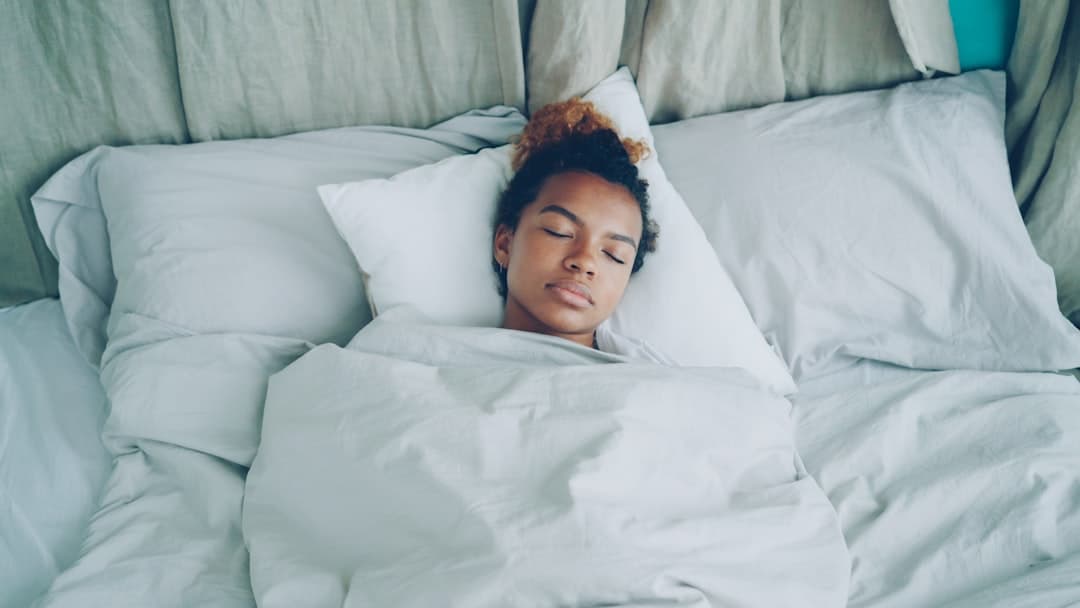
- ✓Sleep protection is treated as “respiratory plus recovery,” using blackout darkness, quieter noise profiles (pink noise), and bedroom HEPA filtration.
Why do I feel worse at home sometimes?
Have you ever cleaned the house, lit a candle, cooked dinner, and still felt like your nose or chest was “off” afterward?
This video’s core idea is that modern homes can act like exposure amplifiers. Outdoor contaminants drift in through windows and vents, everyday cooking adds combustion byproducts, and common household products can release gases that linger in indoor air. The unique twist is the mindset: treat your home like something you can instrument and improve, not a mystery you either tolerate or panic about.
It is also a very data-forward perspective. Instead of relying on vibes, labels, or “clean living” marketing, the goal is to measure what is in your air and water, then build systems that reduce exposures without requiring constant effort.
Did you know? Indoor air pollution is not just about “stuffy rooms.” A scientific review describes how indoor environments can contain multiple pollutant types, including particles and gases, and how health effects can vary by exposure and vulnerability (children, older adults, people with asthma) NIH overviewTrusted Source.
This is not about achieving a perfect, sterile home.
It is about knocking out the big drivers first, then iterating.
Start at the front door: stop contaminants at the threshold
The first “solution” in the walkthrough is almost comically simple: take your shoes off.
The claim is striking: the first four steps inside the house can track in a huge share of the outside world’s contaminants, including lead and pesticides. Whether your exact percentage differs by neighborhood, the practical point holds up, shoes are a direct conveyor belt from outdoors to your floors, where kids play, pets roll, and dust gets kicked back into the air.
A small habit that changes the whole house
If you want a low-effort start, build a door routine.
The video’s bigger theme starts here: build systems and habits so you do not have to “re-decide” health every day.
Pro Tip: If shoes-off is hard socially, start with “shoes-off for kids and household members,” then expand to guests later. Progress beats awkward perfection.
Measure first: indoor air monitors, HVAC filters, and “set-and-forget” systems
A major part of the video is about instrumentation, using sensors to learn what your home is actually doing.
Two types of monitors are shown. One provides particulate readings like PM2.5 (and also PM1 and PM10). Another gives a broader AQI-style number and includes CO2. The key benefit is continuous tracking so you can see patterns, like CO2 rising after a group gathers, or particles spiking when you cook.
That feedback loop matters. If you buy an air purifier or change a filter, you can see whether it moved the needle within minutes.
HVAC filtration as the “first line of defense”
The walkthrough emphasizes HVAC filtration over standalone purifiers.
The example used is a MERV 13 filter. The point is not that everyone needs MERV 13, it is that higher-rated filters capture more small particles, but only if your HVAC system can handle the airflow resistance.
A MERV 8 filter is described as capturing only about 30 percent of PM2.5. The takeaway is to go as high as your system is rated for, but not higher.
Important: If you are unsure what your HVAC can handle, consider asking an HVAC professional. Using a filter that is too restrictive for your system may reduce airflow and strain equipment.
Safety sensors that matter even if you feel fine
The video groups three detectors together as foundational:
What the research shows: Scientific reviews of indoor air pollution describe multiple indoor sources (combustion, building materials, consumer products) and note that health impacts can include respiratory symptoms and exacerbation of existing disease NIH reviewTrusted Source.
Q: Do I really need monitors, or can I just “buy a purifier”?
A: Monitors can help you avoid wasting money on fixes that do not address your biggest exposure. If your main issue is cooking particles, you might see sharp spikes at dinner time and focus on ventilation and filtration. If CO2 is consistently high, that can point you toward fresh air exchange.
If you have asthma, allergies, or young children at home, consider discussing monitoring and mitigation choices with a clinician, especially if symptoms worsen indoors.
Jordan Healthwright, MPH (Health Education)
Kitchen “death trap”: water, plastics, cookware, and gas stoves
The kitchen section is intentionally dramatic. It is framed as a place where multiple exposure types stack, water contaminants, plastic contact, cookware coatings, and combustion.
It is also where trade-offs show up fast, because convenience often competes with exposure reduction.
Water: test, filter, then maintain
Water is described as a major source of contaminants like heavy metals, PFAS, and microplastics.
The approach shown is ongoing testing plus a reverse osmosis system. The video shares an example data comparison: tap water with “over 300 mg” of dissolved substances versus reverse osmosis water dropping to almost nothing. The practical point is not the exact number, it is the habit of verifying what you drink.
If you choose filtration, the video stresses maintenance. Filters need cleaning or replacement every few months, and testing is performed monthly in the example.
Plastics: the “it is everywhere” reality
One of the most human moments in the video is the admission that even with serious effort, plastic still shows up everywhere. Even medical-grade devices and health tech can be mostly plastic.
So the goal becomes selective replacement, not perfection.
Cookware: avoid nonstick if you can
Nonstick pans are called out because they can involve PFAS (sometimes called “forever chemicals”). The suggested swap is food-grade stainless steel or cast iron, which do not rely on the same type of coating.
If you love nonstick, a realistic compromise is to avoid high heat and replace damaged pans, because scratched coatings can change what gets released.
Gas stoves: a high-impact respiratory exposure
The video’s stance is direct: gas stoves are “not a good idea” for indoor air.
Using one gas burner is described as quickly spiking nitrogen dioxide and fine particles. A specific figure is mentioned, these pollutants are linked to around 13% of childhood asthma cases in the US. The solution proposed is switching to induction.
Even if you cannot replace your stove right now, you can reduce exposure by using a vent hood that exhausts outdoors, opening windows when cooking, and keeping kids away from the kitchen during high-heat cooking.
The chemical cloud: scented sprays, VOCs, and the limits of labels
This section is where the video becomes skeptical, in a useful way.
Scented sprays and air fresheners are described as filling your home with VOCs (volatile organic compounds). The claim is that VOCs can react in indoor air and form formaldehyde, which is a known carcinogen.
Then comes the key perspective: ingredient labels and “clean” apps may not be enough.
The speaker explicitly says they are not confident in apps that rate products, and they extend that skepticism to labels like “organic,” based on their own testing experience with foods. The deeper argument is about hidden complexity, a label can tell you one set of things, but lab testing can reveal another.
That does not mean you should never use labels.
It means you should treat labels as a starting point, not proof.
Practical ways to reduce VOC load without obsessing
Important: Never mix bleach with ammonia or acids (like vinegar). This can create toxic gases. If you are unsure about a cleaning combination, use one product at a time and ventilate.
»MORE: Want a simple “home exposure audit” checklist? Create one page with these headings: Entryway, Air, Water, Kitchen, Bedroom, Cleaning. Then add one change per week for 8 weeks.
Floors, dust, and air cleaning where you sleep the most
Dust is not just gross, it is a delivery system.
The video highlights a flooring choice: hard floors instead of carpet. The stated reason is that carpet can hold far more dust, allergens, and microbes. If removing carpet is not realistic, the suggested workaround is to vacuum frequently with a HEPA filter vacuum.
A specific claim is included: a good HEPA filter on a vacuum removes 99.97% of microplastic particles. That number aligns with how HEPA filtration is commonly described for particle capture efficiency at a specific particle size, though real-world results depend on the vacuum design and how it is used.
A realistic dust-control routine (Pattern A)
If you want a simple routine that does not take over your life, start here.
A portable HEPA air purifier is framed as a “quick win,” especially in the bedroom where you spend about 8 hours breathing that air.
The video shows an extreme setup (multiple purifiers plus an air quality monitor), but it also acknowledges that many people can do well with a good HVAC filter alone.
Light, sleep, and recovery: reducing nighttime disruption
This video treats sleep as part of the indoor health equation, not a separate wellness topic.
The idea is straightforward: light is a biological signal, and modern homes often blast the wrong signal at the wrong time.
Night light: red beats blue-white
White and blue light at night can delay sleep onset by reducing melatonin. The low-cost solution shown is a dim red lamp (around $30), used in the evening to navigate the house without telling the brain it is daytime.
Try it for two hours before bed.
If you hate it, you learned something.
Bedroom darkness: the “blackout” experiment
The bedroom in the video is fully blacked out. The claim is that even 10 lux of light can cut melatonin production in half and fragment sleep.
Many people cannot fully blackout a room, especially if the bedroom is also a workspace. The practical compromise suggested is an eye mask.
Noise smoothing: why pink noise is mentioned
A noise machine is used to reduce sudden sound spikes (cars, motorcycles, barking dogs). Pink noise is described as less high-pitched than white noise and more like rain or rustling leaves.
This is a good example of the video’s measurement mindset: try it, then check your sleep data to see if it helps you.
Bedroom air: filtration where you spend 8 hours
Two main air filters plus an air quality monitor are used in the bedroom, with the rationale that nighttime is a long continuous exposure window.
A practical version of this is simple: one appropriately sized HEPA purifier running overnight, plus a solid HVAC filter if you have central air.
Q: Should I worry about EMF in the bedroom?
A: The video takes a cautious, undecided stance, it does not claim certainty. The practical step shown is moving the router outside the bedroom and turning off Wi-Fi, mobile data, and Bluetooth on the phone at night to reduce emissions.
If you are concerned, consider focusing first on well-established sleep disruptors (light, noise, temperature, air quality). Then decide whether EMF changes are worth the trade-offs for you.
Jordan Healthwright, MPH (Health Education)
The “systems” mindset (the real throughline)
The closing message is arguably the most unique part: avoid anxiety loops.
The instruction is to build systems so you never make the same decision twice. A higher-rated HVAC filter is the example, install it, set a calendar reminder, and move on. The same goes for shoes at the door, a red lamp that becomes your default, and a bedroom purifier that runs automatically.
It also emphasizes patience. The home shown took about 5 years to build into a “pristine” environment, and the viewer is encouraged to take baby steps.
Key Takeaways
Sources & References
Frequently Asked Questions
- What is the fastest way to improve indoor air quality at home?
- This video’s fastest “see it on the monitor” changes are upgrading HVAC filtration (within your system’s rating) and running a portable HEPA purifier in the bedroom. Ventilating during cooking and avoiding scented sprays can also reduce spikes in particles and VOCs.
- Is a MERV 13 filter always better than MERV 8?
- Not always. Higher MERV filters can capture more small particles, but only if your HVAC system can handle the added resistance. If you are unsure, consider checking your system specifications or asking an HVAC professional.
- Are gas stoves bad for asthma?
- Gas cooking can raise nitrogen dioxide and fine particle levels indoors, which may irritate airways and worsen symptoms in sensitive people. If asthma is a concern, consider discussing home triggers with a clinician and prioritize ventilation and exposure reduction during cooking.
- Do I need to replace all plastic in my kitchen?
- The video’s perspective is that plastic is everywhere, so perfection is unrealistic. A practical approach is to replace the items that contact hot food and liquids first, then make gradual swaps to glass, ceramic, or food-grade stainless steel.
- How can I make my bedroom more sleep-friendly without remodeling?
- Start with a blackout eye mask, a dim red lamp for the last 2 hours before bed, and a noise machine if sudden sounds wake you. If you want an air-focused upgrade, add a bedroom HEPA purifier and keep up with HVAC filter changes.
Get Evidence-Based Health Tips
Join readers getting weekly insights on health, nutrition, and wellness. No spam, ever.
No spam. Unsubscribe anytime.