Brian Johnson’s Blueprint, Data, and the “Don’t Die” Idea
Summary
Brian Johnson’s reaction to his Netflix documentary is less about a single “anti-aging hack” and more about a worldview: treat health like an open, measurable project, build routines that reduce decision fatigue, and share data publicly even when it looks weird. He frames Blueprint as basics done obsessively, sleep, exercise, food quality, plus extensive testing and supplements, while critics argue a single-person experiment cannot prove what works. This article unpacks the documentary moments he highlights, the psychology behind his “Don’t Die” message, and practical, safer ways to apply the measurement-first mindset without copying extreme protocols.
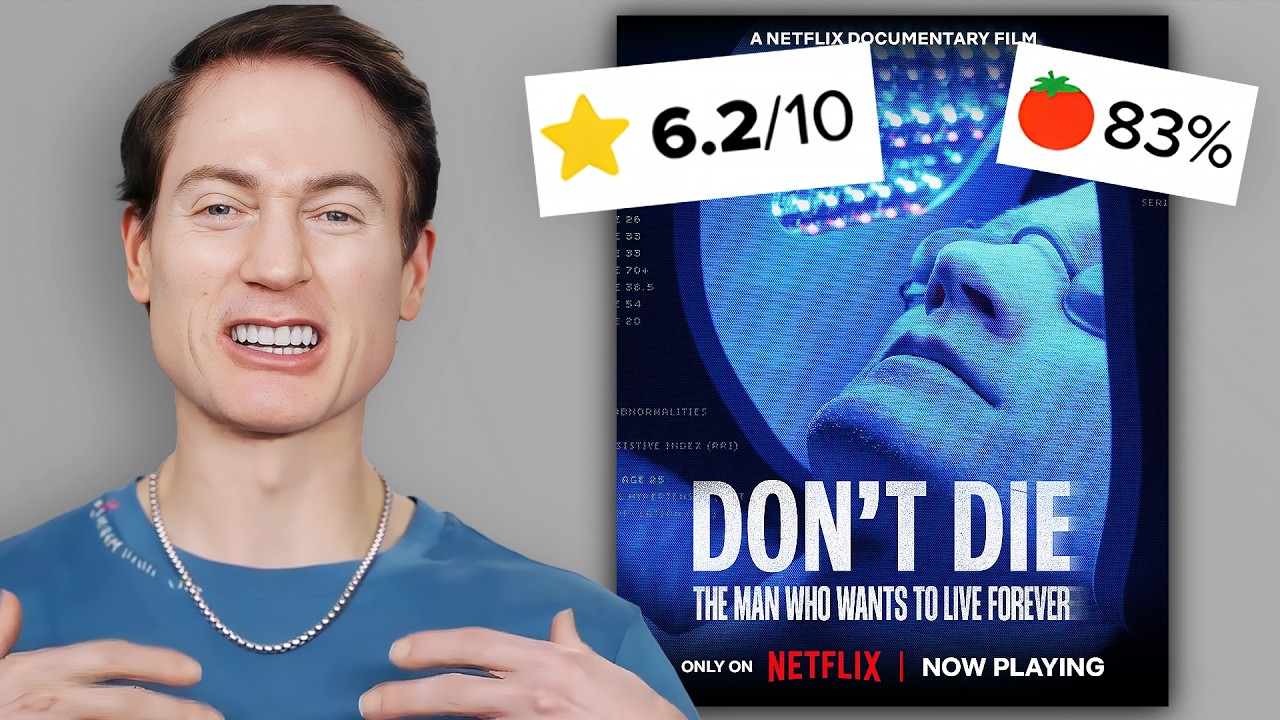
Longevity content often turns into a shopping list. This video pushes a different idea: aging is partly a measurement problem.
Brian Johnson’s reaction to his Netflix documentary is a guided tour of how he thinks, what he believes the film missed, and why he is willing to look bizarre in public to make a point. The point is not only “live longer.” It is, “build a system where your beliefs about your health are continuously checked against data.”
That is a useful lens even if you never take a supplement, never post a biomarker, and never want cameras in your living room.
Why this matters: longevity is a data problem and a meaning problem
Most people do not fail at health because they lack information. They fail because the system around them does not make healthy behavior easy, consistent, or emotionally sustainable.
The video highlights an uncomfortable truth: once you start measuring, you may discover you were wrong about your baseline. Johnson describes seeing his own “former me” on stage and calling it “really not healthy at all,” and noticing he is “almost unrecognizable” across time.
That matters because aging is not just wrinkles. It is changes in cardiometabolic health, muscle, bone, brain, and skin, which can move in better or worse directions depending on sleep, nutrition, activity, stress, and medical conditions.
A second theme runs underneath the biomarker talk: meaning. The documentary scenes about his son leaving for college, his family history, and leaving the Mormon church are not side plots. They show how identity, belonging, and stress load can shape health behaviors, and sometimes health outcomes.
Did you know? Regular physical activity is strongly linked with lower all-cause mortality risk in large population research, and even modest increases from a sedentary baseline can matter. The CDC summarizes recommended activity levels and why they matter in its physical activity guidelinesTrusted Source.
Blueprint’s unique lens: radical measurement, radical transparency
Blueprint is presented as an open experiment.
A key character in this story is Kate, described as the behind-the-scenes driver who pushed the idea to publish protocols, measurements, recipes, supplements, and more. The discussion frames openness as a strategy: when you publish, you invite scrutiny, iteration, and community.
Johnson also describes a turning point around a major profile that included personal details he had never publicly shared, especially about his father. He expected reputational damage, then experienced the opposite, and took it as evidence that transparency can work even when it feels risky.
This is not a small point. Many health programs fail because people cannot see what is actually being done, how it is tracked, and what “success” means. In this approach, success is not a vibe. It is MRI body composition percentiles, lab values, and repeatable routines.
At the same time, the video repeatedly shows the social cost of radical transparency. Johnson describes hate going “from zero to 100 overnight,” and he seems both fascinated and disturbed by how quickly narratives form from headlines.
Important: Sharing health data publicly can create pressure to optimize numbers rather than well-being. If you track metrics, it helps to decide in advance which numbers truly matter to your clinician, and which are “nice to know.”
What “measurement” can realistically look like
You do not need a million-dollar lab setup to apply the core idea.
The “basics, but relentless” framing: sleep, exercise, food
The documentary labels him an “anti-aging fanatic.” He pushes back with a reframing: what if a fanatic is simply someone who goes to bed on time, eats vegetables, and exercises?
That rhetorical move is central to his perspective. It collapses the distance between extreme longevity culture and ordinary preventive health. Then it adds intensity.
In the opening montage, his routine is summarized as “exercise an hour a day plus high intensity three times a week.” Later, he describes a whole-body MRI and being in the “99th percentile for optimal for both muscle and fat across my entire body.” He contrasts that with a lifelong struggle with overeating and losing control around food.
This is an important nuance: the “protocol” is not only supplements. It is a structure that reduces opportunities to binge, drift, and renegotiate with yourself.
Research supports the basics, even if it cannot validate every Blueprint detail. For example:
Pro Tip: If you want to test whether a “basic” is your bottleneck, pick one lever for 4 weeks, sleep timing, daily steps, or added fiber, and track only 1 to 3 outcomes.
Skin, sun, and the shock of seeing UV damage
One of the most vivid moments he calls out is seeing an image of his face showing UV damage. He describes it as “the first terrifying reconciliation” that there was serious skin damage from being in the sun a lot as a kid.
That reaction is relatable because sun damage is often invisible until it is not. Ultraviolet exposure can contribute to photoaging (wrinkles, uneven pigmentation) and increases skin cancer risk.
What is interesting in his framing is not vanity. It is the idea that imaging can reveal hidden biology. In his mind, the image is a biomarker, and the lack of context in the documentary is a missed educational opportunity.
If you want a research-grounded baseline, the American Academy of Dermatology explains why sunscreen matters, how to use it, and what counts as broad-spectrum protection in its sunscreen FAQTrusted Source.
A practical takeaway is simple: if you have not thought about sun exposure since childhood, you may still be carrying its effects. A clinician, especially a dermatologist, can help you interpret concerning changes in moles or pigmentation.
Single-person science vs clinical trials: what the criticism gets right
A scientist in the documentary criticizes the supplement “warehouse” approach: hundreds of interventions make it “very, very hard to identify which if any of them are working,” and what you “really need” is a clinical trial with many people.
That critique is not nitpicking. It is about causality.
When you change sleep, exercise, diet, supplements, and medications together, and your biomarkers improve, several explanations are possible:
Johnson’s counterpoint is experiential: people correct vitamin D deficiency and feel better, so individual interventions can matter. That is true in many cases, but it does not solve the “which lever mattered most” problem when many levers move at once.
The most useful synthesis is this: N-of-1 experiments can help you personalize, but they are weaker for proving general claims.
What the research shows: Randomized controlled trials are designed to reduce bias and isolate cause and effect. For an accessible explanation of why randomization and control groups matter, see the National Library of Medicine overview of clinical trialsTrusted Source.
A safer way to experiment if you like the Blueprint mindset
If you are drawn to the “life as a science experiment” idea, you can borrow the scientific discipline without the extreme stack.
This is slower than copying a protocol, but it is closer to the logic the documentary critic is asking for.
Routines as mental health technology: the no-talking mornings
The video treats routine as a form of cognitive protection.
One of the most distinctive details is the “truce” between Johnson and his son: in the morning, they do not speak. The reason is not conflict. It is that both wake up after a good night’s sleep with a train of thought, and small talk derails it.
This is a rare example of someone describing relationship design as a health tool. Many people experience morning friction, misaligned schedules, or resentment about household roles. Here, the solution is explicit negotiation and a shared rule.
From a health standpoint, this matters because stress is not only big traumas. It is also daily micro-stressors, the repeated moments where you feel rushed, misunderstood, or cognitively scattered.
Research does not specifically endorse “silent mornings,” but it does support the broader idea that protecting sleep and reducing stress supports mental and physical health. The National Institute of Mental Health provides a plain-language overview of stress and copingTrusted Source.
»MORE: If you want a printable tracker, create a one-page “morning friction audit” with three columns: what triggers stress, what you can change, and what you can accept. Use it for 7 days, then renegotiate one household rule.
Family, stress, and the body: depression, sleep loss, and identity shifts
The documentary scenes he highlights about depression and leaving the Mormon church are not presented as medical case studies. They are presented as context for why his earlier life looked unhealthy.
He describes a period where startup chaos, sleep deprivation, depression, relationship conflict, and the process of leaving his religion stacked together. He notes that when you are not well rested, “everything feels so much heavier.” He also describes physical symptoms around church, cold sweats, feeling ill, and lying on the bed while his young son rubbed his back.
Those details align with a broader reality: mental distress can show up in the body. Anxiety and depression can affect sleep, appetite, energy, and motivation. They can also change how you perceive effort, making healthy behavior feel impossible.
If you recognize yourself in the “everything is heavy” description, it may help to know that sleep loss and depression often reinforce each other. The NIMH overview of depressionTrusted Source explains common symptoms and treatment approaches, which can include therapy, lifestyle changes, and medication under medical supervision.
An Expert Q&A on “health optimization” and mental load
Q: If I try to optimize everything, could it backfire on my mental health?
A: It can, especially if tracking becomes compulsive or if numbers become a proxy for self-worth. A safer approach is to track a few high-impact metrics, set review dates, and avoid constant checking.
If you have a history of anxiety, disordered eating, or obsessive tendencies, it is worth discussing any intensive tracking plan with a licensed mental health professional. The goal is better function and well-being, not perfect dashboards.
J. Rivera, PhD, Clinical Psychologist
From viral weirdness to community: the “Don’t Die” movement
The video returns repeatedly to social perception, “weirdness,” and the gap between online commentary and real-life community.
He describes going viral, experimenting with provocative content (including being photographed nude at home as part of a test), and then watching how headlines and commenters turned it into moral judgment. He also describes the sudden arrival of hate, and his surprising reaction: he “loved” it, partly because it was new and partly because it signaled impact.
Then comes a different kind of validation: a hike. What started as 11 people became 400 people in less than two months. For him, that was the moment where the movement felt real.
What is the health angle here?
Community changes adherence. When people show up in person for a hike, the behavior is no longer an abstract intention. It is scheduled, social, and embodied.
This aligns with broader public health insights: social support and group-based activity can help people maintain exercise routines. Even without joining a movement, the mechanism is worth borrowing: make healthy behaviors social and specific.
A grounded way to do this is to join a walking group, schedule weekly hikes, or create a small “default activity” with friends.
How to borrow the good parts without copying the extremes
You can respect the ambition without adopting the entire stack.
A recurring tension in the video is accessibility. Critics argue that spending millions per year is not a realistic model. Johnson does not deny the expense, but he keeps pointing back to basics and to the idea that the future will make today’s medicine look primitive.
If you want to apply the useful parts now, focus on the principles that scale.
A practical Blueprint-inspired framework (without the celebrity lab)
An Expert Q&A on supplements and “too many variables”
Q: If someone takes many supplements at once, what are the main risks?
A: The biggest risks are interactions, side effects that are hard to attribute, and the false sense that more inputs always mean better outcomes. Some supplements can affect blood pressure, bleeding risk, liver enzymes, or how prescription medications work.
A cautious approach is to add one product at a time, use reputable brands that provide third-party testing when possible, and reassess whether each item is still needed. It is also wise to discuss supplements before surgery or if you take anticoagulants, diabetes medications, or thyroid medication.
A. Patel, PharmD, Clinical Pharmacist
A step-by-step plan to run your own “small experiment”
Pick a single outcome that matters to your future self. Examples include blood pressure, LDL cholesterol, A1C, resting heart rate, sleep duration, or strength.
Choose one behavior change that is boring but powerful. A consistent bedtime, a daily walk after dinner, or adding a high-fiber breakfast often beats complicated plans.
Set measurement rules. Decide when you measure (for example, blood pressure three mornings per week) and when you review (every four weeks). This reduces obsessive checking.
Run it long enough to learn. Many changes need weeks, not days. If you quit early, you learn nothing.
Decide what you will do if results improve, worsen, or stay flat. This is where clinician input is most helpful, especially if labs are involved.
Key Takeaways
Frequently Asked Questions
- Is Brian Johnson’s Blueprint approach scientifically proven?
- The video itself highlights a key limitation: a single-person protocol cannot prove which interventions cause which outcomes. Some elements align with strong evidence (sleep, exercise, nutrition), while complex supplement stacks are harder to validate without controlled trials.
- What’s a realistic way to copy the “measurement” idea at home?
- Pick a few repeatable metrics like home blood pressure, waist circumference, sleep duration, and weekly activity minutes. Change one behavior at a time for 4 to 12 weeks, then review trends with a clinician if you are unsure how to interpret results.
- Why does the video focus so much on routines and mornings?
- A core theme is reducing mental friction so healthy behavior becomes automatic. The no-talking morning rule is an example of designing the environment to protect focus, reduce stress, and make routines easier to maintain.
- Does seeing UV damage mean it is too late to protect your skin?
- Not necessarily. Sun protection can still reduce further damage and lower skin cancer risk, and a dermatologist can help evaluate concerning spots or changes. Using broad-spectrum sunscreen and protective clothing are common preventive steps.
- Are large supplement stacks risky?
- They can be, especially due to interactions and side effects that are hard to trace. If you take prescriptions or have chronic conditions, it is wise to review any supplement plan with a clinician or pharmacist before starting.
Get Evidence-Based Health Tips
Join readers getting weekly insights on health, nutrition, and wellness. No spam, ever.
No spam. Unsubscribe anytime.