Boost Leg Strength Naturally: 10 Essential Foods to Include
Summary
Many people search for a single “magic” nutrient for leg strength, but the presenter argues that approach misses the real problem. Legs often weaken first with age, raising fall risk, hip fractures, and loss of mobility that can spiral into brain decline. His core message is that strong legs require two inputs: exercise as the signal, and food as the building materials plus metabolic support. That means prioritizing foods that provide high-quality protein, essential fats, vitamins and minerals, and also reduce inflammation and support the gut-brain axis for clean neuromuscular signaling. He highlights 10 foods, from whole eggs and fatty fish to yogurt, bone broth, vegetables, nuts, legumes, berries, and avocado, with a strong emphasis on food quality and carbohydrate tolerance. The goal is strength plus balance and coordination, not just bigger muscles.

Why leg weakness becomes dangerous with age
A common frustration is seeing “leg strength” advice reduced to one food and one nutrient. The educator in this talk pushes back hard on that simplification, because the consequences of weak legs are not cosmetic. He frames leg weakness as an early, often silent decline that shows up before you feel clearly “old.” When legs weaken, control and balance suffer, and that is where the real danger begins. A single fall can change everything, especially when it leads to a hip fracture.
He emphasizes that falls are not just a bruise-and-move-on event for many older adults. A hip fracture can force immobility, and immobility can trigger a rapid cascade of losses. When you cannot move, you lose more muscle, but you also lose brain stimulation that normally comes from movement. He describes movement as a primary driver of brain signaling, not merely calorie burning. In his view, less movement means fewer signals, and the nervous system can gradually weaken like an unused muscle.
The numbers he cites are meant to be sobering, not sensational. He notes that after a hip fracture, a large share of older adults may die within a year, and many survivors need long-term care. That framing changes the goal from “bigger legs” to “staying independent.” It also explains why he keeps returning to balance, coordination, and clean neuromuscular timing. Strong legs are protective only when the brain can recruit them quickly and accurately.
He also highlights how fast the body can lose leg muscle when activity drops to near zero. In extreme inactivity like coma or bed rest, he says the quadriceps can lose up to half their muscle in about 30 days. He then compares that to decades of sedentary living, which can produce a similar loss over time. The point is that the body responds to demand, and legs pay a steep price when demand disappears. This sets up his later argument that exercise is the “signal” and food is the “stuff.”
Did you know? The presenter notes that 30 days of complete inactivity can shrink quadriceps dramatically, similar to decades of sedentary living.
The big picture the presenter insists on: signal, materials, and metabolism
The presenter’s main framework is that leg strength is built from two coordinated inputs. First, exercise provides a challenge signal, which tells the body it must rebuild stronger. Second, food provides the raw materials and the biochemical helpers to complete that rebuilding. If you remove the signal by staying sedentary, the body has little reason to restore muscle fully. If you remove the materials by eating poorly, the body cannot rebuild even if training is perfect.
He breaks “food” into three categories that are easy to remember: fuel, building blocks, and catalysts. Fuel can come from quality fats, and for some people, a limited amount of whole-food carbohydrates. Building blocks are mainly amino acids from high-quality protein, plus essential fatty acids used in cell membranes. Catalysts are vitamins, minerals, and other micronutrients that help mitochondria and enzymes do their jobs. This is why he dislikes advice based on one nutrient, because it ignores the other categories.
A key part of his perspective is metabolic individuality, especially around carbohydrates. He is explicit that the best foods are not identical for everyone, because metabolic health changes what you tolerate. If someone is diabetic or carbohydrate intolerant, he suggests going very low carb, sometimes even ketogenic, at least intermittently. If someone tolerates carbohydrates well, he still prefers keeping total carbohydrates below about 100 grams per day, and choosing whole foods. This is not a moral stance, it is a “match the fuel to the engine” stance.
He also adds two requirements that many muscle-building conversations skip: inflammation control and nerve signaling support. Chronic, low-grade inflammation can interfere with recovery, and he specifically raises neuroinflammation as a barrier to coordination. In his framing, a muscle is like an engine that needs both fuel and an ignition signal. If the nervous system is inflamed, the signal can be delayed, weak, or poorly timed. That is why he links leg strength to balance and coordination, not only to protein intake.
Quick tip: If you are unsure about carbs, start by reducing refined starch and sugar first, then reassess energy and cravings.
Common misconceptions and the “single nutrient” trap
He opens with a critique of superficial nutrition advice, especially lists that treat one nutrient as a cure. As an example, he mentions people promoting sweet potatoes because they contain potassium, and potassium is involved in signaling. He also mentions oats being marketed as “energy” because they contain complex carbohydrates. His point is not that sweet potatoes or oats are always harmful, but that the reasoning is incomplete. A single fact does not create a full plan for strength, balance, and metabolic stability.
Common mistakes that keep legs weak
One mistake he calls out is confusing a descriptive label with a cause. He notes that “sarcopenia” is often described as if it causes muscle loss, but the word itself describes muscle weakness and loss. That distinction matters because it pushes you to ask, “What is driving the loss?” rather than accepting the label as an explanation. Another mistake is focusing on muscle energy while ignoring the nerve-to-muscle connection. If the nervous system cannot deliver clean signals, more calories will not fix coordination.
A third mistake is ignoring food quality, even when choosing “healthy” foods. He repeatedly contrasts pasture-raised eggs with lower-quality eggs, and wild fish with farmed fish, because nutrient density and fat balance can change. He also warns against fat-free flavored yogurt that contains dessert-level sugar. In his view, these swaps can sabotage metabolic health, which then undermines muscle recovery and inflammation balance. If blood sugar and inflammation are chronically elevated, the leg-strength plan becomes harder to execute.
He also challenges the idea that you can eat your way to strong legs without movement. Exercise is the stimulus that breaks muscle fibers and triggers rebuilding during recovery. Without a consistent challenge, the body may not restore muscle to the same level, even if protein intake is high. This aligns with the broader idea that strength is a functional adaptation, not just a nutrient outcome. Research on combined training supports the idea that resistance work, often paired with aerobic activity, can improve leg strength and function over time, as described in this peer-reviewed paper.
Finally, he reframes the goal as “not falling,” which requires more than strong quadriceps. Strength matters, but so do balance and coordination, which are nervous system skills. That is why foods supporting membranes, neurotransmitters, and inflammation balance show up repeatedly in his list. It is also why he spends time on gut health, because gut-driven inflammation can spill over into the brain. The message is complex, but it is also practical once you see the pattern.
Animal-based anchors: eggs, fatty fish, and beef
The first three foods he lists are animal-based, and he treats them as foundational because they combine protein quality with nervous system support. He starts with eggs, but he insists on whole eggs with the yolk. The yolk is where key nutrients live, including choline and fat-soluble components. He highlights leucine, an amino acid that can trigger muscle protein synthesis through the mTOR pathway. He mentions mTOR by name, but reassures viewers they do not need to memorize it to benefit.
Eggs also matter in his framework because they support neuromuscular signaling. He calls out choline as a precursor to acetylcholine, the neurotransmitter used to activate muscles. He also highlights vitamin B12, which is important for nerve conduction and for maintaining the myelin sheath, the insulation around nerves. When signaling is compromised, weakness can look like “aging,” but it may also reflect nutrient gaps. He also notes that eggs contain essential fatty acids like EPA and DHA, which help build healthy cell membranes.
He then moves to salmon and other fatty cold-water fish like sardines and mackerel, with a caution about very large fish such as king mackerel because of mercury accumulation. His emphasis here is on omega-3 fatty acids, especially EPA and DHA, which help the body balance inflammation. He is careful with language, describing them as supporting normal inflammatory balance rather than acting like a drug. He also says these fats may increase muscle protein synthesis in older adults, which is a key point for maintaining function.
Quality comes up again when he compares wild and farmed salmon. He describes wild salmon as having a much more favorable omega-6 to omega-3 relationship, and he notes that fish are unique in often having more omega-3 than omega-6. Farmed salmon still contains omega-3, but the ratio is less impressive, reflecting different feed. He adds a practical reminder: if the alternative is processed chicken, breading, and macaroni, farmed salmon is still typically the better choice. This is a “best available option” approach, not perfectionism.
He rounds out the animal anchors with grass-fed beef, primarily for creatine, iron, B12, and zinc. He explains creatine as supporting rapid energy cycling through ATP and ADP, which matters for powerful movements and fast-twitch fibers. He also emphasizes iron and B12 for red blood cell quality and oxygen delivery, which affects endurance and recovery. Zinc supports tissue repair, and beef provides high-bioavailability protein. He prefers grass-fed when possible, noting higher omega-3s and more antioxidants like CLA and vitamin E, but he still places regular beef above ultra-processed, high-sugar foods.
Note: If you have kidney disease, hemochromatosis, or other conditions affected by protein or iron, discuss major dietary changes with your clinician.
Gut and connective tissue support: yogurt and bone broth
After the “big protein” foods, he pivots to items that support absorption, inflammation control, and pain-free movement. He lists yogurt, but he is very specific about the type: unsweetened, full-fat yogurt, not fat-free flavored varieties. His concern is that many commercial yogurts contain sugar amounts comparable to desserts. That sugar load can be metabolically disruptive, especially for people already insulin resistant. He also suggests choosing tart yogurt, because tartness can indicate more fermentation and less remaining milk sugar.
He values yogurt for its probiotics, which support the microbiome. In his framing, a healthier gut environment improves nutrient absorption, meaning you get more benefit from the foods you eat. He also links gut health to inflammation, because poorly processed foods and an imbalanced microbiome can increase inflammatory byproducts. That inflammation can be systemic, and he repeatedly ties systemic inflammation to neuroinflammation. When the nervous system is inflamed, the quality of muscle signaling can decline.
Yogurt also contributes calcium, which is essential for muscle contraction and signaling. He mentions the importance of proper signaling for contraction, but he does not treat calcium as a stand-alone fix. Instead, it is one part of a coordinated mineral system, alongside sodium, potassium, and magnesium. Yogurt also counts as a high-quality animal protein, especially in strained styles like Greek yogurt. He prefers full-fat versions, noting that some fat-free products add ingredients to recreate texture.
Bone broth is his fifth food, and its role is different from steak or fish. He emphasizes collagen and connective tissue support, including joints, ligaments, and the gut lining. His reasoning is practical: if joints hurt, muscles often “shut down” protectively, reducing mobility and strength. Pain can also lead to less movement, which then accelerates weakness. Supporting connective tissue may therefore indirectly support leg strength by keeping you active.
He highlights specific amino acids in bone broth, especially glycine and glutamine. Glycine is described as supporting a calmer neurological state and helping reduce chronic inflammation. Glutamine is framed as helping heal “leaky gut,” and he links that to the gut-brain axis. He uses the idea that a leaky gut can correspond with a “leaky brain,” meaning inflammatory compounds may influence the brain and nervous system. Whether or not that phrase resonates, his practical takeaway is consistent: gut support can be a leg-strength strategy when it reduces inflammation and improves nutrient availability.
Plants for circulation and signaling: vegetables, legumes, berries
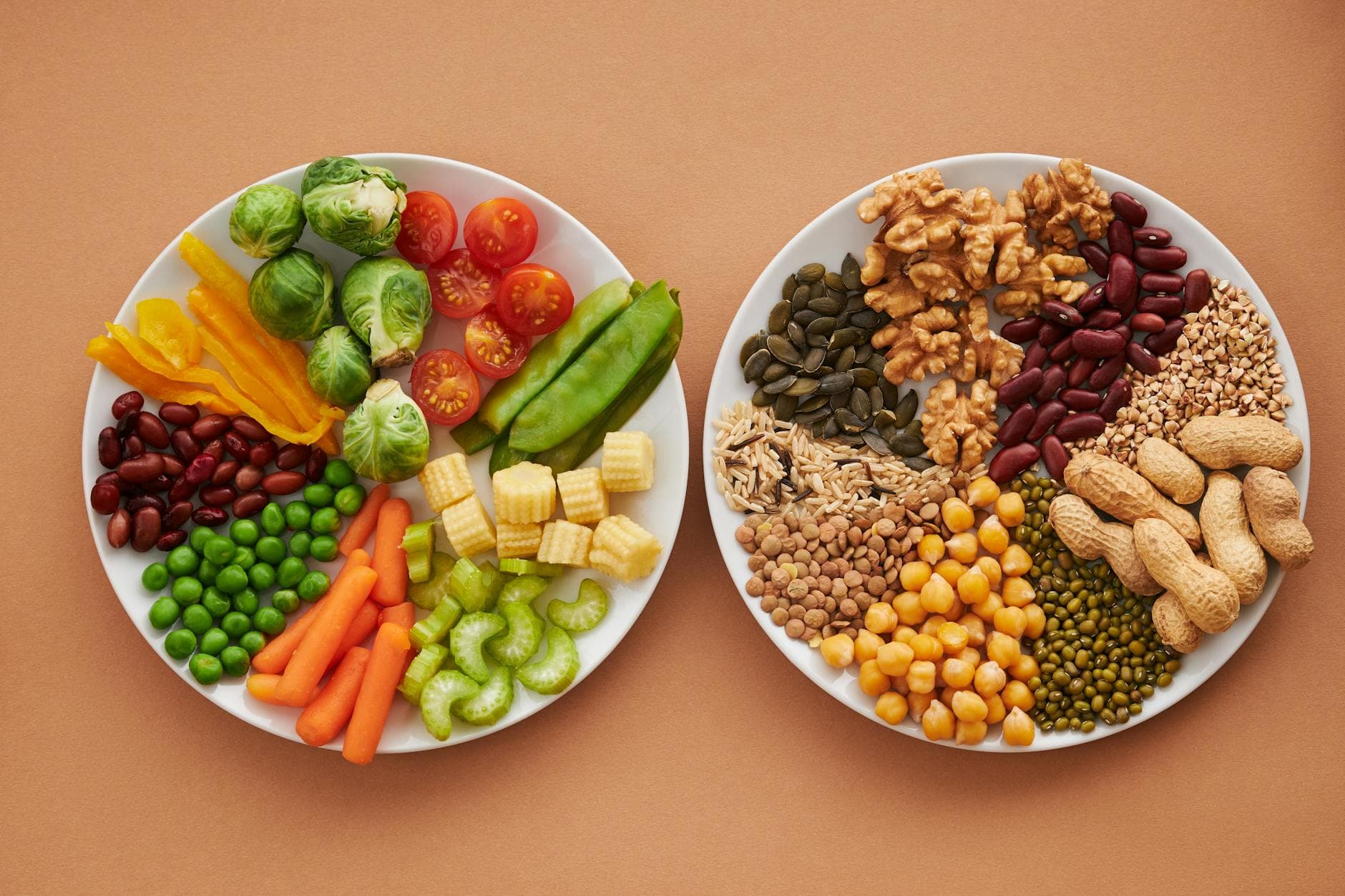
He includes plant foods not as protein substitutes, but as mineral, micronutrient, and microbiome support. Vegetables are his sixth category, and he emphasizes nonstarchy vegetables and leafy greens. The reason is metabolic, you can eat large volumes without overloading blood sugar. He highlights minerals like magnesium and potassium, and vitamins like folate and vitamin K. He also emphasizes polyphenols and nitrates, which can support blood flow through nitric oxide pathways.
What is distinctive in his explanation is that polyphenols are not framed as “essential nutrients” for human cells directly. He describes them as important largely because they feed gut bacteria, and different polyphenols support different microbial species. More variety in plant foods can therefore mean more microbial diversity. That diversity can influence inflammation levels and gut barrier integrity. In his model, that eventually affects brain signaling quality and movement control.
Legumes, including lentils, chickpeas, and black beans, appear with a clear caveat. He says he has not emphasized them in the past because much of his audience focuses on diabetes and very low-carb strategies. Here, he offers a more nuanced position: legumes can fit in moderation if your metabolism tolerates moderate carbohydrates. He lists their contributions, including protein, iron, potassium, fiber, B vitamins, and polyphenols. He also notes that legumes can be valuable microbiome fuel, especially through their fiber.
He also mentions arginine in legumes as another nitric oxide precursor, alongside dietary nitrates from vegetables. The goal is better circulation to muscles and brain, which can support performance and coordination. Still, he is consistent that the food must match the person, and keto-focused individuals may not include legumes. This “context first” mindset is central to his metabolic-health niche. It also helps readers stop treating foods as universally good or bad.
Berries are his ninth food category, and he names favorites like raspberries, blueberries, blackberries, and strawberries. He likes them because they are nutrient-dense, high in fiber, and relatively low in sugar compared with many fruits. He highlights anthocyanins in some berries and links them to reduced neuroinflammation. He also connects berries to BDNF (brain-derived neurotrophic factor), describing it as “miracle grow” for forming new nerves and synapses. That matters for learning movement patterns and maintaining coordination.
What the research shows: Improvements in leg strength and function are commonly seen when people combine resistance training with aerobic work, as summarized in this open-access review.
Minerals and anti-inflammatory fats: nuts, seeds, and avocado
Nuts and seeds are his seventh food, and he presents them as mineral-dense tools for contraction, relaxation, and repair. He highlights magnesium and zinc, and he notes that some seeds like flax and chia contain omega-3 in the form of ALA. He is careful to explain that ALA is not the same as EPA and DHA, because conversion is limited. Still, he suggests ALA can help support a healthier omega-3 to omega-6 balance overall. He also notes vitamin E and some protein content.
His practical physiology point is about electrolyte balance and muscle function. For muscles to contract and relax smoothly, the body needs sodium, potassium, calcium, and magnesium in appropriate ratios. When those minerals are out of balance, cramps and poor performance are more likely. He also links these minerals to nerve transmission and neurotransmitter production. In his framework, mineral sufficiency supports both the muscle machinery and the wiring that controls it.
Avocado is his tenth food, and he calls it close to a perfect plant food. He emphasizes monounsaturated fats, similar to those in olive oil, plus soluble fiber and a dense mineral profile. He also highlights vitamin B6 and vitamin E, tying B6 to neurotransmitter production and signaling. The fats and fiber can support metabolic steadiness, which matters for people sensitive to carbohydrate spikes. He also frames monounsaturated fats as “neutral” fats that can replace more inflammatory fats in the diet.
This section also reinforces his repeated theme: inflammation is not an enemy to eliminate, it is a system to balance. The foods he favors tend to reduce inflammatory load by improving fat quality, supporting gut integrity, and providing antioxidants. He previously mentioned selenium and astaxanthin in salmon as antioxidants that may reduce oxidative stress in mitochondria. Less oxidative stress can mean less breakdown and better rebuilding capacity. That logic applies broadly to plant antioxidants and vitamin E sources too.
He also points out that these foods support the nervous system, not just the muscles. Healthy cell membranes are built partly from dietary fats, and nerve cells are membrane-rich structures. When membranes are healthier, signaling can be more efficient and resilient. That can show up as better balance reactions and steadier gait, not only as heavier leg press numbers. It is a more functional definition of “strong legs,” aligned with fall prevention.
Putting it together: a simple, leg-focused eating pattern
The most practical takeaway from his list is that leg strength nutrition is a pattern, not a hack. You are trying to supply amino acids for repair, fats for membranes and inflammation balance, and micronutrients for mitochondria and signaling. At the same time, you are trying to avoid metabolic chaos that comes from excess sugar and refined starch. That is why he repeatedly warns against sugar-laden yogurt and implies caution with high-carb staples when someone is insulin resistant. The plan should feel sustainable and individualized, not like a temporary “muscle phase.”
A simple step-by-step way to apply his framework
If you want to translate his perspective into daily choices, it helps to think in steps rather than in perfect menus. The goal is to build a plate that supports both muscle tissue and the nervous system controlling it. This approach also makes it easier to adjust carbohydrates up or down based on your tolerance. Here is one practical sequence that matches his logic.
He would likely encourage you to watch how your body responds, especially if you have metabolic issues. If you notice energy crashes, cravings, or rising blood sugar readings, that may be a sign to reduce starches and emphasize the lower-carb foods on his list. If you are very active and tolerate carbs, modest portions of legumes and berries can add fiber and microbiome diversity. The guiding principle is that muscle rebuilding should not come at the expense of metabolic stability.
He also makes it clear that food alone is not enough without exercise, because exercise is the signal to rebuild. Resistance training challenges the muscle fibers, and recovery is when rebuilding happens. Aerobic activity can support circulation and mitochondria, which may help overall function and endurance. Research on combined aerobic and resistance programs supports improvements in leg strength and physical function in adults, as discussed in this paper. If you are new to exercise or have balance concerns, it is reasonable to ask a physical therapist or clinician for a safe starting plan.
Finally, his message is meant to be empowering rather than fear-based. He acknowledges that leg weakness is common, but he argues it is not inevitable. By combining a consistent movement signal with nutrient-dense, metabolically appropriate foods, many people can improve strength and stability over time. The focus on gut health and neuroinflammation may feel unusual in a “leg food” video, but it is central to his viewpoint. Strong legs are a brain-and-body project, and food can support both.
Key Takeaways
Sources & References
Frequently Asked Questions
- Why do legs tend to weaken earlier than other muscles?
- The presenter explains that leg muscles often contain more fast-twitch fibers, which can atrophy faster with inactivity. He also emphasizes that modern sedentary habits reduce the regular challenge legs need.
- Do I need carbs like oats or sweet potatoes to build leg strength?
- He argues carbs are not automatically required, and tolerance varies by metabolic health. If you do eat carbs, he suggests keeping them moderate and choosing whole-food sources.
- Why are eggs with the yolk emphasized for leg strength?
- He highlights leucine for muscle-building signaling, plus choline for acetylcholine production and B12 for nerve conduction. Those nutrients are concentrated in the yolk and whole egg.
- Can gut health really affect balance and coordination?
- He links gut inflammation to systemic inflammation and neuroinflammation through the gut-brain axis. The practical idea is that better gut function may support cleaner nerve signaling and recovery.
- Are legumes a good choice if I have metabolic issues?
- He treats legumes as optional and context-dependent. They can support the microbiome and provide protein and fiber, but may not fit a strict low-carb or ketogenic approach.
Get Evidence-Based Health Tips
Join readers getting weekly insights on health, nutrition, and wellness. No spam, ever.
No spam. Unsubscribe anytime.