The Worst Workout Myth, You Need an Hour to See Results

Summary
Many people skip strength training because they think workouts must last an hour to “count.” The video challenges that myth with a time-efficient approach: full-body training 2 times per week, doing just one truly hard set per exercise. The striking point is that even experienced trainees in a new study built muscle with this minimal structure. The practical takeaway is not to do less effort, but to do less volume while keeping intensity high. If you can commit to about 30 minutes, 2 to 3 times weekly, you may still make meaningful progress in strength, health, and physique.
Metabolic health is not just about weight. It is also about how well your muscles use glucose, how resilient you feel day to day, and whether you can stick with a routine long enough to benefit.
A major barrier is time. If you believe workouts must last an hour, the “all or nothing” mindset can quietly erase weeks of progress.
Why the “one-hour workout” myth matters for health
Short workouts remove friction. When training feels doable, you are more likely to repeat it, and repetition is what compounds.
Strength training also supports muscle mass, which is metabolically active tissue. Over time, maintaining muscle can help with insulin sensitivity and healthy aging, and major guidelines encourage adults to do muscle-strengthening activities at least twice weekly (Physical Activity Guidelines for AmericansTrusted Source).
Did you know? The CDC notes that adults should do muscle-strengthening activities on 2 or more days a week, in addition to aerobic activity (CDC physical activity recommendationsTrusted Source).
The video’s core claim: less time, more intent
This perspective challenges the idea that anything under 60 minutes is “a waste.” The key insight is that getting in shape may require far less gym time than most people think.
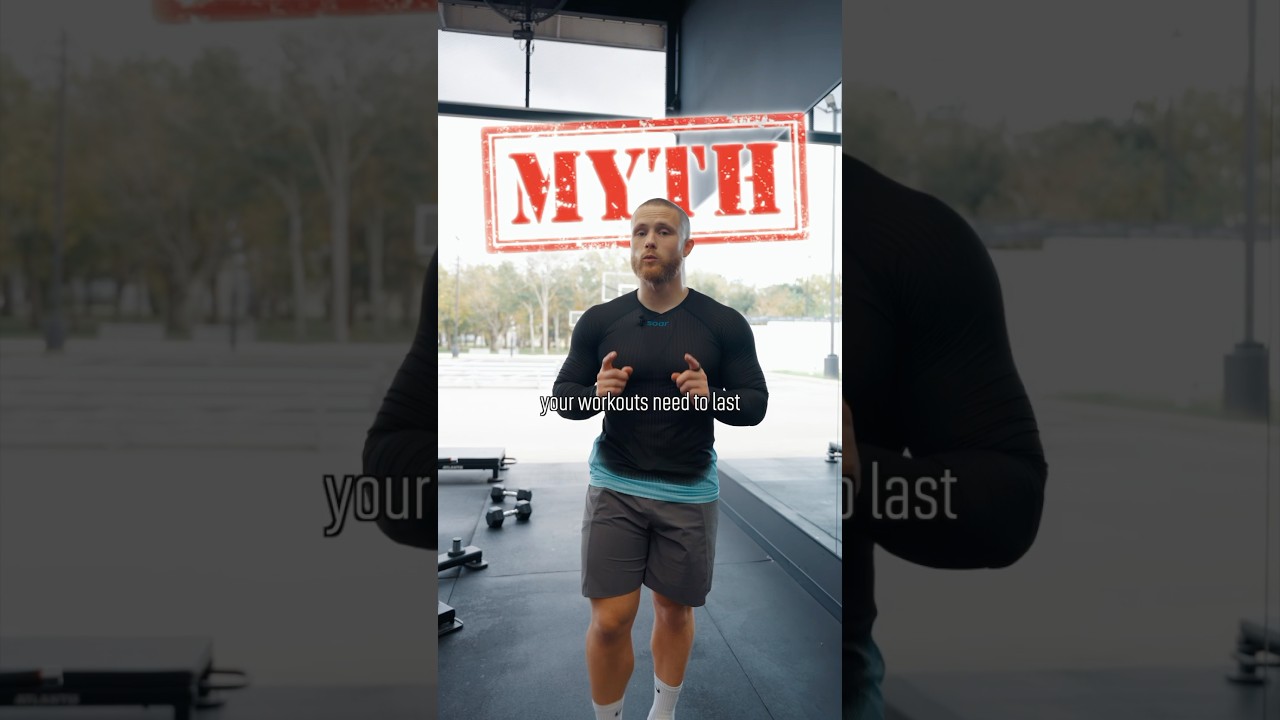
The speaker points to a brand-new study discussed this month and highlights a surprising setup: experienced trainees did full-body workouts twice per week, and just one hard set per exercise was enough to build new muscle.
What the research shows: Muscle can grow with lower training volume when sets are performed with high effort, close to muscular fatigue, especially when programming is consistent and progressive (Schoenfeld, volume and hypertrophy reviewTrusted Source).
How to build a 30-minute, full-body plan (mostly bullets)
If you are time-limited, the video’s approach is straightforward: pick a few exercises, do one hard all-out set for each, then leave.
Pro Tip: If you only have 20 to 30 minutes, reduce the number of exercises, not the effort on your hard set.
What “one hard set” really means (and common pitfalls)
“One hard set” is not a rushed, sloppy set. It is a set performed with controlled form, where the last few reps feel genuinely challenging, often within a couple reps of failure.
This approach can backfire if you skip warm-ups, choose unsafe exercises for your skill level, or push through sharp pain. It can also be mentally demanding, because going “all-out” requires focus.
Important: If you have chest pain, dizziness, uncontrolled blood pressure, are pregnant, or have joint pain that changes your movement, talk with a clinician or a qualified trainer before attempting near-failure sets.
Expert Q&A
Q: If I only do one hard set, is it “enough” for fat loss too?
A: One hard set can support muscle maintenance and growth, which may help your metabolism indirectly. Fat loss still largely depends on overall energy balance, sleep, and nutrition, so pair short training with sustainable eating and daily movement.
Jordan Lee, CSCS
Expert Q&A
Q: How hard is “hard” if I am a beginner?
A: Early on, “hard” can mean stopping when your form starts to break, even if you could grind out more reps. As technique improves, you can gradually work closer to muscular fatigue while keeping reps smooth and controlled.
Jordan Lee, CSCS
Key Takeaways
Frequently Asked Questions
- Do I need to work out for an hour to build muscle?
- Not necessarily. The video highlights that even experienced trainees built muscle with one hard set per exercise in twice-weekly full-body workouts, suggesting time-efficient training can still work when effort is high.
- What is a “hard set” in practical terms?
- A hard set is performed with controlled technique and ends close to muscular fatigue, where the last reps are challenging. For many people, that means stopping with about 0 to 2 reps left in good form.
- How many days per week should I train with this approach?
- The video emphasizes twice-weekly full-body workouts, and also notes that 2 to 3 sessions of about 30 minutes can be enough for meaningful progress. Recovery, sleep, and soreness should guide whether you add a third day.
- Is this safe if I am new or have health conditions?
- It can be, but “all-out” effort should match your skill and health status. If you have medical conditions, concerning symptoms, or pain, check with a clinician and consider guidance from a qualified trainer before pushing near failure.
Get Evidence-Based Health Tips
Join readers getting weekly insights on health, nutrition, and wellness. No spam, ever.
No spam. Unsubscribe anytime.