Menopause Workouts Without HRT: Bone, Strength, Fat
Summary
If you are postmenopausal and not using hormone therapy, the most powerful lever you still control is training stimulus. This video’s core message is that long, moderate workouts are often the wrong “dose” for improving bone density, strength, and midsection fat after menopause. Instead, the strategy centers on progressive heavy resistance training (often 6 to 8 reps at challenging loads) plus true sprint interval work. The approach is framed through “Naomi,” a 60-year-old breast cancer survivor with low bone mineral density, knee pain with running, and a goal to protect bones, reduce belly fat, and stay strong for decades.
🎯 Key Takeaways
- ✓Menopause hormone therapy may help symptoms and slow bone loss, but it is not a stand-alone fix for body composition or a treatment for osteoporosis.
- ✓For postmenopausal bone and strength, heavier resistance training (not light weights for 20 to 30 reps) is emphasized as the cornerstone stimulus.
- ✓Moderate-intensity steady-state cardio can add stress without delivering enough signal for muscle gain, visceral fat reduction, or bone density improvements in this framing.
- ✓Bone responds best to multidirectional loading, the discussion highlights resistance training and carefully scaled jump training over walking or running alone.
- ✓Short, true sprint intervals paired with strength work can be “enough” when intensity and recovery are structured, even around age 60, with appropriate progression.
The big takeaway: change the exercise “dose” after menopause
If your goal is bone density, strength, and less belly fat after menopause, the central idea in this discussion is simple: stop defaulting to long, moderate workouts, and start training for power and load.
This perspective treats exercise like a prescription, meaning the dose matters. A dose that is too easy or too “middle of the road” may keep you busy without giving your bones and muscles a reason to adapt.
What is different here is the emphasis on progressive heavy resistance training (often in the 6 to 8 rep range at challenging loads) plus true sprint interval training, rather than lots of steady-state cardio or high-rep, light-weight circuits.
Important: If you have a history of breast cancer, osteoporosis, fractures, or joint pain, it is worth discussing your exercise plan with your oncology team, primary clinician, or a physical therapist before you dramatically change intensity.
Meet “Naomi”: postmenopause, low bone density, no HRT
The conversation is anchored around a real-world profile: “Naomi,” a 60-year-old woman who is postmenopausal, has low bone mineral density, and is not taking hormone therapy because of a breast cancer history and being told it is contraindicated.
She is doing many things “right” already. She exercises regularly, eats “clean” most of the time, drinks modestly (about two to three glasses of wine per week), and she is motivated by long-term health, not just aesthetics.
And still, she is seeing a familiar pattern: more weight around the midsection and stubborn belly fat.
There are also practical constraints. Running hurts her knees, but she can cycle, walk, and lift weights.
The goals are layered:
This is not presented as a situation where Naomi is “broken.” It is presented as a situation where the training stimulus needs to match the biology of peri and postmenopause.
Why strength and belly fat feel harder in peri and postmenopause
The explanation offered is multi-factorial, and it is not just “metabolism slows.” It focuses on shifting hormones, changing receptor signaling, and downstream effects on muscle performance.
During perimenopause, the discussion highlights a shift in estrogen and progesterone ratios, with less progesterone due to more anovulatory cycles. The claim is that this contributes to downregulation of progesterone receptors and also affects estradiol receptor stimulation.
Then there is the gut angle.
This framing emphasizes a “hepatic to gut” loop where sex hormones are processed in the liver, bound to sex hormone-binding globulin (SHBG), excreted into bile, and then modified by gut microbes that can influence hormone recirculation. With less endogenous estrogen and progesterone entering that system, the argument is that the gut ecosystem shifts, including changes in diversity and relative abundance of microbial groups associated in research with obesity patterns.
A key performance detail is that many women notice strength and power drop even when they feel like they have not “lost all their muscle.” Two mechanisms are highlighted:
The practical implication is punchy: after menopause, you may need a stronger stimulus to get the same adaptation you once got from moderate training.
Did you know? Menopause is associated with accelerated bone loss in the years around the final menstrual period, and major medical organizations note that resistance and impact exercise can support bone health as part of an overall plan. See guidance on osteoporosis prevention and exercise from the NIH Osteoporosis and Related Bone Diseases Resource CenterTrusted Source.
A note on HRT in this specific framing
The speaker draws a clear line between symptom management and body composition. Menopause hormone therapy is described as effective for symptoms that disrupt daily life, including hot flashes, night sweats, mood swings, sleep disruption, and vaginal dryness.
But for body composition, the claim is that hormone therapy does not “fix” the issue. It may slow the rate of change, but it does not stop it.
For bone, the framing is similarly specific: hormone therapy may slow bone mineral loss, but it is not positioned as a direct treatment for osteoporosis.
For readers, it can help to compare this with mainstream clinical guidance. Large medical organizations note that menopausal hormone therapy can prevent bone loss and reduce fracture risk for some women, but it requires individualized risk-benefit discussion, especially with a history of hormone-sensitive cancers. You can review a balanced overview from the North American Menopause SocietyTrusted Source.
Why moderate cardio is questioned here (and what to do instead)
The usual public health message is familiar: 150 minutes of moderate-intensity activity per week, plus some resistance training.
This perspective challenges that as a default for peri and postmenopausal goals like Naomi’s.
The critique is not that walking or cycling are “bad.” It is that moderate-intensity continuous training can sit in a middle zone that increases sympathetic drive and baseline stress hormones, without delivering a strong enough signal to build lean mass, improve bone density, or meaningfully reduce visceral fat.
In other words, you can do a lot of work and still not get the adaptation you want.
This is where the concept of polarization comes in. Instead of spending most training time in the moderate middle, the plan leans toward:
What the research shows: Resistance training is consistently associated with improvements in muscle strength in older adults, and can support bone health when appropriately loaded and progressed. A helpful overview is available from the American College of Sports MedicineTrusted Source.
The cornerstone: heavy resistance training for bone and power
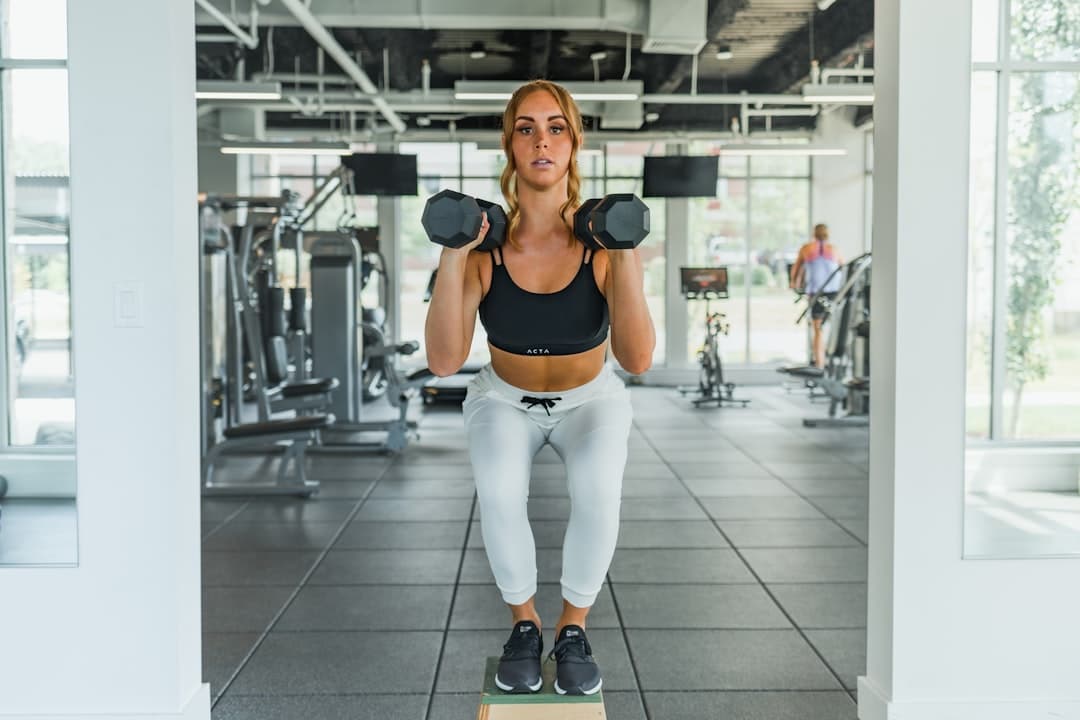
The most distinctive recommendation in the video is the push away from light weights for very high reps (20 to 30) as the main strategy.
High-rep sets are framed as a metabolic stress that can drift into that moderate-intensity zone. You might feel a burn and see some “tone,” but the argument is that it is not the most direct path to strength, power, or bone adaptation in postmenopause.
Instead, the emphasis is on lifting heavier (for you), often around 70 to 80 percent of one-rep max, for about 6 to 8 reps. The discussion mentions studies in women in their 70s and 80s showing improvements in lean mass, bone density, and proprioception when they move away from the 10 to 12 rep hypertrophy default and train heavier.
That last piece matters. Better proprioception and strength can reduce fall risk, and falls are a major driver of fractures.
Why bone needs more than walking and running
Bone responds to mechanical loading, but not all loading is equal.
The argument here is that walking and running are not sufficiently multidirectional for bone mineral density gains. They may support cardiovascular health and general function, but they are not presented as the primary lever for improving low bone density.
Two training inputs are emphasized for bone:
This aligns with broader bone-health recommendations that include resistance and impact exercise as helpful for many people, with modifications for fracture risk. The International Osteoporosis FoundationTrusted Source discusses exercise types commonly used in osteoporosis prevention and management.
Pro Tip: If running hurts your knees, you can still train power. Cycling or rowing sprints can deliver high intensity without the same joint impact, and heavy lifting can be progressed with controlled technique.
“Heavy” is relative, and technique comes first
A practical and motivating point is that heavy lifting does not mean doing a 100 kg deadlift on day one.
It means choosing a load that is challenging for your current capacity. For Naomi, that might start with an empty bar, or even two 5 kg weights, while learning the movement.
The plan described is phased:
For someone with osteoporosis or high fracture risk, the discussion suggests using additional support, such as a Smith machine, rather than a free barbell in open space.
A practical 7-day template, plus the 12-minute strength-sprint workout
One of the most actionable parts of the video is the time reality check.
Even if Naomi has 45 to 60 minutes a day, the claim is she does not need that much volume. The reasoning is that women are already very capable of “long and slow,” and after menopause that tendency can work against recomposition goals.
So the weekly structure emphasized is:
That can sound like a lot, but many of these sessions can be short if intensity is real and recovery is respected.
How to build a week (example)
Here is a sample template consistent with the video’s priorities. It is not a prescription, but a way to visualize the split.
The video’s signature workout: 12 minutes, strength plus sprints
This workout is presented as a way to teach what “true” intensity looks like, without requiring long sessions.
It is described as a buy-in of 10 deadlifts at 75 percent, then immediately a hard sprint on a bike or rower for the remainder of a minute, followed by a full minute off. Repeat for six rounds.
That is it.
The point is not the exact equipment. It is the pairing of meaningful load with maximal effort intervals, plus enough recovery to go hard again.
Step-by-step: how to scale this workout safely
Choose a deadlift variation you can control. If a barbell deadlift is not appropriate yet, start with kettlebell deadlifts, trap bar deadlifts, or a rack pull. The goal is a strong hip hinge with a neutral spine and no pain.
Make “75 percent” relative to your current reality. If you do not know your one-rep max, use a load you could lift about 8 to 10 times with good form, then stop at 10 reps without grinding. A qualified trainer can help you estimate loads without testing maximal lifts.
Pick a sprint tool that respects your joints. A stationary bike or rower can deliver very high intensity with lower impact. If you have knee pain, cycling sprints may feel better than running.
Sprint with a clear target. The video emphasizes trying to accumulate more meters or distance each round. That objective helps people commit to true effort instead of drifting into “kind of hard.”
Protect the recovery. Take the full minute off. True sprint interval training depends on recovery so you can repeat near-max efforts, not just survive.
Stop before form breaks down. If deadlift mechanics degrade or you feel dizzy, chest pain, or unusual shortness of breath, end the session and seek medical advice.
»MORE: If you want a simple tracking sheet, create a “6-round log” with columns for deadlift load, sprint distance, and rate of perceived exertion. The goal is gradual progression, not perfection.
Safety, scaling, and what to ask your clinician about
This approach is motivating, but it is also intense. The best outcomes usually come from smart progression.
A key theme is that many women have been socially conditioned to believe they are fragile after menopause. The counterpoint is that capability often improves quickly when training is scaled correctly.
Still, there are real medical considerations, especially for someone like Naomi.
Trusted organizations provide practical guidance on exercise and cancer survivorship, including safety considerations. See information from the American Cancer SocietyTrusted Source.
Important: New or worsening chest pain, fainting, severe shortness of breath, or sudden joint swelling are not “push through it” signals. They are reasons to stop and get medical evaluation.
Expert Q&A
Q: If I cannot take HRT, am I stuck with belly fat and weaker bones?
A: Not necessarily. This video’s viewpoint is that training stimulus can compensate for some of the lost hormonal support, especially by using heavier resistance training to drive neuromuscular adaptation and bone loading.
It also suggests that replacing long moderate workouts with strength plus true sprint intervals can better target visceral fat and strength, although individual results vary. If you have low bone density or a cancer history, it is wise to coordinate changes with your clinician and consider working with a trainer experienced in older adults.
Exercise-focused health educator (based on the video’s framework)
Q: Are light weights for 20 to 30 reps safer for postmenopausal women?
A: Light weights can be appropriate for learning movement, managing pain, or building tolerance. The key point here is that “safe” is not the same as “effective for your goal,” and very high-rep sets can become a moderate-intensity metabolic grind.
In this framework, safer and more effective often means learning excellent technique first, then gradually increasing load into lower rep ranges with adequate rest, sometimes using supportive equipment like a Smith machine when needed.
Exercise-focused health educator (based on the video’s framework)
Key Takeaways
Frequently Asked Questions
- How many days a week should a postmenopausal woman lift weights for bone health?
- In the video’s framework, resistance training three days per week is a strong start, with four days per week preferred once you are comfortable and recovering well. The emphasis is on progressive load and good mechanics, not long sessions.
- Is walking enough to improve bone mineral density after menopause?
- Walking can support general health and function, but the video argues it is not enough multidirectional stress to meaningfully improve bone mineral density. Resistance training and carefully scaled impact or jump training are emphasized more for bone adaptation.
- What is “true” sprint interval training in this approach?
- It means short, near-max effort sprints with full recovery so you can repeat high output, not a steady hard pace. The example given uses one-minute sprints on a bike or rower paired with one full minute of rest.
- Can heavy lifting be safe if I have low bone density?
- It may be safe when individualized and progressed, but it depends on your fracture risk, movement skill, and medical history. The video suggests learning mechanics first and using supportive setups when needed, and it is smart to discuss plans with a clinician or physical therapist.
Get Evidence-Based Health Tips
Join readers getting weekly insights on health, nutrition, and wellness. No spam, ever.
No spam. Unsubscribe anytime.