DEXA, VO2 Max, Grip: Biomarkers That Matter Most
Summary
Most people get biomarkers wrong by chasing the most tests instead of the most useful ones. In this video critique, Bryan Johnson reacts to “Browney” measuring nearly everything, from 3D scans and mole mapping to DEXA, grip strength, lactate thresholds, and VO2 max. The unique takeaway is not “test everything,” it’s “prioritize low cost, high information markers,” especially **DEXA** for **bone mineral density**, plus performance metrics like **grip strength** and **VO2 max**. The critique also flags a big misconception, pushing max-effort strength tests without a warm-up can be an avoidable injury risk that can later show up as asymmetry on scans.
🎯 Key Takeaways
- ✓DEXA is framed as “low cost, high information,” and uniquely valuable because it shows **bone mineral density** plus **muscle symmetry and asymmetry**.
- ✓The most practical use of testing is building intuition and baselines, not collecting endless data points for bragging rights.
- ✓Going from cold to max effort, like an isometric mid-thigh pull with no warm-up, is called out as a preventable injury setup.
- ✓Grip strength is highlighted as a surprisingly strong longevity marker, and it is easy to track at home over time.
- ✓VO2 max testing is described as brutally uncomfortable but highly informative, and trainable with structured aerobic and interval work.
Most people chase “more tests” instead of better tests
Most people think the secret to health is finding the most “top 1%” tests.
This video’s perspective flips that idea: what matters is which measurements actually change your decisions, and which ones just create noise.
The critique is built around a creator, “Browney,” doing an intense week of testing, and Bryan Johnson reacting in real time. The tone is half impressed, half protective. He likes the educational design, the way people hear their heartbeat, see their scans, and start to internalize what is happening inside their body. But he also repeatedly returns to a practical rule: low cost, high information beats “everything, everywhere, all at once.”
There is also a second theme that runs through the entire commentary.
Avoid preventable injury.
When testing becomes a performance stunt, it can backfire. A pulled back, a tendon flare, or an aggravated ankle can create months of reduced activity. And in the bone health context, less activity can mean less impact loading, less strength training consistency, and less stimulus to maintain bone and muscle.
Pro Tip: If you only remember one filter from this video, use this one: “Will this test change what I do next week?” If not, it may be interesting, but not essential.
DEXA: the “gold standard” that also protects your bones
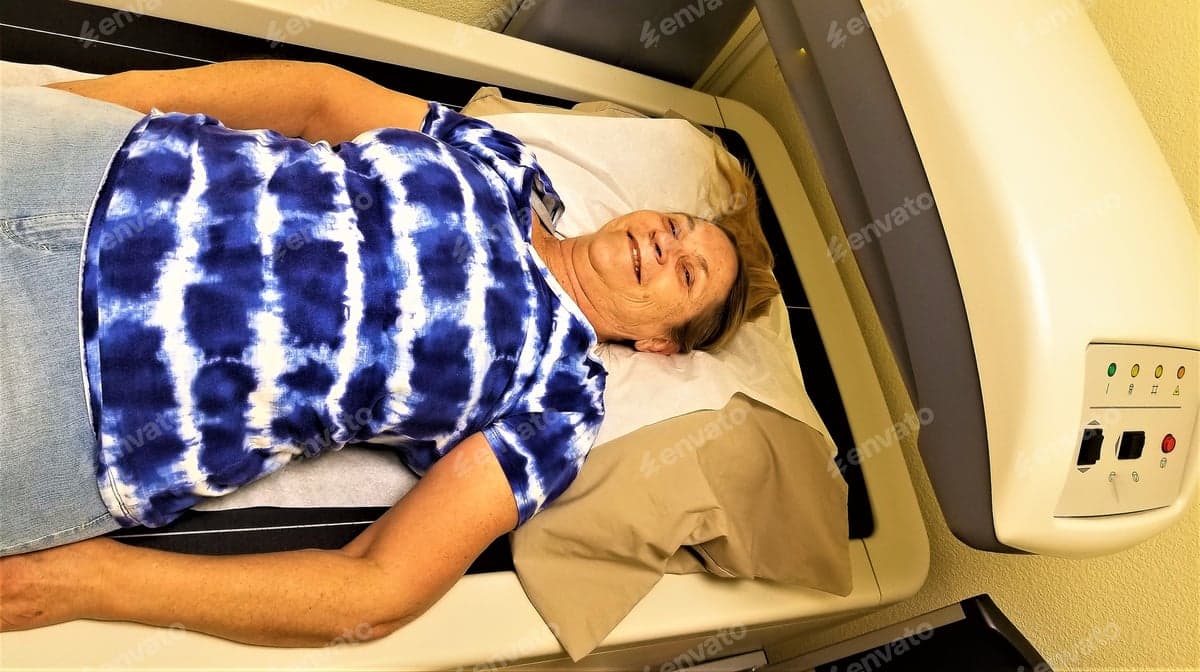
The standout recommendation is DEXA (also written as DXA), described as the gold standard for body composition.
And the unique emphasis here is bone.
DEXA is praised not just for body fat and muscle estimates, but because it reveals bone mineral density as a baseline. That matters because bone loss can be silent for years. People often do not know where they stand until a fracture happens, or until a clinician flags osteoporosis or osteopenia on imaging.
What’s interesting about this framing is how practical it is. A DEXA scan is positioned as something many people can access, relatively affordable compared with high-end performance labs, and immediately useful.
Why bone mineral density is a “know your baseline” metric
Bone mineral density is not just a number you get once and forget.
It can help you and your clinician decide whether your routine makes sense. If bone density is low for age or risk profile, the next steps often focus on fundamentals, strength training, impact activity when appropriate, adequate protein and calcium intake, vitamin D status, fall risk reduction, and reviewing medications that may affect bone.
Research and clinical guidance commonly use DXA to diagnose osteoporosis and estimate fracture risk. In the US, the National Institute of Arthritis and Musculoskeletal and Skin Diseases explains how bone mineral density testing works and why it is used to assess fracture risk and osteoporosis status (NIAMS overview of bone mineral density testsTrusted Source).
Did you know? DXA is not only used for osteoporosis. It is also widely used in sports and research settings to estimate lean mass and track changes over time, which can matter when you are trying to rebuild after injury.
The underappreciated DEXA feature: asymmetry
The video also highlights a feature many people do not realize they are getting.
DEXA can show left to right differences in lean mass. Johnson points out that asymmetries can influence gait and posture. In the video, Browney’s results show about a kilogram difference between legs, and Browney immediately connects it to a previous ankle injury.
That is the practical loop.
Injury happens, then you unconsciously compensate, then the compensation becomes measurable, then it can influence future pain patterns and performance. A scan does not “solve” that, but it can make the problem visible so you can work with a qualified professional (like a physical therapist) on a plan.
Skin scanning, sun exposure, and the “don’t get burned” rule
A big portion of the testing day is skin focused, including a scanner that takes about 2,000 photos and maps moles and freckles.
The commentary likes the quantified nature of it.
Knowing you have “557” mapped spots on your back is not a diagnosis, but it is a concrete baseline. It can make follow-ups more objective, especially for people with many moles or a history of significant sun exposure.
Then the critique gets blunt.
If you are getting burned during outdoor shoots, “we need to up your game on the skincare.” The practical message is simple: do not trade content, aesthetics, or short-term fun for long-term skin damage.
This aligns with mainstream dermatology guidance. The American Academy of Dermatology emphasizes that UV exposure increases skin cancer risk, and it highlights protective steps like shade, protective clothing, and broad-spectrum sunscreen (AAD guidance on sunscreen and sun protectionTrusted Source).
Important: A skin scanner can map and track spots, but it does not replace a clinician’s evaluation of changing, bleeding, or suspicious lesions. If you notice changes, it is worth booking a professional skin exam.
Blood draws and “heart age”: useful, but don’t over-interpret
The video includes a blood draw and a “heart age” style assessment.
Two practical points stand out.
First, the blood draw advice is oddly specific, and very human. The suggestion is to set expectations with the phlebotomist, aim for a single stick, and avoid the “fishing expedition” if they miss. This is not about being difficult, it is about reducing anxiety and discomfort.
Second, the “heart age” concept is framed as a gateway.
It helps people understand that chronological age and biological function can diverge. Someone can be 25 and have a heart that behaves more like a younger or older person. The critique is that these simplified scores can build intuition, but you can go much deeper with clinical measurements if needed.
If you want a grounded way to think about cardiovascular risk, many clinicians use validated risk calculators and a mix of blood pressure, lipids, diabetes status, smoking status, family history, and sometimes imaging. The US Preventive Services Task Force discusses cardiovascular risk assessment and prevention approaches in its recommendations, including how risk factors guide decisions (USPSTF recommendationsTrusted Source).
The practical takeaway is not “ignore heart age.”
It is “treat it like a conversation starter, not a verdict.”
Sweat, cramps, and electrolytes: make the data practical
Sweat testing shows up as a surprisingly useful niche measurement.
The video uses pads on the forearm to induce and collect sweat, then analyzes sodium concentration. Johnson connects this to his own experience starting a sauna protocol at 200°F (about 93°C) and dealing with nighttime cramps, which he attributes to incomplete rehydration and electrolyte imbalance.
That is a key point: data is only as good as what you do with it.
If you learn you are a salty sweater, the next question becomes practical. How do you replace fluid and electrolytes during long training sessions, heat exposure, or sauna use? For many people, the answer is not exotic testing. It is a consistent hydration strategy, especially during prolonged exercise.
Sports medicine guidance commonly notes that sodium losses vary widely, and that longer or hotter sessions may require electrolyte replacement. The American College of Sports Medicine provides position statements and guidance on hydration and exercise performance, including considerations for electrolytes during prolonged activity (ACSM resources and position standsTrusted Source).
Johnson also critiques complexity here.
He suggests that instead of building your own sweat test setup, a simpler commercial patch approach during real exercise or sauna might be easier and potentially more representative.
What the research shows: Hydration needs vary by person, environment, and duration. For longer, sweat-heavy sessions, replacing sodium along with fluids may better maintain performance and reduce cramping risk for some people, especially in heat (ACSM position standsTrusted Source).
Strength testing: grip, symmetry, and the zero-to-100 problem
This is where the video becomes a safety lecture.
And it matters for bone health, because strength training is one of the most practical tools people use to support bones, muscle, balance, and fall prevention as they age.
The testing includes grip strength using a device connected to an iPad, with the tester cueing, “Squeeze, squeeze, squeeze.” It is treated like a game, and that is not an accident. Gamification can improve effort and adherence, and it can make health feel less abstract.
Then comes the mid-thigh pull.
It is essentially an isometric deadlift against an immovable bar, described in the video as “a very painful deadlift.” Browney goes from cold to maximal effort, and Johnson reacts strongly: “That was the biggest zero to 100. No warm up.” He repeats that it is “not a good situation,” and he is worried about injury.
That caution is not just dramatic.
A max effort pull can strain muscles and connective tissue, especially if someone is not warmed up, not used to the movement, or has a prior injury history. For older adults, or anyone with low training exposure, the risk can be higher.
Grip strength as a longevity marker
Grip strength is highlighted as more than a party trick.
The commentary calls it one of the best longevity markers for predicting all-cause mortality. This is consistent with large observational research linking lower grip strength with higher risk of disability and mortality, although grip strength is best viewed as a global marker of health and function, not a direct cause.
For a reader-friendly overview, the UK Biobank and other cohorts have contributed to this area, and clinical discussions often reference grip strength as part of frailty and functional assessment. The National Institute on Aging discusses the importance of strength and function as people age, including resistance training and maintaining physical capability (NIA guidance on exercise and physical activityTrusted Source).
The practical move is simple.
Track grip strength periodically, and treat meaningful declines as a cue to review training, nutrition, sleep, and medical factors with a clinician.
The misconception: “Testing strength” is not the same as “training safely”
This video’s sharpest misconception call-out is that measurement environments can pressure people into unsafe efforts.
A lab coat does not automatically mean a safe protocol.
If a test requires maximal exertion, a warm-up is not optional. A reasonable approach is to ramp effort gradually, practice the movement, and stop if pain feels sharp, sudden, or wrong. If you have osteoporosis, recent fractures, uncontrolled blood pressure, or known cardiovascular disease, it is especially important to ask your clinician what types of maximal testing are appropriate.
Expert Q&A
Q: If DEXA shows I have muscle asymmetry, does that mean I am injured?
A: Not necessarily. Asymmetry can come from prior injury, sport-specific habits, or even daily routines like carrying a bag on one side. The useful next step is to pair the scan with how you feel and move, then consider an evaluation with a physical therapist or clinician if you have pain, repeated strains, or performance limitations.
Jordan Lee, DPT (Doctor of Physical Therapy)
Performance testing: lactate thresholds, altitude, and VO2 max
The performance testing section is where the “top 1% biomarkers” vibe really peaks.
It also becomes surprisingly practical when you translate it into everyday training decisions.
Browney does lactate threshold testing, two ramp tests (one at sea level and one at simulated altitude around 2,700 m), and then a VO2 max ramp test to failure. Johnson likes the value of threshold data, because it tells you where your “sweet spot” training zones are, hard enough to improve, not so hard that you burn out.
Then he calls VO2 max what many athletes call it.
Brutal.
The point is not suffering for suffering’s sake. VO2 max estimates the body’s ability to transport and use oxygen during intense exercise, and higher cardiorespiratory fitness is consistently associated with lower risk of many chronic diseases and mortality. The American Heart Association highlights cardiorespiratory fitness as an important health indicator and supports assessing it in clinical care (AHA scientific statement on cardiorespiratory fitnessTrusted Source).
A notable moment in the commentary is skepticism about devices. Johnson wonders what system they are using and how accurate it is compared with clinical-grade equipment.
That is a useful consumer lens.
If you are going to use VO2 max numbers to guide training, it helps to use consistent methods over time, ideally the same lab and protocol, because different devices and algorithms can produce different values.
“220 minus age” and max heart rate, handle with care
The video references the classic “220 minus age” estimate for max heart rate.
It is a simple heuristic, but it can be off by a lot for individuals. Some people naturally have higher or lower max heart rates than the formula predicts. If you have symptoms like chest pain, fainting, or unusual shortness of breath during exertion, it is important to discuss this with a clinician before pushing maximal tests.
Still, the practical training message is solid.
Build fitness gradually, and use thresholds or perceived exertion to avoid turning every session into a suffer-fest.
Resource Callout: »MORE: Want a simple way to use lactate threshold ideas without lab testing? Create a “talk test” training log. Note whether you could speak in full sentences, short phrases, or only single words during your main workout sets.
How to build a “high information” testing plan you will use
The video ends with praise, “a nice entry point,” and a 10 out of 10 for getting people curious about measurement.
But the most useful application is not copying the entire testing menu.
It is choosing a small set of metrics that you can repeat, interpret, and act on.
Here is a practical, bone-health-forward approach that follows the video’s “low cost, high information” theme.
How to choose your first 5 metrics
DEXA scan (bone mineral density plus body composition) Get a baseline, especially if you have risk factors (family history, low body weight, prior fractures, long-term steroid use, menopause, or low activity). Discuss timing and frequency with a clinician, since needs vary by age and risk profile. DXA is widely used for osteoporosis assessment (NIAMS DXA overviewTrusted Source).
Grip strength Track it a few times per year under similar conditions. Treat it as a functional vital sign, not a vanity metric. If it trends down, it can be a cue to review resistance training consistency and overall health with a professional (NIA exercise guidanceTrusted Source).
A simple cardiovascular fitness proxy A lab VO2 max test can be great, but it is not required. Many people use a consistent submaximal test (like a timed walk, step test, or a repeatable bike protocol) to track progress. Cardiorespiratory fitness is strongly linked with long-term health (AHA statementTrusted Source).
Blood pressure and basic labs you can interpret If you do blood work, prioritize markers you and your clinician will actually act on (lipids, glucose or A1C, kidney function, iron status when relevant). Use trend lines over time, not one-off highs or lows.
One behavior metric that drives everything else Sleep duration, step count, or weekly resistance sessions. The video jokes about sleep data sources, but the underlying point is real, behavior consistency often beats perfect testing.
Safer testing and training, a checklist inspired by “zero to 100”
Before any maximal or near-maximal effort test, run through this:
One more practical detail from the video is worth repeating.
Injury can create measurable asymmetry.
And asymmetry can create future problems.
If you care about bone health long term, avoiding preventable injury is not “playing it safe,” it is a strategy.
Expert Q&A
Q: Is a DEXA scan worth it if I am young and feel fine?
A: It can be, especially if you have risk factors for low bone density or a history of stress fractures, eating disorders, or long-term steroid use. For many low-risk young adults, the highest value may be body composition and symmetry tracking rather than bone diagnosis. A clinician can help you decide whether a baseline DXA makes sense for your situation.
Mina Patel, MD (Internal Medicine)
Key Takeaways
Frequently Asked Questions
- Is DEXA really the best test for bone health?
- DXA (DEXA) is widely used to measure bone mineral density and assess fracture risk, and it is a common clinical standard. Whether it is the “best” for you depends on age, risk factors, and what you will do with the results, which you can discuss with a clinician.
- Can grip strength really tell me anything about longevity?
- Grip strength is often used as a marker of overall strength and function, and lower grip strength is associated with higher health risks in large studies. It is not destiny, but it can be a useful trend to track and a prompt to strengthen training habits.
- Is VO2 max testing necessary to improve fitness?
- Not necessarily. VO2 max testing can give a clear baseline, but many people can improve cardiorespiratory fitness using consistent training and simpler repeatable measures like timed walks, bike protocols, or heart-rate based sessions.
- Are skin scanners a substitute for a dermatologist visit?
- No. Skin scanners can help document and track spots over time, but changing or suspicious lesions still need a professional evaluation, especially if they bleed, itch, change color, or grow.
Get Evidence-Based Health Tips
Join readers getting weekly insights on health, nutrition, and wellness. No spam, ever.
No spam. Unsubscribe anytime.