Bone Density, DEXA, and Protein Myths, Blueprint View
Summary
Bones are not “set and forget.” In this podcast discussion, the core message is measurement-first: use objective biomarkers like DEXA, then build habits that actually change the readout. The conversation frames bone mineral density as both fracture protection and a proxy for whole-body health, influenced by load-bearing exercise, sleep quality, inflammation, and targeted nutrition. It also touches on “dad bod” science in mice, suggesting visceral fat may increase via new fat cell formation in midlife males, and highlights a plant-forward polyphenol angle as one potential lever.
🎯 Key Takeaways
- ✓Bone mineral density is treated here as a whole-body health readout, not just a bone issue, because sleep, exercise, nutrition, and inflammation all show up in the number.
- ✓DEXA is positioned as a practical tool for objective tracking, and an “expanded” DEXA can also estimate muscle mass and visceral fat trends.
- ✓Load-bearing stimulus matters more than simply consuming calcium, without impact or resistance training, minerals may not be directed into bone.
- ✓Sleep is framed as a major bone remodeling window, with the claim that chronic sleep deprivation is associated with lower bone mineral density.
- ✓The “dad bod” segment highlights a mouse finding that midlife males may add visceral fat partly by creating new fat cells, not only enlarging existing ones, and suggests polyphenols as a possible signaling lever.
Bones can be five times stronger than steel by weight
Bones are described here as five times stronger than steel by weight.
That single fact sets the tone of the conversation: your skeleton is not a static frame, it is a high-performance, living tissue that responds to what you do, what you eat, and how you sleep.
Another striking point follows right behind it. Astronauts in microgravity are said to lose about 1% to 1.5% of bone mineral density per month, roughly 10 times faster than typical loss on Earth, largely because their bodies are missing regular loading and impact.
Did you know? A hip fracture in older adults can be a major turning point. In the discussion, the claim is that only 63% of men and 75% of women are alive one year after a hip fracture, compared with about 90% survival without fracture. These numbers are directionally consistent with the well-known finding that hip fractures are associated with high 1-year mortality in older adults, although exact percentages vary by study and population.
This is why the episode treats bone density as more than an orthopedic concern. It becomes a longevity concern.
The video’s core thesis, stop debating, start measuring
The most distinctive theme is not a supplement or a workout. It is a philosophy: objective measurement beats health storytelling.
The argument is blunt. Online wellness is crowded with confident voices, shifting nutrition headlines, and “it worked for me” narratives. When people feel whiplash from contradictory advice (cholesterol is bad, then good, eggs are bad, then good), the proposed escape hatch is to stop trying to win debates and start collecting data from your own body.
This perspective emphasizes biomarkers as a credibility baseline. If an intervention matters, it should show up in measurable outcomes, not just in vibes, identity, or charisma.
A key nuance is also acknowledged: one person’s biomarkers are not automatically your biomarkers. Still, the bet is that humans are similar enough that measurement-driven iteration can outperform guesswork.
Important: If you have a history of osteoporosis, eating disorders, kidney disease, endocrine disorders, or you take medications that affect bone (for example, long-term glucocorticoids), talk with a clinician before making big changes to training volume, supplements, or aggressive dieting. Bone health is highly sensitive to medical context.
What bone mineral density actually is (and what it is not)
Bone mineral density (BMD) is explained in plain terms as the density of the mineral scaffolding inside bone. Bones are not completely solid, they contain a structure built from minerals like calcium and phosphorus, arranged in a way that provides strength without excessive weight.
This framing matters because it corrects a common mental model. Many people picture bones like inert sticks. The episode repeatedly insists bones are more like a constantly renovated building.
“You get a new skeleton every 10 years”, what that means
A memorable line in the conversation is the claim that you “get a new skeleton every 10 years.” The underlying concept is bone remodeling, the continuous process in which old bone is broken down and new bone is formed.
In everyday terms, this means your skeleton is responding to your life right now, not just to what you did as a teenager. If you change the inputs, loading, sleep quality, nutrient adequacy, you may be able to change the outputs over time.
This is directionally consistent with mainstream physiology. Bone remodeling is well established, and remodeling rates vary by age, sex, bone site, hormones, and health conditions. For a deeper overview of how bone is constantly renewed, see the NIH’s explanation of bone health and osteoporosis basics at NIH Osteoporosis and Related Bone DiseasesTrusted Source.
Why BMD is treated as a “proxy” for overall health
The discussion highlights BMD as a proxy marker, not because bone density magically measures everything, but because so many foundational health behaviors influence it.
If you are sleeping poorly, chronically under-fueling, not strength training, sedentary, inflamed, or nutrient deficient, bone may quietly reflect those problems. And when bone fails, fracture risk rises, mobility drops, and the downstream health consequences can be severe.
DEXA scanning, a practical way to track bone, muscle, and fat
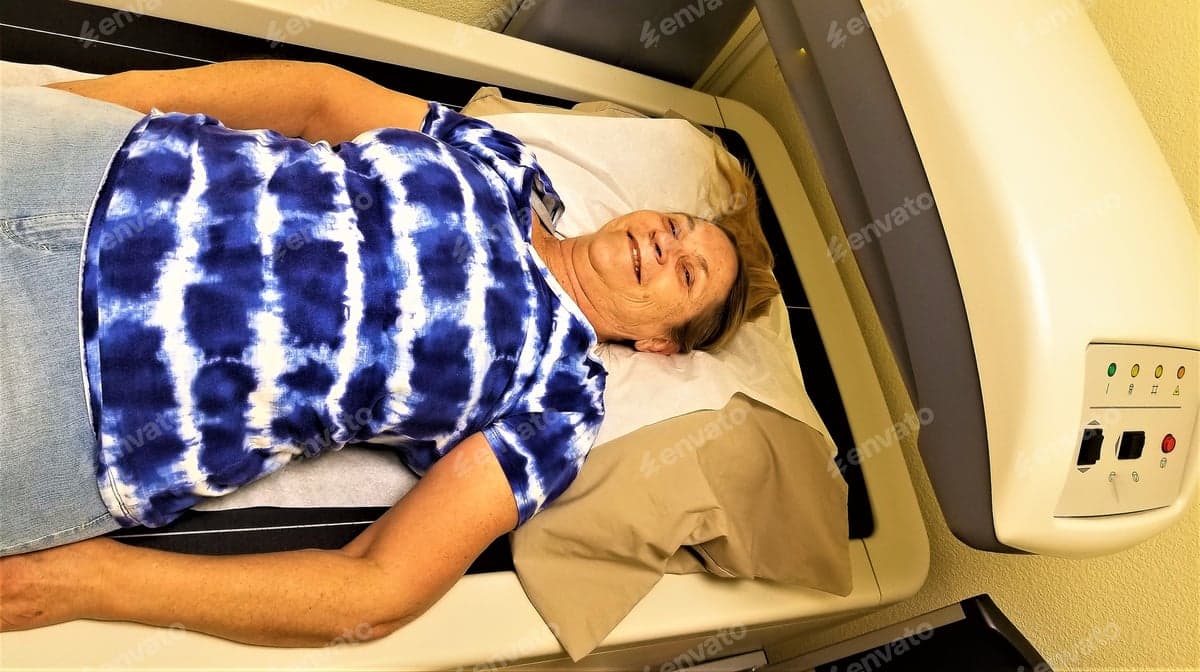
A practical tool anchors the measurement-first approach: the DEXA scan (also written DXA).
The conversation treats DEXA as accessible, relatively quick, and low radiation compared with many other imaging tests. It is portrayed as something a person can do annually to track trends.
Research-oriented sources similarly describe DXA as a standard method for assessing bone density. For clinical background, see the International Society for Clinical DensitometryTrusted Source, which outlines how DXA is used and interpreted.
One colorful detail is that mobile DEXA vans exist, which makes the test feel less like a hospital procedure and more like routine screening.
Expanded DEXA, the “bonus” metrics people forget
A specific tip from the episode: if you are going to do a DEXA anyway, consider an expanded DEXA that estimates more than bone.
The expanded report can include:
A key point here is not that DEXA is flawless. It is that DEXA offers a repeatable, objective snapshot that can reduce self-deception.
Pro Tip: If you are using DEXA for trend tracking, try to repeat the scan under similar conditions each time (similar hydration, similar time of day, similar pre-scan routine). Small changes in conditions can nudge body composition estimates.
Why bones reflect your whole lifestyle, sleep, exercise, nutrients
Bone health is often marketed as calcium plus maybe vitamin D. The episode pushes back hard on that oversimplification.
Bones are portrayed as a living system that is constantly taking cues from your behavior. The cue list in the conversation is consistent and practical: sleep quality, load-bearing exercise, adequate minerals and vitamins, and lower inflammation.
Sleep gets special emphasis. The claim is that a lot of remodeling happens during high-quality sleep, and that chronic sleep deprivation is associated with reduced BMD.
While the episode does not cite a specific paper, sleep and bone health is an active research area. For a general, reputable overview of osteoporosis risk factors and prevention strategies that include lifestyle elements, see Mayo Clinic’s osteoporosis overviewTrusted Source.
The “use it or lose it” principle is hammered home through the astronaut example and through the idea that inactivity can accelerate loss.
This is also where the episode introduces a motivating contrast: you can be meticulous with supplements, but if you do not provide the mechanical stimulus, bone may not respond the way you hope.
The biggest lever, load-bearing stimulus (not just calcium)
The most actionable section of the discussion is also the simplest.
If you want stronger bones, you need impact or loading.
The conversation draws a parallel to muscle: eating protein does not automatically build muscle without resistance training. In the same way, consuming calcium does not guarantee bone deposition without mechanical stimulus.
This aligns with established guidance. Weight-bearing and muscle-strengthening exercise are widely recommended to support bone health across the lifespan, including by organizations like the National Osteoporosis FoundationTrusted Source.
What “weight-bearing” means in real life
A practical clarification is offered: cycling is not weight-bearing in the way bones need, because it reduces impact forces through the skeleton.
Weight-bearing and impact examples discussed include walking, jogging, running, jumping, stair stepping, and lifting weights. Even an elliptical may provide enough loading to help, though it is lower impact.
One specific, beginner-friendly suggestion stands out: turn walking into a more meaningful bone stimulus by adding load, for example with a backpack containing weight.
That is a simple lever because it does not require a gym, and it can be scaled gradually.
“I don’t want to run”, a joint-friendly workaround
A very practical personal strategy is described: using an elliptical plus a weighted vest.
This is positioned as a way to increase skeletal loading while reducing joint pounding that some people feel with running.
It is not presented as the only approach, and the tone suggests that, if possible, a broader program would include resistance training movements like squats and deadlifts, plus some plyometrics.
Do vibration plates help bone density?
Vibration plates are mentioned as a trend, and the take is cautious but positive: they may help increase bone mineral density, especially for people who cannot do other weight-bearing activities.
However, they are not framed as a first choice because traditional weight-bearing and resistance training bring additional benefits (cardiometabolic fitness, strength, function).
What the research shows: Whole-body vibration has been studied for bone outcomes with mixed results depending on population and protocol. It may be useful in certain groups, but it is not a universal replacement for resistance and impact training. A starting point for evidence-based context is this overview of exercise approaches for bone health from the National Osteoporosis FoundationTrusted Source.
A nutrient stack perspective, what the Blueprint list emphasizes
The episode shifts into a very specific, product-linked list of nutrients that are framed as supportive of bone health.
Rather than speaking in vague terms, the conversation names particular ingredients and, in one case, a dose.
Here is the nutrient framing as presented:
Two things are distinctive about this perspective.
First, it treats bone as a multi-nutrient system, not just calcium. Vitamin D and vitamin K are framed as part of the mineral handling story, and magnesium is treated as foundational.
Second, it ties nutrients to measurement. The implicit promise is not “take this because it is healthy,” but “take what is targeted, then verify via biomarkers like DEXA.”
From a research standpoint, many of these nutrients have plausible roles in bone metabolism, but the strength of evidence varies by nutrient, baseline deficiency, and population. For example, vitamin D is essential for calcium absorption, and major health organizations discuss its role in bone health, including the NIH Office of Dietary Supplements vitamin D fact sheetTrusted Source.
Important: More is not always better with supplements. Fat-soluble vitamins like D and K can accumulate, and minerals can interact with medications or medical conditions. If you are considering higher-dose supplementation, or you have kidney disease, parathyroid disease, or you take blood thinners, involve a clinician.
Protein and amino acids, the myth the conversation pushes back on
Even though the transcript segment is heavier on bone density, it repeatedly hints at a broader theme: nutrients do not substitute for stimulus.
Amino acids and protein are treated like tools, not magic. The episode uses the analogy: eating 200 grams of protein per day does not automatically make you muscular unless you also lift.
The same caution is applied to bone. Calcium intake without loading may not translate to stronger bones.
This is a useful myth-buster because it is easy to over-focus on a single nutrient. People often search for the one supplement that “builds bone,” then underinvest in training, sleep, and overall energy intake.
At the same time, adequate protein is generally considered important for maintaining muscle and supporting function as you age, which indirectly supports bone by reducing fall risk and improving strength. For a mainstream overview of protein’s role in healthy aging, see Harvard’s nutrition resource on protein at Harvard T.H. Chan School of Public HealthTrusted Source.
Dad bod science, what the mouse data suggests about visceral fat
The episode opens with a side conversation that is surprisingly relevant to bone and longevity: “dad bod” physiology.
The unique angle is not moralizing about discipline. It is a mechanistic hypothesis based on a mouse study.
The mouse finding described is that midlife male mice may gain visceral fat partly through new fat cell formation, not just enlargement of existing fat cells. A “stem-cell-like” population in visceral fat is described as proliferating around an age equivalent to about 30 to 40 in human males.
That is a different story than “you got lazy.” It suggests a biological shift that may make midlife fat gain more likely, even before accounting for time pressure, sleep disruption, or lifestyle changes that often come with parenting.
The discussion also notes that the same phenomenon was not observed in female mice in that study, and it ties this to the idea that men experience a testosterone drop after having children.
An evolutionary framing (battery theory)
A distinctive part of the conversation is the evolutionary speculation.
The idea is that, in a hunter-gatherer context, a father might need a larger energy reserve, a “bigger battery,” to support greater hunting and gathering demands after children arrive. At the same time, reduced testosterone after fatherhood is framed as an adaptation that may shift priorities away from mate seeking and toward caregiving.
This is not presented as settled science. It is presented as a coherent story that could explain why the “dad bod” pattern seems common.
Can you stop it?
The practical advice offered is familiar but framed as proactive: sleep, exercise, and healthy eating.
A more specific mechanistic teaser is also included. The episode mentions a signaling molecule implicated in the mouse work, and says that, at present, the only known influence on that signaling pathway is polyphenols, plant compounds.
That leads to a blunt takeaway: eating plants is good for you.
Polyphenols are abundant in foods like olive oil and cocoa powder, which are specifically mentioned as prominent sources in the dietary pattern being discussed.
For a general evidence-based overview of polyphenols and health, see Harvard’s overview of plant compounds and dietary patterns at Harvard Nutrition SourceTrusted Source.
Quick Tip: If you are trying to reduce visceral fat risk, do not rely on the scale alone. Waist circumference, strength levels, sleep consistency, and labs like triglycerides and fasting glucose often provide a more useful picture than weight by itself.
Putting it together, a measurement-first bone health playbook
This section turns the episode’s philosophy into a practical template.
It is not a “perfect protocol.” It is a way to decide what to do next based on objective feedback.
How to build a bone-focused plan (without guessing)
Pick your measurement and timing. A DEXA scan is the tool highlighted, typically repeated about yearly to track trends rather than day-to-day fluctuations. If you are also working on body composition, consider the expanded DEXA report to trend muscle and visceral fat estimates.
Prioritize the stimulus first. The conversation’s hierarchy is clear: do weight-bearing and resistance training before obsessing over minerals. If you are new, start with walking plus load (weighted backpack), then progress to resistance training and, if appropriate, plyometrics.
Support the stimulus with recovery. Sleep is treated as a major remodeling window. If your sleep is chronically short or fragmented, it is framed as a direct threat to bone density trends.
Fill nutrient gaps strategically. The nutrient list emphasized includes calcium, magnesium, vitamin D, vitamin K1 and K2, zinc, boron, selenium, collagen, and a complete amino acid profile. The one explicit dose mentioned is 2.5 grams of creatine in a daily mix. If you supplement, do it with your clinician’s awareness and revisit labs and DEXA trends.
Re-check and adjust. The whole point of this approach is iteration. If BMD is trending down, you adjust training stimulus, sleep, energy intake, and medical evaluation rather than arguing online about whose diet is best.
A mostly-bullets “starter menu” for bone stimulus
If you want one section you can screenshot, this is it.
A final practical reminder from the episode is that bone loss can happen quickly when stimulus disappears, the astronaut example is the extreme version, but the principle applies on Earth too.
Resource Callout »MORE: If you are tracking bone density, consider keeping a simple “Bone Inputs Log” for 8 weeks, sleep hours, resistance sessions, impact sessions, daily steps, and any supplement changes. Trend lines often make more sense when you can see what changed.
Expert Q&A Box
Q: If I take calcium and vitamin D, do I still need to lift weights for bone density?
A: The episode’s stance is that supplements without stimulus are limited. Minerals can support bone, but mechanical loading is the signal that tells the body where to deposit and maintain bone tissue.
A practical approach is to pair adequate nutrition with weight-bearing movement you can do consistently, then verify with objective tracking like DEXA over time.
Health educator summary based on the podcast discussion (measurement-first approach)
Expert Q&A Box
Q: How often should I get a DEXA scan if I am trying to improve bone density?
A: The conversation treats annual DEXA as a reasonable cadence for tracking, because bone changes tend to be gradual and trend-based. If you have a medical diagnosis like osteoporosis, your clinician may recommend a different schedule based on risk and treatment decisions.
Health educator summary based on the podcast discussion (DEXA as an accessible biomarker)
Key Takeaways
Frequently Asked Questions
- What is bone mineral density in simple terms?
- Bone mineral density is an estimate of how much mineral is packed into your bones, which relates to bone strength. In the podcast’s framing, it also reflects broader lifestyle factors like exercise loading, sleep quality, and nutrient adequacy.
- Is a DEXA scan only for bone density?
- No. The discussion highlights that an expanded DEXA can also estimate lean mass and fat distribution, including visceral fat trends, which can be helpful for tracking body composition over time.
- Does cycling count as weight-bearing exercise for bones?
- In this episode’s explanation, cycling is not considered weight-bearing in the way bone needs because it reduces impact through the skeleton. Walking with added load, resistance training, and impact activities are emphasized instead.
- Do vibration plates improve bone density?
- The take here is that vibration plates may help, especially for people who cannot do other weight-bearing activity. They are not presented as a first choice because traditional exercise offers broader fitness and metabolic benefits.
- Is “dad bod” just about lifestyle choices?
- The episode discusses a mouse study suggesting that midlife male visceral fat gain may involve new fat cell formation, not only bigger existing cells. It still emphasizes that sleep, exercise, and diet can matter, even if biology nudges the trend.
Get Evidence-Based Health Tips
Join readers getting weekly insights on health, nutrition, and wellness. No spam, ever.
No spam. Unsubscribe anytime.