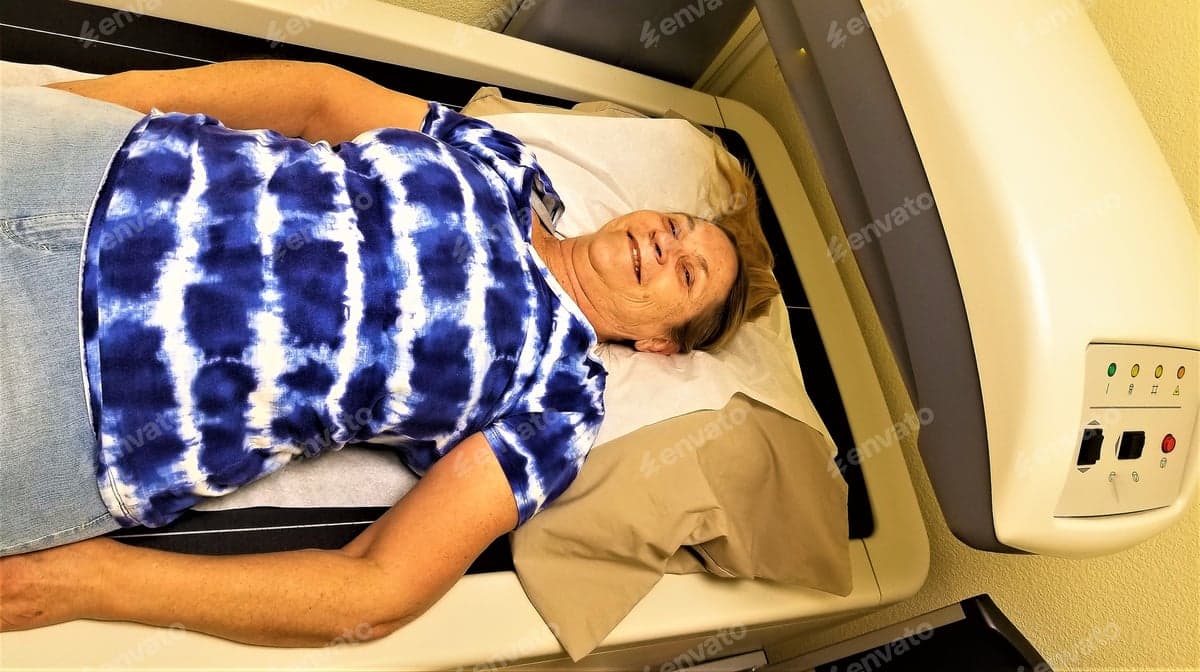
FRAX vs DEXA: A Practical Guide to Fracture Risk

Summary
FRAX is a free questionnaire that estimates your 10-year risk of hip fracture and major osteoporotic fracture using age, sex, BMI, prior fractures, family history, smoking, alcohol, certain conditions, and sometimes bone density. The video’s core message is practical: bone density matters, but it is not the whole story. FRAX can help you see how multiple everyday factors stack together, and it can guide whether you should simply maintain habits, monitor risk, or talk with a clinician about further evaluation and options.
🎯 Key Takeaways
- ✓FRAX estimates 10-year risk using multiple real-life factors, not just bone density.
- ✓Age and prior osteoporotic fracture are major risk drivers, and several risks multiply together.
- ✓Low BMI (especially under 20) can raise fracture risk, frailty and nutrition often matter in older adults.
- ✓DEXA is still the gold standard for measuring bone density, but FRAX can add context for decision-making.
- ✓FRAX has limitations, it does not directly capture fall risk, bone quality, or medication response.
Fracture risk is not the same thing as bone density.
That is the unique, practical lens in this video: you can have a number from a DEXA scan, but your day-to-day risk of breaking a hip, wrist, shoulder, or vertebra is shaped by a stack of factors that live outside the scan.
The tool at the center of the discussion is FRAX (often pronounced “fracks” in the video, like the sound a bone might make). It is a free questionnaire that estimates your 10-year risk of two outcomes: hip fracture and major osteoporotic fracture (typically hip, clinical spine, wrist, or shoulder).
The big takeaway: fracture risk is bigger than bone density
The framing here is simple and a little provocative: could a survey predict fracture risk better than a DEXA scan? Maybe.
Not because DEXA is useless. It is not. DEXA remains the standard way to measure bone mineral density.
But the point is that fractures happen to people, not to numbers.
A person’s risk is influenced by age, body size, smoking, alcohol intake, prior fractures, family history, certain medications, and inflammatory disease. FRAX tries to pull those threads into one estimate.
Did you know? Better risk reporting can change clinical decisions. Research comparing different reporting approaches suggests that translating bone density results into fracture risk can improve how actionable the information feels for patients and clinicians, compared with a T-score alone (fracture risk reporting vs T-scoreTrusted Source).
A useful way to think about this video’s perspective is: DEXA measures density, FRAX estimates risk.
And risk is what you actually care about.
What FRAX is actually doing (and why people like it)
FRAX is a questionnaire that asks a set of yes or no questions plus a few basic measurements (age, sex, height, weight). It then uses an algorithm to estimate your probability of fracture over the next decade.
The discussion highlights a key advantage: it is practical. You can answer the questions quickly, at home, and get an estimate that can help you decide what to do next.
It is also designed to be country-specific, because fracture rates and population risks vary. The video notes you can find a version “for your country,” and it is free to use.
A quick note on “WHO” and FRAX
The speakers mention the tool’s origins and a sometimes-confusing association with the World Health Organization. The practical takeaway, though, is not about branding. It is about using the tool that exists now.
If you want to explore it yourself, you can start here: the official FRAX site is hosted by the University of Sheffield (FRAX toolTrusted Source).
Walking through the FRAX questions, and what each one means
This section follows the video’s structure closely, because the value of FRAX is in the specific variables it includes.
Some factors are modifiable. Some are not.
And a few are surprisingly easy to overlook until you see them listed.
1) Age
Age is the heavy hitter.
The video gives an intuitive example: being 70 vs 50 can raise fracture risk by roughly 4 to 5 times. It is also the least modifiable factor, short of a time machine.
This perspective emphasizes a practical reality: even if you do everything “right,” fracture risk can still rise with age. That is not failure, it is biology.
2) Sex assigned at birth
The questionnaire asks whether you were born male or female.
The video’s nuance matters here. The difference is not uniform across life. It is described as smaller from about 30 to 50, then more pronounced after menopause.
Between roughly 50 to 70, women are described as having about 2.5 times the fracture risk compared with men. After about 80, the gap narrows as men lose bone faster and “catch up.”
3) Height and weight (BMI)
Height alone is not the issue.
The combination of height and weight, expressed as BMI, is what matters in FRAX.
This is one of the more “everyday” insights in the video: people hear “lose weight” constantly, but being too thin can also be a problem for bones.
The discussion connects this to what clinicians often see, older adults who are smaller, frailer, and sometimes dealing with nutrition challenges, access to food, or reduced appetite.
Pro Tip: If your BMI is low, do not assume it is automatically “healthy.” Ask a clinician to review nutrition, strength, and fall risk together, because frailty and low body mass can travel as a package.
4) Prior fracture (but not any fracture)
FRAX is not asking whether you ever broke a bone in a high-speed crash.
It is asking about a low-trauma osteoporotic fracture, for example, breaking a wrist from a fall from standing height.
In the video, a prior osteoporotic fracture is described as a big risk factor that can double your risk of another fracture in the next 10 years.
This is why clinicians take “I broke my wrist last year” seriously, especially when it happened from a simple fall.
5) Parent hip fracture
This question is specific: did a parent break a hip?
The video’s tone here is memorable because it captures the emotional reality. Knowing a parent broke a hip can make you nervous about your own.
Risk-wise, it is described as about 1.5 times higher.
You cannot change genetics or family history. But you can use it as a reason to get proactive about strength, home safety, vision checks, and medication reviews.
6) Smoking
Smoking is described as a 1.3 times risk multiplier.
The point is blunt: it is modifiable, and it is worth addressing.
The speakers also raise an open question about vaping: it may be less harmful than smoking, but it is not the same as “nothing,” and the long-term bone impact is still being clarified.
7) Alcohol (more than 3 units per day)
FRAX uses a threshold: more than 3 units per day.
The video acknowledges a real-world limitation, it does not perfectly capture binge patterns (for example, “21 on the weekend and nothing during the week”). Still, heavy intake is treated as a risk marker.
The risk increase given is about 1.4 times.
There is also a practical layer: alcohol can increase fracture risk both through biology (for example, chronic inflammation and bone turnover) and through mechanics (more falls, worse balance).
8) Rheumatoid arthritis
FRAX asks about rheumatoid arthritis.
The video describes it as raising risk about 1.5 to 2 times. It is not only about bone density, it is also about systemic inflammation and the reality that bones can be “softer,” which clinicians notice even during joint replacement surgery.
The speakers mention newer biologic therapies, but they do not claim these erase fracture risk. Many people with RA still end up on bone-protective medications based on overall risk.
9) Corticosteroids (especially prednisone)
FRAX asks about chronic steroid use, particularly prednisone.
Risk depends on dose and duration, and the video describes it as potentially 1.5 to 2 times higher.
A key nuance: this is not about anabolic steroids. It is about corticosteroids used for conditions like polymyalgia rheumatica or severe reactive airway disease.
The discussion is balanced: these drugs can be lifesaving and effective, but they have consequences for bone. Clinicians often aim for the lowest effective dose and taper when possible.
The video also distinguishes systemic steroids from local cortisone injections into joints, which are generally more localized and not the same as long-term systemic exposure.
10) Secondary osteoporosis (other medical conditions)
FRAX includes a category often called secondary osteoporosis, meaning medical conditions that can affect bone.
The video mentions examples like diabetes and thyroid disease, and notes there is a list within the tool.
The risk increase is described as around 1.2 to 1.3 times. Importantly, the speakers note that if you have a bone mineral density test result, that result may “override” or reduce the need to count secondary osteoporosis as a separate checkbox in the model.
11) Bone mineral density (optional input)
FRAX can be run with or without bone density, depending on what information you have.
The video reinforces that DEXA is currently the gold standard for measuring bone mineral density, while also teasing a future discussion about other technologies.
If bone mineral density is very low, for example a T-score at or below -2.5, the video describes risk as increasing by about two times.
What the research shows: Bone density measurement site matters, and different approaches to measuring bone density can change fracture risk assessment. This is one reason risk tools and measurement strategies are often considered together, not in isolation (single-site vs multisite bone density measurementTrusted Source).
How FRAX and DEXA fit together (not either-or)
The video’s most useful comparison is not “FRAX vs DEXA.” It is “FRAX plus DEXA when appropriate.”
DEXA tells you about density. FRAX tells you how multiple risk factors combine into a probability.
Here is the practical trade-off:
This approach aligns with broader clinical thinking. Major medical centers discuss fracture risk as a combination of bone strength and other clinical factors, and they highlight the growing toolbox for prediction beyond bone density alone (Mayo Clinic on new fracture risk toolsTrusted Source).
One more nuance from the video: FRAX’s internal algorithm is proprietary. That means you cannot easily “do the math” yourself from the multipliers. Still, the speakers give ballpark multipliers to help you understand which factors tend to matter more.
How to use your FRAX result in real life
The video lays out a simple, action-oriented way to interpret the output.
You are not trying to predict the future with certainty. You are trying to make better decisions with the odds you have.
FRAX typically categorizes risk into broad bands:
Those cutoffs are presented in the video as practical thresholds, not as a diagnosis.
The “multiplier” mindset
One of the most distinctive teaching points in the video is how risks can stack.
It is not just that smoking adds a little and low BMI adds a little. The conceptual model is that risk factors can multiply.
So if one factor raises risk 1.5 times and another raises risk 2 times, together they can create a bigger combined risk than either alone.
That is why a questionnaire can feel more “real life” than a single scan result.
Important: FRAX gives a probability, not a promise. A higher score does not mean you will fracture, and a lower score does not guarantee you will not. Use it as a decision aid, then discuss next steps with a clinician who can interpret it in context.
FRAX blind spots: what it does not capture well
The video is clear that FRAX is helpful, but incomplete.
That honesty is part of its unique perspective.
Here are the main limitations highlighted:
Q: If FRAX does not include falls, is it still worth doing?
A: Yes, because it captures major clinical risk factors that often get missed when people focus only on a T-score. But if you have frequent falls, dizziness, balance issues, neuropathy, or mobility limits, you should treat fall prevention as its own priority alongside FRAX.
Talking with Docs clinicians (video perspective)
Research is moving in this direction, toward tools that incorporate more information about bone structure and strength. For example, investigators have explored fracture risk assessment approaches using high-resolution peripheral imaging to add detail beyond standard bone density (HR-pQCT fracture risk assessment toolTrusted Source).
A practical, action-oriented plan to lower fracture odds
The video ends with a direct message: you are in charge of your own health.
That does not mean you can control everything (you cannot change age or genetics). It does mean you can act on the parts that are modifiable, and you can bring better information to your next appointment.
How to run FRAX and bring it to your clinician
Gather your basics first. Have your height, weight, and age ready. If you know whether a parent had a hip fracture, write it down.
Answer the yes or no questions honestly. Smoking and alcohol intake matter here, and the tool uses a specific threshold for alcohol (more than 3 units per day).
If you have a recent DEXA result, use it if appropriate. Adding femoral neck bone mineral density can refine the estimate for some people.
Save the output. Take a screenshot or print the results so you can discuss the numbers and categories with your clinician.
Ask a focused question. For example: “Given my FRAX risk band, what should we do about fall risk, exercise, nutrition, and whether I need further testing?”
»MORE: Consider creating a one-page “fracture risk snapshot” for appointments. Include FRAX results, prior fractures, current medications (especially steroids), and any recent falls.
Everyday changes that match the video’s risk factors
This is not about perfection. It is about moving the biggest levers you can.
If you smoke, get help quitting. The video frames smoking as a modifiable risk that raises fracture risk. Many people do better with structured support (counseling, quitlines, or clinician-guided options) than with willpower alone.
If alcohol is above the FRAX threshold, treat it as both a bone and fall issue. Cutting down may lower inflammation-related impacts and may reduce falls from impaired balance.
If you are underweight or trending frail, prioritize strength and nutrition. The video repeatedly returns to the clinical reality of smaller, older adults who break hips. A clinician or dietitian can help assess protein intake, vitamin D status, and whether unintentional weight loss needs investigation.
If you have rheumatoid arthritis or need prednisone, plan ahead. Ask your clinician how often bone density should be monitored, whether calcium and vitamin D intake is adequate, and whether additional prevention strategies are appropriate for your overall risk.
A quick home safety checklist (because falls matter)
FRAX does not calculate fall risk, but you can.
Q: If my parent broke a hip, what should I do differently?
A: You cannot change that history, but you can treat it as a signal to get serious about prevention earlier. Ask about FRAX and DEXA timing, build leg strength and balance, and make your home environment safer, because hip fractures often follow a fall.
Talking with Docs clinicians (video perspective)
Key Takeaways
Sources & References
Frequently Asked Questions
- Is FRAX better than a DEXA scan for predicting fractures?
- FRAX and DEXA answer different questions. DEXA measures bone mineral density, while FRAX estimates 10-year fracture probability using multiple clinical factors, and sometimes includes bone density too.
- What counts as a “major osteoporotic fracture” in FRAX?
- In the video’s framing, the major fractures are the “big four,” wrist, shoulder, hip, and spine (back). FRAX focuses on these because they are common and strongly linked to osteoporosis-related fragility.
- Why does low BMI increase fracture risk?
- Lower body mass can be linked with less bone and muscle reserve, and in older adults it can overlap with frailty and nutrition issues. The video notes that BMI under about 20 increases risk, and under 18.5 increases it further.
- Does FRAX include fall risk or balance problems?
- Not directly. The video highlights this as a key limitation, so people with dizziness, mobility issues, or frequent falls should address fall prevention separately with a clinician.
- If I take prednisone, does that automatically mean I will fracture?
- No. The video describes prednisone as a dose-dependent risk factor that can raise fracture risk, but FRAX provides probabilities, not certainty. It is worth discussing bone monitoring and prevention strategies with your clinician.
Get Evidence-Based Health Tips
Join readers getting weekly insights on health, nutrition, and wellness. No spam, ever.
No spam. Unsubscribe anytime.