Jump Training for Osteopenia: A 12-Week Plan
Summary
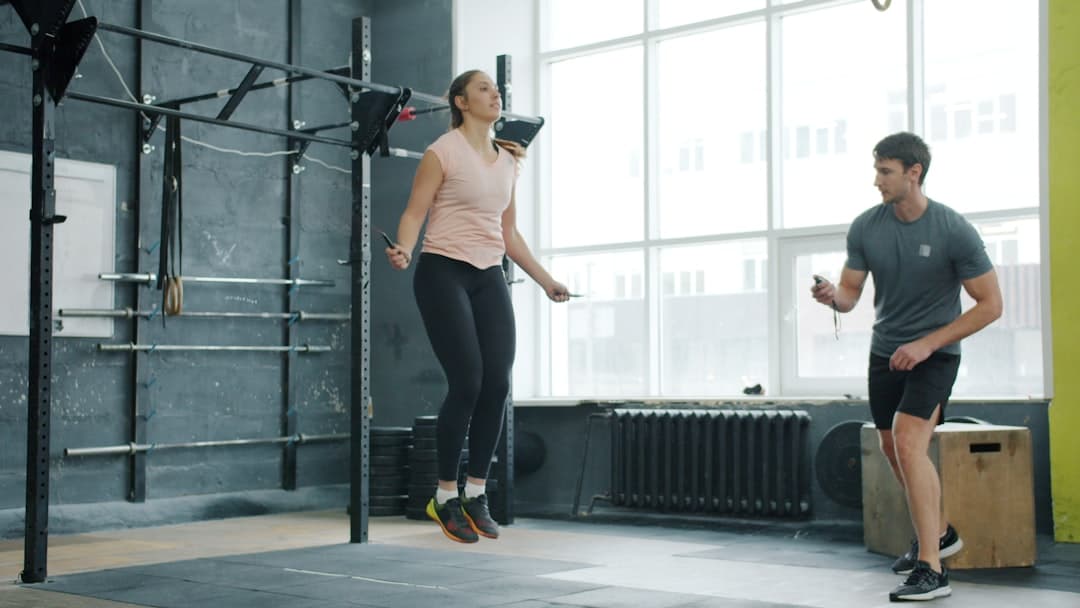
A striking takeaway from Dr. Stacy Sims is that short, targeted impact can be enough to meaningfully challenge bone. She highlights research from a bone scientist colleague suggesting **10 minutes of jumping, three times per week** (jump rope or jumping in place) may move some osteopenic women into a normal bone density range over **12 weeks**. The unique twist is technique: landing with a **stiffer leg** rather than deeply bending the knees, so the skeleton, not just the muscles, absorbs the impact signal. This same jump block can also double as high-intensity work that supports **blood sugar and insulin** goals.

If you only remember one thing from this discussion, make it this: 10 minutes of jumping, three times per week is presented as enough stimulus to meaningfully challenge bone in a relatively short window.
The big idea: 30 minutes a week of impact
This perspective centers on a very specific dose, 10 minutes, 3 times weekly, using jump rope or simply jumping in place. The claim highlighted is that, in a research setting, this kind of impact exposure moved women with osteopenia into a normal bone density range over 12 weeks.
That is a bold, motivating message because it reframes bone work as something you can do without long workouts or complicated equipment.
Did you know? Bone is living tissue that responds to mechanical loading. Weight bearing and muscle forces are key signals that can help maintain bone strength over time, according to the NIH Osteoporosis overviewTrusted Source.
Why “stiff-leg” landings might matter for bones
A unique detail here is technique. Instead of the common coaching cue to “bend your knees to absorb impact,” the approach described emphasizes landing with a stiffer leg (not locked, but less of a deep knee bend) so more of the impact is transmitted through the skeleton.
Mechanistically, bones adapt to strain. When impact forces travel through the tibia, femur, and hip, bone cells can respond by remodeling tissue, especially when the loading is novel, appropriately intense, and repeated consistently. This aligns with broader guidance that impact and resistance exercise can help support bone health, including in people at risk for low bone density, as discussed by the Royal Osteoporosis SocietyTrusted Source.
What the research shows: Exercise that includes impact or higher force loading is commonly recommended as part of an osteoporosis prevention strategy, and it may help maintain or improve bone-related outcomes in some people, per the Bone Health and Osteoporosis FoundationTrusted Source.
How to try the 10-minutes, 3-days plan safely
This is where practicality matters most. The goal is to get the bone-loading signal without turning the session into a pain flare or an injury.
Important: If you have known osteoporosis, a history of fragility fracture, significant joint arthritis, pelvic floor symptoms (leaking, heaviness), or you are unsure about your risk, consider checking in with a clinician or physical therapist before starting impact training.
Bone goals and blood sugar goals can overlap
Another key insight is that this jump block can double as your high-intensity work. In other words, you are not necessarily adding more training, you are choosing a format that hits multiple targets.
High-intensity intervals can improve metabolic markers like insulin sensitivity in many people, especially when paired with regular activity and strength training. The American Diabetes AssociationTrusted Source notes that physical activity can help with blood glucose management, and interval-style work is one option when appropriate.
A simple way to combine both goals
If 10 straight minutes feels intimidating, think of it as a structured interval session where the “hard” part is jumping and the “easy” part is walking or marching.
Q: Is jump training only for younger or already-fit people?
A: Not necessarily. The dose described is small, and jumping in place can be scaled with shorter sets and longer rests. Still, impact is not right for everyone, so it is smart to individualize based on injury history and bone status.
Dr. Stacy Sims, PhD
Key Takeaways
Frequently Asked Questions
- Can jump rope count, or does it have to be jumping in place?
- Both are presented as valid options. The main goal is consistent impact loading for about 10 minutes, three times per week, using a style you can repeat safely.
- Why not bend the knees to absorb impact?
- The viewpoint emphasized is that a stiffer landing may transmit more of the impact signal through bone. Deeply absorbing every landing may reduce the skeletal loading the protocol is trying to create.
- How soon might someone see changes in bone density?
- The specific timeline discussed is 12 weeks in a research context. Real-world results can vary based on baseline bone density, age, nutrition, hormones, training history, and adherence.
Get Evidence-Based Health Tips
Join readers getting weekly insights on health, nutrition, and wellness. No spam, ever.
No spam. Unsubscribe anytime.