Best Workout Split for Muscle, a Science-Based Take

Summary
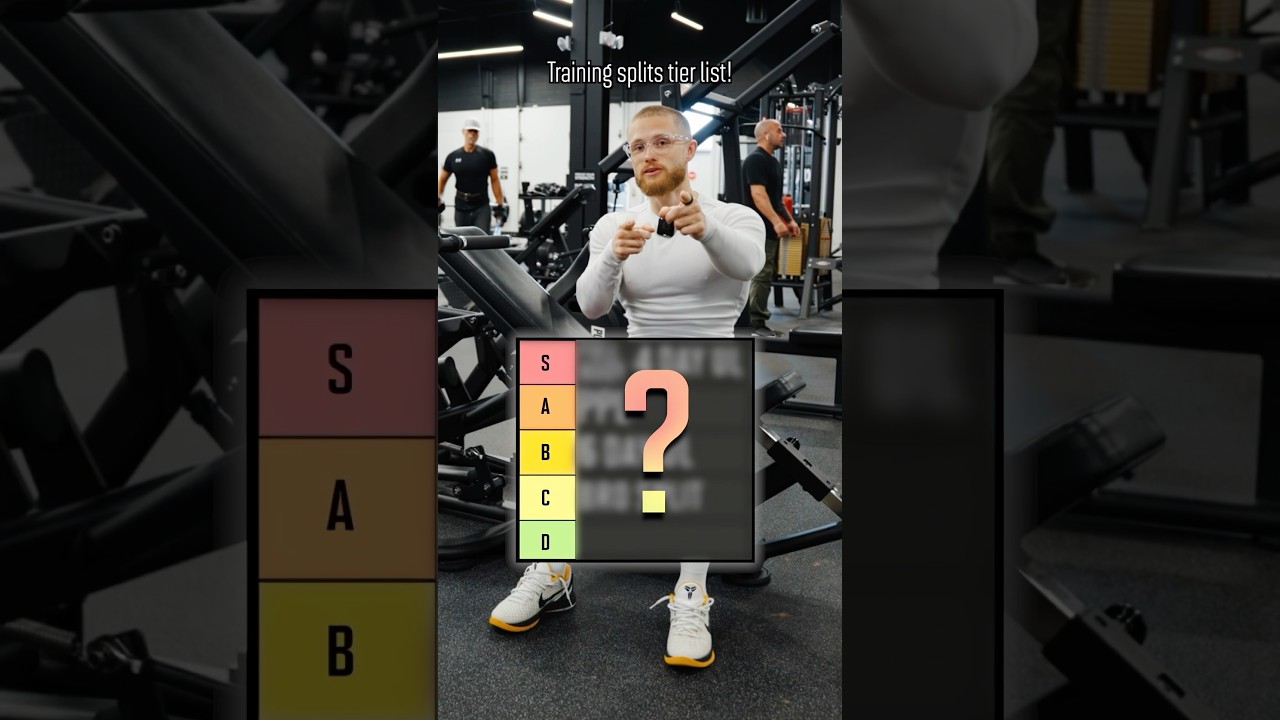
If you have ever bounced between push pull legs, a bro split, and full body training, the most useful question is not, “Which is perfect?” It is, “Which can I repeat consistently?” This video ranks common splits with a practical lens: full body and 4-day upper lower land in the top tier for most people, while push pull legs is strong but can be a lot for beginners. The most unique takeaway is the “S tier plus” hybrid the speaker used in a 365-day experiment, where they reported their best gains in years.
You miss a Monday workout, then Wednesday runs late, and suddenly your “perfect program” is off the rails.
This perspective keeps it simple: the best workout split is the one you will actually stick with.
If your schedule is chaotic, your split matters
A training split is just how you organize muscle groups across the week. The point is to get enough hard sets, recover, then repeat.
What’s interesting about the video’s approach is that it grades splits based on real-life friction, not just theory. A plan that demands 6 days a week might be “optimal” on paper, but it can be a mismatch for beginners, busy lifters, or anyone who struggles to recover.
Pro Tip: Before choosing a split, decide how many days you can train consistently for the next 8 to 12 weeks. Build the split around that number, not around hype.
The video’s tier list, what each split is best for
Push pull legs (PPL)
Push pull legs is framed as “great” and something the speaker ran for years. The catch is practical: it can be too upper-body focused, and doing it 6 days per week can be “a bit much” for beginners. That lands it in A tier in this ranking.
Bro split
It “still works,” but the critique is pointed: you usually do not need seven whole days to recover a muscle. It also tends to overemphasize upper body, so it lands in C tier.
Did you know? Many training overviews suggest that training a muscle more than once per week can be an efficient way to build strength and size for a lot of people, depending on total weekly volume and recovery (ACSM resistance training guidanceTrusted Source).
Full body splits
Two to three full body workouts per week are labeled S tier for busy lifters. For advanced lifters, the discussion highlights that high-frequency full body can be “awesome,” with one guardrail: do not do too much per session.
Upper lower splits (4-day and 6-day)
A 4-day upper lower is placed in S tier, and it is the split the speaker uses during a cut, with an added arm and shoulder day.
A 6-day upper lower is rated high B tier. It can suit advanced lifters chasing high volume, but “three leg days a week is brutal,” and it is usually too much for beginners.
The hybrid that made the speaker’s best gains
The most unique moment is the “UL PPPpl” hybrid. The speaker says they ran it during a 365-day experiment and made the best gains they had made in years, calling it S tier plus.
How to choose your split in 3 simple steps
Pick your weekly training days first. If you can train 2 to 3 days, full body is hard to beat for coverage. If you can train 4 days, upper lower is a clean, repeatable structure.
Match volume to your recovery. This view emphasizes not cramming “too much per session,” especially with full body. A good sign you are overdoing it is when performance drops across multiple workouts, not just one bad day.
Choose the plan you will repeat. The speaker’s bottom line is blunt: all these splits can work “as long as you do.” Consistency is the multiplier.
Q: Is 6 days per week automatically better for muscle?
A: Not automatically. More days can help you spread weekly work out, but it also raises the recovery and scheduling demands. If 6 days makes you miss workouts or train half-recovered, a 3 to 4 day split may produce better results over time.
Jordan Lee, CSCS
What the research supports (without overcomplicating it)
The research conversation usually comes back to a few themes: total weekly sets, effort level, and progressive overload. Frequency can help, but it is not magic by itself.
What the research shows: Reviews often find that training a muscle group at least twice per week can be an efficient approach for hypertrophy when volume is equated, although individual response and program design matter (Schoenfeld et al., 2016 meta-analysisTrusted Source).
Practical translation: if a bro split makes it hard to accumulate quality weekly volume for legs or back, you may grow better on full body, upper lower, or PPL. If a 6-day plan crushes your recovery, dialing back can be the more “science-based” move.
»MORE: Want a simple template? Create a one-page “split cheat sheet” with your weekly days, main lifts, and a cap on exercises per session.
Key Takeaways
Frequently Asked Questions
- Is a full body split enough to build muscle if I only train 2 to 3 days per week?
- For many people, yes, especially if you train consistently and keep progressing over time. The key is to avoid cramming too many exercises into one session so you can maintain good effort and form.
- Why does the video rank the bro split lower?
- The main criticism is that you often do not need a full seven days to recover a muscle, and bro splits can over-focus on upper body. That can make it harder to balance weekly training volume across the whole body.
- How do I know if a 6-day split is too much for me?
- Warning signs include consistently declining performance, persistent soreness that affects movement quality, and difficulty sticking to the schedule. In that case, reducing days or spreading volume differently may be more sustainable.
Get Evidence-Based Health Tips
Join readers getting weekly insights on health, nutrition, and wellness. No spam, ever.
No spam. Unsubscribe anytime.