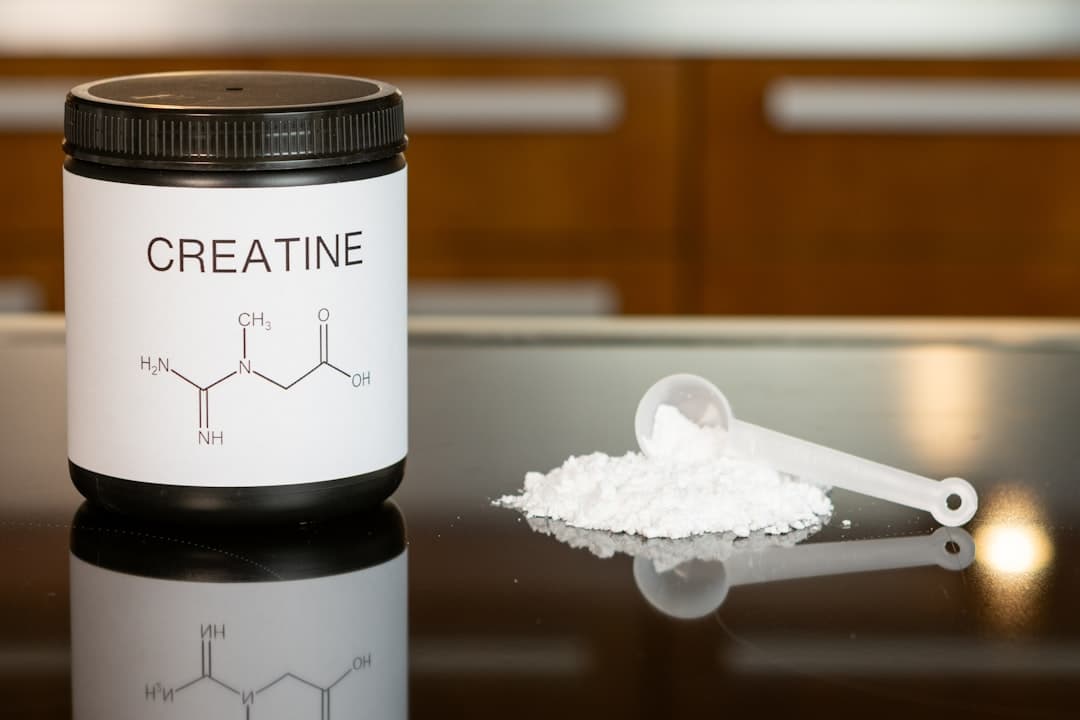
Creatine for Women Over 40, Dosing That Makes Sense
Summary
Creatine is often treated like a gym bro supplement, but this video frames it as a daily “cellular battery booster” for muscle, recovery, and even focus, especially for women over 40. The core approach is simple: pick a form you tolerate, take it consistently, and track body composition instead of obsessing over scale weight. The expert favors creatine HCL for smaller dosing (around 750 mg for many women) and less bloating, then “titrates up” on harder training days, poor sleep, or travel. Expect possible water shifts inside muscle, not fat gain, and talk with your clinician if you have kidney concerns.
🎯 Key Takeaways
- ✓Creatine is framed as a “cellular battery booster”, supporting short-burst training, recovery, and potentially focus under stress or sleep loss.
- ✓The video’s practical baseline for creatine HCL is about 750 mg daily for people around 150 pounds or less, with extra doses on hard workout days.
- ✓A small weight increase can be a positive sign of more intracellular water in muscle, not fat gain, so track body composition and total body water if possible.
- ✓The expert argues creatine HCL may cause less GI distress than monohydrate because it requires much smaller doses, although most research is on monohydrate.
- ✓Creatine is not a steroid, not a hormone, and the discussion emphasizes it does not directly cause fat gain.
- ✓If you have kidney disease or complex kidney labs, a clinician should guide creatine use because creatinine can rise transiently.
“Most of your creatine is in your skeletal muscle.”
That single detail explains why creatine keeps showing up in conversations about strength, aging, and staying capable, especially for women over 40 who are trying to build or preserve lean mass.
This article follows the video’s very specific, no-nonsense perspective: creatine is not magic muscle dust, it is more like a daily support tool that helps you train harder, recover faster, and in some situations feel sharper. The twist is that the expert strongly prefers creatine HCL over creatine monohydrate, mainly to reduce bloating and GI issues by using much smaller doses.
Creatine’s “battery booster” idea (and why women 40+ care)
Creatine is framed here as a cellular battery booster, not a bodybuilding shortcut.
The key insight is mechanical and practical. During heavy lifts, sprints, or hard contractions, your muscles burn through adenosine triphosphate (ATP), the body’s immediate energy currency. This discussion highlights creatine’s role as a rapid “recharge” system, donating a phosphate to help regenerate ATP quickly.
That matters more as training gets more intentional. Many women over 40 are lifting to protect bone density, maintain muscle, and keep everyday life easier, carrying groceries, getting up off the floor, moving furniture, hiking without feeling wrecked. Creatine is presented as a way to get more high-quality work out of the same workout.
But the video is equally blunt about what creatine does not do.
Pro Tip: If you want creatine to “show up” in your results, pair it with progressive strength training, the supplement supports the work, it does not replace it.
What creatine is, where it lives, and what you should feel
Creatine is described in the video as an “amino acid-like peptide.” Your body can make about 1 gram per day using amino acids (methionine, arginine, glycine), and you typically need about another gram per day from food.
The food example is intentionally vivid: roughly a pound of rare or raw red meat, or fish, can be a rich source. The video also notes that cooking can reduce creatine content because heat can convert creatine to creatinine.
Most of your creatine is stored in one place.
About 95% is in skeletal muscle, with around 5% in the brain. That distribution shapes the “what you’ll notice” list in the transcript.
What you might notice first
The expected effects are described as practical, not dramatic:
A second mechanism in the transcript is the “cell volumizer” idea. When muscle cells stockpile creatine, they pull in water and nutrients. The video frames this as a good thing because it may support muscle repair and growth signaling.
Did you know? A large body of research supports creatine monohydrate for improving strength and lean mass when combined with training, and it is one of the most studied sports supplements. The International Society of Sports Nutrition calls creatine the most effective nutritional supplement for high-intensity exercise capacity and lean mass gains when paired with training (ISSN position standTrusted Source).
HCL vs monohydrate: the video’s dosing logic (and the debate)
This is where the video has a very specific point of view.
Creatine monohydrate is the most studied form, widely used in research and athletics. Many people do fine with it. Still, the expert argues that monohydrate often creates two common problems for women over 40: GI distress and a “puffy” feeling that is not the same as the fuller, inside-the-muscle look people want.
The transcript’s logic goes like this:
The speaker also challenges the popular claim that monohydrate is “100% absorbed,” arguing that if it were truly fully absorbed, typical dosing recommendations would not be so high.
Here is the important nuance for readers: most high-quality creatine research is still on creatine monohydrate, including performance benefits and long-term safety in healthy adults (ISSN position standTrusted Source). Creatine HCL is used by many people anecdotally for tolerance, but it has less large-scale, long-term data than monohydrate.
So the practical takeaway is not “HCL is the only way,” it is “choose the form you tolerate and can take consistently.” The video’s unique perspective is simply that HCL may help more women stay consistent because the dose is small and the stomach is calmer.
What the research shows: Creatine monohydrate consistently improves strength and high-intensity performance when combined with training in many populations, and is generally considered safe for healthy individuals at recommended doses (ISSN position standTrusted Source).
How to take creatine HCL day to day (a practical routine)
The video keeps the baseline simple: take it every day.
Not just on workout days. The goal is to keep tissue stores “full.”
A step-by-step approach the video emphasizes
Start with a foundational dose. The baseline suggested is about 750 milligrams of creatine HCL daily if you are around 150 pounds or less. The expert suggests capsules or powder are both fine, choose what you will actually use.
Track three signals, not just your scale weight. The transcript repeatedly returns to monitoring: (a) energy levels, (b) focus and mood, and (c) body composition using a bioimpedance (BIA) scale.
Titrate up on the days you need it. On hard training days, high-intensity intervals, poor sleep nights, or travel, the routine adds extra servings, sometimes two to three doses per day depending on the situation.
This is not presented as a strict protocol carved in stone. It is positioned as a flexible, everyday tool, with the dose matching your stress load and training load.
The “gym bottle” ritual (a very specific video detail)
The expert describes bringing a large water bottle to the gym and mixing multiple products together, including green tea, electrolytes, essential amino acids, glutamine, and creatine.
You do not need a long ingredient list to benefit from creatine, but the underlying point is useful: creatine is easy to take when it is built into a routine you already do.
»MORE: Consider a simple “creatine consistency tracker” for 30 days, a checkbox habit sheet can be more effective than chasing the perfect timing.
Weight gain, bloating, and the scale trap: what to track instead
A small weight increase can be a win.
That is one of the most important reframes in the transcript, and it is aimed directly at women who have been trained to panic at the scale.
Creatine can increase water content inside muscle cells. The video argues that if your weight goes up by about 0.5 to 1 pound, and your BIA readout shows higher total body water and higher fat-free mass, that is likely the “fuller muscle” effect many physique athletes want.
This is also why the expert repeatedly says: ditch the scale, or at least stop treating it like a verdict.
What to look for on a BIA scale
BIA devices are imperfect, but the video’s suggested use is practical: watch trends.
A short, punchy reality check: BIA is sensitive to hydration, salt intake, menstrual cycle changes, and timing of meals. Use it consistently, same time of day, similar conditions, and watch the trend line rather than one reading.
Important: If you have a history of eating disorder behaviors or scale fixation, even “body composition tracking” can become obsessive. In that case, it may be healthier to track performance markers (reps, weights, recovery, energy) and how clothes fit, and leave the numbers to a clinician.
Use cases beyond lifting: sleep loss, stress, and travel days
Creatine is positioned as a brain tool as much as a muscle tool.
The transcript points out that about 5% of creatine is in the brain, and that neurons use a similar energy shuttle system. From that, the video builds a practical claim: extra creatine may help cognitive performance when you are sleep-deprived, stressed, or dealing with aging.
The expert also mentions ongoing research interest in depression, traumatic brain injury, dementia, and neurodegenerative disease. It is important to keep expectations grounded here. “Being studied” is not the same as “proven to treat,” but it does help explain why some people notice mental benefits.
The jet lag experiment (personal, but practical)
One of the most unique parts of the video is the jet lag use case. It is not presented as a published protocol. It is presented as a personal trial that felt like a “game changer.”
The routine described:
That is a very “real life” application, and it fits the overall theme: creatine is a daily baseline, plus extra support during predictable stressors.
Expert Q&A
Q: Do I have to take creatine right before or right after my workout?
A: The video’s approach prioritizes consistency over perfect timing, because the goal is keeping muscle stores topped up. Many studies on creatine monohydrate use daily dosing and still show benefits, suggesting timing is less important than taking it regularly (ISSN position standTrusted Source).
If you are prone to stomach upset, taking it with food and plenty of water may feel better. If you are unsure about timing with other supplements or medications, a pharmacist or clinician can help you space things out safely.
Health Writer, medically cautious perspective
Common questions: kidneys, creatinine labs, and who should pause
The video directly addresses a question that comes up constantly: kidney safety.
The guidance is careful: talk to your doctor if you have kidney issues. That is not fearmongering, it is basic medical common sense, because creatine and its byproduct creatinine intersect with kidney lab markers.
Why creatinine can rise on creatine
Creatine can convert to creatinine, and creatinine is commonly used as part of kidney function assessment. The transcript notes you might see a transient increase in creatinine after starting creatine, and that this can be normal if nothing else changes.
This is a spot where it helps to be extra organized:
Creatine is generally considered safe for many healthy adults at typical doses, but kidney disease, complex medication regimens, or abnormal labs deserve professional guidance (National Kidney Foundation overview of creatinine testingTrusted Source).
“Can my husband take it?”
The video’s answer is straightforward: yes, men can take creatine too. The product branding may be aimed at women, but creatine itself is not gendered.
A note on misconceptions: hair loss and “steroids”
The transcript also tries to put two fears to bed: that creatine is a steroid, and that it causes hair loss.
Expert Q&A
Q: If creatine makes me “gain weight,” should I stop?
A: The video’s framing is that a small bump (often 0.5 to 1 pound) can reflect water moving into muscle cells, not fat gain, and may make muscles look fuller. Tracking total body water and fat-free mass trends, or tracking performance in the gym, can help you interpret the change more accurately.
If weight changes feel distressing, or you develop swelling, shortness of breath, or other concerning symptoms, stop and check in with a clinician promptly.
Health Writer, medically cautious perspective
Key Takeaways
Frequently Asked Questions
- Is creatine only for bodybuilders?
- No. The video frames creatine as a practical support for strength training, recovery, and even focus, not a niche bodybuilding product. Many people use it to maintain performance and lean mass as they age.
- What dose of creatine HCL does the video suggest?
- The foundational dose discussed is about 750 mg of creatine HCL daily for people around 150 pounds or less, then increasing on hard training days or during sleep deprivation or travel. Individual needs vary, so consider clinician guidance if you have medical conditions.
- Do I need a loading phase?
- The video does not emphasize loading. It emphasizes daily consistency and titrating up only when needed for hard workouts, poor sleep, or time zone changes.
- Will creatine make me gain fat?
- The discussion argues creatine does not cause fat gain. If weight changes occur, they are often attributed to water shifts, including more water stored inside muscle cells.
- Can creatine affect kidney lab results?
- Yes, creatinine can rise transiently because creatine can convert to creatinine, which is commonly measured in kidney panels. If you have kidney disease or abnormal labs, involve your clinician and do not interpret results on your own.
- Is creatine monohydrate or HCL better?
- Most research is on creatine monohydrate, and it is widely supported for performance and lean mass when paired with training. The video’s preference for HCL is mainly about tolerance and smaller dosing, especially to reduce GI issues and bloating.
Get Evidence-Based Health Tips
Join readers getting weekly insights on health, nutrition, and wellness. No spam, ever.
No spam. Unsubscribe anytime.