Muscle Building

Science vs Bro Training: Who Builds More Muscle?

Science vs Bro Training: Who Builds More Muscle?
ByHealthy Flux Editorial Team
Published 12/26/2025 • Updated 12/30/2025

Summary

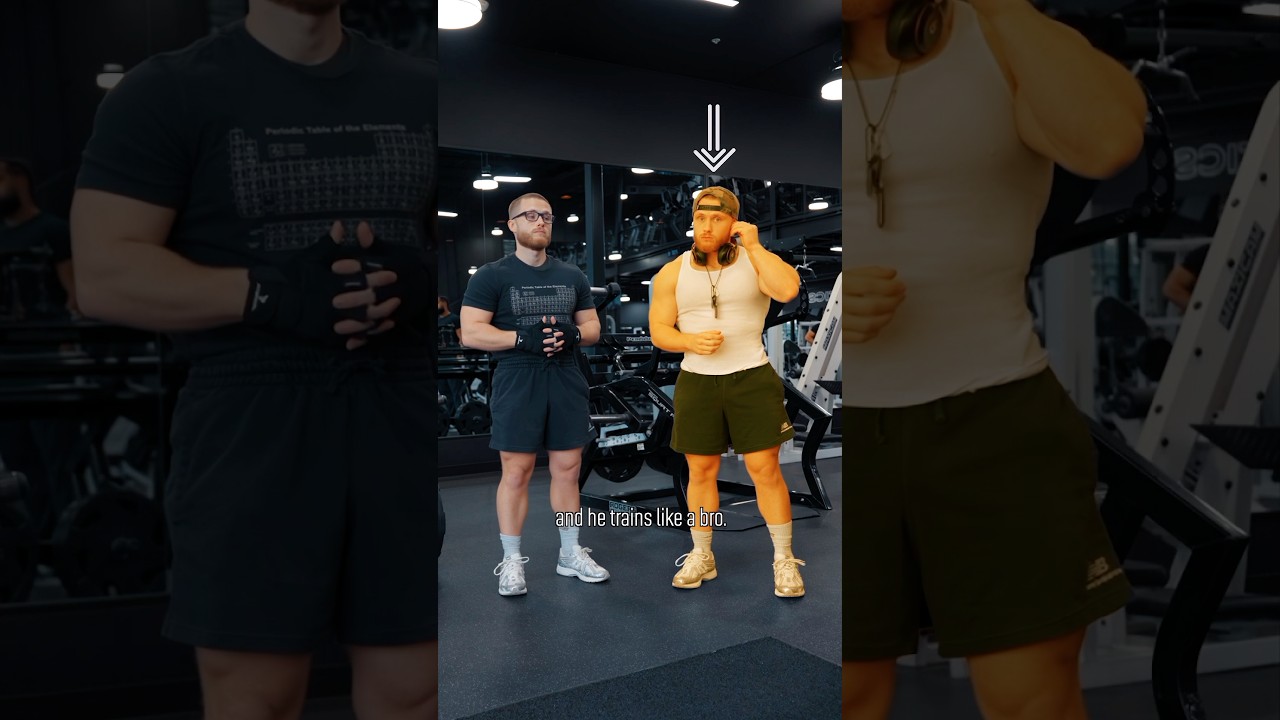
A common gym puzzle is whether the “science guy” (always following the latest research) or the “bro” (training hard by feel) gains more muscle. The video’s take is refreshingly balanced: both approaches contain key truths. Getting close to failure is a big driver of growth, and so is using a variety of exercises to hit a muscle from multiple angles. If both lifters stay natural and train consistently, the science-guided lifter may edge out more muscle and fewer injuries long term, but the real-world difference is often smaller than people expect.
Science vs Bro Training: Who Builds More Muscle?
▶️
▶️ Watch Video
⏱️1 min read

Why this debate matters for your body, not your ego

Muscle building is not just about looks. Strength and muscle can support joint health, daily function, and healthy aging.

The problem is that gym culture often frames progress like a personality test: are you the “nerd” who follows studies, or the “bro” who just trains brutally hard?

This video’s perspective is more useful than the usual internet argument. It suggests both camps are circling the same fundamentals, and the winner is often the person who combines them consistently.

Did you know? Major strength and hypertrophy guidelines from professional organizations emphasize progressive overload, sufficient volume, and effort over time, not a single “perfect” method. See the American College of Sports Medicine resistance training guidanceTrusted Source.

Option A vs Option B: “Science guy” and “bro” in plain terms

Here is the setup: one lifter always trains according to the latest science. The other trains like a bro.

Before vs After: what changes when you “go science-based?”

Before (bro-leaning): You might rely on intensity and instinct, pushing sessions hard because it feels like the main driver. This can build muscle, especially if you stay consistent and recover well.
After (science-leaning): You start tracking effort more deliberately, aiming for sets that get close to failure and managing fatigue so you can repeat quality training week after week.

The key insight from the speaker is blunt: if the “science guy” is not training really hard, he is not actually being science-based. Research-backed programming still requires uncomfortable effort.

What the research shows: Training closer to muscular failure tends to produce more hypertrophy than stopping far short, especially when volume is matched, according to a systematic review and meta-analysis on proximity to failureTrusted Source.

The shared middle: hard sets and smart variety

The “bro” often discovers something important without reading papers: doing a variety of exercises to target a muscle from different angles is a good idea.

That idea has research-friendly logic. Different exercises can bias different regions of a muscle and change the stress on joints and connective tissue. Variety can also keep training productive when a single movement starts to irritate a shoulder, elbow, hip, or knee.

Use multiple exercises per muscle over the week. For example, a chest-focused plan could include a press, an incline variation, and a fly pattern, with loads and reps adjusted to your tolerance.
Keep the goal the goal. Variety is not random exercise hopping. It is a way to apply progressive overload while distributing stress.
Treat recovery like part of training. The video emphasizes long-term progress and fewer injuries, which usually means you need sleep, sensible weekly volume, and rest days.

Important: If you have persistent joint pain, numbness, or sharp pain that changes your technique, consider pausing the aggravating lift and checking in with a qualified clinician or physical therapist.

A practical plan that blends both styles

This is where the video lands: assuming both lifters stay natural, the science-guided lifter may build more muscle and be less likely to get injured over the long term, but both will make gains and the difference is probably not as big as it seems.

How to combine “nerd” and “bro” without overthinking it

Pick 1 to 2 main lifts per muscle group. Use stable, repeatable movements so you can track progress.
Add 1 to 2 accessory angles. Choose variations that feel good on your joints and hit the muscle differently.
Aim for hard sets near failure, not sloppy failure. Many people do best stopping with about 0 to 3 reps in reserve, then adjusting next week based on performance and soreness.

Pro Tip: If you are unsure how close to failure you are, record one top set. Technique breakdown usually shows up on video before you feel it.

Q: Do I have to train to failure to grow muscle?

A: Not necessarily. The point highlighted here is getting close to failure often matters more than chasing failure every set, which can spike fatigue and form breakdown.

A sustainable approach is to save true failure for occasional sets on safer exercises, and keep most work hard but controlled.

Jordan Lee, CSCS

Key Takeaways

Close-to-failure effort is a major driver of hypertrophy, but it only counts if your sets are genuinely challenging.
Exercise variety and angles are not just “bro science,” they often align with how muscles and joints tolerate training.
Long-term consistency (especially for natural lifters) can matter more than picking a side in the nerd vs bro debate.
The gap is smaller than it seems when both people train hard, recover well, and stick with the plan.

Frequently Asked Questions

Is “science-based” training always better than “bro” training?
Not automatically. The video’s point is that science only helps if you still train hard and consistently. Many “bro” habits, like using multiple exercises and angles, can also be effective when applied progressively.
What does “close to failure” mean in lifting?
It generally means ending a set when you could only do a small number of additional reps with good form (often about 0 to 3 reps). If you stop far earlier, you may leave muscle-building stimulus on the table.
Why might the science-based approach reduce injuries long term?
A research-informed approach often manages fatigue, volume, and progression more deliberately. That can help you avoid constantly maxing out or using form breakdown as a strategy, which may lower overuse risk over time.

Get Evidence-Based Health Tips

Join readers getting weekly insights on health, nutrition, and wellness. No spam, ever.

No spam. Unsubscribe anytime.
More in Muscle Building

View all
5 Women’s Supplements for Stress, Fog, and Training

5 Women’s Supplements for Stress, Fog, and Training

The video’s core message is practical: supplements should fill real gaps, not replace food, and the first filter is quality. The expert shares a short list she uses regularly, protein powder, creatine monohydrate (3 to 5 g daily), omega-3s, and two adaptogens (rhodiola and ashwagandha). She also clarifies a common misconception: collagen is for structure (joints, skin, hair), not for counting toward daily protein for muscle. This article translates that viewpoint into everyday steps, with safety notes for thyroid meds and tips for choosing clean, third-party tested products.

Budget Muscle Building: Achieve Your Fitness Goals for $8 a Day

Budget Muscle Building: Achieve Your Fitness Goals for $8 a Day

This video’s core takeaway is practical: muscle building does not have to be expensive if you anchor your day around a few high-protein staples and keep “extras” minimal. The $8-a-day framework stacks protein across five moments, a smoothie breakfast (48 g), a chicken wrap lunch (43 g), a turkey stir fry post-workout (46 g), and a Greek yogurt snack before bed (27 g). It also budgets for 5 g creatine, a multivitamin, low-cost caffeine, an inexpensive gym membership, and a macro-tracking app. The bigger point is consistency, not perfection.

Creatine for Brain Energy, Muscle, and Healthy Aging

Creatine for Brain Energy, Muscle, and Healthy Aging

Creatine is usually marketed for muscle, but this video frames it as a foundational “energy buffer” for high-demand tissues, including skeletal muscle, brain, eyes, inner ear cells, and even the placenta. The key idea is simple: your body stores limited ATP, and creatine helps rapidly recycle ATP when energy demand spikes, during hard training, intense focus, sleep loss, or aging. The discussion also highlights creatine’s indirect antioxidant role through more efficient mitochondrial respiration. You will also learn practical dosing, why electrolytes may matter for uptake, and common misconceptions about hair and kidneys.

3 Lifting Lessons: Effort, Focus, Patience

3 Lifting Lessons: Effort, Focus, Patience

Early lifting can feel confusing, slow, and noisy, especially online. This video’s core message is refreshingly simple: you do not need three sets of everything, you need one or two sets you actually push hard, especially through the last reps that burn and slow down. It also argues that social media “optimization” matters far less than showing up and doing basic lifts consistently. Finally, it reframes slow progress as normal, not failure, and encourages judging results over months, not days, because muscle growth takes time.

We use cookies to provide the best experience and analyze site usage. By continuing, you agree to our Privacy Policy.