Exploring the Risks and Benefits of Rapamycin for Longevity
Summary
Rapamycin is one of the most talked-about experimental longevity drugs because it inhibits mTORC1, a growth pathway tied to aging biology. In this video-based journey, a data-driven self-experiment aimed to slow biological aging by testing different weekly pill schedules and measuring blood levels over time. The surprising outcome was no clear benefits, several side effects (mouth sores, slower wound healing, cholesterol and glucose changes, higher resting heart rate), and a later preprint suggesting faster biological aging on multiple epigenetic clocks. The takeaway is not “never try new things,” but to measure carefully, stay cautious as evidence evolves, and share results transparently.
🎯 Key Takeaways
- ✓Rapamycin’s longevity appeal centers on inhibiting **mTORC1**, a pathway linked to age-related disease biology.
- ✓Real-world self-tracking in the video found **noticeable side effects** but no obvious benefits, even while adjusting schedules and measuring blood levels over 96 hours.
- ✓Stopping rapamycin was followed by improvements in cholesterol, blood glucose, and soft tissue infections, strengthening the case that rapamycin drove those changes.
- ✓A human preprint reported rapamycin was associated with **accelerated biological aging** across 16 epigenetic clocks, a finding the video treats as important but not definitive.
Why rapamycin matters in longevity, and why this story is different
Longevity medicine is full of big promises and incomplete answers.
Rapamycin sits right in the middle of that tension. It has strong animal data, a plausible mechanism, and a long clinical history in a completely different context, organ transplantation. This combination makes it both exciting and unsettling.
The unique perspective in this video is the willingness to treat longevity like an engineering problem. Over four years, the approach was to build a “best possible” protocol with medical professionals, test one of the most promising experimental drugs for slowing the speed of aging, and then accept whatever the data said.
And the data did not say what anyone wanted.
Important: Rapamycin is an FDA-approved prescription drug for specific medical indications (such as preventing organ rejection), but using it for longevity is experimental. If you are discussing it with a clinician, bring your full medication list and medical history, because interactions and immune effects can matter.
Rapamycin’s origin story, from cave soil to transplant medicine
Rapamycin was first discovered in the 1960s, after scientists collected a soil sample from a cave on Easter Island. In that soil, they found a bacterium producing a compound with powerful antifungal properties. Early on, it looked like it might become a go-to treatment for common fungal problems.
Then the plot changed. Researchers realized the same compound also had potent immunosuppressant effects.
That is a life-saving property in the right setting, and a dangerous one in the wrong setting. For organ transplant recipients, suppressing immune activity can help prevent the body from attacking a transplanted organ. In 1999, rapamycin (sirolimus) was approved by the FDA for transplant-related use, where high doses may be used to reduce rejection risk.
This transplant history matters for longevity discussions because it established a clear side effect profile. The video highlights issues seen in transplant settings, including metabolic disruptions like high cholesterol, tissue swelling, soft tissue infections, and impaired wound healing.
The longevity connection did not meaningfully enter the conversation until 2009, when a study in older mice reported lifespan increases (about 14% in females and 9% in males). Repeating experiments in younger mice suggested additional benefit, and combining rapamycin with other drugs in mice was reported to extend lifespan even more.
That arc, from cave soil to mouse longevity headlines, is exactly why so many people became interested.
How rapamycin is supposed to work: mTORC1, mTORC2, and trade-offs
The mTORC1 idea
Rapamycin’s longevity appeal centers on inhibiting mTORC1, a cellular growth and nutrient-sensing pathway. The framing in the video is practical: mTORC1 is a “growth pathway,” and chronic overactivation is implicated in many age-related diseases.
In day-to-day terms, mTORC1 helps cells decide when to build, grow, and reproduce components. That is essential for life. But the longevity hypothesis is that dialing down growth signaling at the right times may shift the body toward maintenance and repair.
What’s interesting about this perspective is that it places rapamycin on a spectrum with lifestyle levers that also tend to reduce mTORC1 signaling.
The mTORC2 problem
Rapamycin is not a perfectly selective “longevity switch.” The video emphasizes a key trade-off: rapamycin can also inhibit mTORC2, and that inhibition is linked to side effects, particularly metabolic dysfunction.
This is where the longevity story gets complicated. The goal is “enough” mTORC1 inhibition to get potential benefits, without tipping into unwanted mTORC2 effects and immune suppression.
That balancing act is the entire game.
Did you know? Scientists are actively studying what drives aging in humans, including how cells sense nutrients and stress. Research groups have highlighted specific molecular drivers that may influence the aging process, but translating mechanisms into safe interventions is still an open challenge (Salk Institute overviewTrusted Source).
Immune effects, including NK cells
Another sharp edge in the video is immune suppression. Rapamycin can suppress immune function, including effects on NK cells (natural killer cells), which are often described as part of the body’s cancer surveillance toolkit.
That does not automatically mean “rapamycin causes cancer.” It does mean the risk-benefit calculation is not just about cholesterol numbers or mouth sores. It is also about how immune modulation might play out over years.
The protocol in the video: dosing experiments, blood levels, and biomarkers
This is not presented as casual supplementation. The protocol is treated like a controlled project, with repeated changes and measurement.
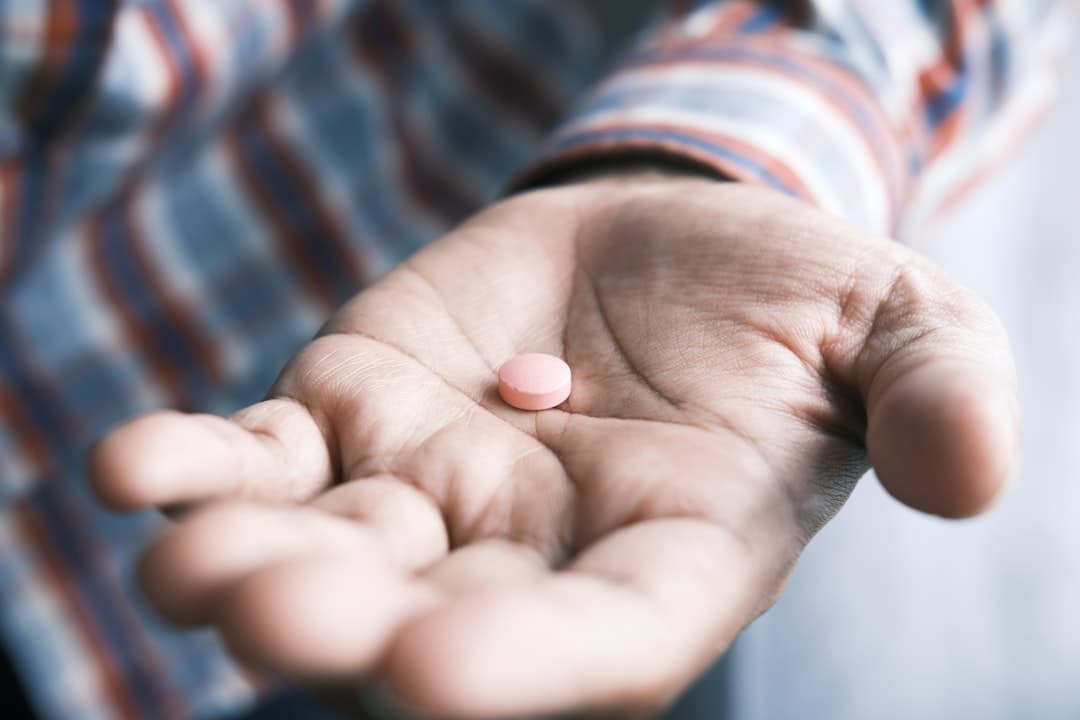
A small but vivid detail from the video is the pill itself, a triangle-shaped tablet. That image underscores the theme: something that looks simple can have complex systemic effects.
What they were trying to achieve
The targets were specific: reduction in biological age, slower speed of aging, and improvements in organ-specific biological age markers. There was also interest in potential immune rejuvenation and skin benefits.
But the method was not “take a pill and hope.” It was “dose, measure, adjust.”
The dosing schedules tested (as described)
Several regimens were tried over time, including:
The key point is not that these are “right” doses. The key point is that multiple schedules were tested because dosing is the central uncertainty.
Measuring blood levels over time
To understand exposure, blood was drawn about 90 minutes after taking the pills, then measured again at 24, 48, 72, and 96 hours. The goal was to map how much rapamycin was in the blood and how quickly it decayed back toward zero.
This is the video’s unique lens: longevity experimentation should be tied to pharmacokinetics and measurable biomarkers, not just feelings.
And yet, feelings and function still mattered.
Pro Tip: If you ever run a clinician-supervised experiment with a medication, ask in advance which markers will trigger a stop or dose change (for example, mouth ulcers, wound-healing issues, fasting glucose shifts, lipid changes, or recurrent infections). Pre-defining “off ramps” can prevent slow harm.
What went wrong: side effects, stopping the drug, and the epigenetic-clock shock
No clear benefits were noticed.
That is the blunt observation after years of testing: “everything seemed to be the same.”
Side effects, however, did show up, and they were consistent with what the transplant literature had already hinted.
The side effects that appeared
The video describes several issues that emerged during use:
That last point is easy to overlook. For this protocol, sleep quality was not a vague wellness goal, it was a core metric, and resting heart rate was treated as a lever that can make sleep better or worse.
The discontinuation test
Because many other interventions were happening at the same time, the protocol needed a way to isolate cause and effect.
So rapamycin was stopped.
After discontinuation, several changes moved in the desired direction: blood glucose dropped, cholesterol corrected, and soft tissue infections went away. In the logic of the video, this strengthened the conclusion that rapamycin was driving the side effects.
The preprint that changed the mood
A month after stopping, on October 27, a preprint was released evaluating multiple longevity interventions, including rapamycin. It reported that rapamycin accelerated the biological speed of aging in humans across 16 epigenetic clocks.
That finding was described as huge news, and also deeply ironic given the original purpose.
At the same time, the stance was cautious. A preprint can be flawed, incomplete, or later revised. This perspective leaves room for rapamycin to still have benefits, while treating new human data as a reason to pause and watch for replication.
What the research shows: Aging biology is complex, and “premature aging” mechanisms span metabolism, inflammation, DNA maintenance, and cellular signaling. Reviews emphasize that interventions can have mixed effects depending on dose, timing, and individual context (NIH overviewTrusted Source, Frontiers research topicTrusted Source).
If you are considering rapamycin, a practical caution-first framework
The conclusion in the video is not “never try new things.”
It is, “share what works and what does not, so we all learn.”
If you are a reader who is curious about rapamycin, here is a practical framework that matches the video’s mindset without turning it into medical advice.
How to think like the protocol (without copying it)
Start with the question, not the drug. Are you trying to improve metabolic markers, immune resilience, sleep quality, or an epigenetic estimate of aging? Different goals imply different risks.
Treat dose and schedule as the main unknown. The video’s core message is that rapamycin is a double-edged sword, too much can suppress immunity and worsen metabolism, too little may do nothing.
Measure what you are not willing to lose. In the video, resting heart rate and sleep quality were non-negotiable. For you, it might be training performance, wound healing, or infection frequency.
Plan a discontinuation test with a clinician. If you change ten things at once, you cannot know what caused what. A structured stop can be informative, but should be medically supervised.
Signals worth discussing with a clinician
If someone is using rapamycin under medical care for any reason, these are examples of issues to raise promptly, because they appeared in the video and are biologically plausible:
Expert Q&A box: epigenetic clocks and “speed of aging”
Q: If an epigenetic clock says someone is aging faster, does that mean real damage is happening?
A: Epigenetic clocks estimate biological aging using DNA methylation patterns, but they are still evolving tools. A change across multiple clocks can be a meaningful signal, yet it does not automatically translate into a specific disease outcome for an individual.
The practical value is often directional: if a change lines up with worsening metabolic markers, immune issues, or sleep disruption, it may strengthen the case that something is not working well for that person.
Jordan Lee, PhD, Molecular Aging Researcher
Expert Q&A box: immune suppression and cancer surveillance
Q: Should people worry that suppressing NK cells means higher cancer risk?
A: NK cells are part of immune surveillance, but cancer risk is influenced by many factors, including genetics, exposures, age, and overall immune function. Immune-modulating drugs can have complex effects, and risk can depend on dose, duration, and the individual’s baseline health.
If someone is considering an off-label use of an immunosuppressive medication, it is reasonable to discuss personal cancer risk factors and screening with a clinician.
Amina Patel, MD, Internal Medicine
»MORE: If you like the “measure, then decide” approach, create a one-page tracking sheet for resting heart rate, sleep quality, fasting glucose, lipids, infections, and wound-healing notes. Bring it to your next appointment so decisions are based on trends, not memory.
Key Takeaways
Sources & References
Frequently Asked Questions
- Is rapamycin proven to slow aging in humans?
- No. While animal studies suggest lifespan benefits, human longevity outcomes are not established, and a recent preprint discussed in the video reported accelerated aging signals across multiple epigenetic clocks. If you are considering it, discuss risks and monitoring with a clinician.
- Why does dosing schedule matter so much with rapamycin?
- The video’s key concern is balancing potential mTORC1-related benefits with mTORC2-related metabolic side effects and immune suppression. Different schedules can change peak blood levels and how long the drug remains in the body, which may change both effects and risks.
- What side effects were noticed in the video experiment?
- The experiment described mouth canker sores, slower wound healing, cholesterol disruptions, a small blood glucose spike, soft tissue infections, and an increase in resting heart rate that affected sleep quality. Many of these improved after discontinuation.
- What are epigenetic clocks, and why did the preprint matter?
- Epigenetic clocks estimate biological aging using DNA methylation patterns. The preprint mattered because it reported rapamycin was associated with faster biological aging across 16 clocks, which directly challenged the goal of slowing the “speed of aging.”
Get Evidence-Based Health Tips
Join readers getting weekly insights on health, nutrition, and wellness. No spam, ever.
No spam. Unsubscribe anytime.