Lectins, leaky gut, and smoking, sorting the claims
Summary
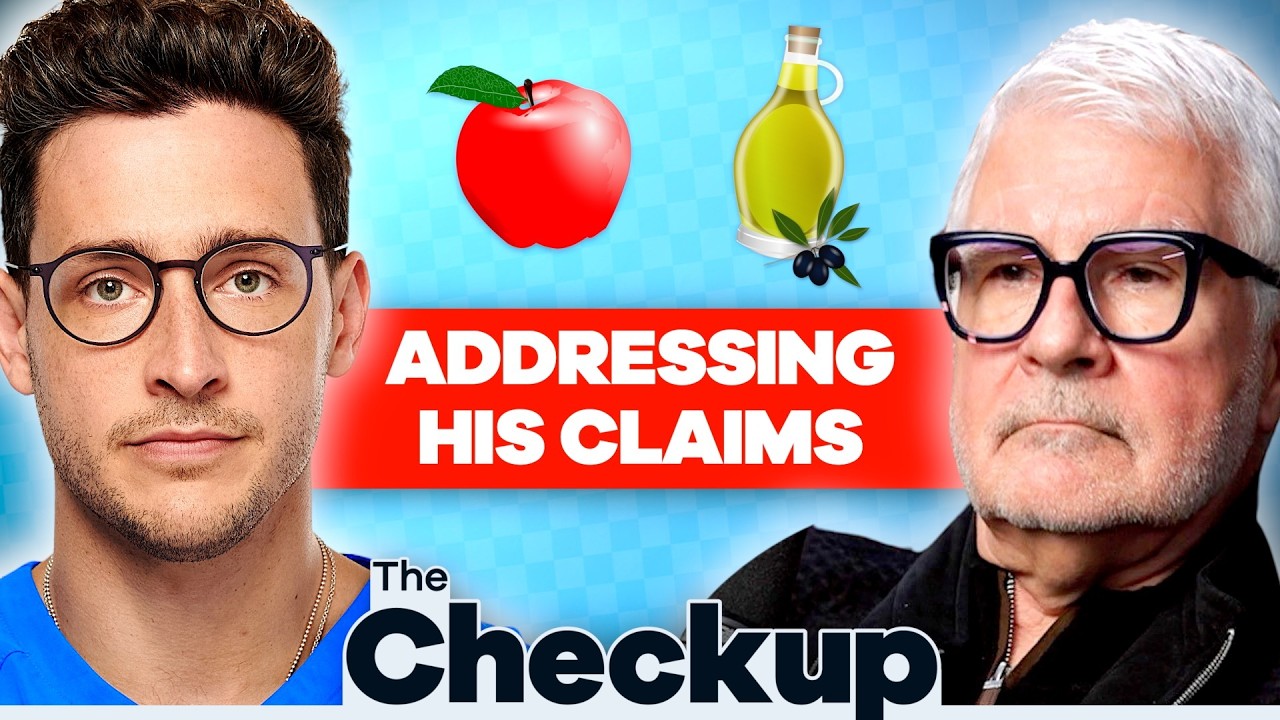
Is it possible that “healthy” foods like beans and tomatoes are secretly harming your gut, and that smoking could be beneficial if your diet is right? This article unpacks a pointed podcast debate between Dr. Steven Gundry, a cardiothoracic surgeon known for lectin-focused claims, and clinicians pushing for evidence-based nutrition. You will learn what lectins are, what “leaky gut” means in plain language, why mechanistic theories can mislead, and how to make everyday food choices without fear. We also address the nicotine and vitamin C arguments, and why major guidelines still prioritize smoking cessation and ApoB lowering.
“Are beans and tomatoes hurting my gut?” Why this debate matters
“Do I need to stop eating apples, beans, tomatoes, and whole grains to heal my gut?”
That question sits right under the surface of this entire conversation.
The video is not a calm, academic lecture. It is a confrontation, a careful one, but still a confrontation, between two very different ways of talking about nutrition. One side speaks with high confidence in mechanisms and personal clinical experience. The other side keeps pulling the discussion back to what large bodies of human evidence and guideline processes actually support.
And then the debate takes a hard left turn.
Smoking.
In the middle of a conversation about heart disease prevention, the claim appears that nicotine from cigarettes may be beneficial for longevity because it “uncouples” mitochondria, and that the harms of smoking might be “mitigated” by a diet high in vitamin C and olive oil.
If that made your eyebrows jump, you are not alone.
This article keeps the video’s unique perspective intact, including the surprising arguments, while also translating what is being said into everyday, practical decisions you can make without getting pulled into extremes.
Important: If you smoke or use nicotine, do not interpret this debate as a reason to continue. The overall evidence base still strongly supports quitting, and clinicians have effective tools to help.
The video’s big storyline: a clash between certainty and standards
The discussion opens with a familiar frustration: many patients show up to primary care after years of ultra-processed eating patterns, and it is hard to “reverse” risk once disease is established.
One perspective in the video argues that mainstream medical advice about “healthy foods” can be dangerously wrong, and that certain plant foods are harming people through lectins.
Another perspective argues for evidence-based nutrition, meaning you do not build public recommendations from one mechanism, one anecdote, or one biomarker shift. You synthesize multiple layers of evidence, including randomized trials when possible, and long-term observational outcomes when trials are not feasible.
That difference is not just academic.
It changes what you do on Monday morning when you are deciding what to eat.
The “Big Ed” origin story
A pivotal moment in the video is the story of a patient who reportedly reversed about 50% of coronary blockages in six months using a diet plus many supplements.
In the video, that single case is described as the spark that shifted a surgeon’s career from operating to prevention.
The pushback is immediate and practical: clinicians see unusual anecdotes all the time, including people who smoke for decades and live a long time. Anecdotes can be real, and still be misleading if you build sweeping conclusions on them.
The key insight here is not that personal stories are useless.
It is that stories are not the same as standards.
Did you know? Public health agencies consider smoking one of the most preventable causes of disease and death. The CDC’s smoking and tobacco use overviewTrusted Source summarizes the scale of risk across heart disease, stroke, and multiple cancers.
Lectins in plain language, what they are and why people worry
Lectins are a group of proteins found in many plants.
They can bind to carbohydrates, and in some lab contexts, certain lectins can irritate tissues or interfere with absorption. That is the seed of the concern.
The video’s framing takes that seed and grows it into a broad narrative: foods like beans, tomatoes, whole grains, and bell peppers are portrayed as unhealthy because their lectins are “destroying your gut.”
Here is the everyday problem with that framing.
Most people do not eat lectins in a petri dish.
They eat them in cooked foods, in mixed meals, within dietary patterns that also contain fiber, polyphenols, and a wide range of nutrients.
Cooking changes the lectin question
A practical point that often gets lost in social media nutrition debates is that preparation matters.
Many lectins are reduced substantially by soaking, boiling, pressure cooking, and fermenting. For example, undercooked or raw kidney beans can cause acute GI illness due to phytohaemagglutinin, a lectin, and thorough boiling makes them safe. That is why food safety guidance emphasizes proper cooking of beans, and why most cultures that rely on legumes have cooking traditions around them.
This does not mean every person tolerates every legume.
It means “lectins exist” does not automatically equal “beans are harmful.”
From a population health standpoint, dietary patterns that include legumes and whole grains are commonly associated with better cardiometabolic outcomes. For broad dietary pattern evidence, the American Heart Association dietary guidanceTrusted Source emphasizes overall patterns rich in fruits, vegetables, whole grains, and plant proteins.
Pro Tip: If beans make you feel bloated, try smaller portions, rinse canned beans well, or choose lentils, which many people find easier to tolerate. If symptoms are persistent or severe, discuss with a clinician to rule out conditions like celiac disease or inflammatory bowel disease.
“Leaky gut” and inflammation, what’s real, what’s oversold
“Leaky gut” is a popular term, but it can mean very different things depending on who is talking.
In plain language, it refers to increased intestinal permeability, meaning the gut barrier is not functioning as tightly as it should. In certain diseases, including inflammatory bowel disease, permeability changes can be part of the picture.
The leap happens when a complex, partially understood concept becomes a single-cause explanation for everything.
That leap is a major undercurrent in the video.
One side implies a fairly direct chain: lectins damage the gut barrier, gut barrier damage drives inflammation, inflammation drives chronic disease.
The other side keeps asking for the missing step: where are the human outcome data showing that removing whole categories of foods improves hard endpoints for most people?
Why inflammation narratives are so persuasive
Inflammation is real.
It is also vague enough that almost any symptom can be placed under its umbrella.
If you have fatigue, joint pain, bloating, brain fog, or skin flares, it is tempting to accept a single villain and a single fix.
But everyday health decisions usually work better when you think in patterns:
Those pattern-level factors have far more consistent links to outcomes than a single protein in a single food.
What the research shows: Dietary patterns like the Mediterranean-style pattern are associated with lower cardiovascular risk in many studies. For an accessible summary, see the AHA guidance on dietary patternsTrusted Source.
Blue Zones, smoking, and the nicotine twist
This is where the video becomes truly distinctive.
The claim is not merely that some long-lived populations include smokers.
The claim is that smoking, specifically nicotine, might be a reason some groups live longer, because nicotine is described as a strong mitochondrial uncoupler.
That is an attention-grabbing reversal: instead of asking, “How did they thrive despite smoking?” the argument suggests asking, “What if smoking helped them?”
It is also where the evidence standards matter most.
What the video argues about Blue Zones
Several examples are used:
The key rhetorical move is consistent: Blue Zones are treated as unreliable when they support beans and grains, and treated as revealing when they support the nicotine or dairy narrative.
That inconsistency is directly challenged in the discussion.
The confounding problem, why this is hard to interpret
Even if it is true that some long-lived subpopulations include smokers, it does not follow that smoking caused longevity.
Lifestyle variables cluster.
In many places, smoking may correlate with more walking, less ultra-processed food, more social cohesion, different infectious exposures, different air quality, different occupational patterns, and different caloric availability over the life course.
This is why mainstream public health does not treat Blue Zone stories as a reason to smoke.
The broader evidence base, across many countries and study designs, consistently finds smoking increases risk of heart disease, stroke, peripheral artery disease, COPD, and multiple cancers. The CDCTrusted Source and World Health OrganizationTrusted Source summarize these risks in detail.
A single-sentence reality check is worth stating plainly.
Smoking remains one of the most harmful health exposures most people can choose.
Vitamin C as a shield for smokers, an appealing story with major gaps
A second distinctive claim in the video is that the harms of smoking may be mitigated by high vitamin C intake, and that olive oil “doubles our own vitamin C production.”
The story is told through a collagen-and-blood-vessel lens: smoking creates oxidative stress, vitamin C is used up dealing with that stress, collagen repair suffers, vascular injury follows, and cholesterol acts like “spackle” at damaged bends in vessels.
It is a vivid narrative.
It also raises immediate practical questions.
What we do know about smoking and vitamin C
Smokers tend to have lower vitamin C levels, and many references note smokers may require higher vitamin C intake than nonsmokers. The NIH Office of Dietary Supplements vitamin C fact sheetTrusted Source discusses how smoking increases oxidative stress and can lower vitamin C levels.
That does not mean vitamin C negates smoking risks.
It means smoking creates biological strain, and vitamin C is one nutrient involved in antioxidant defenses.
In the video, a cardiologist explicitly states they have not seen evidence that vitamin C negates smoking risk.
That is consistent with the broader stance of major guidelines, which prioritize quitting smoking rather than “buffering” it.
Why “mitigation” is a dangerous word here
Mitigation can be true in a narrow sense and still be harmful in the big picture.
For example, a person who smokes and eats more fruits and vegetables may have better outcomes than a person who smokes and eats poorly.
But both may still be worse off than a similar person who does not smoke.
This is the trap: relative improvement inside a harmful behavior can be mistaken for safety.
Important: If you smoke, talk with a clinician about evidence-based cessation supports. The CDC guide to quittingTrusted Source outlines counseling and medication options that can meaningfully increase quit success.
Mechanisms vs human outcomes, why “it makes sense” can fail
The most useful part of the video is not the smoking controversy.
It is the repeated return to a core medical principle: mechanistic plausibility is not enough.
A mechanism explains how something might work.
An outcome trial tells you whether it actually helps people live longer or avoid heart attacks.
The hierarchy described in the discussion
A prevention-focused cardiologist in the video lays out a practical evidence ladder:
That framework is not perfect, but it is how medicine avoids repeating mistakes.
A classic example raised in the conversation is that many interventions that look good on paper fail in real people, or produce unexpected harms.
This matters because lectin arguments often lean heavily on mechanisms.
So do many “advanced biomarker” arguments.
If you are a regular person trying to eat well, the practical implication is simple.
Be cautious when someone is extremely confident based mostly on how a pathway should work.
ApoB, Lp(a), and niacin, what the disagreement reveals
The lipid discussion in the video becomes a case study in how medical disagreements happen.
On one side, niacin is described as useful for lowering Lp(a) (lipoprotein(a)), and Lp(a) is framed as a major cardiovascular risk factor.
On the other side, the cardiologist counters with how modern cardiology interprets niacin: multiple large randomized trials did not show improved hard outcomes, so it is no longer routinely recommended for cardiovascular risk reduction, even if it changes certain numbers.
That is a key theme.
Changing a biomarker is not the same as changing your risk.
What are ApoB and Lp(a), in everyday terms?
ApoB is a protein found on atherogenic particles (the particles that can enter artery walls and contribute to plaque). Many guidelines treat ApoB as a strong indicator of “how many risky particles” are circulating.
Lp(a) is a genetically influenced lipoprotein that can increase cardiovascular risk in some people. Many organizations now recommend measuring it at least once in a lifetime, especially with family history.
For a patient-friendly overview of cholesterol, ApoB, and risk, reputable heart organizations like the American Heart AssociationTrusted Source provide accessible summaries.
The niacin dispute, and why it matters beyond niacin
The cardiologist’s point in the video is that three major randomized trials did not show cardiovascular benefit with niacin, so guidelines moved away from it.
The counterargument is that those trials allegedly failed because they did not “compensate” for other changes (like homocysteine or Lp-PLA2), and that supplementing could negate those effects.
Then comes a credibility flashpoint: the claim of publication at the American Heart Association is challenged as being an abstract rather than a peer-reviewed full paper.
If you have ever felt whiplash reading nutrition claims online, this is why.
For most people, especially those without rare lipid disorders, it is safer to anchor on interventions with strong outcome evidence.
That is why major cardiovascular prevention guidelines emphasize lowering LDL-C and ApoB through diet patterns, lifestyle, and medications when appropriate, rather than chasing many advanced oxidation markers.
For a guideline-level view of prevention priorities, see the American Heart Association prevention guidanceTrusted Source.
Practical food decisions without fear, a “gut check” approach
If you ignore the extremes, the video still leaves you with a real problem.
People are overwhelmed.
One voice says fruits and smoothies are “the worst thing you could do for your mitochondria.” Another voice says the bigger issue is ultra-processed foods and overall patterns.
So what do you do at the grocery store?
Here is a practical approach that respects the debate without getting trapped in it.
Start with what is consistently harmful
This is the part almost everyone agrees on.
Highly processed, hyperpalatable diets tend to make it easy to overeat, displace fiber, and worsen cardiometabolic risk.
The video’s primary care framing is especially relevant here: many patients arrive with years of accumulated risk, and small, consistent dietary shifts can matter.
How to “test” lectin concerns without going all-in
If you suspect certain foods worsen your symptoms, you can explore that carefully without assuming the food is universally toxic.
Use this simple, clinician-friendly experiment.
Pick one symptom to track (bloating, diarrhea, reflux, joint pain, skin flares). Write down what “better” would mean in concrete terms.
Choose one food category to adjust for 2 to 4 weeks, not forever. For example, you might reduce beans temporarily, or switch from wheat-based grains to oats or rice, while keeping the rest of your diet steady.
Reintroduce intentionally. If symptoms return clearly, that is useful information. If nothing changes, you have avoided an unnecessary restriction.
This is not a diagnosis.
It is a way to reduce noise.
Pro Tip: If you remove a food group, replace it with something nutritionally comparable. If you remove beans, consider other fiber-rich options you tolerate, like lentils, chia, oats, vegetables, or nuts.
A realistic “plate” that fits the evidence and the debate
You do not need a perfect diet to make progress.
Try this as a default template, then personalize:
That pattern aligns with broad heart-healthy guidance like the AHA dietary recommendationsTrusted Source.
How to talk to your clinician when you’ve heard conflicting advice
The video shows what happens when people talk past each other.
One side asks, “Does it work in my clinic?”
The other asks, “Does it work in randomized outcomes, and is it generalizable?”
You can use both.
Bring better questions, not just better supplements
If you are trying to reduce heart risk or improve gut symptoms, consider bringing these questions to your next appointment.
Short appointments reward clarity.
If you show up with a one-page symptom and food log, you will usually get a better conversation.
»MORE: Consider creating a 7-day “food, symptoms, sleep, stress” log. Include meal timing, bowel patterns, and any nicotine or alcohol use. Bring it to your clinician or dietitian so decisions are based on patterns, not memory.
Expert Q&A box: Should I take nicotine for longevity?
Q: The video mentions nicotine as a “mitochondrial uncoupler.” Does that mean nicotine patches or drops are a longevity hack?
A: The most important issue is that nicotine products can be addictive, and tobacco smoking is strongly linked to serious disease. Even if a mechanism sounds interesting, it does not outweigh the large body of human evidence linking smoking to harm, summarized by agencies like the WHOTrusted Source.
If you are considering nicotine for any reason, discuss it with a clinician who can weigh your cardiovascular risk, blood pressure, anxiety, sleep, and addiction vulnerability.
Danielle Belardo, MD (cardiology), perspective summarized from the video discussion
Expert Q&A box: Do I need to avoid lectins to fix “leaky gut”?
Q: If I have bloating and fatigue, should I cut out lectins like beans and tomatoes?
A: Some people do feel better when they adjust certain fermentable carbohydrates or specific foods, but that does not mean lectins are the universal cause. A safer approach is a time-limited, structured trial with reintroduction, ideally with a registered dietitian, while also checking for common medical causes of symptoms.
If symptoms include weight loss, blood in stool, anemia, persistent diarrhea, or severe pain, seek medical evaluation promptly.
Perspective aligned with evidence-based nutrition principles discussed in the video
Key Takeaways
Frequently Asked Questions
- Are lectins harmful for everyone?
- Lectins are proteins in many plant foods, and some can cause problems when foods are raw or undercooked. For most people eating properly prepared foods, broad avoidance is not clearly supported by outcome evidence, and tolerance varies by individual.
- Can vitamin C cancel out the harms of smoking?
- Vitamin C supports antioxidant defenses, and smokers often have lower vitamin C levels. However, there is no strong evidence that vitamin C negates smoking’s major risks, and quitting remains one of the most impactful health steps.
- What is ApoB and why do clinicians focus on it?
- ApoB reflects the number of atherogenic particles that can contribute to plaque in arteries. Many guidelines emphasize ApoB because lowering these particles is consistently linked to reduced cardiovascular events.
- Should I take niacin to lower Lp(a)?
- Niacin can lower Lp(a) in some people, but major trials did not show improved cardiovascular outcomes, so it is not routinely recommended for risk reduction. If you have elevated Lp(a), discuss evidence-based risk lowering with your clinician.
- What is the safest way to test if a food is causing my gut symptoms?
- A time-limited elimination of one food category for 2 to 4 weeks, followed by a planned reintroduction, can clarify whether symptoms change. Doing this with a clinician or dietitian helps prevent nutrient gaps and unnecessary restriction.
Get Evidence-Based Health Tips
Join readers getting weekly insights on health, nutrition, and wellness. No spam, ever.
No spam. Unsubscribe anytime.