How to Bulk Like a Pro, Science-Based and Realistic

Summary
A “proper bulk” is not a dirty bulk, and it is not endless main gaining either. The approach here is a lean bulk built around a small calorie surplus, slow monthly weight gain, enough protein, moderate fat intake, hard training, and some cardio. The unique angle is practical and measured: gain at a controlled rate (often 0.5% to 1% of body weight per month for experienced lifters), adjust calories based on scale trends, and use food flexibility once your totals are set. You will likely gain some fat, but the goal is to maximize muscle gained per pound of weight gained.

The story starts with a year-long experiment.
The expert in this video committed to a “proper bulk” from January 1 for about a full year, with training and nutrition intentionally optimized. The punchline is not that bulking is magic, it is that doing it slowly and on purpose produced the most muscle gains he has seen in years, and those changes were measured with tools like DEXA and ultrasound.
That framing matters because most people are not confused about whether eating more increases body weight. They are confused about why bulking sometimes seems to “work” for size but backfires for health, confidence, and long-term progress.
The “bulk” puzzle: why eating more sometimes backfires
If you have ever tried to bulk by “freestyling it,” you already know the plot twist. You get bigger, but a lot of what you gain is fat.
Old-school dirty bulks do build muscle, but they tend to create a huge calorie surplus, sometimes 50% to 100% above maintenance in the way people actually execute them. Without pharmaceutical help, that is a fast track to rapid fat gain.
What is interesting about this video’s perspective is that it also pushes back on the opposite extreme. After getting burned by a sloppy bulk, many lifters swing hard into “main gaining,” meaning they keep body weight stable and hope muscle steadily accumulates. This view holds that main gaining is possible, but it is not the most effective route to maximizing muscle growth over time.
So the puzzle becomes: how do you get the muscle-building benefits of a surplus without repeating the “I gained 20 pounds and none of my clothes fit” mistake?
Did you know? Building new muscle tissue is a slow biological process. Trying to rush it by adding a huge surplus often just increases the amount of energy your body can store as fat.
Why a surplus helps muscle growth (and why main gaining can stall)
The core argument is evolutionary and practical. Your body prioritizes survival, not aesthetics. When calories are tight, energy is directed toward functions like keeping blood glucose stable for your organs and supporting immune function.
You can still build muscle at maintenance, or even in a deficit, especially if you are newer to training or returning after time off. But in this framing, muscle building is simply lower on the priority list when energy is limited.
A calorie surplus changes the signal. It tells the body that starvation is not an immediate threat, and that it can “afford” to invest more resources into building tissue that is not strictly necessary for survival.
What the research shows: In overfeeding studies paired with resistance training, groups eating more calories often gain more fat-free mass than groups eating closer to maintenance, although real-world results vary by training status and how large the surplus is. A widely cited evidence-based position stand also supports higher protein intakes and structured training for hypertrophy, especially when calories are controlled (International Society of Sports Nutrition position stand on protein and exerciseTrusted Source).
The video highlights a study example where one group ate roughly 2,500 calories per day and another ate roughly 4,300 calories per day while following the same training plan for 8 weeks. The higher-calorie group gained more fat-free mass. The surprising detail mentioned is that the higher-calorie group did not gain measurable fat in that specific study, likely because they were new lifters.
In more experienced lifters, bulking still tends to increase muscle gain, but it also tends to increase fat gain. The key insight here is not to abandon bulking, it is to control the variables that drive fat gain.
Set the one number that controls fat gain: your rate of weight gain
How much fat you gain on a bulk mainly depends on how fast you gain weight.
Muscle takes time. You cannot force-feed it.
This is where the video gets very specific and practical. The “lean bulking” consensus targets are:
That sounds slow because it is slow. For a 170-pound lifter with around 2 years of consistent training, that often works out to roughly 1 to 2 pounds per month.
What if some of the gain is fat?
This approach does not pretend you will gain only muscle forever. If you are closer to your natural muscular ceiling, a realistic outcome might be that roughly half the weight you gain is lean tissue and half is fat.
In the video’s trade-off framing, that can still be a win. You are moving forward instead of spinning your wheels, and you can plan a later cut to reduce body fat while trying to keep most of the new muscle.
Important: If you have a history of disordered eating, bulking and cutting cycles can be psychologically risky. Consider discussing your plan with a clinician or a registered dietitian who understands sports nutrition.
Build your lean-bulk calories and macros (simple, not perfect)
This is the anti-dirty-bulk section.
Instead of adding “as much food as possible,” the video argues that even a modest surplus can provide the raw materials for muscle growth without shoving a flood of extra calories into fat storage.
Step 1: Find maintenance, then add 5% to 10%
The target surplus here is about 5% to 10% above maintenance.
In the expert’s own example:
If you do not know your maintenance calories, the video suggests a quick estimate: multiply body weight in pounds by 14 to 18 to get a ballpark.
Another option mentioned is using an app that estimates energy expenditure from your intake and daily weigh-ins over time. This can be convenient, but it is still just a tool, you are looking for a trend, not a perfect number.
Pro Tip: Weigh yourself under similar conditions (for example, after waking and using the bathroom) and focus on the weekly average. Day-to-day water shifts can hide real progress.
Step 2: Set protein first
Protein is positioned as non-negotiable for bulking because it provides amino acids needed to build new tissue.
The video’s target is 0.7 to 1.0 grams of protein per pound of body weight per day. For the expert at 180 pounds, that is about 170 grams per day.
This range aligns with research summaries suggesting that higher protein intakes support lean mass gains during resistance training, especially when training is hard and consistent (ISSN protein position standTrusted Source).
Step 3: Keep dietary fat moderate (20% to 30% of calories)
This video takes a clear stance against extreme low-fat and extreme high-fat bulks.
The practical target given is 20% to 30% of total calories from fat.
For a 3,000 calorie bulk, that is roughly 65 to 100 grams of fat per day, and the expert reports usually landing around 80 grams per day.
Step 4: Fill the rest with carbs
Once protein and fat are set, the remaining calories go to carbohydrates.
This is less about carbs being “magic” and more about carbs being useful for training performance, hard sets, and overall volume. If you train intensely, having carbs available can make it easier to push your workouts.
A full day of bulking meals, based on the video’s exact example
This is where the plan stops being theoretical.
The day is structured around hitting totals, not eating “perfect” foods all the time. There is room for flexible dinners, occasional sweets, and restaurant meals, as long as daily calories and macros are controlled.
Morning routine and breakfast (late breakfast)
The day starts around 7:30 a.m. with an energy drink or coffee. Coffee is framed as the healthier default because it contains antioxidants and has a large body of research linking it with various health benefits, while energy drinks may be fine in moderation.
Breakfast happens around 10:00 a.m., partly because hunger is low right after waking.
Breakfast example from the video:
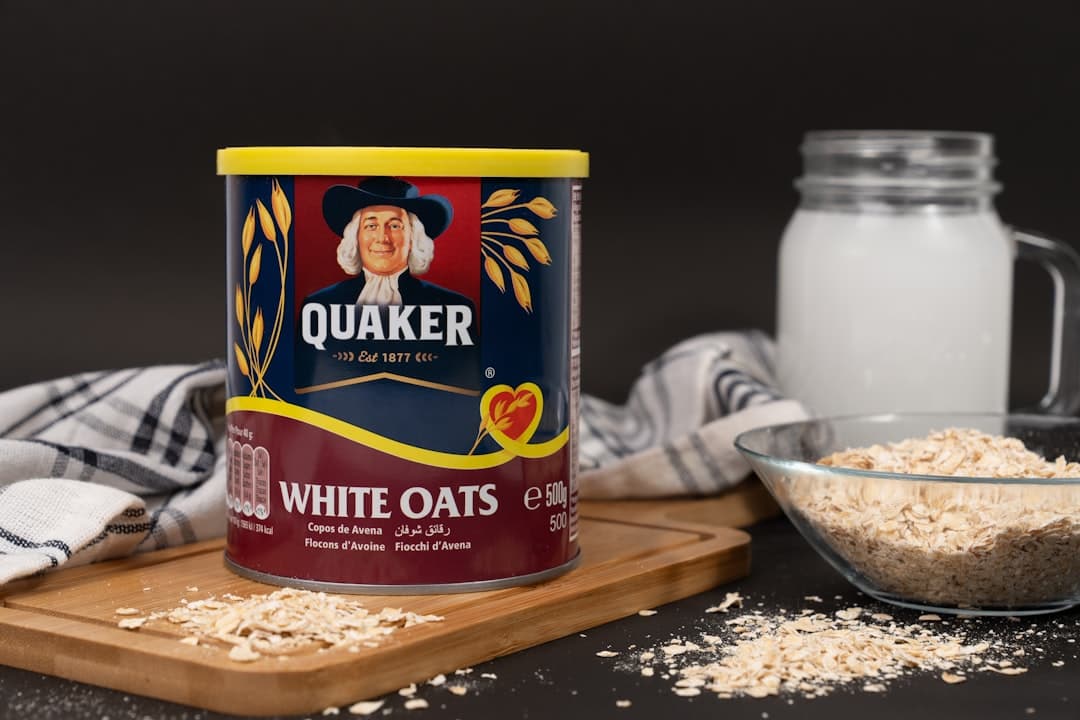
If the morning is busy, the backup plan is simple: a protein shake with some oats.
Pre-workout meal (1:00 p.m.)
At 1:00 p.m., the pre-workout meal is built around lean protein, carbs, and some fats.
The video’s exact example includes:
Then a pre-workout supplement is taken, and training starts about an hour later.
Post-workout and flexible dinner
After training, the routine is straightforward: a protein shake and a banana.
Dinner is where flexibility shows up. Some nights are takeout, like pita, burritos, sushi, or Thai food. Other nights look like a more “classic” bodybuilding plate: chicken, potato, sour cream, and broccoli, plus roasted sunflower seeds for fats.
Before bed: Greek yogurt, honey, and peanut butter, sometimes with popcorn if calories allow.
And yes, sometimes something sweet fits in, like candy or chocolate.
This is a key part of the video’s unique perspective: tracking makes room for real life. It is not a permission slip to live on junk food, but it is a method for including enjoyable foods without losing control of the bulk.
»MORE: Want a practical tracking checklist? Create a simple “daily minimums” list: protein target, fruit or vegetables at 2 meals, and a calorie range. Once those are met, use remaining calories for flexibility.
Training on a bulk: where the extra calories should go
Extra calories do not automatically become muscle.
Training is the signal that tells your body what to do with the surplus.
A common mistake called out in the video is slacking off in the gym during a bulk. That is a reliable way to gain more fat than muscle because the surplus is not being “spent” on hard training adaptations.
Below is the practical progression outlined, with different priorities depending on training age.
Beginner focus: learn to train hard with good form
If you are in your first year, the emphasis is basics.
Split selection is framed as flexible at this stage. Bro split, push-pull-legs, upper-lower, and full body can all work if you show up consistently and progress.
Intermediate focus: add volume without losing intensity
For people training hard for about 1 to 3 years, the video recommends increasing weekly volume while keeping intensity as the priority.
A practical target is about 8 to 15 sets per muscle per week, with the note that bigger muscle groups like the back often tolerate more volume than smaller groups.
This aligns with broader hypertrophy guidance suggesting that multiple hard sets per muscle group per week, spread across the week, tends to outperform very low-volume approaches for most intermediate lifters (ACSM resistance training guidanceTrusted Source).
Advanced focus: specialize strategically
For advanced trainees (more than about 3 years of hard, smart training), the video suggests a specialization approach during a bulk.
That means picking one or two lagging muscles and adding 20% to 40% more volume for those areas.
Example given: if shoulders are a priority and you currently do 15 sets per week, increase to about 18 to 20 sets per week.
Advanced techniques are mentioned as possible tools for “marginal gains,” such as lengthened partials and higher-rep methods, but the foundation remains progressive overload and high-quality hard sets.
Expert Q&A
Q: If I bulk but my lifts are not going up, am I doing it wrong?
A: Not necessarily, but it is a red flag worth investigating. A bulk works best when the surplus supports progressive training, so if performance is flat, look at sleep, stress, program design, and whether your surplus is too small or your recovery is poor.
Also consider that some lifts progress in waves. Tracking reps, sets, and technique quality can reveal progress even when the scale weight does not jump every week.
Jordan Hill, MS, CSCS
Cardio during a bulk: the “kills gains” myth versus reality
Cardio is not the enemy in this approach.
The video argues that the belief that cardio “kills gains” comes from outdated, low-quality science and from misapplication, like doing large volumes of endurance work while also trying to maximize hypertrophy.
The practical point is work capacity. Better cardiovascular fitness can help you tolerate more training volume. If your conditioning is poor, your heart and lungs may give out before the target muscles do, especially on leg days. That can limit the number of quality reps you can perform.
For people with very active jobs (construction, serving), extra cardio may not be needed. For desk workers, adding some structured cardio is framed as a net positive for both health and training.
The expert’s personal practice is 2 to 3 moderate-intensity cardio sessions per week, often a brisk walk or recreational basketball.
Research reviews generally support the idea that combining resistance training with moderate aerobic work can improve cardiovascular health without necessarily preventing muscle gains, especially when programmed sensibly and when total recovery is managed (CDC physical activity guidelinesTrusted Source).
Quick Tip: If you are worried about interference, separate hard cardio and hard lifting by several hours, or put cardio on a different day. Many people find this helps legs feel fresher.
Supplements and “extras”: what’s core, what’s optional, what needs caution
Supplements are presented as add-ons, not the foundation.
The “basic boring stuff” list in the video is:
Creatine monohydrate is one of the most studied sports supplements, and research supports benefits for strength and lean mass when paired with resistance training (NIH Office of Dietary Supplements, creatineTrusted Source).
Then there are additional supplements the expert used during this bulk:
That last point is important. Supplements can be marketed as “natural,” but natural does not automatically mean risk-free. Ashwagandha has emerging evidence for stress and performance-related outcomes in some studies, but there are also case reports of side effects, and quality control can vary across products. If you are pregnant, have thyroid disease, autoimmune conditions, liver disease, or take sedatives, it is especially worth talking with a healthcare professional before using it.
Important: If you take anticoagulants, have upcoming surgery, or have a bleeding disorder, ask a clinician before using high-dose fish oil. If you have kidney disease, ask before using magnesium supplements.
Expert Q&A
Q: Can I bulk “clean” and avoid fat gain completely?
A: You can reduce fat gain by keeping the surplus small and the rate of gain slow, but completely avoiding fat gain is not realistic for many intermediate and advanced lifters. The goal is a better ratio of muscle gained to fat gained, not perfection.
If you are gaining faster than the recommended monthly range, adjusting calories down slightly is often more effective than trying to “out-train” a large surplus.
Jordan Hill, MS, CSCS
Key Takeaways
Frequently Asked Questions
- How big should my calorie surplus be for a lean bulk?
- A practical starting point is about a 5% to 10% surplus above your maintenance calories, then adjust based on your weekly weight trend. If you gain too quickly, reduce calories slightly to limit fat gain.
- How fast should I gain weight while bulking?
- Many beginners can aim for about 1% to 2% of body weight per month, while intermediate to advanced lifters often do better around 0.5% to 1% per month. Faster gain usually increases the proportion of fat gained.
- How much protein do I need on a bulk?
- A common evidence-based range is about 0.7 to 1.0 grams of protein per pound of body weight per day. Protein powder can help if meeting that target with food is difficult.
- Should I do cardio while bulking?
- Often yes, moderate cardio can support heart health and improve conditioning so you can tolerate more training volume. If you already have a very active job, you may not need additional structured cardio.
- What supplements matter most for bulking?
- Creatine (5 g/day) and caffeine (around 200 mg pre-workout if sleep is not affected) are common evidence-supported options. Fish oil, vitamin D, and magnesium may be useful depending on diet, labs, and medical considerations.
Get Evidence-Based Health Tips
Join readers getting weekly insights on health, nutrition, and wellness. No spam, ever.
No spam. Unsubscribe anytime.