Meat, Tools, and the Human Brain, Schindler View
Summary
Dr. Bill Schindler, an experimental archaeologist and traditional food educator, frames human nutrition as a story of tools. Unlike most animals, humans are not biologically optimized to eat many raw foods safely. Instead, we externalize digestion through processing, including butchery, cooking, fermentation, and other techniques. In this view, early stone tools enabled access to animal foods, especially organs, fat, and blood, supporting major increases in body and brain size. He also challenges popular blue zone narratives by describing on-the-ground experiences in Sardinia where animal foods were daily staples and vegetables were present but not central.
🎯 Key Takeaways
- ✓This perspective argues humans are not built to thrive on most foods raw, we depend on processing, including cooking and fermentation, to make foods safer and more nourishing.
- ✓Early stone tools likely changed human diets by enabling butchery and access to animal foods, which may have supported rapid brain and body growth.
- ✓The argument emphasizes that organs, fat, and blood can be more nutrient dense than muscle meat, and hunting provided first access to these parts.
- ✓Blue zone storytelling can miss cultural realities, the Sardinian example described includes frequent animal foods, homemade cured meats, and cheeses, with relatively few vegetables and no big salads.
- ✓Health span, not just lifespan, is highlighted through daily movement, social food traditions, and food literacy that reduces confusion about what to eat.
A Sardinian arrival that reframed “healthy eating”
A family lands in Sardinia, drives winding mountain roads, and arrives exhausted in a village known for exceptional longevity. Instead of rest, the host, an older woman who speaks no English, insists on an hour-long walk up and down steep streets.
That scene matters because it sets the tone for the entire nutrition argument: health is not just nutrients on a label. It is daily movement, food traditions, and a community that still knows how to feed itself.
In the village described, there were no gyms, no nutritionists, and no retirement homes. Yet there were people in their 100s walking hills as part of ordinary life, living independently, and staying mentally present. Meals were not built from packaged “health foods.” They were built from scratch, from local animals and seasonal plants, using inherited methods like curing, cheesemaking, and careful home cooking.
This is the expert’s unique angle on the “blue zone” conversation: the story most people hear is plant-forward and light on animal foods. The story he lived was different. Animal foods were on the table every day, often as homemade cured meats and cheeses, and vegetables existed but were not the centerpiece.
Did you know? Many longevity studies emphasize that health span (years lived with function and independence) can differ from lifespan. Research on healthy aging often highlights mobility, social connection, and diet quality as interacting factors, not single magic foods. For broader context, see the World Health Organization overview of healthy ageingTrusted Source.
The core claim: humans are not “perfectly designed” eaters
The discussion starts with a blunt comparison: most wild animals are well matched to their diets.
A cow is equipped, anatomically and microbially, to turn grass into usable energy. Many herbivores have specialized teeth, long digestive tracts, and fermentation chambers. Predators have different tools: sharp teeth, short guts, and behaviors optimized for hunting and tearing.
This framing argues humans are the odd case. Humans do not appear to be perfectly designed to eat most foods in their raw state, at least not safely and efficiently across environments. The claim is not that humans cannot eat plants or animal foods. It is that, after infancy, humans rely heavily on strategies outside the body to make foods workable.
One striking detail used to support this idea is anatomical tradeoffs: compared with similar-sized primates, humans have a much smaller gut (the figure cited is about 60 percent of what it “should be” for a comparable primate), and human teeth have shrunk even as head size increased over evolutionary time.
If bodies and brains grew, why did the “hardware” for raw digestion shrink?
The proposed answer is that humans began outsourcing digestion. Tools, fire, and later fermentation became part of the digestive system. In this view, human evolution is not just about what we ate, it is about what we did to food before eating.
Important: Evolutionary narratives can be compelling but also easy to overinterpret. Fossil and archaeological evidence can suggest patterns, but it rarely provides a single, simple explanation for complex traits like brain size. If you are making major diet changes based on evolutionary arguments, consider discussing it with a clinician, especially if you have kidney disease, gout, iron overload disorders, pregnancy, or a history of eating disorders.
Externalized digestion: why “processing” is not automatically bad
“Processed food” is usually treated as a single category. In this perspective, that is a mistake.
The key distinction is between processing that improves safety and nutrient access, versus processing that optimizes convenience and profit at the expense of safety, nutrient density, and bioavailability (the proportion of a nutrient your body can absorb and use).
Humans, in this framing, require processing. Cooking can reduce pathogens and deactivate some plant defense chemicals. Fermentation can reduce certain antinutrients, pre-digest components, and preserve food. Butchery can make tissues accessible, and can change what parts of an animal are eaten. Even pounding, grinding, soaking, and sprouting can shift what your body can extract from a food.
That does not mean all processing is beneficial.
Ultra-processed foods are often engineered for hyper-palatability and shelf stability, and are associated in many studies with poorer health outcomes. For example, observational research frequently links higher ultra-processed food intake with higher risk of obesity and cardiometabolic disease, although causality is complex and confounded by lifestyle factors. A useful reference point is the NOVA food classification systemTrusted Source, which distinguishes minimally processed foods from ultra-processed products.
What this view tries to rescue is the idea that “processing” includes ancestral technologies, not just factories. Cooking a stew, fermenting dairy, curing meat, or making sourdough are all forms of processing. The question is what the processing is for.
Before vs after: a practical way to think about processing
Here is a comparison that matches the logic used in the conversation.
Before (inside-the-body digestion only):
After (externalized digestion):
This is not an endorsement of any single diet. It is a lens for asking better questions about food preparation.
From banging rocks to butchering: tools as nutrition technology
The discussion treats early tools as nutrition breakthroughs, not just cultural artifacts.
An example given is the Lomekwi stone tool tradition (referred to as “Lamechway” in the conversation), dated to roughly 3.3 million years ago in Kenya. The striking point is that the tool can be made in less than a second if you hit the right rock at the right angle, producing a sharp flake.
That sharp edge is described as sharper and more durable than anything the body can produce naturally, and replaceable instantly. The tool becomes an external tooth and claw.
In this telling, the earliest clear use is butchery. Cut marks on bones suggest hominins were accessing carcasses, likely scavenging after large predators. That matters because it changes the diet without changing the digestive tract first. The tool allows a leap in what foods are possible.
The broader argument is that nearly every ancestral technology connects to food in some way: getting it, processing it, storing it, cooking it, and sharing it. Even technologies that look “non-food” often support food logistics, like hunting tools or containers.
What the research shows: Archaeological evidence supports that stone tools were used for butchery and marrow access in early hominin sites. For an accessible overview, see the Smithsonian Human Origins discussion of early stone tool technologyTrusted Source.
Scavenging vs hunting: the “first access” idea
Not all meat-eating is the same.
This perspective draws a sharp line between scavenging and hunting, and ties that difference to brain and body expansion.
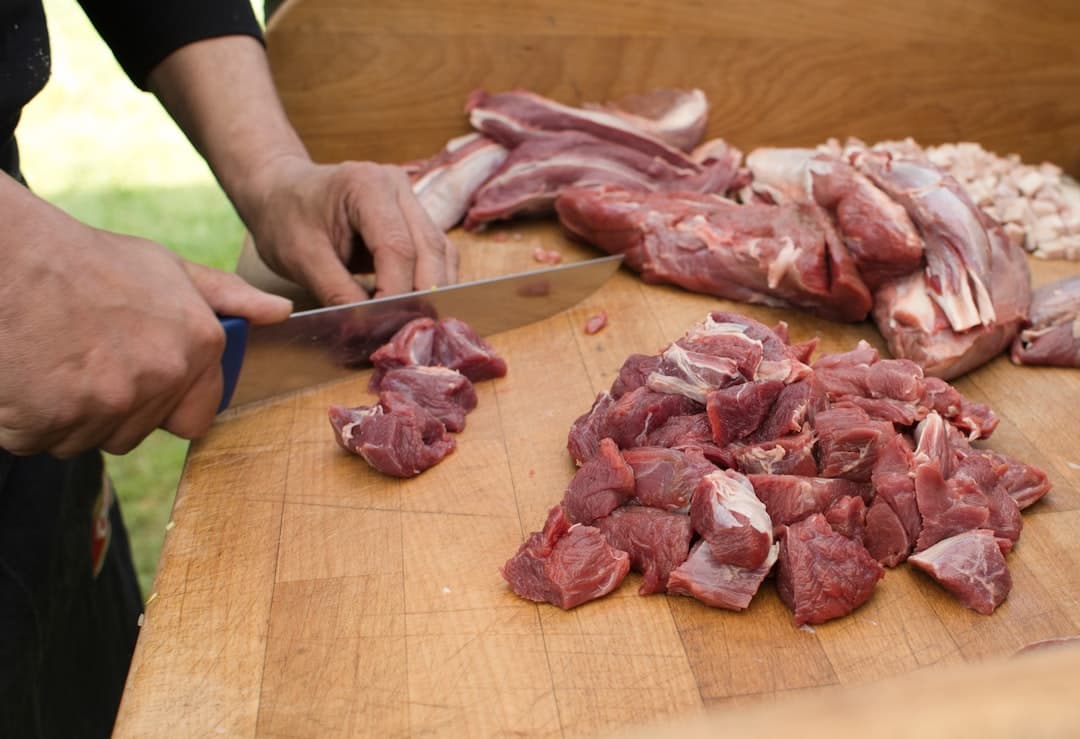
Scavenging means arriving after a predator has eaten the most prized parts. In the conversation, those parts are named explicitly: blood, fat, and organs. What is left is often muscle meat clinging to bone, plus scraps that other scavengers also want.
Hunting, by contrast, provides first access. If you can take down an animal intentionally, you can choose what to eat first, what to preserve, and what to share. You can also access a wider range of tissues before decay or competition.
The discussion links a major evolutionary jump around 2 million years ago, associated with Homo erectus (and sometimes Homo ergaster), to two dietary shifts: hunting and cooking. The claim is that these shifts coincide with a rapid increase in brain and body size toward modern proportions.
It is worth holding this as a hypothesis rather than a settled fact. Many factors likely contributed to brain expansion, including energy tradeoffs, social cooperation, climate variability, and technological innovation. Still, the “first access” framing is a useful way to think about what animal foods meant in practice.
Pro Tip: If you eat animal foods and want to follow a “first access” principle in a modern way, start by diversifying beyond muscle meat. That can mean occasional liver, sardines, eggs, or slow-cooked connective tissues, while keeping portions aligned with your needs and medical history.
Why organs, fat, and blood matter in this framework
The argument here is not simply “eat meat.” It is “understand animal foods as a nutrient package.”
Muscle meat is valuable, but the discussion calls it one of the less nutrient-dense parts of an animal compared with organs, fat, and blood. That is why hunting is framed as transformative: it gives access to the full package.
From a nutrition science standpoint, organ meats can indeed be rich in micronutrients. Liver, for example, is high in vitamin A, B12, folate, iron, and copper. That density can be helpful for some people and risky for others if consumed in large amounts, especially because preformed vitamin A can accumulate. For background on vitamin A safety, see the NIH Office of Dietary Supplements page on vitamin ATrusted Source.
Fat is also not just calories. Animal fats can carry fat-soluble vitamins and provide energy density, which matters in environments where food is seasonal and physical activity is high. Blood and blood-rich foods provide iron and other compounds, and historically were used in many cultures.
At the same time, modern health guidance often focuses on limiting certain saturated fats for cardiovascular risk reduction, especially in people with elevated LDL cholesterol or existing heart disease. The nuance is that risk depends on the whole dietary pattern, genetics, and overall lifestyle. A balanced overview is available from the American Heart Association on saturated fatTrusted Source.
This is where the Modern Stone Age lens becomes practical: it pushes you to ask what “animal foods” means. Is it only lean chicken breast, or is it a diverse set of tissues, prepared in traditional ways, eaten alongside seasonal plants?
A note on safety and edge cases
Nutrient density cuts both ways.
If you are pregnant, trying to conceive, have liver disease, hemochromatosis, chronic kidney disease, or take certain medications, high intakes of organ meats or high-protein diets may not be appropriate. Foodborne illness risk also matters, particularly with raw dairy, undercooked meats, or fermented products made without careful controls. A clinician or registered dietitian can help tailor choices to your situation.
Blue zone diet myths: what the Sardinia story suggests
The Sardinia example challenges a common takeaway: that blue zones are essentially plant-based.
In the village described (Villagrande Strisaili, on the east coast of Sardinia), daily life included constant walking on steep terrain and a food system based on home production. Meals were built from scratch, and the default diet was seasonal because that is what the environment and traditions enforced.
Then comes the surprising part: animal foods were everywhere.
Every home offered homemade charcuterie and cheeses as a first course. There was lamb on a spit, and intestines prepared and eaten alongside it. No meal was described as animal-free. Vegetables existed, including tomatoes, olives, onions, garlic, basil, and even eggplant, but there were no big salads and no sense that vegetables were the main event.
This does not automatically mean animal foods cause longevity. It does suggest that popular media narratives can simplify or selectively emphasize certain aspects of a culture’s diet. It also suggests that “plant-based” may be interpreted differently across contexts. In some places, it can mean plants are present daily, but animal foods are still frequent, and the overall diet remains minimally processed.
Resource callout: Want a simple way to audit your own diet for “ancestral-style processing”? Create a one-week log that tracks not just foods, but preparation methods (fermented, slow-cooked, soaked, homemade, packaged). That single shift often reveals where ultra-processing sneaks in.
Movement, food literacy, and “health span” as the hidden variables
The Sardinia story is as much about behavior as it is about food.
Walking was not exercise. It was transportation, social life, and daily rhythm.
That matters because physical activity changes energy needs, glucose handling, muscle mass maintenance, mood, and sleep. Even modest regular movement is associated with lower all-cause mortality risk in many studies. For a broad, practical summary, see the CDC guidance on physical activityTrusted Source.
Food literacy was also striking in the description. People did not need labels or apps because they produced or sourced their foods directly. That reduces a modern stressor: decision fatigue about what is “healthy.” It also reduces exposure to ultra-processed foods by default.
Social structure may be another missing variable. Shared meals, cultural continuity, and roles for older adults can influence mental health and resilience. While the video focuses on food and tools, the lived example implicitly includes these protective factors.
A key phrase used is “health span,” the idea that the goal is not merely to live longer, but to remain functional and mentally present until close to the end. That is a different target than simply minimizing one biomarker.
Standalone statistic: In the United States, ultra-processed foods contribute more than half of total calorie intake in many analyses, raising concerns about diet quality at the population level. For context, see discussions summarized by the NIHTrusted Source.
Option A vs Option B: two ways humans get nutrition
The discussion offers a simple model with two pathways.
It is not presented as moral philosophy. It is presented as biology and strategy.
Option A: let another animal do the hard work
This pathway is: consume foods that have already been transformed by an animal that is biologically designed for them.
The example given is grass. Humans have “no business” eating grass directly, but ruminants can convert it into nutrient-dense tissues. In this view, humans can then eat meat, fat, blood, and organs, which are described as safe and highly bioavailable forms of nutrition.
This is essentially the argument for animal foods as a kind of biological processing step.
Option B: use human technologies to transform difficult foods
The other pathway is to use tools and techniques to make otherwise problematic foods safer and more nourishing.
Cooking, fermentation, soaking, grinding, and other methods can reduce plant toxins, increase digestibility, and preserve food through seasonal scarcity. This is a major focus of the expert’s career, understanding how ancestral people detoxified plants and made nutrients accessible.
Many plant foods contain defense compounds like lectins, oxalates, phytates, and other antinutrients. These compounds do not affect everyone the same way, and many people tolerate a wide range of plant foods well. Still, preparation methods can matter. For example, traditional processing of cassava is essential to reduce cyanogenic compounds, and soaking or fermenting can reduce phytate content in some grains and legumes. For an evidence-based overview of phytates and mineral absorption, see the NIH ODS page on ironTrusted Source, which discusses dietary factors that influence absorption.
The practical takeaway is not “plants are bad.” It is “plants often require respectful preparation.”
Practical, medically neutral ways to apply the Modern Stone Age lens
This section translates the video’s perspective into choices you can experiment with, without turning it into a rigid ideology.
The goal is not to recreate the Paleolithic era. The goal is to reduce friction between modern diets and human biology by improving food quality, preparation, and diversity.
How to apply this lens without going extreme
Start with processing quality, not macronutrient wars. Replace a few ultra-processed items with minimally processed or traditionally processed alternatives. For example, swap packaged snacks for fruit plus cheese, or swap sweetened yogurt for plain yogurt with honey.
Treat cooking as a nutrient tool. Slow-cooking tougher cuts can improve palatability and reduce waste. Cooking also reduces many microbial risks and can improve digestibility for some people.
If you eat plants, consider preparation as part of the “dose.” Some people do fine with raw salads, others feel better with cooked vegetables, peeled tubers, or fermented vegetables. Keep a simple symptom log if you are experimenting.
If you eat animal foods, diversify thoughtfully. Consider occasional nutrient-dense options like eggs, small oily fish, or small servings of liver, while avoiding excess. If you have high LDL cholesterol or heart disease risk, discuss saturated fat and overall dietary pattern with your clinician.
Make movement non-negotiable, but keep it simple. The Sardinia example was walking, daily, built into life. A sustainable goal for many people is a daily walk plus two days per week of strength work, adjusted for ability and medical conditions.
Rebuild food literacy one skill at a time. Pick one traditional skill per month, like making a simple stew, fermenting vegetables safely, baking sourdough, or learning basic butchery cuts.
Short changes often beat perfect plans.
Q: If humans “require processing,” does that mean raw foods are unhealthy?
A: Not necessarily. Many people tolerate and enjoy raw foods, and some raw foods (like ripe fruit) are relatively easy to digest. The point is that humans often do better when at least some of the diet is cooked, fermented, or otherwise prepared, especially for tougher plants and animal foods.
If you notice bloating, pain, or changes in bowel habits with large amounts of raw vegetables or high-fiber foods, it may be worth discussing with a clinician. Sometimes the issue is the amount, the preparation method, or an underlying condition rather than the food category itself.
Bill Schindler, PhD (as presented in the discussion), experimental archaeologist and traditional food educator
Q: Are organ meats a good idea for everyone?
A: Organ meats can be very nutrient dense, which is both the benefit and the risk. Small portions occasionally may help some people meet micronutrient needs, but frequent large servings could be problematic for people who need to limit vitamin A, iron, or purines.
If you are pregnant, have gout, have iron overload, or have liver or kidney disease, talk with your clinician before adding organ meats regularly.
Bill Schindler, PhD (as presented in the discussion), experimental archaeologist and traditional food educator
A short checklist for “modern stone age” shopping
Key Takeaways
Frequently Asked Questions
- Does this perspective mean humans should eat mostly meat?
- No. The central claim is that humans depend on food processing and preparation, not that one macro split fits everyone. Many people thrive with a mix of animal foods and plants, especially when foods are minimally or traditionally processed.
- Why does the video emphasize organs, fat, and blood over muscle meat?
- Because the argument focuses on nutrient density and bioavailability. Organs and certain animal tissues can contain higher concentrations of key micronutrients than muscle meat, which may have mattered in seasonal, high-activity environments.
- Are blue zones really plant-based?
- The video challenges that generalization by describing daily animal foods in a Sardinian blue zone village, alongside seasonal plants. Blue zone health likely reflects multiple factors, including movement, social structure, and low ultra-processed food intake.
- Is all food processing bad for health?
- No. The video distinguishes traditional processing (cooking, fermenting, curing, soaking) that can improve safety and nutrient access from ultra-processing that may reduce diet quality. The purpose and method of processing matter.
- What is one safe first step if I want to try this approach?
- Start by replacing one ultra-processed item per day with a minimally processed or traditionally prepared food, and add a daily walk. If you plan to add organ meats or major dietary shifts, consider checking in with a clinician first.
Get Evidence-Based Health Tips
Join readers getting weekly insights on health, nutrition, and wellness. No spam, ever.
No spam. Unsubscribe anytime.