Life at 600+ Pounds: Pain, Cravings, and Change
Summary
Most people assume extreme obesity is only about willpower. This video’s perspective is different: it frames 600+ pounds as a whole-body physiology problem where pain, breathlessness, skin infections, cravings, and daily logistics all reinforce each other. It highlights why weight loss can reduce joint symptoms, why hygiene becomes medically important, how ultra-processed foods can worsen hunger signals, and why abrupt 1,200-calorie plans can backfire. It also contrasts bariatric surgery’s early appetite changes with the need for therapy and long-term behavior support, and it explains why newer GLP-1 medications can be so impactful by reducing cravings and slowing gastric emptying.
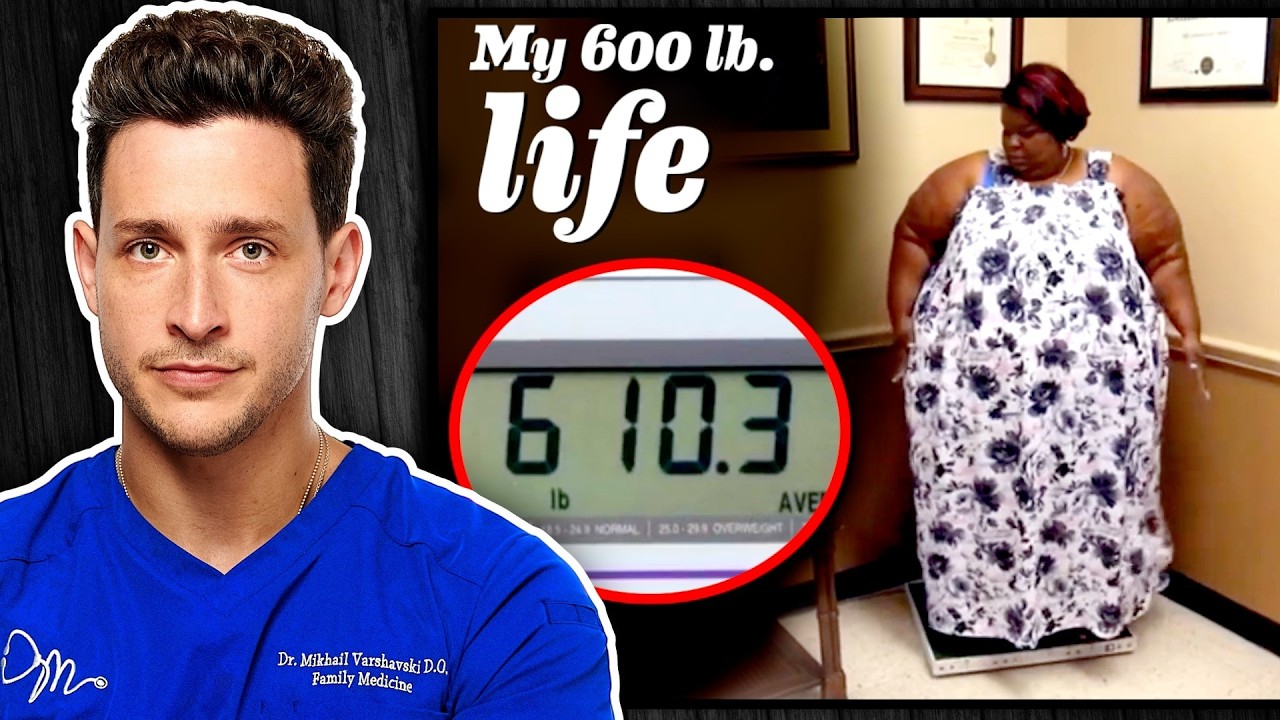
What Most People Get Wrong About 600+ Pounds
Most people get one thing wrong right away: they treat life at 600+ pounds as a character story.
This video frames it as a systems problem, biology, mechanics, environment, and mental load stacking on top of each other until “choice” becomes a very narrow lane. You see it in the morning routine, the shortness of breath on a walk to the classroom, and the way pain shapes every decision. The core idea is not that personal responsibility does not matter, it is that the body’s constraints and signals can become so loud that the usual advice stops working.
The discussion keeps returning to quality of life. Lowering risk for diabetes and cardiovascular disease matters, but so does being able to shower safely, walk without frequent stops, keep independence with age, and participate in daily life.
Did you know? Even modest weight loss can improve symptoms in people with knee osteoarthritis (OA). Guidelines emphasize weight management as a key non-drug strategy for OA symptoms, especially for the knee and hip (CDC osteoarthritis guidanceTrusted Source).
There is also a compassionate, practical point that runs through the episode: when someone is caring for kids, working, and trying to survive day to day, the plan has to fit the reality of their body and schedule. Otherwise, the plan becomes another failure experience, and failure experiences can fuel more overeating.
The Mechanics of Pain and Mobility Limits
Pain is not a side note here, it is the engine that drives everything else.
The video highlights an important mechanical concept: weight carried in the abdomen increases load on the hips, knees, and ankles in a way that can feel “exponential.” Biomechanically, each step can multiply forces across the knee joint, so additional body weight can translate to much higher joint stress during walking. Over time, that stress can worsen pain, reduce activity, and create a feedback loop where less movement makes deconditioning and breathlessness worse.
A key insight is straightforward: weight loss can reduce osteoarthritis pain for many people. That does not mean pain disappears, and it does not mean everyone’s pain is solely weight-related. But for weight-bearing joints, reducing load often helps symptoms and function. Public health guidance commonly includes weight loss and physical activity as first-line approaches for osteoarthritis symptom management (NIAMS overview of osteoarthritisTrusted Source).
Shortness of breath shows up as a safety signal, not a moral one. In the school setting, needing to map a route by chairs is a real-world adaptation to limited cardiopulmonary reserve. With severe obesity, the work of breathing rises, the chest wall can be harder to expand, and conditions like obstructive sleep apnea (OSA) and obesity hypoventilation syndrome can become more likely. Breathlessness can also reflect heart strain, which is why clinicians often evaluate cardiovascular risk and anesthesia safety before surgery.
Small movement can still be meaningful
The episode also highlights something people underestimate: when mobility is limited, “exercise” may start as simply increasing safe walking tolerance.
Pro Tip: If walking triggers joint pain, try breaking it into “micro-walks,” for example, 2 to 5 minutes several times per day, rather than one long bout. The goal is to build tolerance without flaring pain.
Skin Folds, Moisture, and Infection Risk
Hygiene becomes medical at this body size.
The video lingers on showering and the need for help cleaning and drying hard-to-reach areas. This is not about appearance. Skin folds can trap sweat and moisture, creating an environment where bacteria and fungi thrive. Over time, that can lead to irritation, rashes, and infections, and the discomfort can make movement and sleep even harder.
The practical detail that stands out is the emphasis on drying thoroughly, not just washing. Moisture left in skin folds can worsen friction and microbial growth. Clinically, intertrigo (skin fold inflammation) and fungal overgrowth are common concerns in chronically moist areas.
Important: If you notice rapidly spreading redness, severe pain, fever, or confusion, seek urgent care. Skin infections can become serious, especially when mobility limits delay treatment.
Cravings That Feel Like Addiction: What Could Be Driving Them
The episode uses a phrase many people relate to: “it feels like an addiction,” even if textbooks debate the label.
This framing matters because it shifts the goal from shame to strategy. If cravings are intense and persistent, it is useful to ask what is driving them biologically and environmentally, then build interventions that reduce the signal rather than relying on constant resistance.
Mechanism 1: Ultra-processed foods and weak satiety
The video critiques the person’s diet as ultra-processed, and that is not just a cultural judgment. Many ultra-processed foods are engineered to be easy to chew, fast to swallow, and highly rewarding, which can weaken satiety cues and make it easier to overconsume.
Research links ultra-processed food intake with higher calorie intake and weight gain in controlled settings. In a notable controlled feeding trial, people ate more calories and gained weight on an ultra-processed diet compared with an unprocessed diet, even when meals were matched for presented calories and macronutrients (NIH study in Cell MetabolismTrusted Source).
That does not mean all processed foods are “bad.” It does suggest that shifting toward more minimally processed, higher-protein, higher-fiber foods can make hunger easier to manage.
Mechanism 2: Gastric emptying, fullness, and GLP-1 biology
A distinctive point in the video is the mention that the episode may have been filmed before modern GLP-1 receptor agonists became widespread, such as semaglutide. The proposed reason for their success is not only metabolic effects, but also reduced cravings and slower gastric emptying, which can increase fullness.
GLP-1 medications are prescription drugs with important risks and eligibility considerations, so they require clinician oversight. But mechanistically, the idea is accurate: GLP-1 signaling influences appetite centers in the brain and can slow stomach emptying in some people, which may reduce hunger. Large trials show that GLP-1 medications can support clinically meaningful weight loss for many patients when combined with lifestyle support (FDA Wegovy announcementTrusted Source).
Mechanism 3: Sleep and appetite regulation
The video ends with a strong claim: one of the most important things for a healthy metabolism is good sleep.
Sleep affects hunger hormones and decision-making. When sleep is short or fragmented, people often report higher hunger and more cravings, and the brain’s reward response to food can increase. Sleep also affects energy, which makes movement harder and can increase reliance on convenience foods. The American Academy of Sleep Medicine and Sleep Research Society recommend adults aim for at least 7 hours of sleep per night for health (AASM sleep duration recommendationTrusted Source).
What the research shows: Short sleep is associated with higher calorie intake and weight gain risk in many observational studies, although individual responses vary (CDC sleep and healthTrusted Source).
Why “Just Eat 1,200 Calories” Often Fails in Real Life
A major, unique critique in the video is aimed at the “old school” approach: prescribe a low-carb, 1,200 calorie diet, three meals a day, no snacking, then tell someone who has never exercised to start walking.
The argument is not that calorie reduction is irrelevant. It is that an abrupt drop to 1,200 calories can be psychologically and physiologically shocking for someone eating far more, working a demanding job, and already using food to cope with stress and fatigue. Severe restriction can intensify cravings, irritability, and preoccupation with food, and it can make adherence less likely. For some people, it can also increase binge-restrict cycles.
The video’s alternative is more individualized: start by assessing what the person actually eats, then make changes from there, ideally with a nutrition professional. That approach reduces the “all-or-nothing” trap and can prioritize food swaps that improve fullness.
A more realistic step-down plan (conceptual, not a prescription)
Here is a practical framework aligned with the video’s logic, meant to be discussed with a clinician or registered dietitian rather than self-prescribed.
Measure the baseline without judgment. Track typical intake for several days, including stress eating. The goal is information, not punishment.
Change food quality before chasing perfection. Increase protein and fiber at meals to improve satiety. Protein needs vary widely, especially after bariatric surgery, so individualized guidance matters, but the principle is that higher-protein meals often keep people full longer.
Reduce the easiest calories first. Sugary drinks, frequent fast-food add-ons, and large portions of ultra-processed snacks often provide many calories with low fullness. Swapping these can reduce intake without triggering extreme deprivation.
Build movement that matches the body. Start with what is safe and repeatable, then progress slowly. If walking is limited by pain or breathlessness, consider medical evaluation and a physical therapy plan.
Add support, not just rules. Social walking, structured follow-ups, and therapy can improve adherence because the barrier is rarely “knowledge.”
»MORE: Consider asking your clinic for a referral to a registered dietitian, physical therapist, and behavioral health support as a coordinated team. Many bariatric programs offer this kind of wraparound care.
The video also critiques the motivational style of lecturing a patient “do it for your kids.” The more effective approach described is motivational interviewing style: ask questions that help the person state their own reasons for change. When motivation is internalized, it tends to last longer.
Expert Q&A
Q: If someone is short of breath walking into work, is it safe to start exercising?
A: It depends on the cause of the breathlessness and the person’s overall risk. In many cases, gentle, supervised activity is still possible and beneficial, but new or severe shortness of breath should be medically evaluated, especially if there is chest pain, fainting, or swelling.
A clinician may check heart and lung status, review medications, and recommend a gradual plan, sometimes with physical therapy or cardiac rehab style supervision.
Health educator review, MS, CHES
Surgery, GLP-1 Medications, and the Long Game
The episode shows bariatric surgery as both dramatic and incomplete.
Right after surgery, the person reports “lost all cravings for food,” and rapid weight loss follows. That early phase can happen, appetite often changes after bariatric procedures due to altered gut hormones, reduced stomach capacity, and changes in reward signaling around food. But the video is careful about the long-term reality: surgery can reduce the pull toward food, yet it does not automatically resolve stress, trauma, depression, or coping patterns.
A pointed moment comes when therapy is introduced after surgery, and the reaction is resistance, “I thought the surgery will fix everything but it didn’t.” This is the emotional pivot of the episode. The key insight is that obesity treatment often requires layered tools: medical, nutritional, psychological, and social.
“Approval” and gatekeeping concerns
The video also criticizes the language of “I’ll approve you for surgery,” emphasizing that safety testing should guide decisions, not a power dynamic. In practice, bariatric programs typically require pre-op evaluation to assess anesthesia risk, sleep apnea, heart health, and readiness for the postoperative regimen. That evaluation is meant to protect the patient, but communication style matters, especially for people who have experienced stigma.
Where GLP-1 medications fit in this viewpoint
The discussion wonders how bariatric surgery rates may change as newer GLP-1 medications evolve. This is a live question in obesity medicine. For some patients, GLP-1 drugs may reduce cravings enough to support major weight loss without surgery, while for others, surgery may still be the most effective tool, or the two may be used sequentially under specialist care.
GLP-1 medications are not appropriate for everyone, and they can cause side effects such as nausea, vomiting, and diarrhea, and they have specific contraindications and warnings. Decisions should be individualized with a clinician experienced in obesity care.
Protecting metabolism during rapid weight loss
One of the more science-focused points in the video is that losing weight quickly without adequate protein intake and resistance exercise can lead to loss of lean mass along with fat mass. Lean mass matters for strength, mobility, and resting energy expenditure.
A realistic long-term plan often includes:
Expert Q&A
Q: Why do some people feel fewer cravings after bariatric surgery?
A: Appetite changes after surgery may relate to altered gut hormone signaling, changes in stomach capacity, and shifts in how rewarding certain foods feel. Many people also experience earlier fullness, which can reduce the urge to keep eating.
Even with these changes, stress, depression, and old habits can re-emerge over time, which is why behavioral support is often part of long-term success.
Health educator review, MS, CHES
Key Takeaways
Frequently Asked Questions
- Is obesity at 600+ pounds mainly caused by lack of willpower?
- This video’s framing emphasizes that willpower is only one piece. Pain, breathlessness, sleep disruption, ultra-processed foods, stress coping, and appetite biology can all amplify cravings and reduce the ability to sustain strict plans.
- Why is drying skin folds so important?
- Moisture trapped in skin folds can create an environment where bacteria and fungi grow more easily. Thorough drying after washing may reduce irritation and lower the chance of painful rashes or infections.
- Do GLP-1 medications reduce cravings?
- For many patients, GLP-1 receptor agonists can reduce appetite and may reduce cravings by influencing brain appetite pathways and slowing gastric emptying. They are prescription medications and should be used only under medical supervision.
- Why might a strict 1,200-calorie plan backfire?
- A sudden, large calorie drop can intensify hunger, cravings, and emotional distress, especially when someone is used to higher intake and has a physically demanding routine. A step-down approach with dietitian support is often more sustainable.
- Does bariatric surgery fix overeating long-term?
- Surgery can be a powerful jump start and may reduce appetite early on, but it rarely addresses underlying stress, trauma, or coping patterns by itself. Long-term success often includes nutrition planning, movement, sleep, and behavioral health support.
Get Evidence-Based Health Tips
Join readers getting weekly insights on health, nutrition, and wellness. No spam, ever.
No spam. Unsubscribe anytime.