Creatine for Brain, Muscle, and Energy, Practical Guide

Summary
Creatine is often framed as a muscle supplement, but this video’s core message is simpler and broader: creatine helps your body recycle ATP, the “currency” of cellular energy, in high-demand tissues like muscle, brain, and retina. Using a money analogy, the speaker explains how creatine expands your phosphocreatine “reserve,” which can matter during explosive exercise and cognitively demanding days. The video also argues some groups may have a functional creatine shortfall (for example, vegans, vegetarians, and some women who eat little red meat). Research generally supports creatine monohydrate for performance and suggests potential cognitive benefits in specific settings like sleep deprivation.
🎯 Key Takeaways
- ✓Creatine’s main job is energy buffering, it helps regenerate ATP by expanding the phosphocreatine pool, rather than directly “building muscle.”
- ✓The video emphasizes creatine as a brain and retina nutrient, not just a gym supplement, because these tissues are energetically demanding.
- ✓People who eat little or no animal foods (vegans, vegetarians) and some women may be more likely to have lower creatine intake and may notice bigger effects.
- ✓Timing can be practical, taking creatine with a meal or around exercise may be easier to tolerate, and the video discourages mixing it into coffee.
- ✓Higher short-term doses (10 to 20 g) are discussed in the context of sleep deprivation and “loading,” but this approach is not right for everyone.
Creatine is not just a “muscle supplement.”
The most useful way to think about it, based on this video’s framing, is as a cellular energy support nutrient that helps your body keep ATP available when demand spikes, in the gym, at your desk, and in tissues like the brain and retina.
Creatine’s real role, an ATP “cash” buffer
The discussion starts with a problem many people have: they hear creatine is popular, they hear it “builds muscle,” and they still do not know what it is doing.
The core mechanism here is energy recycling. When a muscle contracts, it uses ATP (adenosine triphosphate), and ATP becomes ADP (adenosine diphosphate) after losing a phosphate. To keep contracting, the cell has to put that phosphate back onto ADP to remake ATP.
Here is the video’s analogy in plain language. ATP is like cash you spend to do work. If one muscle contraction “costs” one ATP, then you spend it and you are left with ADP, which the speaker compares to having two quarters instead of a 50 cent coin. To spend again, you need to “make change” back into ATP by adding a phosphate from a reserve.
That reserve is where creatine shows up.
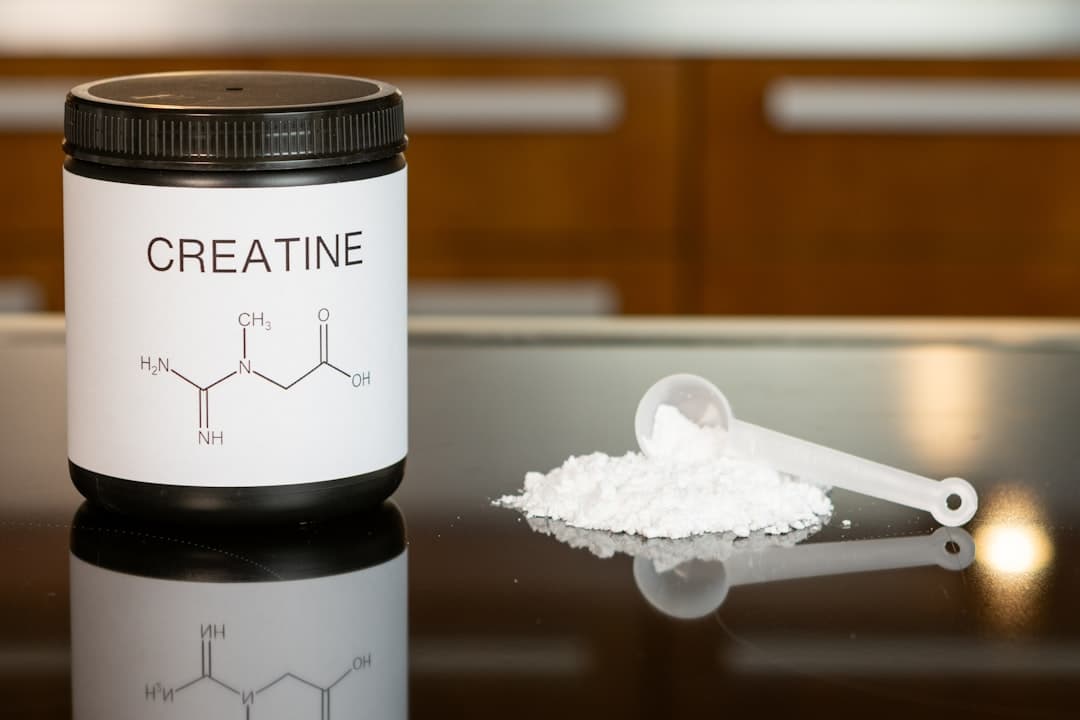
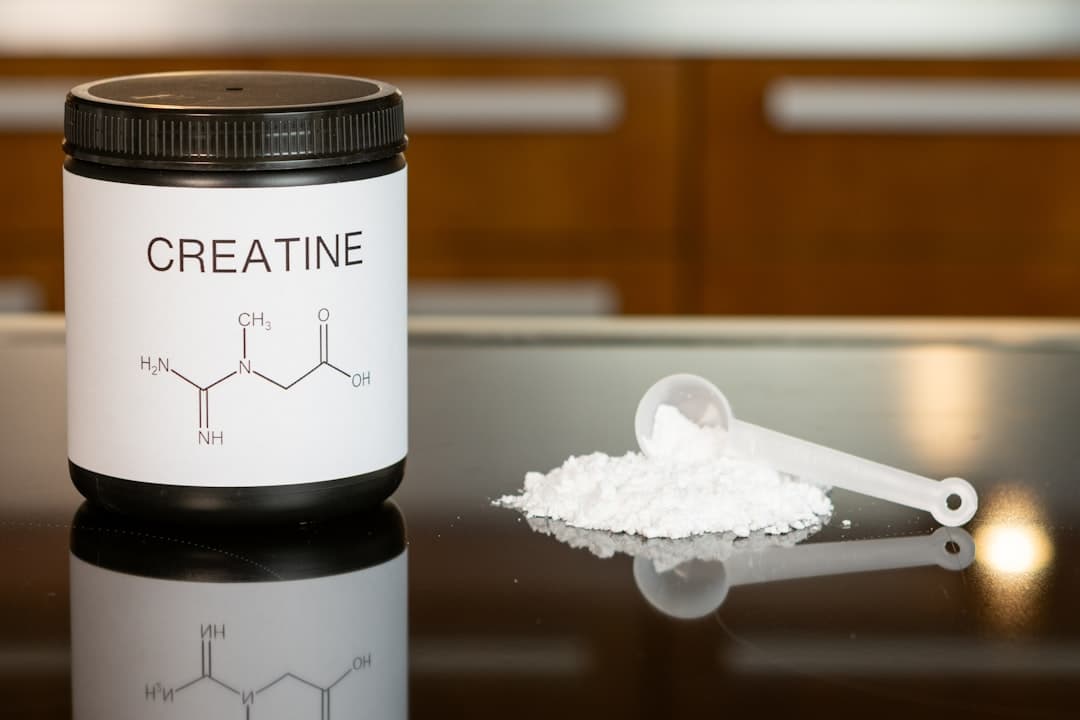
Creatine increases the phosphocreatine pool, which acts like a buffer of ready-to-donate phosphate groups. The practical implication is straightforward: in high-intensity moments, you have more rapid capacity to regenerate ATP.
This aligns with mainstream sports nutrition guidance that creatine monohydrate supports strength and power performance, especially for repeated bouts of high-intensity work, as summarized by the International Society of Sports Nutrition position standTrusted Source.
Did you know? The video highlights that creatine concentration in the brain is reported to be far higher than in plasma (described as about 180-fold), a reminder that creatine is not “just for biceps,” it is heavily present in energetically active tissues.
Why the brain and eyes are central to this creatine discussion
Many creatine conversations stop at muscle. This one does not.
A key insight is that neurons and retinal cells are energy hungry, and the brain is constantly doing expensive biological work. The video points to tasks like maintaining neuronal activity, supporting neurotransmitter resynthesis, and ongoing “pruning” and optimization processes as energy demanding.
If you like the money analogy, the brain is a high-spending organ. When you are learning, problem-solving, or doing cognitively intensive work, you are continually spending ATP. This perspective suggests that having a larger phosphocreatine reserve could matter most when demand is high, not necessarily when you are resting.
The speaker also connects creatine biology to severe, rare medical conditions. In creatine deficiency syndromes, brain creatine can be absent or greatly reduced, and this is associated with significant neurologic symptoms. Reviews describe these syndromes and their clinical features, including developmental delay and seizures, in medical literature such as the National Center for Biotechnology Information overviewTrusted Source.
That clinical extreme is not the same as everyday supplementation, but it supports the broader point: creatine is deeply relevant to brain energetics.
What the research shows: A review in the journal Nutrients discusses creatine’s role in brain energy metabolism and why supplementation may be more noticeable under stressors like sleep deprivation or demanding cognitive tasks, rather than during “normal” baseline conditions (Creatine and the BrainTrusted Source).
Common misconceptions, what creatine does and does not do
Creatine is widely marketed as a muscle builder.
The video pushes back hard on that simplification.
Misconception 1: “Creatine directly makes muscles bigger”
This framing emphasizes that creatine is not inherently anabolic. Instead, it may help you train harder or recover better between intense efforts because ATP can be regenerated faster during short bursts. Over time, better training quality can support strength and hypertrophy adaptations.
That distinction matters in everyday expectations. If you take creatine but do not change training stimulus, sleep, or protein intake, you may not see the dramatic physique changes that social media implies.
Misconception 2: “Creatine is only for athletes”
The argument here is that energetically demanding tissues extend beyond skeletal muscle. The video explicitly includes brain, retina, heart, and even the placenta.
That does not mean everyone needs creatine. It means the “use case” is broader than bodybuilding.
Misconception 3: “Creatine is just a gym trend”
The speaker notes creatine is being discussed in mainstream outlets, and that popularity can create confusion. What cuts through hype is mechanism: creatine supports ATP availability through phosphocreatine buffering.
Pro Tip: If you want to test whether creatine helps you personally, keep everything else steady for 3 to 4 weeks (training plan, caffeine, sleep schedule), then track one or two outcomes like sprint intervals, lifting volume, or how you feel during long study sessions.
Who may benefit most, diet patterns, sex differences, and methylation
Not everyone starts at the same baseline.
This video’s unique angle is “functional deficiency,” especially tied to diet pattern and, potentially, sex differences. The speaker argues that people eating plenty of red meat, fish, shellfish, and eggs are more likely to have enough creatine precursors for the body to synthesize creatine in the liver and kidney.
In contrast, the video flags several groups who might have lower intake or lower stores:
A note on methylation and genetics
The speaker also connects creatine to methylation pathways, mentioning MTHFR and “methylation defects.” In biochemistry, endogenous creatine synthesis uses methyl groups, and some researchers have explored whether creatine supplementation could influence methylation demand.
This is an evolving area. If you have a known genetic variant, a history of elevated homocysteine, or you are already under medical care for methylation-related concerns, it is reasonable to discuss creatine with your clinician rather than self-experimenting aggressively.
Important: If you are pregnant, trying to conceive, have kidney disease, or take medications that affect kidney function, talk with an OB-GYN or other qualified clinician before starting creatine. The video argues pregnant women “should definitely consider” creatine due to placental energy demands, but pregnancy supplementation decisions should be individualized.
How to take creatine in everyday life, dose, timing, and quality
This is where the video gets practical, and also a bit opinionated.
First, the speaker discourages putting creatine in coffee. The transcript does not fully explain why, but the clear recommendation is to avoid that habit.
Instead, the suggested timing options are:
Dose ranges mentioned in the video
The transcript includes two clear dose ideas:
In research and sports nutrition practice, a common approach is either a daily maintenance dose (often 3 to 5 g/day) or a short loading phase followed by maintenance, as summarized by the ISSN position standTrusted Source.
How to use the video’s advice without overcomplicating it
If you are considering creatine for training performance, cognition during demanding work, or as a dietary gap-fill, these steps mirror the video’s practical intent.
Pick a consistent daily dose and stick with it. Many people use 3 to 5 g/day of creatine monohydrate in studies and real-world practice, and the video repeatedly references 5 g as a label amount.
Choose timing you can repeat. Take it with a meal, or take it near workouts if that fits your routine. Consistency is usually more important than perfect timing.
Be cautious with high-dose experiments. The video mentions 10 to 20 g for sleep deprivation scenarios. Higher doses can increase the risk of gastrointestinal upset in some people, and they are not appropriate for everyone.
Pay attention to product quality. The speaker makes a strong quality claim, contrasting a 99% purified German raw material (Creapure) with some products described as lower purity. While purity varies by manufacturer, it is reasonable to look for third-party testing and transparent sourcing.
»MORE: If you want a simple tracking sheet, create a one-page “Creatine Trial Log” with daily dose, training session notes, sleep hours, and one cognitive metric (for example, perceived focus from 1 to 10). Bring it to a clinician or sports dietitian if you want help interpreting changes.
Safety, side effects, and when to talk with a clinician
Creatine monohydrate is one of the most studied supplements in sports nutrition, and position statements generally consider it safe for healthy adults when used as directed, including in the ISSN position standTrusted Source.
Still, “safe for many” is not the same as “safe for all.”
Potential downsides people commonly report include:
Situations where it is especially important to get medical guidance first include kidney disease, pregnancy, and use of medications that affect kidney function.
Q: Should I take creatine if I am sleep deprived?
A: The video notes that higher doses (about 10 to 20 g) have been used to offset some cognitive declines linked to sleep deprivation. Research on creatine and cognition suggests benefits may be more likely under stressors like sleep loss, but results vary by person and study design (Creatine and the BrainTrusted Source).
If you are frequently sleep deprived, it is also worth addressing the root cause, and discussing supplement plans with a clinician, especially if you are considering higher-dose protocols.
Jordan Smith, RD, CSSD (Sports Dietitian)
Q: Is it okay to put creatine in coffee?
A: The speaker explicitly recommends not taking creatine in coffee. If coffee is your only consistent routine, consider taking creatine with breakfast or another meal instead, so the habit is stable.
If you notice stomach upset or jitters when combining supplements with caffeine, separating them may be a practical troubleshooting step.
Alyssa Chen, PharmD
Key Takeaways
Frequently Asked Questions
- Does creatine directly build muscle?
- Creatine is better understood as an energy support supplement that helps regenerate ATP during short, intense efforts. Over time, improved training capacity may support strength and muscle gain, but creatine is not considered directly anabolic on its own.
- Who is most likely to notice a difference from creatine?
- People with low dietary creatine intake, such as vegans and vegetarians, may see a larger change in creatine stores after supplementing. Some individuals who eat little red meat, including some women, may also be more likely to notice effects depending on their baseline diet and training demands.
- What dose did the video recommend for sleep deprivation?
- The video discusses “loading up” with about 10 to 20 grams to offset some cognitive declines linked to sleep deprivation. Higher doses are not appropriate for everyone, and discussing this approach with a clinician is a good idea if you have health conditions or take kidney-affecting medications.
- Is creatine safe for most people?
- Creatine monohydrate is widely studied and is generally considered safe for healthy adults when used as directed, according to major sports nutrition reviews. If you are pregnant, have kidney disease, or have complex medical issues, it is best to speak with a clinician first.
Get Evidence-Based Health Tips
Join readers getting weekly insights on health, nutrition, and wellness. No spam, ever.
No spam. Unsubscribe anytime.