Get Jacked on $10 a Day vs $10,000: What Matters

Summary
Most people assume getting muscular requires expensive food, elite coaching, and fancy recovery tools. This video’s experiment challenges that idea by comparing a $10 day (four budget meals, cheap caffeine, low-cost gym) to a $10,000 day (float tank, Michelin-trained chef, top hypertrophy coach, spa recovery). The key theme is simple: muscle-building results mainly come from training hard, hitting calories and protein, and sleeping well. Money can help with taste, convenience, and coaching, but it is rarely required for progress if your basics are solid.
What most people get wrong about “getting jacked”
A lot of people quietly believe there is a secret price tag for muscle.
If you are not buying expensive meal prep, premium supplements, high-end coaching, and the latest recovery tools, then your progress must be capped. That is the story celebrity routines sell, especially when you hear quotes like LeBron James spending a million dollars a year “on his body.”
The video’s unique angle is to treat this as a testable, real-life question, not an internet argument. A two-day experiment compares a strict $10 day (all meals, training, and supplements included) with a $10,000 day built around luxury fitness protocols, including a sensory deprivation float tank, a Michelin-trained chef, a world-class hypertrophy coach, and a high-end spa recovery package.
The practical framing is blunt: if calories, protein, and training quality are similar, the body does not magically grow more muscle because your chicken came with truffle caviar.
At the same time, the experiment does not dismiss spending entirely. It highlights a more realistic “money helps around the edges” view. Spending can make dieting feel easier, make training more precise, and make recovery more relaxing. But those are different benefits than “more muscle by default.”
Did you know? Building muscle does not always require a huge calorie surplus. A review on energy surplus and hypertrophy notes that while a surplus can help in some contexts, the relationship is not simple, and factors like training stimulus and protein intake still matter a lot (NIH reviewTrusted Source).
This article breaks down the video’s exact budget meals, training approach, supplement choices, and luxury upgrades, then translates them into practical decisions you can make in everyday life.
The $10 day blueprint: build meals around the cheapest “macro anchors”
The $10 day is not a “sad diet” day. It is a strategy day.
The guiding idea is to pick a few foods that are both high-protein and low-cost, then build meals that are easy to repeat. To make it concrete, the experimenter created a Walmart price list ranking protein sources from cheapest to most expensive, then used those results to plan four meals.
The budget shopping logic, in plain English
Protein is the hardest macro to hit on a tight budget, so it becomes the anchor.
On the list, lentils came out as the cheapest, with about 40 g of protein for $0.66. Milk was next, at roughly 40 g of protein for $0.81. Chicken breast was also near the top, at around 40 g of protein for $1.17. Protein powder was ranked lower than those staples, but the point was not “never buy whey.” The point was that milk and lentils can be surprisingly cost-effective foundations.
Carbs were handled the same way. The cheapest options were white rice, brown rice, and oats, and bananas were highlighted as the cheapest fruit. For fats, sunflower seeds and peanut butter were the cheapest “healthy fat” picks (with most nuts still being fairly affordable).
This is a useful mental model: instead of searching for the perfect meal plan, pick two to three cheap protein anchors, two cheap carb anchors, and one cheap fat anchor, then rotate flavors.
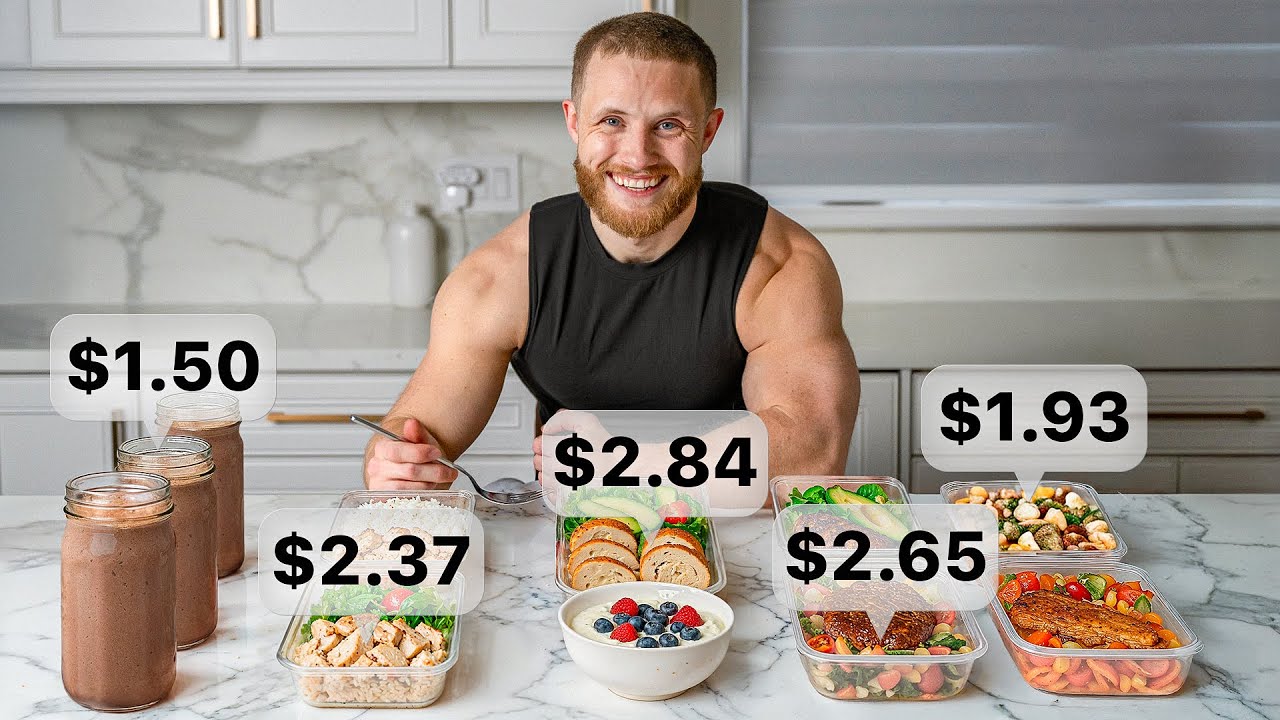
The four meals, with the video’s real costs and macros
Meal 1: Low-cost “anabolic” peanut butter protein smoothie
This breakfast cost $1.50 and delivered 48 g of protein.
It used a combination that makes sense once you see the price list: milk + whey protein (cheap, high-quality protein), plus peanut butter, banana, and oats for calories, carbs, and taste.
Meal 2: Pre-workout high-protein chicken wrap
This wrap cost $2.21.
It was built for speed and repeatability: chicken breast (prepped in bulk), brown rice, spinach, cheese, salsa, sour cream, and one large whole wheat tortilla. The video emphasizes a working-person reality: you can prep the chicken ahead of time, assemble in a couple minutes, or build it the night before and take it to work.
Meal 3: Post-workout turkey and veggie stir fry
This was the most expensive budget meal at $2.83, and it was framed as the most nutrient-dense.
The meal was lean ground turkey cooked with frozen vegetables, soy sauce, brown rice, and an egg, and it provided 46 g of protein. A key money-saving detail is how vegetables “look expensive” on a carb-per-dollar list because you need a lot of volume to reach a typical carb serving. The hack offered here is practical: buy frozen or canned vegetables.
Frozen vegetables are not a downgrade by default. In some cases they may be comparable or even better nutritionally than produce that has spent days in transport and on shelves.
Meal 4: High-protein peanut butter dip with apple slices and sunflower seeds
This last meal cost $1.60.
It combined Greek yogurt, peanut butter, and honey into a dip, then used apple slices (plus cinnamon) for dipping, with sunflower seeds on the side for extra fats. The overall theme is consistent: inexpensive staples, minimal cooking complexity, and enough protein spread across the day.
At the end of the $10 day, all meals plus training and supplements totaled $8.92, under budget.
Pro Tip: If you are trying to cut calories, copy the video’s idea of choosing “lower calorie” protein anchors more often. Lentils and peanut butter can be budget-friendly, but portions matter because calories add up fast.
Budget supplements and pre-workout: what’s actually pulling its weight
Supplements are where budgets often go to die.
The $10 day approach was intentionally minimal: spend money only where the cost-to-benefit ratio is hard to beat.
Creatine and a “coverage” multivitamin
The supplement list was short:
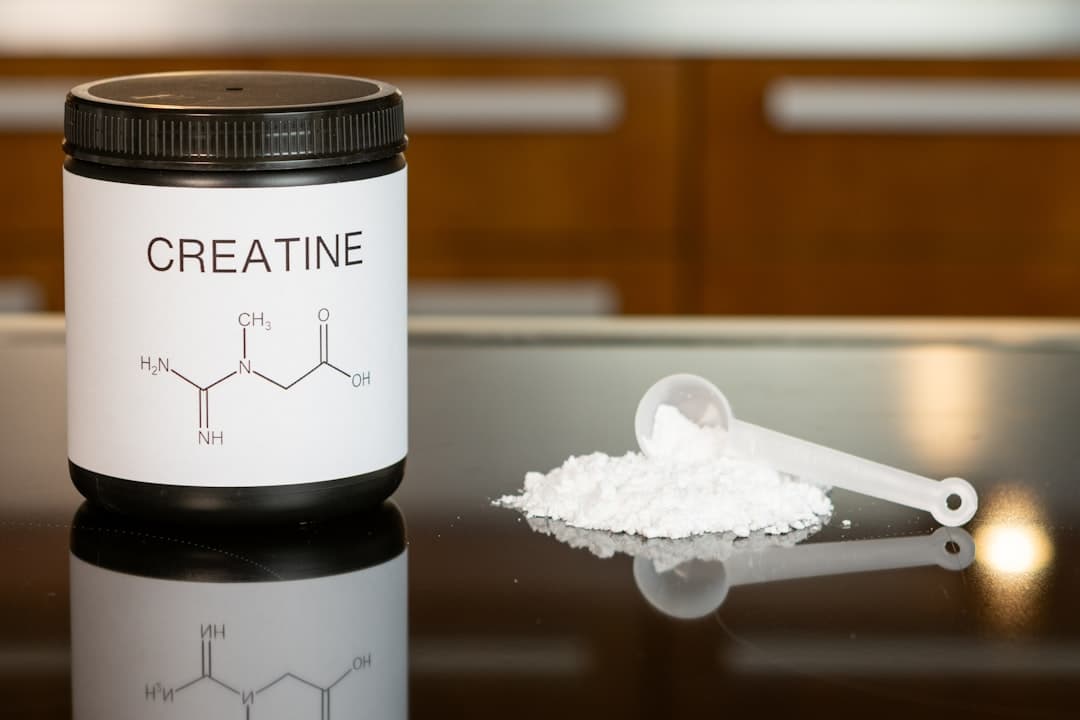
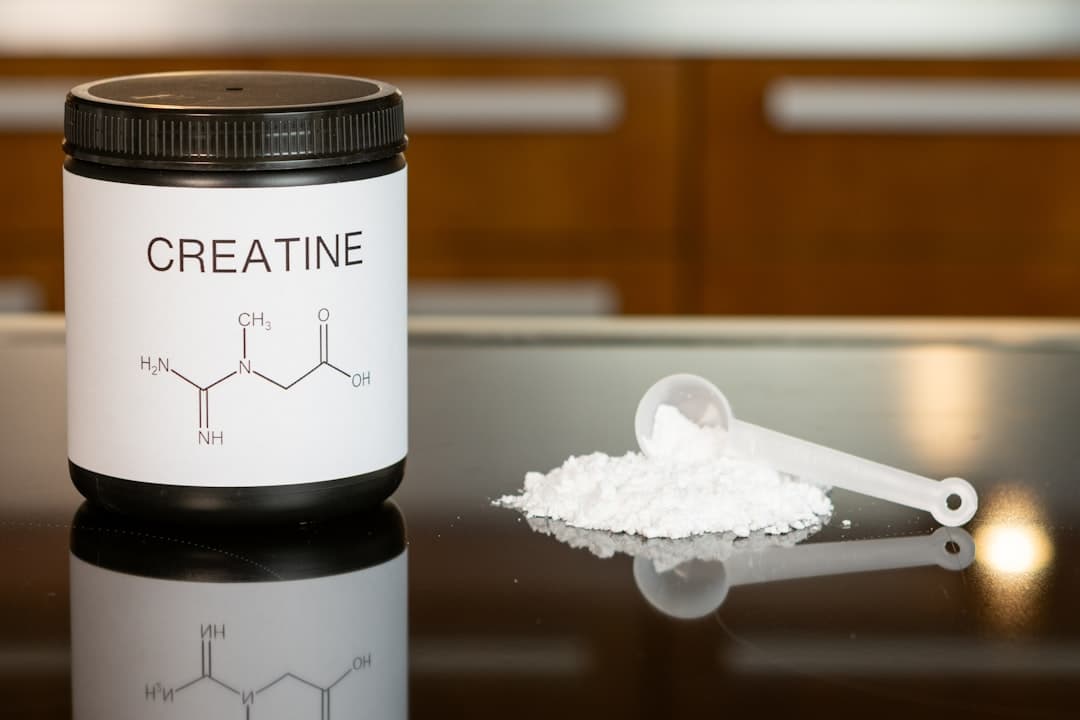
Creatine was highlighted as a standout because it is both well-studied and cheap, especially if bought in bulk. That combination is rare in supplement marketing.
The multivitamin was framed more cautiously. The point was not “everyone needs this,” but “you probably do not need it if your diet is generally healthy, but it can be a low-cost way to feel covered.” If you have medical conditions, take medications, or are pregnant, it is smart to ask a clinician before adding supplements, even common ones.
Coffee vs pre-workout powder
The video’s budget logic for pre-workout is simple: start with caffeine.
A tub of standard pre-workout might be about $30, or roughly $0.50 per scoop. A cup of coffee might be about $0.25 per serving, and caffeine tablets can be around $0.05 per pill.
The video also mentions a newer study finding that caffeine alone was as effective as a multi-ingredient pre-workout supplement for performance outcomes. For many people, that means the “expensive blend” may not be the primary driver, caffeine is.
Important: Caffeine is not harmless for everyone. If you are pregnant, have uncontrolled high blood pressure, certain heart rhythm issues, panic disorder, or you are sensitive to stimulants, talk with a clinician about what amount is reasonable for you.
Training on a budget: the “45-minute, close-to-failure” mindset
A cheap gym can still be a serious gym.
The video points out that there are gyms in the US and Canada that cost around $10 per month, which can work out to about $0.33 per day. Examples mentioned include Planet Fitness, Crunch Fitness, and 24 Hour Fitness in the US, and Fit4Less and Planet Fitness in Canada.
Home training is also presented as viable. Workout bands around $40 plus a pull-up bar around $30 could average to about $1.99 per day over a year. The speaker personally prefers free weights and machines, but still acknowledges that bands can “get the job done,” especially for beginners.
The minimalist hypertrophy approach (what to do when time is tight)
The training idea here is not “do less forever.” It is “you can do less and still make progress.”
If you need a quick workout, the video suggests:
The claim is practical: you can be in and out in about 45 minutes and still get a “huge hypertrophy stimulus” if the sets are truly challenging.
Expert Q&A
Q: Is training to failure safe for everyone, especially beginners?
A: Training close to failure can be effective, but beginners often benefit from stopping a little short while they learn technique. If your form breaks down near the end of a set, that is a sign to leave a rep or two in reserve, especially on complex lifts.
People with joint problems, recent injuries, or certain medical conditions may need a more conservative approach. A physical therapist or qualified trainer can help you choose exercises and effort levels that match your body and goals.
Jordan Patel, MD, Sports Medicine Physician
The budget day workout was a leg day at a low-cost gym, and the takeaway was direct: you do not need a premium membership to train hard.
The $10,000 day: what luxury really buys (taste, coaching, convenience)
The luxury day starts with a recovery experience instead of a meal.
A sensory deprivation float tank was the first purchase. The explanation is vivid: high-salt water makes you feel weightless, the water is skin temperature, and the pod is dark and soundproof. It felt “trippy” at first, but after about 15 minutes, the body felt deeply relaxed. The conclusion was not “this grows muscle,” but “I can see how it could help recovery.”
The Michelin-trained chef: macros, but make it enjoyable
Next came the biggest “quality of life” upgrade: hiring a personal chef.
A Michelin-trained, Top Chef Canada cook was hired for 5 hours at $500 per hour, totaling $2,500. But the video makes an important distinction: the expensive part is the labor and skill, not necessarily the ingredients.
Breakfast was oyakodon, described as a Japanese version of a “bro meal,” basically chicken, eggs, and rice, plus onions and toppings. The ingredient cost for that breakfast was only $6.46, and it still hit 46 g of protein. The chef simply made it taste far better than a typical meal prep container.
This is a key insight: luxury can improve adherence by improving enjoyment. If you dread your meals, you are less likely to stick with a calorie deficit or consistent protein intake.
The luxury pre-workout meal and the most expensive pre-workout
For the pre-workout meal, the chef made a seafood risotto with lobster, scallops, and shrimp, plus truffled caviar. The ingredient cost was $186.24.
The video even jokes about an everyday gym truth: there is enough salt in the dish to get a good pump.
Then the supplement shop was asked for the most expensive pre-workout, which turned out to be Mammoth Pump High Intensity at $65.99, or about $0.87 per scoop.
The practical implication is not that expensive pre-workout is useless, but that the marginal gains over caffeine alone may be small for many people, while the price difference is obvious.
The world-class trainer session: where money may actually move the needle
The training upgrade was hiring Joe Bennett, described as the “OG hypertrophy coach,” with a client list that includes top bodybuilding champions and celebrities. The rate mentioned was $700 per hour, and the total session was 3 hours for $2,100.
The most valuable part was not the exercise selection, it was the coaching cues that changed how the movements felt.
Specific cues from the session included:
This is the luxury day’s strongest argument: skilled coaching can improve targeting, technique, and effort, which could compound over time.
What the research shows: The video references a study finding that people training with a personal trainer experienced significantly more muscle growth than those who did not. Even when you have good information, accountability, feedback, and motivation can change how hard and how consistently you train.
The session also included shoulder mobility work and posing tips, which highlights another luxury benefit: you are paying for an expert’s eyes and experience across multiple domains, not just counting sets.
Recovery: relaxation is nice, but basics still dominate
The luxury day recovery continued after training.
A post-workout meal was ordered through DoorDash: a chicken pita targeted at 500 to 600 calories and 35 to 40 g of protein. The total cost was $34.44, including the meal, delivery fee, and a $15 tip. The video’s conclusion is refreshingly honest: the main benefit here is convenience, not better gains than the cheaper turkey stir fry from the budget day.
Then came a premium spa package: deep tissue massage focused on back and legs, plus a facial and facial massage techniques. The custom package cost $1,000.
The experimenter’s stance on these recovery tools is consistent. They can help you relax, and relaxation may support recovery, but they are “supplementary, not mandatory.”
Two free recovery tools were emphasized:
This is a useful reset if you feel pressured by social media recovery trends. You can spend money on recovery if it improves your life and helps you train again tomorrow, but you do not need to buy your way out of poor sleep or inconsistent training.
Expert Q&A
Q: Do massage and float tanks actually speed up muscle recovery?
A: Some people feel less soreness and stress after massage or relaxation-based therapies, and that can make it easier to keep training consistently. The evidence for large, direct effects on muscle growth is less clear, but reduced pain and better sleep can still matter in real life.
If you are choosing between spending on recovery services and improving basics like sleep duration, nutrition, and a safe training plan, the basics usually give you more reliable returns.
Elena Ruiz, MD, Internal Medicine
A final luxury meal came from a meal prep service: salmon with rice, broccoli, mushrooms, and onions, costing $10.04. The video notes this is convenient and not wildly expensive, but still typically costs more than buying ingredients in bulk and cooking yourself.
Notably, the experimenter refused to spend the remaining money on “random recovery hacks” without enough science to justify the price, and instead gave $4,000 to a subscriber. That choice reinforces the video’s core perspective: skepticism about pricey add-ons, and respect for the basics.
So, can you get just as jacked on $10 a day?
The answer is mostly yes, with a few important caveats.
The video’s main conclusion is that you would likely make the same gains on the budget meals versus the luxury meals if macros are the same. The body responds to training stimulus, total calories, protein intake, and recovery, not the prestige of ingredients.
Still, the luxury day revealed a few areas where money can help in ways that might indirectly improve results over months.
Here is a practical “what is worth it” breakdown, based on the experiment.
Worth paying for if you can, because it improves adherence: Better-tasting macro-friendly meals. The chef experience made dieting feel easier because the food was genuinely enjoyable. If taste is your biggest barrier, investing in cooking skills, sauces, spices, or occasional meal prep support may pay off.
Potentially worth paying for, because it can improve training quality: A good trainer. The cues in the back workout changed muscle targeting and execution in ways that many lifters struggle to self-correct. Over time, better technique plus higher effort could compound.
Usually not necessary for muscle gain: Expensive pre-workout formulas, especially if you respond well to caffeine. The budget day’s coffee approach is hard to beat on cost.
Nice but optional: Recovery experiences like float tanks and luxury spa packages. These may reduce stress and soreness for some people, but they do not replace sleep, smart programming, and nutrition.
Where “macros” meets real life
The experiment keeps returning to macros because they are measurable and actionable.
But it also acknowledges something many plans ignore: people do not fail because they do not know protein is important. They fail because their plan is annoying, time-consuming, bland, or socially isolating.
If money solves those friction points, it can indirectly help you gain muscle by keeping you consistent.
A simple budget-first spending ladder
If you are deciding where to put limited money for muscle building, this is a practical order that fits the video’s viewpoint:
»MORE: If you struggle to stay consistent, consider making a one-page “default day” template, breakfast, pre-workout meal, post-workout meal, and bedtime snack, then repeat it most weekdays. Consistency often beats novelty.
Finally, remember the video’s no-nonsense closer: training hard, training smart, eating the right number of calories and protein for your goal, and sleeping well are the big rocks. Your approach does not need to be perfect to be effective.
Key Takeaways
Sources & References
Frequently Asked Questions
- Can I really build muscle with cheap foods like rice, milk, and peanut butter?
- Many people can, as long as total calories and protein match their needs and training is consistent. The video’s approach uses these foods as affordable macro anchors, then adds items like frozen vegetables for nutrients and variety.
- Is a cup of coffee enough as a pre-workout?
- For some people, caffeine alone may provide much of the performance boost they associate with pre-workouts. If you are sensitive to caffeine or have certain health conditions, check with a clinician before using caffeine strategically.
- Do I need a personal trainer to gain muscle?
- Not necessarily. A trainer can improve technique, motivation, and targeting, which may help results, but many people progress well with solid programming, good effort, and reliable information.
- Are float tanks and massages worth it for recovery?
- They may help you relax and feel less sore, which can support consistency, but they are not required for muscle growth. Sleep, smart training, and adequate nutrition are typically higher-impact recovery tools.
- Do I need to eat in a calorie surplus to build muscle?
- A surplus can help in some situations, but it is not the only factor. Research discussions suggest the relationship is nuanced, and training quality plus adequate protein remain central ([NIH review](https://pmc.ncbi.nlm.nih.gov/articles/PMC6710320/)Trusted Source).
Get Evidence-Based Health Tips
Join readers getting weekly insights on health, nutrition, and wellness. No spam, ever.
No spam. Unsubscribe anytime.