Dr. Mark Hyman’s Systems Plan for Vitality

Summary
This article captures Dr. Mark Hyman’s core message from his Huberman Lab conversation, health improves fastest when you stop chasing isolated diagnoses and start fixing the underlying systems that create them. His functional medicine lens focuses on root causes like diet quality, gut dysfunction, toxins, infections, allergens, and stress, plus the “ingredients of health” like real food, sleep, movement, and targeted nutrients. You will learn how this network view connects symptoms that seem unrelated, why inflammation and metabolic dysfunction show up everywhere, and how to build a stepwise plan you can discuss with your clinician.
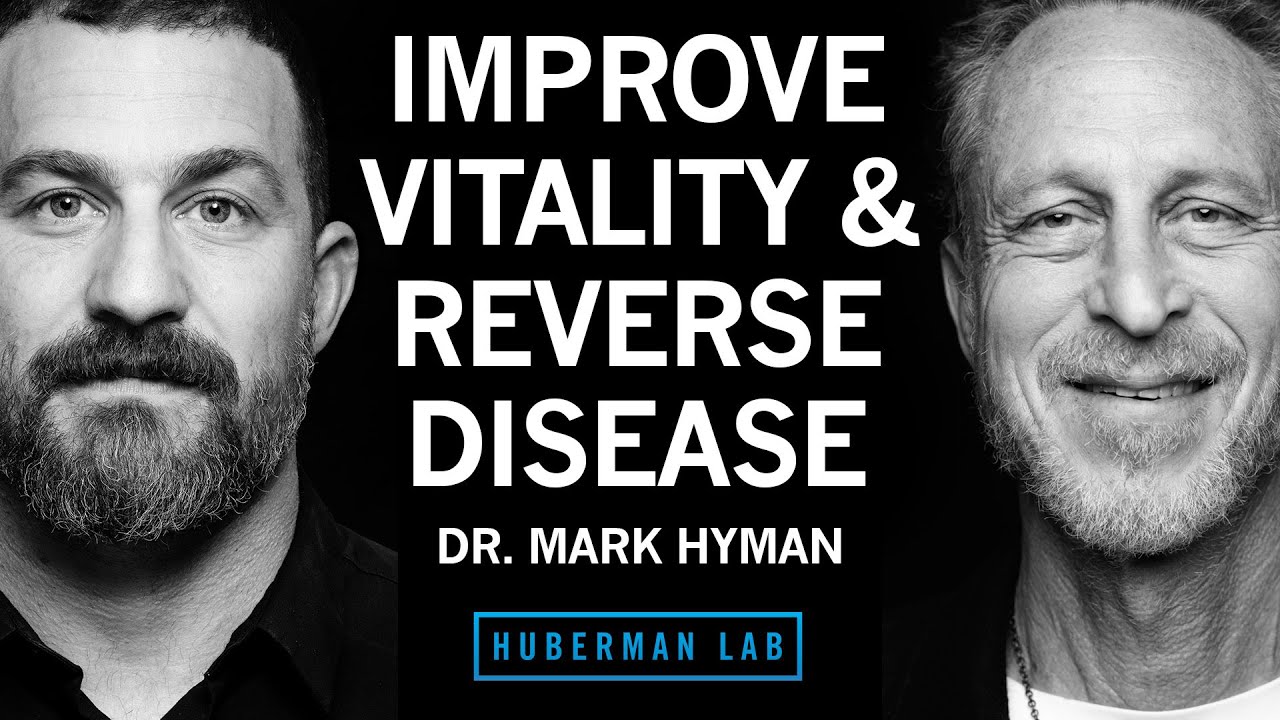
A surprising claim: fix health, and disease becomes the side effect
The most provocative line in this conversation is also the most practical.
Functional medicine is framed as “the science of creating health”, and the argument is that when you create health, disease often recedes as a downstream effect.
That is a different goal than most people have been trained to pursue. The usual model is to name the diagnosis, match it to a medication, then manage the side effects and add more medications when new symptoms appear. In contrast, this viewpoint keeps asking what is driving the biology underneath the label.
This does not reject conventional medicine. It tries to use it more strategically, while expanding the toolkit to include food quality, gut function, sleep, movement, stress biology, and environmental exposures.
Pro Tip: If you have multiple diagnoses that seem unrelated, treat that as a clue. This perspective suggests you might be looking at one or two shared drivers, not five separate “bad luck” conditions.
What functional medicine means in this conversation
Functional medicine is described as a meta framework, basically an “operating system” for thinking about health.
It is not defined here as supplements, trendy lab panels, or a rejection of standard care. Instead, it is a way of seeing the body as a connected network, where gut, immune function, hormones, mitochondria, detox pathways, and the brain constantly influence each other.
That network framing matters because the reductionist medical workflow can unintentionally fragment a person. Migraine goes to neurology. Rash goes to dermatology. Reflux goes to GI. Mood symptoms go to psychiatry. Each specialist may do excellent work inside their lane, but the person can end up with a growing list of prescriptions and still feel unwell.
This approach tries to do the opposite. It is inclusive rather than exclusive, meaning symptoms that do not “fit” a single diagnosis are treated as valuable information.
The origin story that shapes the lens
The unique perspective in this episode is personal. Dr. Hyman describes being highly functional and athletic, then developing a severe chronic illness picture that included profound fatigue, cognitive issues, gut symptoms, rashes, and autoimmune-type problems.
He recounts being dismissed or redirected, including being told he was depressed and should take an antidepressant. His turning point came from tracing his own case back to systems, including a history of living in Beijing and heavy exposure to coal-related air pollution, with a suspected mercury burden.
The key takeaway is not that everyone has mercury toxicity.
It is that complex symptom clusters often require systems-level detective work, and that the “one diagnosis that explains everything” model can fail people whose biology has been pushed off track in multiple places.
Important: If you are considering environmental exposure testing (for heavy metals, mold, or other toxins), do it with a qualified clinician. Interpretation and next steps can be nuanced, and self-treating based on a single test can backfire.
Start with two questions: what is disrupting you, and what is missing?
The conversation boils functional medicine down to a deceptively simple method.
What are you exposed to that is interrupting normal function?
What ingredients for health are you missing?
That is the whole game plan.
It also explains why this approach can feel so different from standard medical visits. Instead of starting with the diagnosis name, it starts with inputs and outputs, what is coming into the system, and what the system is doing in response.
From a research standpoint, this is consistent with the idea that environment and behavior strongly shape risk for chronic disease, even when genes matter. Many chronic conditions are influenced by diet quality, activity, sleep, stress, and exposures, all of which interact with genetic susceptibility. A helpful way to think about this is the “exposome,” the sum total of exposures that affect biology over time.
Did you know? The World Health OrganizationTrusted Source estimates that noncommunicable diseases account for the majority of deaths globally, and many are linked to modifiable risk factors like diet, inactivity, and harmful exposures.
The “short list” of root causes: toxins, microbes, allergens, diet, stress
A major theme is that there is a short list of common disruptors that “piss your system off,” to use the blunt phrasing from the discussion.
The list given is:
This list is not presented as a complete catalog of all disease causes. It is presented as a high-yield starting point for understanding why so many people feel stuck.
Trade-off: simple list, complex reality
The strength of this framework is speed. It gives you five buckets to investigate instead of 50.
The trade-off is that each bucket can be complicated. “Microbes” could mean post-viral symptoms, chronic sinus issues, periodontal disease, gut dysbiosis, or something else. “Toxins” could be occupational exposure, contaminated water, indoor air quality, or a very specific event.
So the list is a map, not a diagnosis.
What makes it useful is how it changes your next question. Instead of, “What drug treats my diagnosis?” you ask, “Which of these buckets is most likely driving my inflammation, fatigue, mood symptoms, or pain?”
Why inflammation is the common denominator across so many diagnoses
Inflammation is repeatedly treated as the “root” mechanism connecting a wide range of chronic conditions.
The discussion links inflammation with obesity, diabetes, heart disease, cancer, dementia, autism, depression, allergies, and autoimmunity.
That is a big claim, and it is easy to misunderstand. Inflammation is not “bad” by default. Acute inflammation is how you heal a cut, fight an infection, and repair tissue. The concern is chronic, dysregulated inflammation, the kind that lingers and quietly alters metabolism, blood vessels, immune signaling, and brain function.
From a research lens, chronic low-grade inflammation is associated with cardiometabolic risk and can track with insulin resistance and obesity. For example, the Centers for Disease Control and PreventionTrusted Source explains insulin resistance as a key pathway toward type 2 diabetes, and insulin resistance often correlates with inflammatory markers.
The practical point in this episode is not to obsess over a single lab value.
It is to recognize that if you have a cluster of conditions, it can be worth asking, “What is driving my inflammatory load?” and then working backward through gut health, diet quality, stress load, sleep, activity, and exposures.
What the research shows: Dietary patterns emphasizing minimally processed foods, fiber-rich plants, and unsaturated fats are associated with better cardiometabolic outcomes in many populations, including reduced risk of heart disease. The American Heart AssociationTrusted Source summarizes evidence supporting unsaturated fats over saturated and trans fats.
Gut health as the hub: the psoriatic arthritis case that changed the script
One of the most “video-specific” moments is a clinical story from Cleveland Clinic.
A woman arrives with psoriatic arthritis plus a long list of other problems: migraines, prediabetes, depression, reflux, and irritable bowel symptoms, including severe bloating and distension.
The network interpretation is immediate. These are not random.
They can share an inflammatory driver, and the gut is a plausible hub because of symptoms, antibiotic and steroid history, and the immune nature of psoriasis and arthritis.
What was done in the story
The intervention described is straightforward and intentionally not exotic.
Then comes the twist.
She returns reporting that symptoms are gone, she lost 20 pounds, and she stopped multiple medications, including a biologic medication described as costing $50,000 per year.
Two things can be true at once.
First, this is a compelling illustration of the systems approach, and it matches what many people experience when they remove ultra-processed foods and identify specific triggers.
Second, stopping prescription medications without medical supervision can be risky, particularly immunosuppressive therapies and psychiatric medications. So the lesson is not “quit your meds.” The lesson is that food and gut-focused interventions can be high leverage, and should be coordinated with the prescribing clinician.
Important: If you are on biologics, steroids, antidepressants, migraine preventives, or reflux medications, do not stop them abruptly without talking to the clinician who prescribed them. If you improve quickly, ask about a supervised taper plan.
Why the gut is such a powerful lever
The gut is not just a digestive tube. It is an immune interface, a barrier, a signaling organ, and a microbial ecosystem.
This perspective also aligns with growing scientific interest in the gut microbiome. Research suggests the microbiome can influence immune activity and metabolic health, although translating that into precise, personalized treatments is still evolving. The National Institutes of HealthTrusted Source notes that probiotics may help in some conditions, but benefits depend on the strain, dose, and the person’s health context.
In practical terms, the gut-focused plan in the story is less about fancy testing and more about removing likely irritants, feeding beneficial microbes with whole foods, and lowering inflammatory burden.
Mitochondria and metabolic health: energy, brain function, and resilience
Another distinctive thread is the emphasis on mitochondria, described as the “little factories in your cells that make energy.”
Mitochondrial function is used here to connect symptoms that people often separate into different categories: fatigue, exercise intolerance, brain fog, mood changes, and even elevated muscle enzymes.
This matters because many people interpret low energy as a character flaw.
This view treats it as biology.
Metabolic psychiatry enters the chat
The conversation also highlights the rise of metabolic psychiatry, the idea that insulin resistance and inflammation can influence the brain in ways that contribute to depression, anxiety, and, in some research contexts, severe psychiatric conditions.
This is not presented as “all mental illness is metabolic.”
It is presented as a missing layer in many evaluations, especially when someone has mood symptoms plus weight gain, sleep disruption, fatigue, and blood sugar issues.
From a research standpoint, the relationship between metabolic health and mental health is an active area of study. The National Institute of Mental HealthTrusted Source describes depression as multifactorial, involving biological, psychological, and environmental factors. Metabolic factors may be one contributor for some people, and addressing overall health behaviors can be part of a comprehensive plan.
The actionable takeaway is to treat metabolic health as brain health.
Not as an aesthetic goal.
Food as information: the anti-inflammatory, whole-food default
Food is treated as the most powerful daily input into the system.
The default recommendation in this discussion is simple: eat food as close to nature as possible.
Michael Pollan’s shorthand appears, “Eat food, mostly plants, not too much,” and another memorable line is to eat food “grown in a plant, not made in a plant.”
This is not a narrow diet tribe.
It is an anti-ultra-processed stance.
What “whole food” means in practice
The conversation points toward a pattern that tends to look like:
This is broadly consistent with many mainstream guidelines that emphasize dietary quality and minimizing ultra-processed foods. The U.S. Dietary Guidelines for AmericansTrusted Source similarly prioritize nutrient-dense foods and limiting added sugars, saturated fat, and sodium.
Still, the unique angle here is not “follow the guidelines.”
It is to use food strategically to calm inflammation, stabilize metabolism, and reduce gut triggers.
»MORE: If you want a practical starting point, draft a two-week “food audit” where you track ultra-processed foods, added sugars, alcohol, and how symptoms respond. Bring it to your clinician or dietitian to personalize.
Testing, wearables, and the trade-offs of “more data”
A modern twist in the conversation is the role of testing and wearables.
The idea is that people are seeking answers outside the traditional system because they are not getting relief, and tools like CGMs, sleep trackers, and broader lab testing can reveal patterns.
This is a double-edged sword.
More data can create clarity, but it can also create anxiety, false certainty, and expensive detours.
A practical way to use data without getting lost
Here is a grounded way to think about it, consistent with the systems framing in the episode:
The conversation also touches on regulatory issues in food, including the “GRAS loophole,” referring to “Generally Recognized as Safe” pathways that can allow food chemicals into the supply with limited oversight.
The actionable point is not to memorize policy.
It is to recognize that modern food environments contain additives and exposures that did not exist at scale in human history, and choosing minimally processed foods can reduce that load.
For readers interested in the regulatory background, the FDA explains its approach to GRAS substancesTrusted Source and how determinations may be made.
A step-by-step action plan you can personalize with your clinician
This episode’s tone is practical, and it repeatedly returns to “simple stuff” executed consistently.
Here is a stepwise plan that matches the discussion while staying medically cautious.
How to run a “systems reset” without making it complicated
List your symptoms as clusters, not as separate problems. Write down everything, including gut, skin, mood, sleep, pain, headaches, and energy. The goal is to see patterns, for example migraines plus IBS plus reflux plus rashes, rather than treating each as unrelated.
Identify likely drivers from the short list. Consider toxins or exposures, infections or post-viral issues, allergens or sensitivities, diet quality, and stress load. You are not diagnosing yourself, you are choosing where to start.
Start with food quality for 2 to 6 weeks. The case example used removing dairy, gluten, grains, sugar, and processed foods, then focusing on whole foods. You can discuss a similar elimination trial with a clinician, especially if you have diabetes, eating disorder history, are pregnant, or take medications that require stable intake.
Support the basics that make food work better. Sleep and movement change glucose regulation, appetite hormones, and inflammation. The CDC sleep guidanceTrusted Source outlines recommended sleep duration for adults, and most people do best when sleep timing is consistent.
Consider targeted supplements only when there is a rationale. In the story, vitamin D, fish oil, and probiotics were used. These can be reasonable to discuss with your clinician, particularly if you have documented deficiency (vitamin D), low fish intake or elevated triglycerides (fish oil), or specific gut complaints (some probiotic strains). The NIH notes probiotics are not one-size-fits-all, and effects depend on the product and condition (NIH NCCIHTrusted Source).
Reassess and decide what to test. If symptoms improve meaningfully, you learned something important. If not, it may be time to explore other buckets, such as infections, exposures, or deeper metabolic evaluation.
What to watch for in the mirror, and in daily function
The conversation includes the idea that you can often see health in someone’s “vibrancy,” skin tone, and energy.
Here are practical, non-diagnostic markers you can track week to week:
Expert Q&A
Q: If I have multiple diagnoses, should I assume it is all inflammation?
A: Not automatically. But this framework suggests it is worth asking whether a shared driver like chronic inflammation, insulin resistance, sleep disruption, gut dysfunction, or an exposure is amplifying multiple symptoms at once. A clinician can help you rule out urgent causes while you work on foundational inputs like diet quality, sleep, and activity.
Mark Hyman, MD (as described in the episode context)
Expert Q&A
Q: Is an elimination diet safe, and how long should it last?
A: Short-term elimination trials are commonly used to identify triggers, but they should be time-limited and structured. If you have diabetes, are pregnant, have kidney disease, take blood pressure or blood sugar medications, or have a history of disordered eating, it is especially important to do this with medical guidance.
Mark Hyman, MD (as described in the episode context)
Key Takeaways
Frequently Asked Questions
- What is functional medicine in Dr. Mark Hyman’s framing?
- It is presented as an “operating system” for health that treats the body as a connected network. The goal is to identify root causes and restore core systems so symptoms improve as a downstream effect.
- What are the main root-cause categories discussed in the video?
- The short list includes toxins, infections or microbes, allergens or sensitivities, poor diet, and stress. The approach also looks for missing “ingredients of health,” like nutrient-dense food, sleep, and movement.
- Why does the episode focus so much on the gut?
- Gut dysfunction is framed as a common hub for inflammation and immune activation, and it often coexists with symptoms like bloating, reflux, migraines, mood changes, and autoimmune flares. A gut-focused diet trial is described as a high-leverage first step for some people.
- Are supplements the main tool in this approach?
- No. Supplements are described as simple supports that can be layered on, for example vitamin D, fish oil, and probiotics, while the foundation remains food quality and removing key stressors on the system.
- Should you stop medications if you feel better after diet changes?
- This episode includes a story where a patient stopped medications, but stopping prescription drugs can be risky. If you improve, it is safer to discuss next steps and any tapering with the prescribing clinician.
Get Evidence-Based Health Tips
Join readers getting weekly insights on health, nutrition, and wellness. No spam, ever.
No spam. Unsubscribe anytime.