FDA’s New “Healthy” Label, What Changed and Why

Summary
The FDA finalized a new definition for the “healthy” claim in December 2024, after the prior standard largely dated back to the 1990s. The video’s core argument is that the delay mattered, because the old rules allowed foods like sugary cereals, snack bars, and sweetened yogurts to look “healthy” on the front of the package. The discussion also questions long-running nutrition narratives, especially the continued focus on saturated fat and the preference for vegetable oils over butter. The practical takeaway is to treat “healthy” as one data point, prioritize minimally processed foods, and read the Nutrition Facts and ingredient list for added sugars and refined carbohydrates.
🎯 Key Takeaways
- ✓The FDA’s 2024 update is meant to make “healthy” a clearer front-of-pack signal, after decades where sugary, refined products could qualify.
- ✓The video’s central critique is that added sugar and ultra-processed carbs were the bigger labeling blind spot than saturated fat.
- ✓Saturated fat messaging is challenged using the idea that major sources in the diet include desserts and sandwiches, not just red meat and eggs.
- ✓Even when a food qualifies as “healthy,” quality details still matter, for example wild versus farm-raised salmon and what the animal was fed.
- ✓A label claim is not a health plan, the most reliable pattern is building meals from minimally processed foods and using labels as a cross-check.
A “healthy” label that took 30 years to update
The story starts with a simple reaction, confusion mixed with disbelief: the FDA updated the definition of the “healthy” claim on food labels in December 2024, and it took about 30 years.
That time gap is not just trivia. This framing ties the slow-moving label rule to a fast-moving public health reality, rising obesity, more cardiometabolic risk, and type 2 diabetes showing up in younger people than it used to.
A single front-of-package word cannot fix a national diet, but it can nudge shopping behavior. The point made here is that when the nudge is outdated, it can push people in the wrong direction for decades.
Research shows that only about 6.8% of U.S. adults met criteria for optimal cardiometabolic health in an analysis of NHANES data from 1999 to 2018, meaning the vast majority did not, as reported in a JAMA study on cardiometabolic health trends (JAMA NetworkTrusted Source).
Why the 30-year delay is part of the message
This perspective is not subtle: the delay itself is treated as evidence of institutional inertia. It also raises a broader question about how quickly public agencies respond to chronic disease drivers compared with other urgent priorities.
The practical implication is not that labels are useless. It is that consumers should assume that policy and packaging can lag behind the science and behind the food supply itself.
Did you know? The FDA’s “healthy” claim is a specific type of regulated statement called a nutrient content claim, meaning it has rules behind it and is not just marketing language. The FDA explains how nutrient content claims work and why they are regulated (FDATrusted Source).
What “healthy” used to allow, and why that mattered
The most vivid part of the discussion is a list of foods that could qualify under the older “healthy” framework, foods many people would not intuitively call healthy.
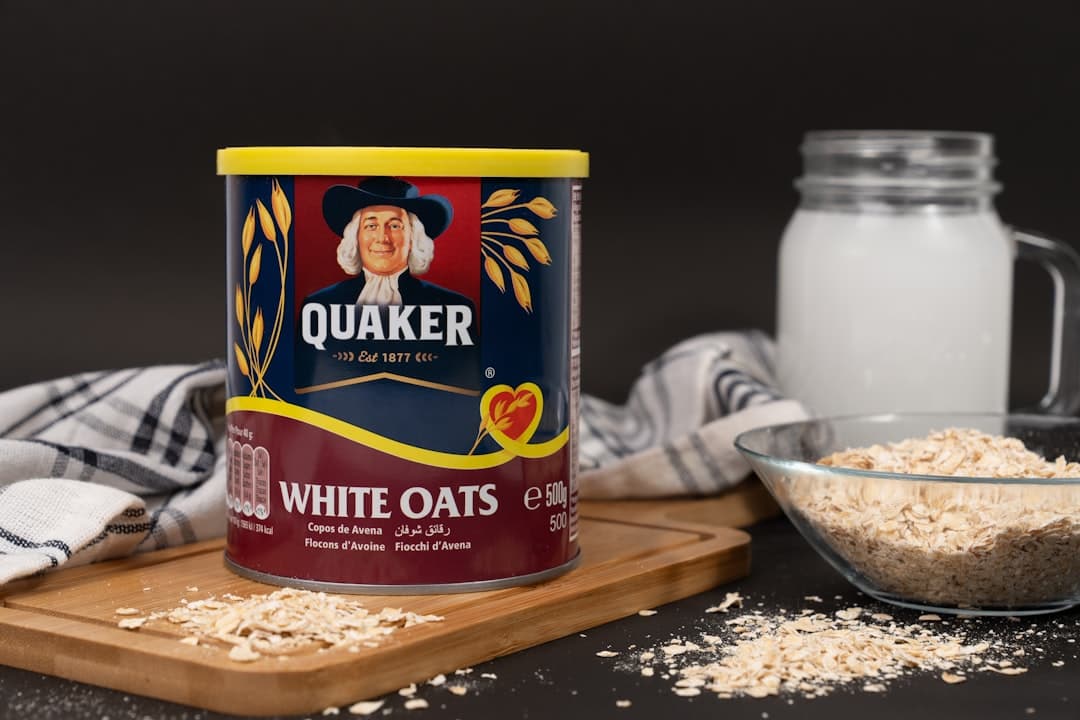
White bread. Sweetened yogurt. Fortified breakfast cereals high in added sugar. Snack bars with lots of added sugar. Fruit punch or fortified juice-like drinks.
The underlying critique is straightforward: the old definition could be satisfied by fortification and a narrow nutrient checklist, while still letting added sugars and refined carbohydrates dominate the product.
This is why the video keeps returning to the phrase “sugar everywhere.” The claim is not that sugar is the only dietary problem. It is that the label system created an easy halo effect for products that were, in practice, dessert-like or highly processed.
The “health halo” problem, explained in plain language
A “health halo” happens when one positive cue, like a front label claim, makes a product feel healthier than it is. People then eat more of it, serve it more often, or stop looking at the Nutrition Facts.
That is especially likely with foods marketed as breakfast staples or kid-friendly snacks, because parents often shop quickly and rely on package cues.
Important: If a food says “healthy” on the front, it can still be high in added sugar, low in fiber, or very easy to overeat. The Nutrition Facts and ingredient list remain the reality check.
From a research standpoint, added sugars are a recognized target for reduction in U.S. dietary guidance. The Dietary Guidelines for Americans recommend limiting added sugars to less than 10% of calories per day (Dietary Guidelines for AmericansTrusted Source).
What the FDA says the update is trying to accomplish
The FDA’s stated rationale, as highlighted in the video, is that the country faces an ongoing crisis of preventable, diet-related chronic disease and that updated labeling is one lever to help.
The logic is that a clearer “healthy” claim could become a quick signal for foundational foods. It could also pressure manufacturers to reformulate products to meet the new definition.
That is the optimistic version. The more skeptical version is that labeling is only as good as the definitions behind it and the enforcement around it.
Still, the key insight is that the FDA is explicitly positioning labeling as a public health tool. The FDA explains its broader nutrition labeling goals and how labeling is intended to support healthier dietary patterns (FDA NutritionTrusted Source).
What would “success” look like?
Success is not that every shopper memorizes grams and percentages.
Success is that fewer products with lots of added sugar and refined starch can sit in the “healthy” lane, and that truly nutrient-dense staples are easier to spot.
This view also argues for a simpler solution that bypasses label politics entirely: eating more foods that do not need labels in the first place, like vegetables, fruit, eggs, fish, and minimally processed meats.
»MORE: Want a simple label-reading checklist? Create a one-page “3 Checkpoints” note for your phone: (1) added sugars grams, (2) fiber grams, (3) first three ingredients. Use it every time a product claims “healthy.”
The saturated fat debate baked into the new messaging
A sharp turn in the discussion is the claim that the FDA is “villainizing saturated fat again.”
This is not presented as a minor quibble. It is framed as a decades-long narrative that, in the speaker’s view, has not delivered the promised population-level improvements in heart disease outcomes.
The argument is built around a specific observation: when you look at where saturated fat comes from in typical U.S. eating patterns, it is not only red meat and eggs. The video points to a figure suggesting red meat contributes a relatively small share, and eggs contribute a small share, while categories like sandwiches and desserts contribute more.
That leads to a rhetorical point: if saturated fat is the villain, then desserts and sweet snacks should receive at least as much attention as steak.
Butter versus vegetable oils, the symbolic swap
The video highlights a common visual in nutrition messaging, butter placed in the “unhealthy pattern” alongside soda, while vegetable oils appear in the “healthier pattern” alongside sparkling water.
This is treated as more than aesthetics. It is a symbol of what the speaker sees as misplaced priorities, swapping traditional fats for industrial seed oils while leaving ultra-processed carbohydrates and sugars as the dominant calorie source.
It also calls out a specific recommendation discussed in the video, an intake on the order of 27 grams of oils per day, roughly 12% of calories, presented as notable and controversial.
To be clear, major health organizations have long recommended replacing saturated fat with unsaturated fats for cardiovascular risk reduction. For example, the American Heart Association discusses replacing saturated fat with polyunsaturated and monounsaturated fats as part of heart-healthy eating patterns (American Heart AssociationTrusted Source).
At the same time, the video’s “why” question remains important for consumers: when dietary advice is simplified into a butter-versus-oil graphic, what else gets ignored, like sugar, refined grains, and overall processing?
What the research shows: Replacing saturated fat with unsaturated fats can improve blood lipid profiles in many people, but the overall dietary pattern still matters. A diet high in refined carbs and added sugar can worsen cardiometabolic risk even if saturated fat is low (AHA dietary fat guidanceTrusted Source).
“Healthy” foods still have a quality spectrum
One of the most useful, non-obvious points in the video is that even when the FDA lists a food as qualifying, quality details can change the nutrition story.
Salmon is the best example used.
It is easy to treat “salmon” as a single category, but the discussion argues that farm-raised versus wild-caught matters because the fish’s feed can change its fatty acid profile. The concern raised is that farmed salmon fed corn and soy may have a less favorable omega-6 to omega-3 balance than many consumers assume.
This is also where the video zooms out to a broader principle: what you eat, ate. In other words, the animal’s diet and environment can influence the nutrient composition of the food on your plate.
A practical way to apply “what your food ate” thinking
You do not need to become an expert in aquaculture or regenerative agriculture to use this.
Use it as a tie-breaker when you are already choosing a generally nutritious food.
Short version: “healthy” on a label does not replace food literacy.
How to use the new “healthy” claim without being misled
A front-of-package claim should be treated like a headline. You still need the article.
Below is a step-by-step approach that matches the video’s overall philosophy, use the updated rule as a helpful filter, but keep your focus on sugar, processing, and real-food patterns.
How to shop with the new “healthy” claim (without outsourcing your judgment)
Start with the perimeter, then use labels for the middle aisles. Build most meals from foods that do not need marketing, produce, meat, fish, eggs, plain dairy, beans, and minimally processed grains. Then use the “healthy” claim only as a time-saver for packaged items.
Check added sugars first, especially for breakfast and snacks. The video’s strongest critique is that sugar-heavy products wore a “healthy” mask for years. On the Nutrition Facts label, look at Added Sugars and ask, is this basically dessert in disguise?
Look for fiber and protein as anchors. Many ultra-processed foods are easy to overeat because they are low in fiber and not very filling. Foods with meaningful fiber and protein are more likely to support steadier appetite and better blood sugar control.
Scan the ingredient list for refined starches and multiple sweeteners. You do not need to fear every ingredient you cannot pronounce, but a long list of syrups, concentrates, and refined flours is a clue that the food is engineered for palatability.
Use “healthy” as a comparison tool, not a permission slip. If two similar products exist, the one that meets the FDA’s “healthy” definition may be a better starting point. But portion size, frequency, and the rest of your diet still carry most of the health impact.
Pro Tip: If a product is marketed as “healthy” but has multiple forms of sugar in the first five ingredients, treat it like an occasional treat, not a daily staple.
Expert Q and A: Does “healthy” mean good for weight loss or diabetes?
Q: If a food has the FDA “healthy” claim, does that mean it is good for weight loss or blood sugar?
A: Not necessarily. A “healthy” claim is a regulated label category, but it does not personalize the food to your goals, your portions, or your metabolic health.
For people managing weight or blood sugar, the most important factors are often the overall pattern, total calories, fiber, protein, and how processed the carbohydrates are. If you have diabetes or prediabetes, it can help to review label strategies with your clinician or a registered dietitian.
Jordan Lee, RD (Registered Dietitian)
Expert Q and A: Should you avoid saturated fat because the FDA still warns about it?
Q: The messaging still warns about saturated fat. Should I avoid foods like butter, full-fat yogurt, and eggs?
A: Many guidelines still recommend limiting saturated fat, especially for people with elevated LDL cholesterol or cardiovascular risk. But it is also true that foods exist in patterns, butter on vegetables is not the same pattern as butter in a diet high in sugary snacks and refined grains.
If you are unsure how saturated fat fits your health profile, a clinician can interpret your lipid panel and family history and help you choose realistic swaps. Often, the biggest wins come from reducing ultra-processed foods and added sugars while improving overall diet quality.
Amina Patel, MD (Internal Medicine)
Key Takeaways
Frequently Asked Questions
- What is the FDA “healthy” claim supposed to do?
- It is meant to be a regulated front-of-package signal that a food meets specific nutrition criteria. The goal is to help shoppers identify more nutritious options and encourage companies to reformulate products.
- Can sugary foods still look healthy on the package?
- Yes. Even with updated rules, marketing can create a health halo through words like “natural” or “made with whole grains.” Checking added sugars, fiber, and the ingredient list helps you see past the headline.
- Is butter automatically unhealthy compared with vegetable oils?
- Not automatically. Many guidelines favor unsaturated fats, but the overall diet pattern matters, including added sugars and refined carbs. If you have high LDL cholesterol or heart disease risk, ask a clinician what fat targets fit your situation.
- Does “healthy” mean a food is good for weight loss?
- No. Weight change depends on overall calorie intake, satiety, and dietary pattern, not one label claim. Foods higher in protein and fiber and lower in added sugars tend to be more filling for many people.
- Does wild-caught salmon have different nutrition than farm-raised?
- It can. The fish’s diet and farming conditions may change the fat profile, including omega-3 content. If sourcing matters to you, look for transparency on labels or ask the retailer about origin.
Get Evidence-Based Health Tips
Join readers getting weekly insights on health, nutrition, and wellness. No spam, ever.
No spam. Unsubscribe anytime.